Manchester changes every 20 minutes. This 5 Quarters walking tour is a smart way to see how the city went from mills and waterways to street art, cathedrals, and modern business power. I especially like the way the guide uses humour to turn each stop into a story you can picture, not a lecture you forget.
You do cover a good chunk of ground in about 2 hours 30 minutes, so if your legs need frequent breaks, consider that moderate fitness note. Also, the tour runs in English, so plan accordingly if you prefer another language.
In This Review
- Key highlights you’ll actually feel on the walk
- Why Manchester clicks when you walk its five quarters
- Ancoats and the old industrial heart: mills, canals, and hard work
- The bohemian quarter stop: street art, music, and vintage finds
- Medieval Quarter moment: the cathedral as the centrepiece
- Millennium Quarter: shopping and entertainment with Exchange Square and St Ann’s Square
- Spinningfields: the “Canary Wharf of the North” business hub
- Roman Quarter in Castlefield: cobbles, canals, and Mamucium
- Ending at St Peter’s Square: the civic centre finish with Central Library
- Price and timing: whether the value makes sense for you
- What to pack so the walk feels easy
- Should you book the Manchester 5 Quarters Walking Tour?
- FAQ
- FAQ
- Where does the Manchester 5 Quarters Walking Tour start?
- Where does the tour end?
- What time does the tour start?
- How long is the tour?
- How much does the tour cost?
- Is the tour offered in English?
- Do I need a ticket, or is it mobile?
- How many people are in the group?
- Is free cancellation available?
- Is the tour suitable if I have moderate physical fitness?
Key highlights you’ll actually feel on the walk
- A route through five distinct Manchester “eras”: industrial, bohemian, medieval, millennium-era, business, then Roman
- A guide who keeps it moving with humour and energy, making the history easier to follow
- Stop-and-see moments that match the vibe: canals and mills, street art and vintage shops, then major squares
- A strong finish at St Peter’s Square, with the Central Library right there at the end
- Small group size (up to 20), which usually means less waiting and more Q&A
- A fun souvenir pin showed up on at least one tour experience: I walked the 5 quarters
Why Manchester clicks when you walk its five quarters
Manchester can feel like separate pieces until you connect them. This tour’s whole idea is simple: walk the city’s different chapters, close enough together that you can start spotting patterns. You move from old industrial muscle to medieval landmarks, then into modern shopping and finance.
What I like is that it’s not just “look at buildings.” You’re guided to notice the setting: canals where industry worked, cobbles where the Roman past still shows its shape, and squares that explain why people gather. Even if you only have a short visit, the route helps you get your bearings fast.
You can also read our reviews of more tours and experiences in Manchester.


Ancoats and the old industrial heart: mills, canals, and hard work
The walk starts at Cutting Room Square, Ancoats (near Manchester’s transport options), and right away you’re pointed toward the city’s working roots. The first stop focuses on Manchester’s old industrial heart, where mills and canals shaped daily life.
This is a good place to train your eye. Instead of treating the industrial era as dusty, you see it as infrastructure. Canals were practical. Mills were the engine. The whole area reads like the blueprint for later Manchester growth.
Practical note: because your early time is spent with an industrial setting (and you may be around waterways), bring shoes that handle uneven ground without drama. It’s not a sightseeing stroll in flip-flops.
The bohemian quarter stop: street art, music, and vintage finds
Next you get a change of mood. The tour moves toward a bohemian heaven vibe, where street art, music, and vintage boutiques are part of the neighborhood’s identity. This is where Manchester feels more like a living city and less like a museum.
I like that this section isn’t only about visuals. It’s about culture in the street: what gets displayed, what gets played, and how local style turns ordinary corners into something worth slowing down for. If you enjoy hanging out where creative people work and shop, you’ll get a lot out of this stop.
Possible drawback to consider: street art and small shops can vary from day to day. So keep expectations flexible and treat it like a chance to spot the city’s personality rather than hunt a specific mural.
Medieval Quarter moment: the cathedral as the centrepiece
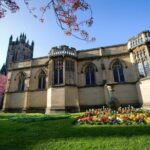
Then the tour shifts again—this time to the Medieval Quarter, with the magnificent cathedral as the centrepiece. Medieval Manchester isn’t just about old stone. It’s about place-making: the cathedral anchors the neighborhood, and everything around it starts to feel ordered by centuries.
This stop works well because it gives you a visual anchor after the faster-moving, trend-led bohemian section. You pause, look, and let the scale of the building do some of the explaining. Even if you’re not a big church-history person, the cathedral’s role as a landmark is hard to miss.
If you like architecture and urban design, this is the section to pay attention to. Where the cathedral sits tells you how the medieval city organised itself.
Millennium Quarter: shopping and entertainment with Exchange Square and St Ann’s Square
After medieval calm, you hit the Millennium Quarter, described as having been born from adversity. The vibe here is more “what’s happening today?” It’s shopping and entertainment centred around Exchange Square and St Ann’s Square.
This stop is valuable because it shows how Manchester reinvents itself. You’re not just seeing modern buildings; you’re seeing the city’s shift from industrial routines to public spaces built for crowds, commerce, and nightlife. Squares matter in cities, and these ones are designed for people to meet and move between events.
One way to use this stop well: glance around, then think about flow. Where do people gather? Where do they cross? What kind of spaces are made for lingering versus quick movement? You’ll start understanding Manchester like a local planner, not just a tourist.






Spinningfields: the “Canary Wharf of the North” business hub
Next up is Spinningfields, often described as the Canary Wharf of the North. This is the Manchester Business Quarter hub, with corporate offices, upscale dining, and stylish bars.
I enjoy this segment because it’s a contrast. You’ve just been in public squares focused on crowds and shopping. Now you get an area shaped by finance and professional life—cleaner lines, office energy, and a different kind of evening rhythm.
This isn’t a stop for people who only want street-level history. But if you want to see the other Manchester—where business and city branding show up in the details—Spinningfields is a strong chapter.
Roman Quarter in Castlefield: cobbles, canals, and Mamucium
The tone turns serene again in the Roman Quarter inside Castlefield. This is where you slow down. You’re told it dates back to when the city was first christened as Mamucium—and the setting helps you believe it.
Castlefield’s cobbles and canals create a different kind of atmosphere than the business district or the squares. Even if you don’t know Roman details off the top of your head, the physical environment does a lot of storytelling. It feels older in a practical way, like the city’s layers are still close enough to touch.
If you’re the type who enjoys “small scale history,” this is your moment. It’s not about grand ruins alone—it’s about how the city’s earliest roots have remained part of Manchester’s everyday texture.
Ending at St Peter’s Square: the civic centre finish with Central Library
Your tour journey ends at St Peter’s Square, finishing in front of Manchester Central Library. Ending at a civic centre is a smart choice. It gives the route a point of closure: you’ve moved from working industry, to culture, to medieval power, to modern entertainment, to finance, and then back to the city’s earliest origins.
Central Library works as a practical landmark too. It’s easy to plan after the tour. You’re not left wandering with “where do we go now?” energy.
If you want to extend your day, this is also a good area to connect to other parts of Manchester, because St Peter’s Square sits where lots of plans naturally branch out.
Price and timing: whether the value makes sense for you
The tour costs $20.38 per person and runs about 2 hours 30 minutes. For that price, you’re paying for a guided walk that strings together five quarters plus a Roman chapter and a civic finale. That’s the real value: the guide helps you link places into a story, so you don’t just collect photos.
The max group size is 20 travelers, which matters more than people think. Smaller groups usually mean fewer delays and more back-and-forth questions. Add in the fact that the tour is offered in English, and you can see why it’s especially useful for visitors trying to make the most of a few days.
If you have limited time, this is a strong “one-and-done” option. It won’t replace deeper museum visits. But it will give you the city map in your head that makes everything else easier.
What to pack so the walk feels easy
Since the route covers mills/canals, cobbles, and multiple neighborhood styles, I’d pack like you’re walking a city for real. Wear comfortable shoes, bring a light layer, and keep water handy if you tend to run warm.
Also, check your start location calmly: you’ll meet at Cutting Room Square, Ancoats at 10:00 am. Show up a few minutes early so you can settle in before the group heads off.
One more nice detail: some people pick up a fun reminder pin that says I walked the 5 quarters. If it’s offered on your tour date, it’s an easy souvenir that actually matches what you did.
Should you book the Manchester 5 Quarters Walking Tour?
Book it if you want a fast, organized way to understand Manchester. The mix of industrial mills and canals, creative street-life, a medieval cathedral centrepiece, modern squares, a business-district contrast, and Roman-era Castlefield makes the city feel like one place instead of random stops.
Skip it or think twice if you dislike walking or you’re hoping for very specific indoor museum content. This is an outdoor, on-foot experience, and the pacing is built for seeing the city from the street.
FAQ
FAQ
Where does the Manchester 5 Quarters Walking Tour start?
The tour starts at Cutting Room Square, Ancoats, Manchester M4 6BF, UK.
Where does the tour end?
The tour ends in front of Manchester Central Library at St Peter’s Square, Manchester M2 5PD, UK.
What time does the tour start?
The start time is 10:00 am.
How long is the tour?
The duration is about 2 hours 30 minutes.
How much does the tour cost?
The price is $20.38 per person.
Is the tour offered in English?
Yes, the tour is offered in English.
Do I need a ticket, or is it mobile?
It uses a mobile ticket.
How many people are in the group?
The tour has a maximum of 20 travelers.
Is free cancellation available?
Yes. You can cancel for a full refund up to 24 hours in advance of the experience start time.
Is the tour suitable if I have moderate physical fitness?
The tour is listed for people with a moderate physical fitness level, and it also notes that service animals are allowed.