REVIEW · MANCHESTER
Manchester Outdoor City Hunt
Book on Viator →Operated by StreetHunt Games · Bookable on Viator
Manchester hides clues in plain sight. This outdoor mystery turns a walk through central Manchester into a real puzzle chase, with red-brick streets, Castlefield canal scenery, and a coffee empire that has secrets. It’s built for groups who like problem-solving while they move through the city.
I like the team format, because groups of 2 to 6 stay active instead of waiting around. I also like how the hunt nudges you toward specific places tied to the story, including the Goodbeans=Goodbrews coffee spot and the old canals area around Castlefield.
One thing to plan for: this is a challenging puzzle route (difficulty rated 13+), so if you prefer an easy, low-thinking stroll, it may feel like too much mental work—especially in windy or rainy weather when you’d rather coast.
In This Review
- Key points at a glance
- A detective walk through Castlefield and coffee-shop secrets
- Price and what $26.35 buys you in real walking time
- How the hunt works: teams, timing, and the 13+ challenge
- Start at North West Therapy, Milton Hall on Deansgate
- The clue trail: red-brick streets, old canals, and Goodbeans=Goodbrews
- Mid-way pub break: smart pacing for a mentally demanding game
- Manchester weather reality: plan for wind and rain
- Who this is best for (and who should skip it)
- Practical value: team competition and the gold-medal payoff
- Should you book the Manchester Outdoor City Hunt?
- FAQ
- How long is the Manchester Outdoor City Hunt?
- How many people can be on a team?
- How challenging is the hunt?
- Where does the hunt start and end?
- What ticket do I receive?
- Can I cancel and get a refund?
Key points at a glance

- 2-hour outdoor detective game that loops back to the start, so you’re not stuck figuring out logistics
- Team play (2–6 people) with larger groups splitting into separate teams for fair competition
- Clues built around real locations, including Castlefield’s old canals and Goodbeans=Goodbrews
- A mid-way pub stop that breaks the walk and resets your group before the final stretch
- Difficulty rated 13+, so you’ll want good group communication and patience with puzzles
- Mobile ticket and easy access near public transport for a smoother start
A detective walk through Castlefield and coffee-shop secrets
This hunt has the best kind of premise: it sounds silly on purpose, then gets serious about the puzzle part. The story centers on a coffee empire brewing with secrets, suspicious staff, and buried files—then you and your team follow evidence, decode cryptic clues, and stay one step ahead.
What makes it feel more than just a scavenger game is the setting. You move through classic Manchester streets with that red-brick feel, then you shift into the Castlefield area, where the old canals add a different mood—more open, more scenic, and good for regrouping as you compare clues. It’s the kind of route that keeps your eyes up, not just glued to a phone.
And yes, the coffee-shop angle is part of the fun. Goodbeans=Goodbrews isn’t just a name on the map; it’s woven into the mystery so the location feels like a step in the story, not a random stop.
You can also read our reviews of more tours and experiences in Manchester.


Price and what $26.35 buys you in real walking time
At $26.35 per person for about 2 hours (excluding breaks), you’re paying for a structured group experience rather than a loose self-guided walk. That matters, because you’re not spending extra time figuring out what to do next.
In practical terms, this price usually works best when you value:
- Time-saving structure: you get a planned flow of clues across the route.
- Group dynamics: the game is designed for teams, so two people can’t just tag along like spectators.
- Learning through doing: rather than reading facts from a sign, you pick up details while you solve tasks.
If you’re a solo wanderer who wants quiet strolling, this price may feel less efficient because the value comes from teamwork. But if you’re bringing a couple friends, a small group, or even a mixed group of locals and first-timers, the per-person cost becomes easier to justify.
How the hunt works: teams, timing, and the 13+ challenge
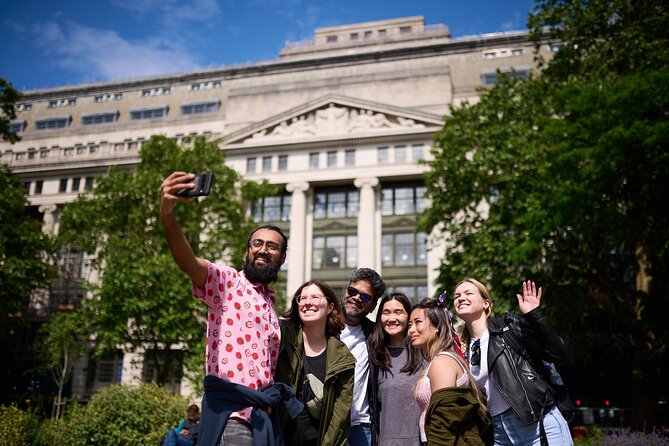
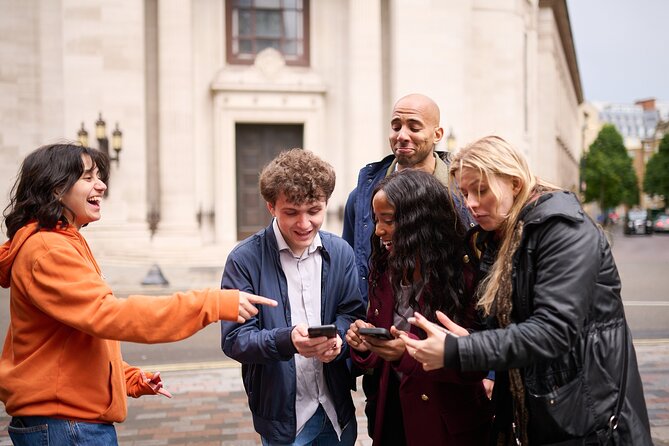
You’ll be given a mobile ticket, then the hunt is played as a team challenge. Teams run from 2 to 6 people. If you have a bigger crew, you’ll split into multiple teams, which helps everyone stay involved instead of waiting in line.
The difficulty is rated 13+ and the puzzles are described as challenging—not the kind you blast through in five minutes. That’s a big part of why people seem to like it. The tasks reward conversation. You’ll get better results when your group talks things through instead of racing ahead.
The pacing is also part of the design. Expect roughly 1.5–2 hours of active game time, excluding breaks. That’s long enough to feel like you did something substantial, but short enough that you’re not stuck for half a day if your schedule is tight.
Start at North West Therapy, Milton Hall on Deansgate
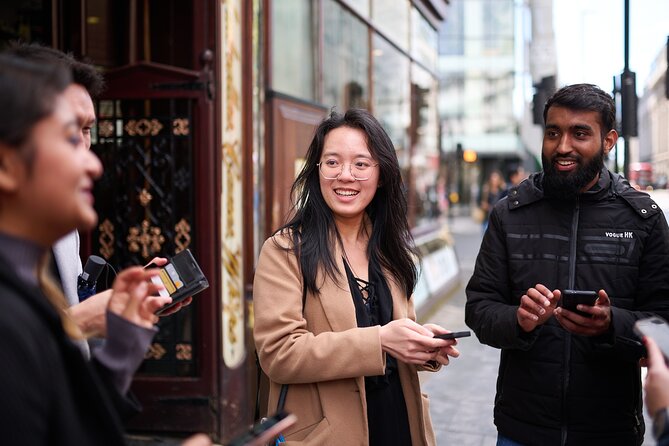
The hunt begins and ends back at the meeting point, which is a small detail that makes a big difference. You start at North West TherapyMilton Hall Deansgate, Manchester M3 4BQ, UK, and you return there when you finish.
Why I think that’s valuable: you don’t need to solve end-of-activity transport problems. You walk back to the same area, so you can keep your plans simple—whether you’re going for lunch, a coffee after, or a train home.
This meeting point is also described as near public transportation, which helps a lot if you’re using the tram or trains to get into central Manchester. And because it’s a private activity for your group, you’re not dealing with large crowds making the start messy.
The clue trail: red-brick streets, old canals, and Goodbeans=Goodbrews
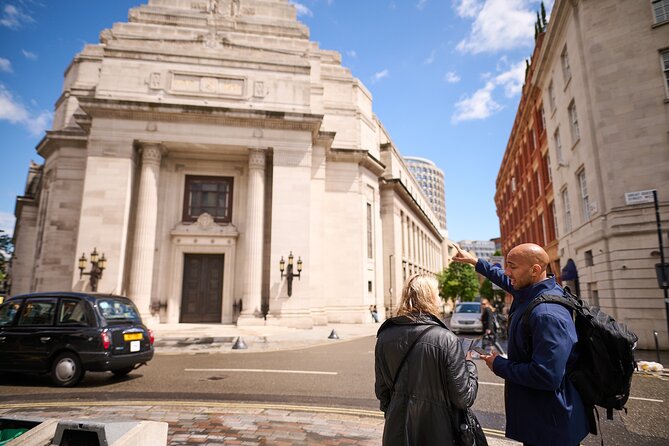
The hunt’s “mystery” vibe comes from how the clues are scattered across real streets and real story locations. You’re not just walking past landmarks; you’re hunting for evidence tied to the plot.
Here’s the sense of what to expect along the way:
1) The red-brick streets phase
This is where you get your bearings fast and start building momentum. You’ll likely be working out the first steps of the story and learning how your team should approach clues. If your group tends to disagree, this early section is where you’ll decide on a strategy: one person reads clue details, one person checks options, and everyone contributes to the final answer.
2) Castlefield’s old canals phase
Then you move toward Castlefield and its old canals. Even without knowing the exact puzzle sequence, this shift tends to be refreshing. Open canal-side space makes it easier to stop, compare notes, and reset your thinking. It also gives the hunt a stronger sense of place—Manchester doesn’t only look like high-rises and shopping streets.
3) The coffee empire stop at Goodbeans=Goodbrews
The Goodbeans=Goodbrews connection is central to the story, with suspicious staff and hidden information in the background. Expect this stop to feel like a turning point: you’ll be able to connect clue fragments into something more coherent, and your group will likely talk more here because the setting pushes you to slow down.
I like this approach because it prevents the game from becoming just a map-based challenge. The locations give the puzzles context, and the story makes the city feel like part of the mechanism.





Mid-way pub break: smart pacing for a mentally demanding game

This is one of the most practical parts of the experience: a mid-way pub stop. The hunt includes a break so your group can reset before tackling the second half.
That matters because the puzzles are described as challenging. After an hour of clue-solving and walking, your group’s energy can drop, and decision-making gets sloppy. A pub stop gives you a chance to regroup, share what you think you learned, and decide what to do if you’re stuck.
Also, it turns the hunt into a better social experience. If your group has a range of puzzle skill levels, the break levels the playing field. People who were quiet at the start often contribute more once they’ve had a chance to decompress.
Manchester weather reality: plan for wind and rain
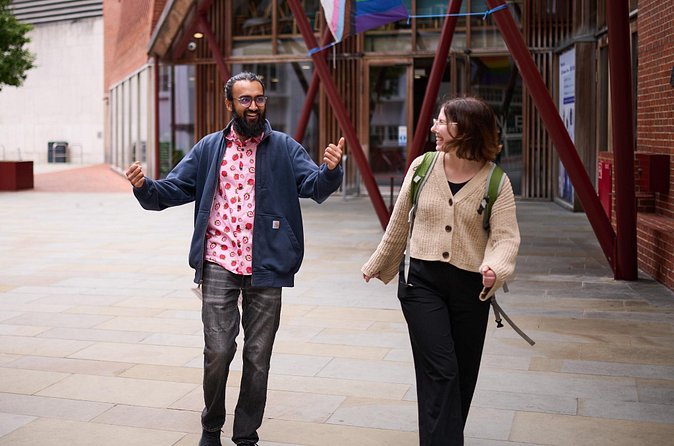
This is an outdoor city hunt, so weather is part of the deal. One group noted that rain and wind got in the way, but they pushed through and still finished strong.
Here’s how you can prepare without overthinking it:
- Wear a jacket you can move in, not just something ceremonial.
- Bring a small umbrella or waterproof layer if the forecast looks iffy.
- Keep footwear practical—Manchester sidewalks are fine, but puzzle hunts involve stopping, turning, and walking fast.
If your group is the type that cancels plans the second clouds roll in, this might not be your best match. If you’re willing to bundle up and treat weather as part of the adventure, it’s usually manageable.
Who this is best for (and who should skip it)
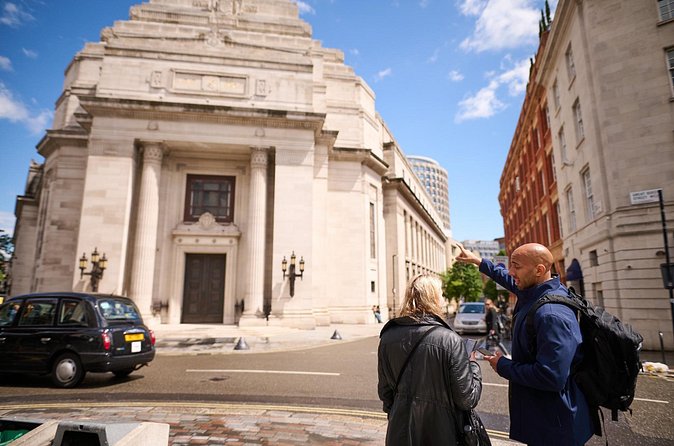
This hunt is a great fit for:
- Small groups and families with older kids (the challenge rating is 13+)
- Friend groups who enjoy puzzles and friendly competition
- Visitors who want a city experience that teaches while you play
- Locals who think they know Manchester and then get surprised by details they’ve never noticed
It may be less ideal for:
- People who hate solving riddles or need guaranteed, instant success
- Groups that want a quiet stroll with minimal talking
- Anyone with limited mobility, since the experience assumes moderate physical fitness and you’ll be walking outdoors for the duration
The sweet spot is a group that can switch between walking and “detective time” without getting frustrated.
Practical value: team competition and the gold-medal payoff
One reason this hunt feels satisfying is that it’s not set up as a pass/fail lecture. It runs like a competition, with teams working against time and logic. People mention getting to the end with gold medals, which tells you the game is designed to give closure and a sense of achievement.
That achievement comes from the puzzle design itself. The clues are described as clever, and the overall storyline makes it feel less random. You’re not just searching for objects—you’re building a case, and that mindset makes the city feel like a living set.
If you’ve ever done a self-guided scavenger walk where you’re never sure if you’re doing it “right,” this is different. Here, your group’s communication is the engine, and the route supports that.
Should you book the Manchester Outdoor City Hunt?
Book it if you want a light-to-moderate physical outdoor challenge with real teamwork and a story that gives you a reason to look closely. It’s a good value when you’re going with 2 to 6 people who like puzzles, and it works for mixed groups too—locals can enjoy it as much as first-timers because it pushes attention to details people often miss.
Skip it if you’re after a mostly relaxing walk, because the puzzle difficulty is real (rated 13+), and the experience works best when your group is ready to talk, compare clues, and take turns.
If you choose to go, I’d advise you to show up with the right attitude: solve together, don’t race, and use the mid-way break to reset. Then the whole route clicks into place.
FAQ
How long is the Manchester Outdoor City Hunt?
It takes about 2 hours (approx.), excluding breaks. The guidance also notes 1.5–2 hours of active time when breaks are not counted.
How many people can be on a team?
Teams are typically 2–6 people. If you have a larger group, it splits into multiple teams.
How challenging is the hunt?
The difficulty is rated challenging, with an age and challenge guideline of 13+.
Where does the hunt start and end?
It starts at North West TherapyMilton Hall Deansgate, Manchester M3 4BQ, UK, and it ends back at the same meeting point.
What ticket do I receive?
You use a mobile ticket.
Can I cancel and get a refund?
Yes. You can cancel for a full refund if you cancel at least 24 hours before the experience starts. If you cancel less than 24 hours before, the amount paid is not refunded.