Cryptic clues turn Oxford into a game. This self-guided hunt uses a mobile-phone treasure map and cryptic clues sent to you by Captain Bess, so you can explore Oxford’s big landmarks at your own pace. You also get short story moments along the way, which makes the walk feel more like solving a mystery than checking boxes.
I especially like the flexible start-and-stop setup. You’re not stuck with a group pace, so you can pause for a shop window moment, a quick photo, or even line up a snack stop without feeling guilty. I also like that the experience works in a WhatsApp-style flow, so it’s easy to follow while you’re walking.
One possible drawback: the clues can feel confusing early on, and one low-score experience hinted that you may only feel things really click when you reach the later part of the route.
In This Review
- Key highlights worth planning for
- How the Captain Bess hunt works on your phone
- Oxford Castle & Prison: your starting line and warm-up clue
- Radcliffe Camera and The Turf: keep moving, pause when you want
- Sheldonian Theatre and Bodleian Library: where the hunt adds story
- Carfax Tower: finishing strong and handling the last clues
- Cryptic clues and hints: the fairness factor
- Timing in Oxford: when to start for a smooth 2.5 hours
- Value for $20.83: what you’re paying for
- Who should book this hunt, and who might not love it
- Should you book the Oxford treasure hunt?
- FAQ
- Where does the Oxford treasure hunt start and finish?
- How long does the treasure hunt take?
- Do I need to download anything or print documents?
- Can I start whenever I want?
- Is it a private activity?
- What if I can’t solve a clue?
- Can I cancel and get a full refund?
Key highlights worth planning for

- Captain Bess guides you by phone with maps and clues, in a WhatsApp-style flow
- No fixed schedule means you control when you start and how long you pause
- Hints are available if you get stuck, so the game doesn’t grind to a halt
- You hit classic Oxford landmarks over roughly 2.5 hours without needing a live guide
- Great for families and mixed ages, with puzzles plus simple city-story facts
- Plenty of photo opportunities as you roam past eye-catching architecture
How the Captain Bess hunt works on your phone

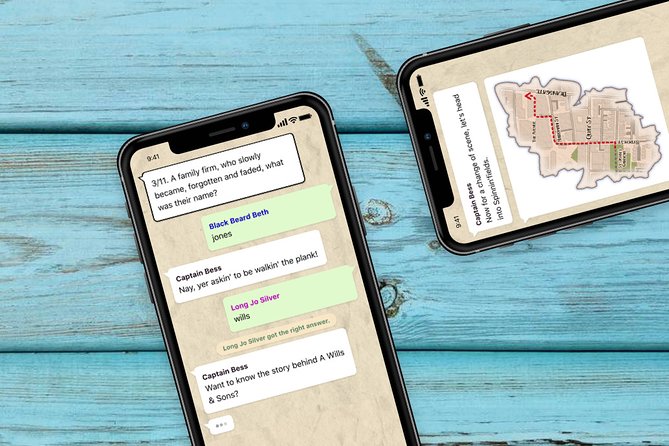
This experience is designed to feel light and casual, even though it’s a real treasure hunt. You start at Oxford Castle, then Captain Bess sends you a series of maps and puzzles that you solve as you move through Oxford. You can play at your own pace, and you can start whenever you want during the activity window, rather than waiting for a set departure time.
The biggest practical win is that you don’t need printing or special prep. There’s a mobile ticket, and the whole game runs through your phone, with no need to download or print anything. The setup is also described as not requiring permissions, and that matters because it keeps your phone experience simple while you’re out sightseeing.
It’s also built to support groups of friends. Captain Bess invites people to join the hunt, so it can work well if you’re traveling with others who want to be in on the same puzzle, not just walk behind you.
Finally, there’s a built-in safety valve: if you can’t find an answer, you can ask for hints. That’s a big deal for puzzle games, because it keeps you moving instead of wandering in confusion for long stretches.
You can also read our reviews of more tours and experiences in Oxford.



Oxford Castle & Prison: your starting line and warm-up clue
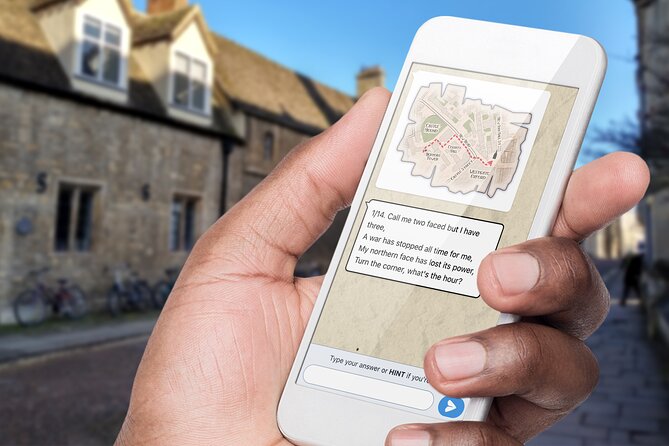
Your meeting point is Oxford Castle, and the hunt begins there. Starting at a recognizable place helps you get oriented fast, especially because you’re not joining a bus or meeting at a random corner. Once you begin, the first clue and map help set the tone for how the hunt will feel: walk, look, think, then verify with the next step on your phone.
This is also a good moment to get your tech ready. Before you move on, make sure your phone is charged enough for a couple hours and that the screen brightness is set for outdoor visibility. Since you’ll be referencing your maps and messages while walking, you want your phone to be reliable from the first minute.
If you like a bit of structure without a rigid schedule, the first stop is a nice entry. You’re not rushing because there’s no “arrive by” countdown like a typical guided tour, but you also aren’t wandering aimlessly because the hunt is steering you.
Radcliffe Camera and The Turf: keep moving, pause when you want

After Oxford Castle & Prison, the route takes you to the Radcliffe Camera and then to The Turf. What makes these stops enjoyable in this format is the pacing. You’re not trying to keep up with a guide’s speaking speed, and you’re not trapped in a long group queue. If you spot something along the way, you can step off the direct route and take a look before you continue.
This is where the treasure hunt design really pays off. The maps keep you moving through the central area, while the clues give you a reason to look closely instead of just walking past big-name buildings. One reason people rate this so highly is that it turns Oxford’s “seen-it-on-a-postcard” locations into part of an interactive scavenger trail.
Also, don’t be afraid to treat this section like your own walking tour. If you want a quick photo break or a short detour to read a shop window, you can do it and then rejoin the next step when you’re ready. The whole point is that the game is self-guided, not scheduled like a live attraction.
Sheldonian Theatre and Bodleian Library: where the hunt adds story

Next up is the Sheldonian Theatre, followed by the Bodleian Library. These are the kinds of places people often want to see, but they can feel like a quick photo stop when you’re traveling with a tight itinerary. Here, they’re part of a sequence, which makes your visit feel more intentional.
Expect facts and stories along the way, delivered between clues. That’s one of the best-value aspects of the hunt: the learning isn’t delivered as a lecture. It’s threaded into the game, so it feels like you’re uncovering meaning rather than listening to someone recite it.
This section is also where timing flexibility helps. If you want to linger longer at one landmark to get better photos or just absorb the atmosphere, you can. And if you prefer to keep a steady pace, you can just solve, move on, and let the next clue pull you forward.
One caution from a low-score experience: puzzles can feel unclear until you reach later steps. If that happens to you around this part of the route, don’t panic. Use the hint option rather than letting the game get frustrating. The design is meant to keep you engaged, not stuck.
Carfax Tower: finishing strong and handling the last clues
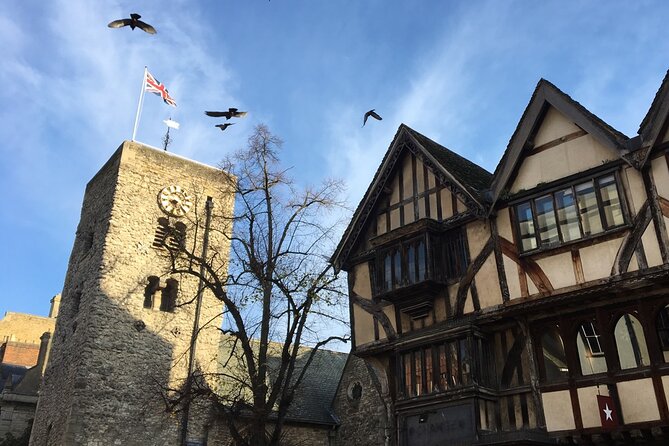
The final listed landmark is Carfax Tower, and the activity ends back at the meeting point. Ending where you started is convenient, especially for independent travelers who don’t want to add another logistics problem at the end. It’s also psychologically satisfying: you solve your way through the city and then close the loop.
This is where you’ll want to manage your patience. The one major negative review you should take seriously is the idea that clues might not feel satisfying until near the end. In other words, the game can front-load confusion and then reward persistence. If that isn’t your style, the hunt might feel like work rather than fun.
But if you enjoy puzzles, this ending can be a great moment. Many high-score experiences highlight that the clues are clever, the maps are clear, and the hunt gives you a better overview of Oxford than a quick stop-and-go day. Carfax Tower is a natural capstone because it’s a landmark people often associate with navigation, and in a treasure hunt, navigation matters.






Cryptic clues and hints: the fairness factor
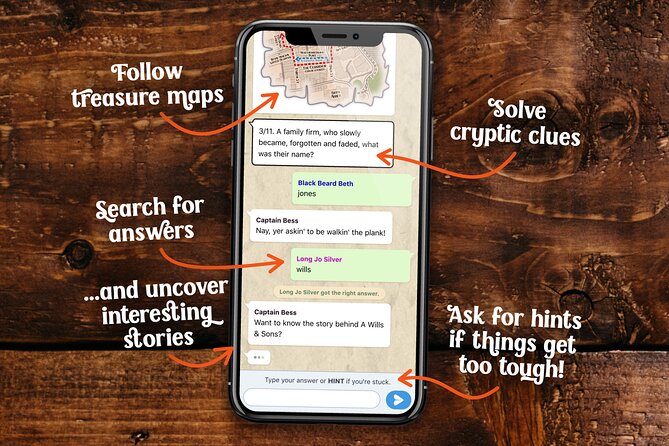
The hunt is built around cryptic clues, and that means the experience is going to vary depending on your puzzle tolerance. Some people love the challenge and feel it pushes them to think in a fun way. Others may find it confusing if they expect straightforward answers from the start.
Here’s how I’d approach it so you get the best outcome. When a clue doesn’t immediately make sense, don’t spiral into guesswork. Instead, use the hints available in the app-style flow. That’s not a failure; it’s how you keep the game moving while still enjoying the hunt.
The best part is that hints exist, so you’re not stuck roaming Oxford like a confused detective for an hour. You can ask for help and continue, which protects your time. And because you control your start and stop, you also have the option to pace yourself so puzzle difficulty doesn’t bulldoze your sightseeing.
If you’re traveling with kids, this format can be a great mix of mental play plus city walking. Adults get the satisfaction of solving, and kids can feel included because everyone can contribute to searching and interpreting clues.
Timing in Oxford: when to start for a smooth 2.5 hours
The game is listed at around 2 hours 30 minutes. That’s a workable length for a half-day plan, especially if you’re also doing other Oxford highlights on the same trip. It’s long enough to feel like you covered multiple landmarks, but short enough that you still have room for dinner plans.
The activity window is shown as 8:00 AM to 6:00 PM, seven days a week. Since it’s self-guided, you’re not locked to a single departure time, but your best experience will depend on when you’re comfortable walking and paying attention to clues.
My practical advice: start early enough that you’re not rushing at the end, but not so early that you feel sleepy while reading messages. Also, plan for the fact that you’ll be stopping for photos, looking closely at your surroundings, and occasionally working out a clue. If you treat it like a fast walk-through, you may miss the fun.
Value for $20.83: what you’re paying for

At $20.83 per person, you’re not paying for a live guide with a set script. You’re paying for a mobile treasure hunt package: maps, cryptic clues, story snippets, and a hint system. That value makes the most sense if you want flexibility and you don’t want to spend your limited vacation hours herding yourself through a rigid schedule.
The other value point is that the experience is private for your group. That means you won’t be squeezed into an awkward pace with strangers. For families, couples, and friend groups, that can make the whole thing feel easier and more personal.
Also, the mobile format removes friction. No printing, no complicated setup, and a simple phone-based chat flow means you can start quickly and focus on the city rather than logistics. For a puzzle-oriented sightseeing day, that matters.
Who should book this hunt, and who might not love it
This treasure hunt is a strong fit if you like interactive sightseeing. If you enjoy solving puzzles, searching the city for answers, and learning in small story bursts, you’re likely to have a great time.
It’s also a good match for travelers who want to avoid crowds. Since you aren’t tied to a group schedule, you can pause whenever you want and keep moving when it feels right. Some of the best feedback highlights that it helps you notice details you might otherwise skip, and that it can reveal parts of Oxford you hadn’t visited before.
It can work well for both kids and adults because the hunt gives you a reason to look around. One high-score experience also suggests it can be a fun way to find nice places for a drink or bite along the route, and the flexibility means you can bend the walk to suit your mood.
Who might not love it: if you want a traditional guided narration with clear explanations from the start, cryptic clues could feel frustrating. And if you dislike puzzle games that require patience, you may feel the same kind of mismatch as the one disappointed review did, where the early clues didn’t land until later.
Should you book the Oxford treasure hunt?
Yes, if you want a flexible, phone-based way to see Oxford’s top sights while staying in charge of your pace. For the price, you’re getting a structured route, a built-in story-and-clue format, and hints to keep the game enjoyable instead of stuck.
Hold off if you prefer a straightforward historical tour with answers explained immediately. Also think twice if cryptic puzzles frustrate you, because at least some players find the clues challenging before the later payoff.
If you do book it, go in with the right mindset: treat it like a walking game. When you use hints early, it stays fun, and you’ll finish with a better feel for Oxford and a clear sense of what you want to explore next.
FAQ
Where does the Oxford treasure hunt start and finish?
It starts at Oxford Castle, Oxford OX1, UK, and it ends back at the same meeting point.
How long does the treasure hunt take?
It takes about 2 hours 30 minutes (approx.).
Do I need to download anything or print documents?
No. You don’t need to download or print anything. The hunt is played using your phone.
Can I start whenever I want?
Yes. The experience has no fixed schedule, and you can start and stop the game whenever you like within the activity hours shown.
Is it a private activity?
Yes. It’s private, so only your group will participate.
What if I can’t solve a clue?
You can ask for hints if you can’t find the answer right away.
Can I cancel and get a full refund?
Yes. You can cancel for a full refund up to 24 hours in advance of the experience’s start time.