Sheffield is best when you wander with a plan.
Treasure Hunt Sheffield turns the city into a treasure map game you can do at your own pace, and I like the fact that it’s all phone-based—no printing, no downloads, no fuss. You’ll also get support if your group gets stuck, thanks to built-in hints, which keeps the energy up instead of grinding to a halt. One thing to consider: it’s still a walking activity, so you’ll want decent footwear and a willingness to move between stops.
What makes this especially fun for groups is that it works like WhatsApp on your phone, with a captain (Captain Bess) sending you maps and clues as you go. You can start when you want during the day, and it’s set up as a private group experience, so you’re not sharing the hunt with strangers. The only real drawback is that, because it’s self-guided, you’ll get the most out of it if you keep phones charged and actually follow the prompts.
In This Review
- Key Things to Know Before You Go
- A Phone-Led Treasure Hunt You Can Actually Do on Your Schedule
- Price and Value for a 3-Hour Group Activity at $20.72
- Meeting at Tudor Square and Finishing Back Where You Started
- How Captain Bess Guides You Like a Chat
- Stops One Through Ten: What You’ll Do at Each Part of the Route
- Sheffield Cathedral: Start Strong With Easy Momentum
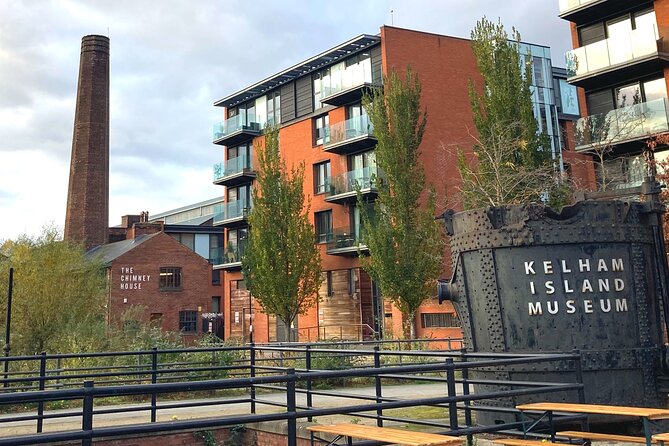
- Kelham Island Museum: A Museum-Stop That Feels Built for Curiosity
- Crucible Theatre: When the Route Shifts From Looking to Spotting
- Sheffield Winter Garden: A Pause-Friendly Break in the Middle
- National Emergency Services Museum: Shift to a More Focused Kind of Observation
- Peace Gardens: A Quieter Landing to Read Clues Carefully
- Sheffield Town Hall: Civic Sights Make Great Puzzle Targets
- Cathedral Church of St Marie: The Route Keeps Variety Without Getting Complicated
- The Cutlers’ Hall: A Distinct Landmark Stop for Team Talk
- Sheffield City Hall: Finish With a “We’ve Got the City Now” Feeling
- Why This Self-Guided Format Works for Real Groups
- Timing, Walking, and Phone Reality Checks
- Should You Book This Treasure Hunt Around Sheffield?
- FAQ
- How long does the Treasure Hunt Sheffield experience last?
- What is the meeting point, and where do we finish?
- Do I need to download anything or print tickets?
- How do the maps and clues reach me during the hunt?
- What if our group can’t find the answers?
- Is there a time window to start?
- What about refunds and cancellation?
Key Things to Know Before You Go

- Captain Bess runs the hunt through your phone, sending maps and clues
- Hints are available if your group struggles, so you don’t lose time or good humor
- Start anytime during the service window, instead of being locked into one rigid slot
- No download or print needed, and it doesn’t require permissions
- Stops span cathedrals, museums, theatres, gardens, and civic buildings
- Private, group-only format, great for friends, colleagues, and celebrations
A Phone-Led Treasure Hunt You Can Actually Do on Your Schedule
This isn’t the kind of tour where you shuffle behind someone’s umbrella. Treasure Hunt Sheffield is self-guided, and the game flow lives on your phone. That means you control the pace. If your group wants to linger outside a landmark and get a few photos, you can. If someone needs a coffee break, you can pause without feeling like you’re breaking the tour.
The other big win is simplicity. You don’t need to download anything. You don’t need to print anything. And it doesn’t ask for permission on your device. That matters more than it sounds, because nothing kills a good day like last-minute tech problems.
Also, the hunt is designed so you don’t need to be a Sheffield expert. The clue path is supported with maps and snippets along the way, which helps you keep moving even if you don’t already know the city.
You can also read our reviews of more tours and experiences in Sheffield.



Price and Value for a 3-Hour Group Activity at $20.72
At about $20.72 per person for roughly 3 hours, you’re paying for three things: coordination, entertainment, and flexibility. You’re not paying for museum admissions or a lecturer’s time. Instead, you’re buying an interactive route plus the phone system that delivers maps, clues, and fact-style commentary.
For groups, the math tends to work well because the format spreads the fun across everyone. People can solve, scan, compare answers, and check routes. That’s especially handy for mixed groups where some folks love puzzles and others just want an easy way to explore.
If you’re thinking about cost vs. value, here’s the practical way to look at it: you’re getting a ready-made “reason to walk around Sheffield” for a set price, and you can still turn pauses into a longer day.
Meeting at Tudor Square and Finishing Back Where You Started
You meet at Tudor Square in Sheffield City Centre (S1). The activity ends back at the same meeting point, so you’re not ending your day in the wrong part of town.
That loop is more than convenient. It keeps the adventure low-stress. You can plan around it like a guided walk, only you decide when to speed up or slow down.
Also, this hunt is set up to be near public transportation, so if your group wants to combine it with other plans, you’re not stranded in the middle of nowhere.
How Captain Bess Guides You Like a Chat
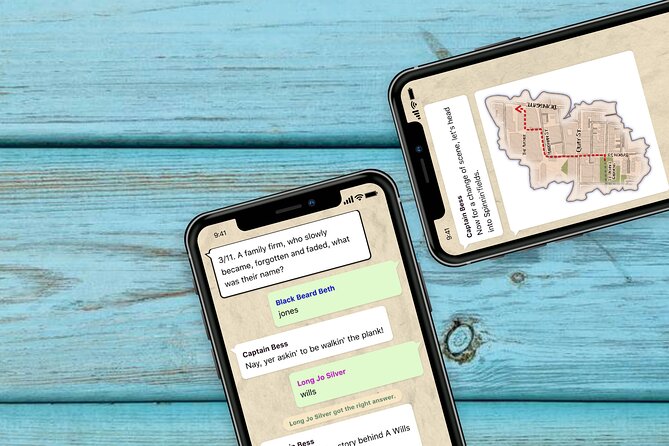
Captain Bess invites your group to join the hunt, and the whole experience is designed to feel like messaging. It works in a similar style to WhatsApp, so you aren’t bouncing between apps or switching screens constantly.
Here’s what you’ll actually be doing:
- Follow maps sent to your phone that guide you between landmarks
- Read cryptic clues and questions that push you to look around the city
- Search for the answers in the real world
- Request hints if you’re stuck
The hint feature is an underrated piece of the design. It prevents that awkward moment where one person is stuck and everyone else starts checking out. With hints available, you get back to teamwork faster.
And because everything is delivered to your phone, you can react to what you see. If something catches your eye in a shop window, you can take a detour and make it part of your day without derailing the entire experience.
Stops One Through Ten: What You’ll Do at Each Part of the Route
This hunt moves through ten named places in a smooth route across the city. What I like about the sequence is the variety: you’re not stuck with only “one type of sight.” It’s cathedral and church vibes, then museums and theatres, then gardens and civic buildings.
A quick caution: the hunt sends you to the spots. It doesn’t say you have to go inside anywhere specific, so treat each stop as a “go there, solve what you’re meant to solve, then decide if you want more time.”


Sheffield Cathedral: Start Strong With Easy Momentum
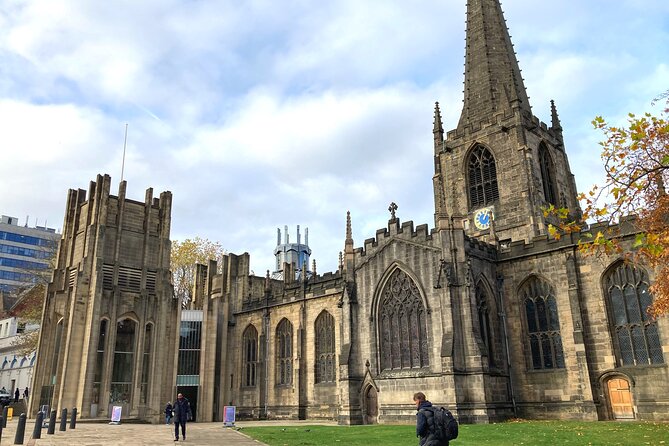
Stop one is Sheffield Cathedral, a great opener because cathedrals naturally give you lots to look at. Your first clue-and-map moment sets the tone: solve something, move forward, feel accomplished early.
Possible consideration: if your group is new to clue hunts, don’t overthink the first answer. Use teamwork. Take turns reading. Let one person focus on the phone instructions while others look around.
Kelham Island Museum: A Museum-Stop That Feels Built for Curiosity
Next is Kelham Island Museum. Museums bring a different energy to a walking puzzle. Even if you only spend a short time on-site for the hunt, the “museum setting” tends to make people slow down and pay attention.
What to do here: keep your eyes moving. When the clue asks you to spot something, it’s usually the details around you, not just the big landmark name. If you get stuck, use hints sooner rather than later.
Crucible Theatre: When the Route Shifts From Looking to Spotting
Then you’ll head to the Crucible Theatre. A theatre stop works well in a treasure hunt because it often cues you to look at the building character and signage-style details.
Drawback to plan for: theatres and performance venues can mean people around and event lighting. If your clue depends on seeing something at a certain angle, take a few extra seconds to step back and look from different positions.
Sheffield Winter Garden: A Pause-Friendly Break in the Middle
Stop four is Sheffield Winter Garden. Garden-like stops tend to be a natural breather in the middle of the route, especially if your group is walking steadily and needs a moment to reset.
This is a good place to regroup. If you’re split into clue-solvers and map-followers, swap roles here. A change of pace keeps everyone engaged.
National Emergency Services Museum: Shift to a More Focused Kind of Observation
Stop five is the National Emergency Services Museum. This kind of theme can make clues feel more “search and verify.” It’s a good spot for hands-on attention—again, the phone clues push you to look for answers where you are.
If your group likes puzzles, this is where you’ll probably feel the momentum peak. If your group likes casual sightseeing, it still gives you structure: go to the place, solve the prompt, enjoy the setting.
Peace Gardens: A Quieter Landing to Read Clues Carefully
Stop six is Peace Gardens. Gardens and open spaces are where clue hunts can work surprisingly well because there’s more room to move and reposition while you search.
Possible consideration: open areas can mean wind and distraction. Make sure everyone can see the phone instructions clearly, and take turns leading the group so no one gets left behind while you focus on answers.
Sheffield Town Hall: Civic Sights Make Great Puzzle Targets
Next up is Sheffield Town Hall. Big civic buildings are excellent for treasure hunts because there’s usually a mix of architectural cues and place markers that clues can point to.
Tip for smoother solving: pause as a group before you start guessing. Confirm what the clue is asking first, then look. You’ll waste less time.
Cathedral Church of St Marie: The Route Keeps Variety Without Getting Complicated
Stop eight is Cathedral Church of St Marie. By now you’ve done enough stops that your group understands how the hunt works: phone map, find the spot, answer the clue, move on.
This stop is a nice reminder that the route isn’t about one building type. You’re training your group to “read” the environment rather than memorizing facts.
The Cutlers’ Hall: A Distinct Landmark Stop for Team Talk
Stop nine is The Cutlers’ Hall. Distinct landmarks are great for groups because they prompt discussion. People will point things out, compare what they think the clue is pointing to, and settle answers together.
If your group likes a bit of friendly arguing, this part is fun. Just remember to use hints if you’re stuck more than a few minutes. The goal is shared progress.
Sheffield City Hall: Finish With a “We’ve Got the City Now” Feeling
The final stop is Sheffield City Hall, then you return to Tudor Square to end the activity. This finish is satisfying because you’ve seen a spread of Sheffield in a compact time window.
At the end, the hunt gives you a broader overview of what you might want to explore next. That’s one of the best outcomes of this style of tour: you don’t just get answers. You get a sense of what kind of places you’re drawn to.
Why This Self-Guided Format Works for Real Groups
Treasure hunts sound gimmicky until you try one that’s built for flexibility. This one hits the practical sweet spot.
If you’re going with friends: you’ll like that it’s casual and you can slow down for snacks and strolls. One good approach is to plan a loose lunch or coffee stop during the middle third of the route, then treat the remaining time as the fun sprint.
If you’re going with colleagues: it’s a way to bond without awkward forced conversation. The shared puzzle work creates natural team roles. One person reads clues, one person watches the map, and others scan the area. That reduces pressure on any one person to entertain.
If you’re on a bachelor party vibe: the start-to-finish structure gives you a storyline, while the hint system helps everyone keep up even if clue-solving isn’t their thing.
Timing, Walking, and Phone Reality Checks
The hunt runs Monday through Sunday from 8:00 AM to 6:00 PM. Confirmation is sent at booking time, and you can start when you want within the operating window.
Duration is about 3 hours, but your real time will depend on how often you pause. If you want it as a fast, focused experience, stay tight and solve quickly. If you want it as a full outing, build in breaks.
Also, keep in mind the physical note: it asks for moderate physical fitness. That likely means steady walking between stops. Wear shoes you’d be comfortable in for a real city stroll.
Finally, treat your phone like part of your kit. Keep it charged if you can. If your battery is low, you’ll feel the stress of “one app must work all day.”
Should You Book This Treasure Hunt Around Sheffield?

Book it if you want an easy, group-friendly way to see multiple parts of Sheffield in a set amount of time—without needing local knowledge. This works best when you want fun structure plus the freedom to wander, pause, and adjust.
Skip it if your group hates walking, dislikes puzzles, or needs a traditional guide who explains everything in real time. Self-guided games are only relaxing if you’re okay taking cues from your phone and solving as a team.
If you’re in doubt, treat it like a low-stakes choice: you’ll be moving through major landmarks, you’ll have hints if needed, and you’ll end right back at Tudor Square with a better sense of where you want to go next.
FAQ
How long does the Treasure Hunt Sheffield experience last?
It runs for about 3 hours (approximately).
What is the meeting point, and where do we finish?
You start at Tudor Square, Sheffield City Centre, Sheffield S1, UK and the activity ends back at the meeting point.
Do I need to download anything or print tickets?
No. It’s mobile-based, and there’s nothing to print. It also doesn’t require downloading and it doesn’t need device permissions.
How do the maps and clues reach me during the hunt?
Captain Bess sends treasure maps and clue prompts to your phone through the app experience (designed to work like WhatsApp).
What if our group can’t find the answers?
If you can’t find an answer right away, you can ask for hints.
Is there a time window to start?
Yes. It operates Monday through Sunday from 8:00 AM to 6:00 PM. You can start when you want within those hours.
What about refunds and cancellation?
You can cancel for a full refund if you cancel at least 24 hours before the experience’s start time. If you cancel less than 24 hours before, the amount paid isn’t refunded.