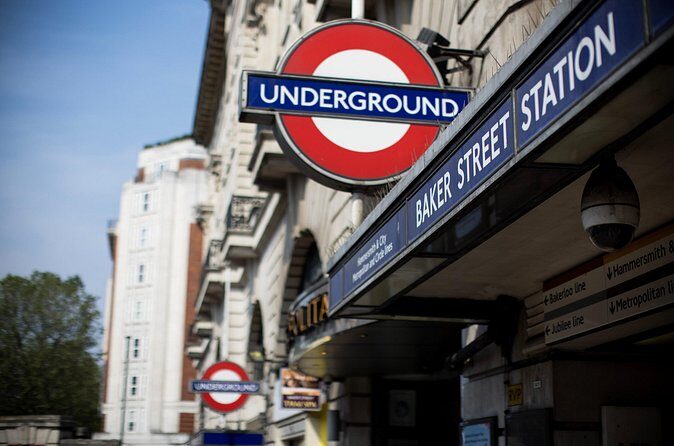
Baker Street hides a real Underground time machine. This Hidden Tube Tour at Baker Street station shows the origins of the world’s first Underground network, with the best part being original 1800s platforms and places that are usually shut off. I also love the way the guides bring it to life, from Richard and Marilyn to Gillian and Marylyn, with stories tied to what you can actually see. The main downside is that the tour is physically demanding: lots of walking, stairs, uneven ground, low lighting, and no elevator—so it is not a good match for claustrophobia.
You’ll spend about 85 minutes underground with a small group (up to 16) in English, starting at the Sherlock Holmes Statue and ending back there. I think the price ($61.70) makes sense when you want something more hands-on than the usual Tube ride, but you do need to plan ahead: bring photo ID, wear closed shoes (no open-toed), and leave large bags behind because there is no cloakroom.
In This Review
- Key highlights you will care about
- Baker Street and the Underground story you can stand inside
- Inside the Hidden Tube pace: 85 minutes of station walking
- Off-limits passages and the original 1800s platforms
- Lift shafts, service tunnels, and how the station keeps running
- Price and value: what $61.70 buys you
- Meeting at Sherlock Holmes and the practical logistics that matter
- Who should book (and who should skip this one)
- Should you book the Hidden Tube Tour at Baker Street?
- FAQ
- How long is the Hidden Tube Tour at Baker Street?
- Where do I meet for the tour?
- What does the tour cost?
- Do I need to bring photo ID?
- Is the tour suitable for children?
- Is the tour suitable for people with claustrophobia?
- Is the tour step-free or accessible by elevator?
- Can I bring food, drinks, or large bags?
Key highlights you will care about
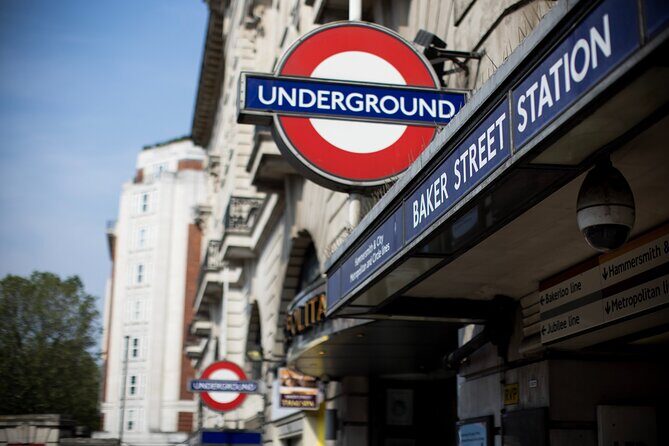
- 1800s platforms and the Underground’s beginnings, explained in place
- Off-limits corridors, lift shafts, and service tunnels
- Guide-led storytelling with names like Richard and Marilyn, or Gillian and Marylyn
- Photo moments from hidden vantage points near working areas
- Stairs, uneven ground, and low lighting (plus no elevator) to know in advance
Baker Street and the Underground story you can stand inside
Baker Street is not just a stop on the Tube. It is a spot where London’s underground ambition took shape, and this tour is built around that idea: you do not just hear about early rail engineering—you get shown where it lived. You start at the famous Sherlock Holmes Statue on Marylebone Road, which is a fun alignment for a tour that feels half museum, half working station.
Once you’re inside Baker Street station, the guide’s job is to connect the dots between old design and what still has to function today. That is why the tour focuses on original elements (like the early platforms from the 1800s) and on the station’s hidden “plumbing,” including service areas and connections that most people never see. If you like how cities grow, adapt, and keep things moving, you’ll get a lot out of the engineering logic here—especially the way the station evolved over more than a century of operation.
What I like most is that this does not try to turn Baker Street into a fantasy set. It stays grounded in real infrastructure. Even when you’re in less-open areas, you still see how the system works, how it was changed, and how parts were repurposed instead of replaced.
You can also read our reviews of more tours and experiences in London.



Inside the Hidden Tube pace: 85 minutes of station walking
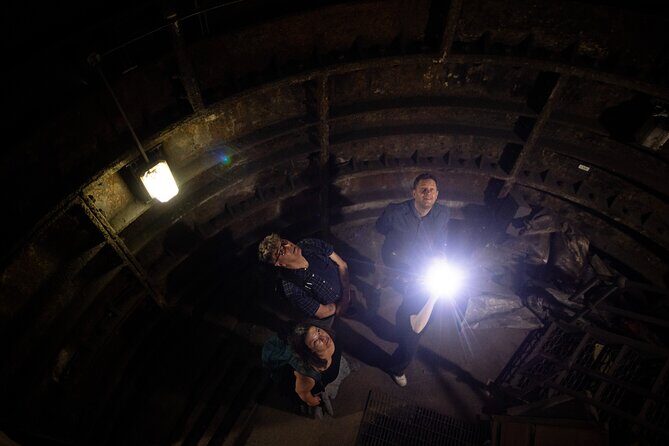
The tour runs about 1 hour 25 minutes, and the time goes fast because you’re mostly moving. Expect guidance the whole way so you don’t end up wandering the wrong corridors or getting turned around in low-light areas. The group size is capped at 16 people, which helps keep it manageable in tight service spaces.
You can also expect a mix of spaces: you’ll have moments away from the main public flow, but you’re still at a live station. One practical result of that is that some parts take place in or near working areas where commuters are also around. So if you want a quiet, gallery-style experience, plan for a bit of station energy.
On the bright side, that live context is part of the value. Seeing old lift components or the layout of service tunnels hits differently when you realize this place still has to run trains and passengers every day. You’re not looking at dead exhibits; you’re getting a tour of a living transport system.
Also note the human pace: this is not a long sit-down talk. It is guide-led walking plus stops for explanation and pictures. If you’re comfortable moving for about 85 minutes and handling stairs and uneven flooring, you’ll likely feel fine.
Off-limits passages and the original 1800s platforms
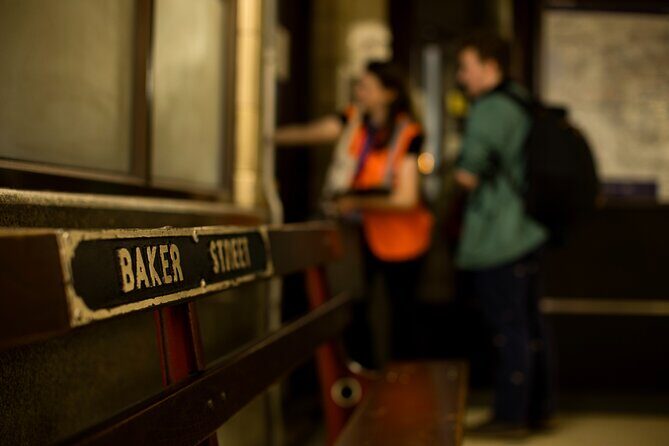
The core “wow” here is access. This tour is designed to get you into areas that are typically off limits, including passages behind walls and older platform sections dating back to the 1800s. That matters because early Underground design is not just a timeline—it’s a physical blueprint. When you can see original platform features in context, the history clicks into place in a way reading alone can’t do.
You’ll also get a guided look at how the station’s layout makes room for growth. Over decades of use, stations like Baker Street had to be adjusted to keep up with changes in train operations and passenger flow. The guide helps you understand those changes as you see the architecture. In other words, you’re not just admiring old stone and metal—you’re learning what had to be modified to keep service running.
Picture time is built into the experience too, and you may get opportunities for shots from vantage points that most people never think to look for. Just remember: lighting can be dim in service spaces, and low light plus uneven ground is not where you want to rush.
One more thing to keep expectations realistic: even though the tour focuses on hidden areas, you still spend a meaningful chunk near operating parts of the station. That can be great for understanding how past and present share the same corridors, but it is not a private world separated from commuters.
Lift shafts, service tunnels, and how the station keeps running
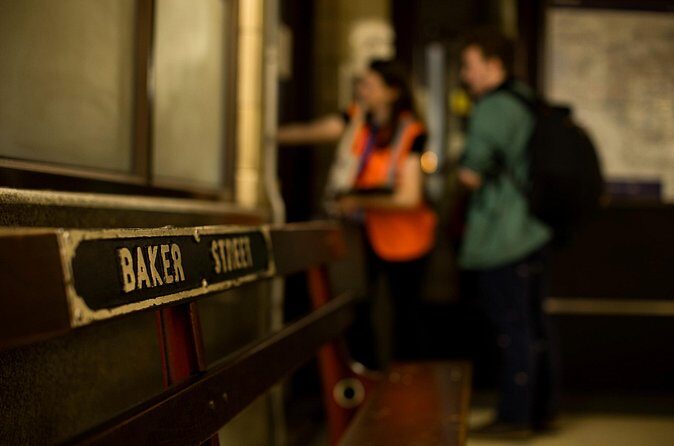
If the Underground is a magic trick, the lift shafts and service tunnels are the behind-the-scenes mechanics that make it possible. This tour leans hard into that. You’ll get shown the kinds of spaces that are usually out of sight, including areas connected to older lifts and the complex network that supports station operations.
One of the most interesting themes you’ll pick up is adaptation. London’s transport system has changed countless times, but the station environment was never totally wiped clean. Instead, parts were altered, repurposed, and kept in use. Seeing the station’s labyrinth of service connections helps you understand why engineering in a major city is often about working with what exists—not starting over.
It also helps you appreciate how much coordination goes into running Underground travel. The guide’s explanations connect the visible architecture to the invisible work—so you end up noticing details you’d otherwise walk past without a second glance, like structural elements that hint at how spaces were designed and reworked.
From what I find most convincing about this tour, the guide doesn’t treat the station like a static artifact. They treat it like an evolving system. That makes the “hidden” parts feel relevant instead of random.
Price and value: what $61.70 buys you
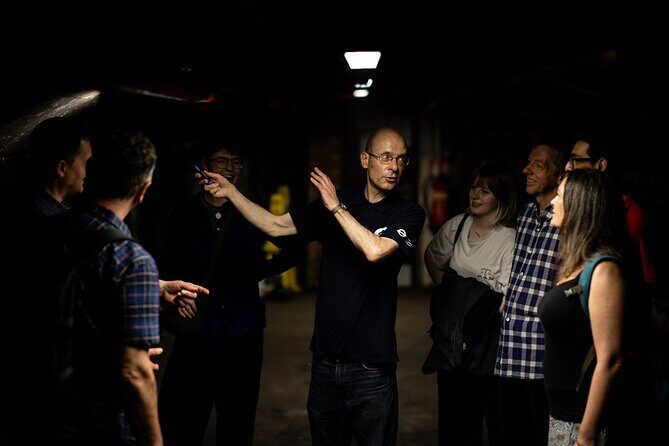
At $61.70 per person, this is not the cheapest thing you can do in London. So the question is value: what are you getting?
You are buying:
- A guided, limited-group visit inside a major, working Tube station
- Access to places most people never see, including older platform areas
- A focused 85-minute format that is built around engineering, station evolution, and what it looks like in real space
In practice, the value improves if you have even a mild interest in how infrastructure works. If your main goal is just getting a view of the station and snapping a few photos, you might be better served by a museum pass or a general Tube-themed stop. But if you want something more specific—early Underground origins, original platforms, service tunnels, and lifts—this tour targets that directly.
Another value factor: the small cap (16 people) helps the guide manage the group in tighter spaces. That is important because the tour isn’t just walking along a wide hallway; you’re moving through areas with stairs, uneven ground, and low lighting.






Meeting at Sherlock Holmes and the practical logistics that matter
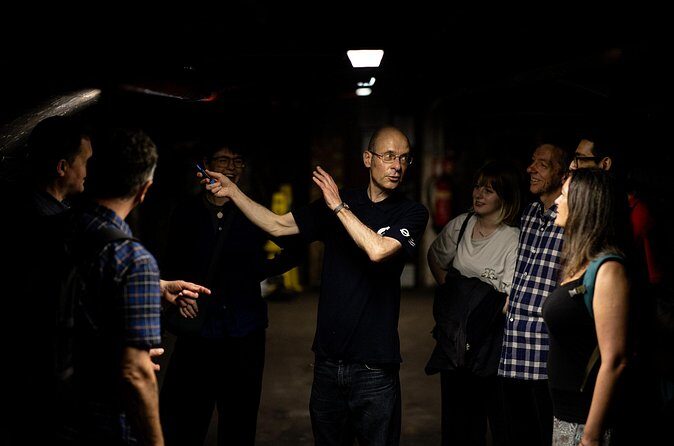
This tour starts at the Sherlock Holmes Statue at 4 Marylebone Rd, London NW1 5LD, and ends back there. It is near public transportation, which is helpful since you’re tying it into a London day anyway.
Here’s what you need to plan for so you don’t feel stressed halfway through:
- Photo ID is required for all participants, so bring your passport or another accepted ID.
- Wear closed-toe shoes—open-toed shoes are not allowed.
- Bring a jacket or warm layer. You’ll spend time in areas that can feel chilly, including spaces not designed for comfort like a main concourse.
- You cannot bring food or drinks on the tour.
- Avoid large bags or luggage. There is no cloakroom, so you’ll want to travel light.
Fitness and mobility matter more than you might expect. The tour involves a lot of walking, including uneven ground, stairs, and low lighting. It is not step-free, and there is no elevator. If you need step-free access, you’ll likely have difficulties. And if you have claustrophobia, this one is not recommended.
Finally, the tour language is English, and you’ll receive confirmation at booking time. They also use mobile tickets, which is convenient—just make sure your phone battery is healthy.
Who should book (and who should skip this one)
This tour is a strong match for:
- People who like the London Underground beyond the basics
- Anyone curious about engineering and how stations evolve
- Families who meet the age rules (but check them carefully)
It is not suitable for children under 10. There’s also a child-to-adult limit: no more than four children aged 10–15 per adult. And if you have claustrophobia or mobility limitations that make stairs and uneven ground hard, this is likely the wrong choice.
My rule of thumb: if you’re excited to see old Underground platform features and the hidden infrastructure that keeps Baker Street operating, this tour will feel purposeful. If you want a simple, accessible, low-effort stroll, you may find the format too demanding.
Should you book the Hidden Tube Tour at Baker Street?
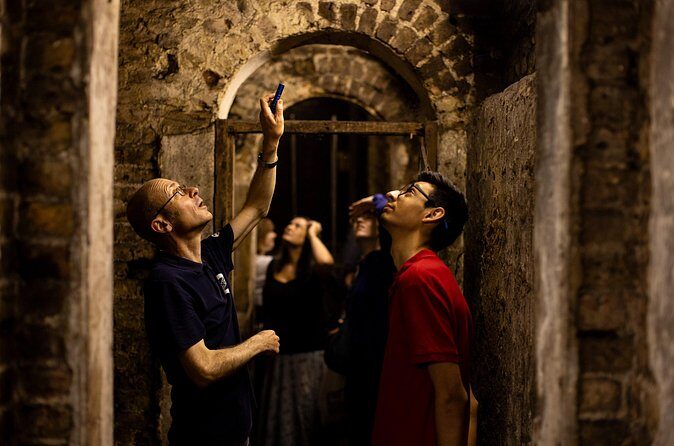
Book it if your idea of a great London day includes walking into real infrastructure, seeing original platform areas from the 1800s, and understanding how the Underground system adapted over time. The guide-led access is the whole point, and the small-group setup helps you get more out of it than a standard station visit.
Skip it if you need step-free routes (no elevator, not step free), if stairs and uneven ground are an issue, or if claustrophobia is a concern. Also, if you’re not interested in engineering details, be aware that this tour is specific by design—it’s not a general sightseeing walk.
One last practical note: there is free cancellation up to 24 hours in advance for a full refund, so if your schedule is flexible, you can hold your spot and decide closer to the date.
FAQ
How long is the Hidden Tube Tour at Baker Street?
It lasts about 1 hour 25 minutes, with an 85-minute tour of Baker Street station.
Where do I meet for the tour?
You meet at the Sherlock Holmes Statue, 4 Marylebone Rd, London NW1 5LD, UK.
What does the tour cost?
The price is $61.70 per person.
Do I need to bring photo ID?
Yes. All guests must bring photo ID.
Is the tour suitable for children?
It is not suitable for children under 10 years old. There is also a limit of four children aged 10–15 per adult.
Is the tour suitable for people with claustrophobia?
No. The tour is not suitable for guests with claustrophobia.
Is the tour step-free or accessible by elevator?
No. The tour is not step free and involves stairs, uneven ground, and low lighting. There is no elevator.
Can I bring food, drinks, or large bags?
No food or drinks are allowed. There is also no cloakroom, so you should not bring luggage or large bags.