Euston hides stories you never see. This guided tour takes you into closed-off parts of Euston Station, where you’ll get face-to-face with the locked underground corridors and that surreal time-capsule feeling from posters concealed for decades. I love that it’s not just lecture-style history; it’s built around what you can actually see. The one real drawback is the low light and claustrophobic areas, so it’s not for everyone.
Two things I’d put at the top: first, the tour gives you access to station spaces that are normally shut to the public, including passages that were once used by the travelling public. Second, the guide pacing tends to leave room to look closely and take photos without feeling rushed. If you’re sensitive to tight spaces, uneven floors, or lots of stairs, take that seriously before you book.
Overall, you’re looking at about 1 hour 15 minutes on foot, in a working transport hub that’s dim, sometimes uneven, and firmly not “step-free.” Plan to travel light, bring the required ID, and wear closed footwear.
In This Review
- Key Highlights You Should Care About
- Entering The Lost Tunnels at Euston Station
- What You Really Get: The 75-Minute Flow
- Stop One: Euston and the Station’s Two-Layer Story
- Seeing The Leslie Green Design In Context
- The Poster Fragments: A Real Time-Capsule Moment
- Locked Doors and What’s Behind Them
- Modern Innovations: How 42 Million Riders Shape the Station
- Getting There and Finding the Meeting Point Without Stress
- What the Conditions Feel Like: Stairs, Uneven Ground, Low Light
- Mobile Ticket, Photo ID, and Being Prepared
- Group Size and the Guide Style That Makes It Work
- Price and Value: What You’re Paying For
- Who Should Book This Euston Tour?
- Should You Book The Hidden Tube Walking Tour: The Lost Tunnels?
- FAQ
- How long is the Hidden Tube Walking Tour: The Lost Tunnels?
- Where does the tour meet, and where does it end?
- Is the tour free?
- What’s included in the ticket price?
- What should I bring with me?
- Are open-toed shoes allowed?
- Is food or drink allowed during the tour?
- Is the tour suitable for children?
- Is the tour step-free?
- Is the tour suitable if I have claustrophobia?
- Can I get a refund if I cancel?
Key Highlights You Should Care About
- Closed areas inside Euston Station you can’t normally reach as a visitor
- Poster fragments and a 1962 time-capsule vibe that feels like the station paused
- Small groups (max 20) so you can hear and see without fighting the crowd
- Humor plus solid context from the guides, with just enough detail to stay interesting
- Photo-friendly moments without turning it into a stop-and-go snapshot rush
- Real station scale explained through how Tube and rail connect to 42+ million riders per year
Entering The Lost Tunnels at Euston Station
If your London travel style is part history, part “how does this city actually work,” this is a strong fit. Euston is one of those stations you pass through without thinking much—until you walk into the sealed-off back corridors and realize the place has more layers than you expected.
This is a guided experience run through the London Transport Museum. The tour is built around the station’s evolution, from early beginnings at the corner of Melton and Drummond Streets to the modern reality of a busier, larger interchange with many platforms. What makes it different is the physical setting: you’re not just staring at exhibits. You’re in the station, moving through its older spaces, seeing traces that have been kept out of sight.
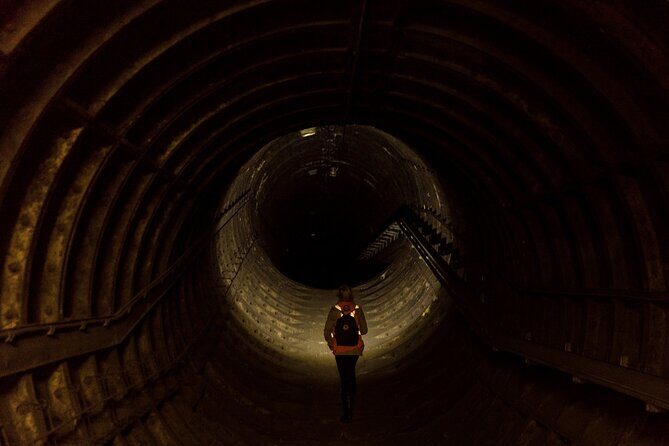
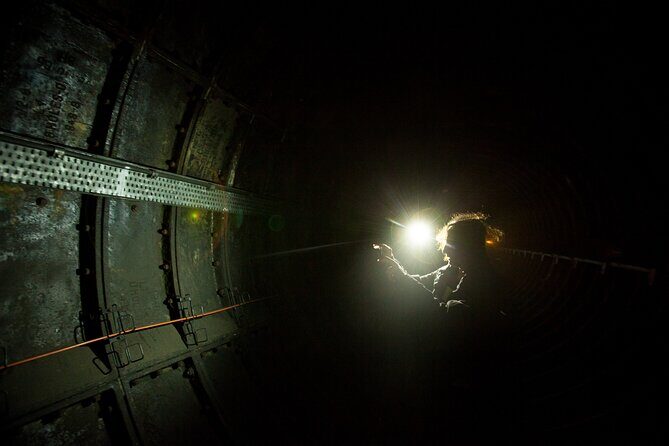
I also like how it manages expectations. You’re not asked to wear a hard hat or pretend you’re a worker. Still, it feels hands-on. And yes, the dim corridors can give you that mildly spooky London-at-night feeling—exactly the kind of mood that makes public transport history memorable instead of abstract.
You can also read our reviews of more walking tours in London



What You Really Get: The 75-Minute Flow
The whole tour runs about 1 hour 15 minutes, which is long enough to feel “worth it,” but short enough that you’re not stuck out in the station for the rest of your day.
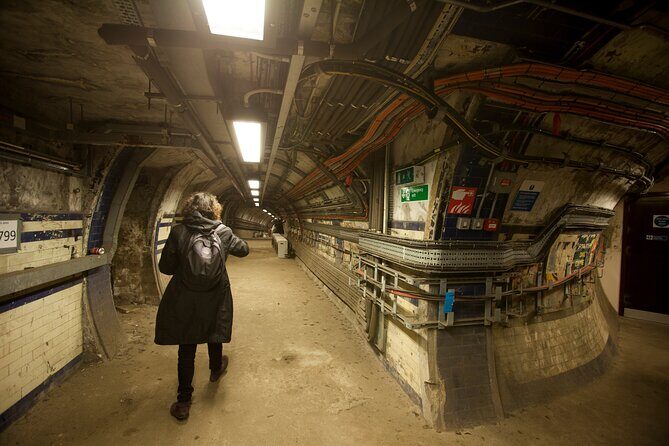
You’ll start at the meeting point near Sainsbury’s Local at Euston Station (London NW1 2DU). You’ll then move through the underground parts of the station—dark passageways, low-lit corners, and areas not meant for general foot traffic—before finishing back at Euston underground in the ticket hall.
Along the way, the guide ties what you’re seeing to the station’s story: how Euston developed, what people needed when it first opened, and how it has continued to change as Tube and rail needs evolved. There’s also time built in to stop, look closely, and take photos where allowed.
Stop One: Euston and the Station’s Two-Layer Story
This tour’s core start is the station itself—Euston as both a modern hub and a historical machine with older parts still tucked inside. The guide frames Euston as a place that has shifted over time, not only in size, but also in how people moved through it and how the station functioned.
What I like about this approach is that it avoids the “random tunnel tour” feeling. Instead, your walk is anchored to recognizable station themes: infrastructure growth, design changes, and hidden remnants of past passenger life.
You’ll be shown areas described as labyrinth-like passageways that were once used by travelling public. That matters because it gives you a clear mental picture. This isn’t just “closed door, empty corridor.” It’s corridor space that once served real journeys.
Seeing The Leslie Green Design In Context
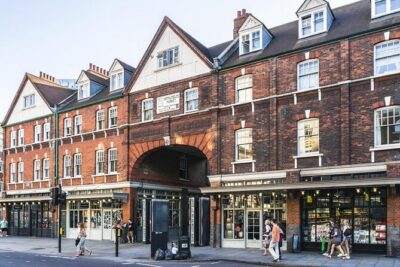
One of the standout moments is the chance to see the Leslie Green designed station—the classic Edwardian-era style associated with early Underground design.
The guide connects that look with surrounding features and the station’s broader layout, and it’s also specifically referenced as being featured on Yesterday Channel’s Secrets of the London Underground. Even if you don’t know the show, the point is simple: you’re seeing a design language that helped shape how London’s Underground became what it is today.
Practically, this kind of stop helps your eyes adjust. Once you understand what you’re looking at—design choices, placement, and what the architecture was trying to do—you start noticing details in the rest of the tunnel corridors too.
The Poster Fragments: A Real Time-Capsule Moment
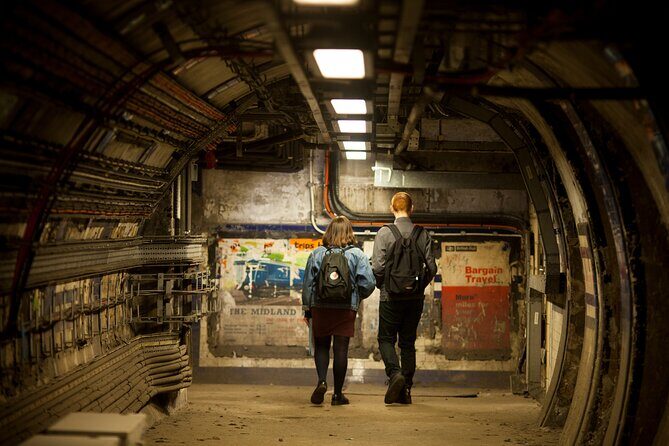
This is where the tour earns its nickname in spirit. You’ll see vintage advertising poster fragments described as concealed for more than 50 years, and the experience includes a sense of discovery: the posters feel like evidence you uncovered rather than something placed for you.
In the comments I’ve seen from people doing this tour, the posters from 1962 show up as a favorite detail. That’s the magic trick: the date makes it feel specific, like you’ve stepped into a single year and the station froze there.
Even if you’re not a museum person, this is the kind of visual history that sticks. You walk through a working station, then hit this sealed-off area where the past has physical texture: dust, age, fragments, and layers.






Locked Doors and What’s Behind Them
The tour focuses on access to areas that are normally closed. That “locked doors” element is a big part of why people feel they got something extra rather than a generic station walk.
What’s useful is that the guide explains what you’re seeing—why those spaces were used, what changed, and what’s been preserved. So you aren’t left guessing in the dark, staring at walls and hoping you’ll interpret them right.
The overall tone can be informational but also a little eerie. If you’re expecting bright, friendly “heritage tour” vibes, dim corridors will surprise you. The flip side: if you like transport history and don’t mind a spooky atmosphere, it’s a big part of the fun.
Modern Innovations: How 42 Million Riders Shape the Station
The past is the hook, but the tour doesn’t stop there. You also learn about the newest innovations related to a Tube and Network Rail station serving over 42 million passengers each year.
This section matters because it connects the “old tunnels” story to the present-day reality of London transit. Euston isn’t a museum on a hill. It’s a live node where upgrades, safety requirements, and passenger flow all matter.
You’ll come away thinking about the station not as one building, but as an evolving system—made of older layers and newer changes working side by side.
Getting There and Finding the Meeting Point Without Stress
You’ll meet at Sainsbury’s Local at Euston Station (London NW1 2DU). The best exit to use is Way Out – Melton Street, Drummond Street, Euston Street. If you’re standing at the mainline platforms facing them, it’s at the bottom left corner.
If you’re arriving by Tube, the guidance is to take the escalators out of the station and up to the Euston piazza. Then walk right toward the hoardings. Enter the mainline station via the entrance on the right, then immediately turn left. The meeting point is past the lift and stairs to the Underground station.
That level of direction is worth paying attention to because Euston is big. If you get disoriented at the start, the whole day gets annoying fast. Take five minutes, read the route, and you’ll walk in ready to go.
What the Conditions Feel Like: Stairs, Uneven Ground, Low Light
This tour is not “museum comfortable.” It’s inside a station with uneven ground, low lighting, and a lot of walking.
A few practical points from the tour rules:
- Tours are not step free and include walking up and down flights of stairs (no elevator).
- Open-toed shoes aren’t allowed.
- There’s no cloakroom, so don’t bring luggage or large bags.
- No food or drinks are allowed during the tour.
- The tour isn’t suitable for children under 10.
- It’s not suitable for guests with claustrophobia.
If you’re someone who gets anxious in tight spaces, treat this as a firm warning. The “lost tunnels” concept is exactly the part that can feel constricting.
Also keep in mind the modest group size. With up to 20 people, you should be able to hear the guide and keep your footing, but you still need to move carefully. Wear shoes you’d trust on a long walk in London.
Mobile Ticket, Photo ID, and Being Prepared
The tour uses a mobile ticket, and you’ll need to bring photo ID.
That’s not the kind of detail you want to discover at the meeting point. Bring your ID even if you think you won’t need it. Also remember: no open-toed shoes, no food/drink, and no large bags. You’re moving through station spaces that don’t offer the kind of convenience you might expect from a typical attraction.
The best strategy is to travel light: phone ready, ID in your pocket or bag, and nothing bulky swinging around.
Group Size and the Guide Style That Makes It Work
This is capped at a maximum of four children aged 10–15 per adult, and the overall group size tops out at 20.
That size matters because it affects how the tour feels. When the group is tight, you can actually hear the guide. You can also pause for photos without blocking everyone behind you.
The tone of the guide matters too. People highlight that the guides mix humor with history and keep the pace balanced—enough context to understand the station without turning the walk into a facts marathon. The best part is that photo time doesn’t get treated like an interruption. It’s part of the experience.
If you like tours where you can ask questions and get real answers—not vague “because history”—this style fits.
Price and Value: What You’re Paying For
The booking details show the price as $0.00 per person, and the tour includes a 75-minute guided component with admission. Even if you’re seeing a promotional price, think of the value like this: you’re paying for access, not just information.
Most station tours talk at you from a safe spot. This one gets you into restricted-feeling passageways and the kinds of preserved details you can’t casually find on your own.
Also, you’re getting museum-level expertise without needing to spend extra time navigating a giant indoor exhibition space. Instead, you’re learning while walking through the actual environment. That’s a different kind of value—less “look around,” more “experience the layers.”
If you’re traveling on a tight budget, it’s a rare London option that feels more behind-the-scenes than you’d expect.
Who Should Book This Euston Tour?
This tour makes sense if you:
- Love public transport history and how systems evolved.
- Want a more unusual London experience that isn’t the same checklist as every major attraction.
- Prefer guided time with enough pacing for photos and questions.
- Can handle low light, uneven ground, and stairs.
It may not be the right choice if you:
- Have claustrophobia.
- Need step-free access.
- Struggle with lots of walking and stairs.
- Are traveling with children under 10.
If your group is the type that enjoys “how did they build this, and why does it look like that?” then you’ll probably have a great time.
Should You Book The Hidden Tube Walking Tour: The Lost Tunnels?
I’d book it if you want an experience that changes how you see a station you already pass through. The mix of access to closed areas, the preserved poster fragments, and the way the guide links the past to modern transit makes it feel like more than a novelty walk.
But decide based on your comfort level. The low light, uneven ground, stairs, and the claustrophobia warning are real. If those factors would stress you out, skip it and choose a museum-based alternative.
If those factors don’t bother you, this is one of the more memorable “London after dark energy” experiences you can get during daylight hours—walking through spaces that feel like they’ve been waiting.
FAQ
How long is the Hidden Tube Walking Tour: The Lost Tunnels?
It runs for about 1 hour 15 minutes.
Where does the tour meet, and where does it end?
You meet at Sainsbury’s Local, Euston Station (London NW1 2DU). The tour ends at Euston Bus Station (Stop G) and the description also notes it finishes back in the Euston Underground ticket hall.
Is the tour free?
The tour summary lists the price as $0.00 per person and says an admission ticket is included. Always double-check what you see at checkout.
What’s included in the ticket price?
A 75-minute guided tour of Euston underground station and the tour guide.
What should I bring with me?
You’ll need a mobile ticket and you must bring photo ID. The rules also say not to bring luggage or large bags since there’s no cloakroom.
Are open-toed shoes allowed?
No. Open-toed shoes are not allowed.
Is food or drink allowed during the tour?
No food or drinks are allowed on the tour.
Is the tour suitable for children?
It’s not suitable for children under 10. For ages 10–15, there’s a maximum of four children per adult.
Is the tour step-free?
No. The tour is not step free and involves stairs. There is no elevator.
Is the tour suitable if I have claustrophobia?
No. The tour is not suitable for guests with claustrophobia.
Can I get a refund if I cancel?
Yes. There is free cancellation, and you can cancel up to 24 hours in advance for a full refund. If you cancel less than 24 hours before, the amount paid is not refunded.