REVIEW · OXFORD
History of Medicine Tour – by Uncomfortable Oxford™
Book on Viator →Operated by Uncomfortable Oxford · Bookable on Viator
Oxford’s medicine story starts under a bridge. This History of Medicine Tour by Uncomfortable Oxford stitches big themes—plague, anatomy, public health, and even penicillin—into the actual streets and buildings you can see, including the Bridge of Sighs and the Radcliffe area. I love the way the guide makes cause-and-effect feel tangible, connecting how people lived to how illness spread. I also love the discussion style, with thought-provoking questions that keep you mentally active instead of just listening. One possible drawback: it’s only about 1 hour 45 minutes, so you’ll cover a lot of ground with limited time to linger at each spot.
The vibe is focused and conversational. You’ll move between landmarks in a group of up to 15, the tour is offered in English, and you use a mobile ticket—easy setup for a short walk. Expect a candid mix of topics, from historical epidemics to prostitution and public health, and if you’re the type who likes history that connects to real bodies and real systems, you’ll likely enjoy it.
In This Review
- Key highlights you’ll care about
- Why Oxford’s medical story is easier on foot
- Price and pace: a short guided walk with real educational punch
- Stop 1: Under the Bridge of Sighs, medieval geography and disease
- Stop 2: Outside New College, plague and historical epidemics
- Stop 3: Inside the Bodleian Library, anatomy and early medical study
- Stop 4: Clarendon Building, prostitution and public health
- Stop 5: King’s Arms (Oxford), pubs and early inoculation
- Stop 6: Oxford University Museum of Natural History, science, medicine, and empire
- Stop 7: St Giles’ Memorial Garden, wartime developments in practice
- Stop 8: St Luke’s Chapel end point, penicillin trials and the NHS
- The guide experience: interactive, source-based, and human
- What you should know before you go
- Who this tour suits best (and who might not love it)
- Should you book the History of Medicine Tour in Oxford?
- FAQ
- How long is the History of Medicine Tour?
- How big is the group?
- Is the tour offered in English?
- Where does the tour start?
- Where does the tour end?
- Is admission included for the stops?
- What is included in the price?
- Is a mobile ticket used?
- Can I cancel for free?
Key highlights you’ll care about
- A tight route that turns Oxford landmarks into medical case studies
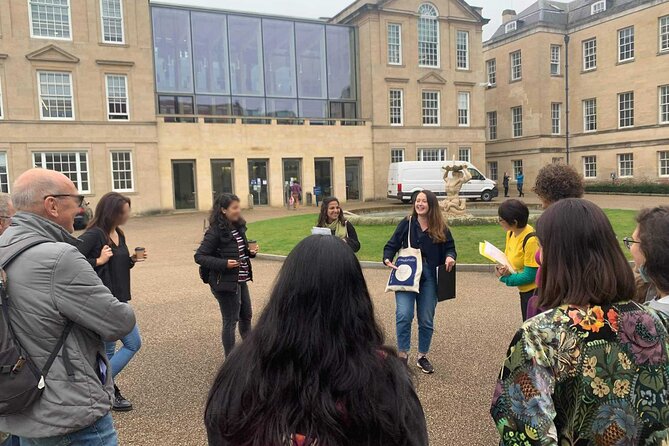
- Certified Uncomfortable Oxford guide with sources and room for questions
- Small group size (max 15) so the talk stays interactive
- No separate admission tickets needed for the listed stops
- A modern finish point tied to penicillin trials and the NHS
Why Oxford’s medical story is easier on foot
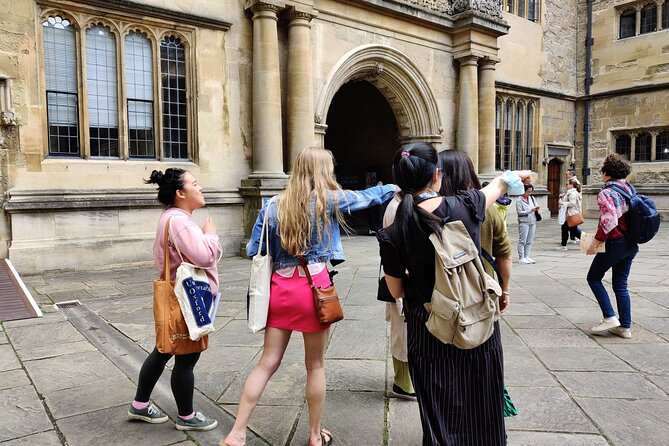
Oxford is one of those cities where history sits in the architecture. This tour leans into that. You’re not just hearing dates—you’re learning how the city’s layout, institutions, and daily life shaped illness and medical thinking. It starts with medieval geography and disease patterns, then tracks forward into university medicine, public health, and the huge changes that show up after the world wars.
What I like most is the balance between science and society. You get anatomical study themes at the university level, sure—but the tour also links health to the messy parts of life: where people lived, how they got care (or didn’t), and how systems responded when things got bad.
If you like tours that show the “why” behind the “what,” this format works well. You walk, you look, and the story follows the same direction your feet do.
You can also read our reviews of more tours and experiences in Oxford.



Price and pace: a short guided walk with real educational punch
At $95.98 per person for about 1 hour 45 minutes, this isn’t a bargain-basement deal. But you’re paying for a guided route that’s built around multiple major Oxford landmarks, with a certified Uncomfortable Oxford guide and an included souvenir postcard.
The value comes from three practical choices:
- You get a small group (maximum 15), so you can ask questions and not get lost in a crowd.
- Each stop is listed as admission ticket free, so you’re not constantly checking separate ticketing for different sites.
- You’re packing serious topic range into a short window: plague, anatomy, public health, wartime medical developments, and the penicillin/NHS thread.
One more detail that matters for planning: this kind of tour is commonly booked around 12 days in advance. If you’re traveling in a busier stretch, it’s smart to reserve early rather than assuming you can wait.
Stop 1: Under the Bridge of Sighs, medieval geography and disease
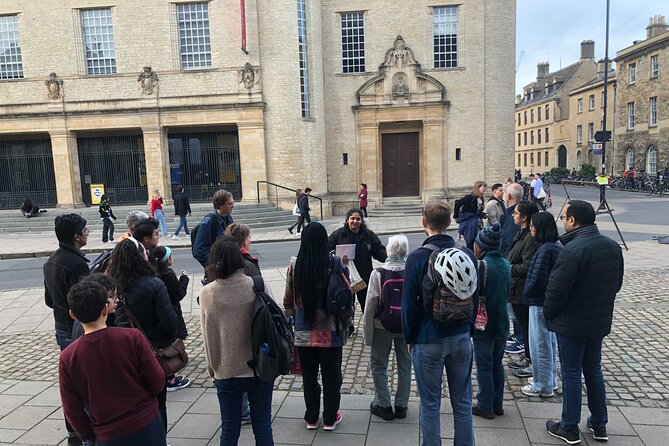
The tour begins under the Bridge of Sighs, and that first moment sets the tone. In roughly 10 minutes, you get an overview of medieval geography and how it affected disease in the city. This is a good opener because it gives you a mental map fast: where people were, how movement and place mattered, and why early medical challenges weren’t just about germs—they were about living conditions and the structure of everyday life.
The benefit of starting here is simple: you’re learning the language of “place-based” disease right away. You’ll carry that idea with you as the tour moves from university spaces to public-health themes.
Stop 2: Outside New College, plague and historical epidemics
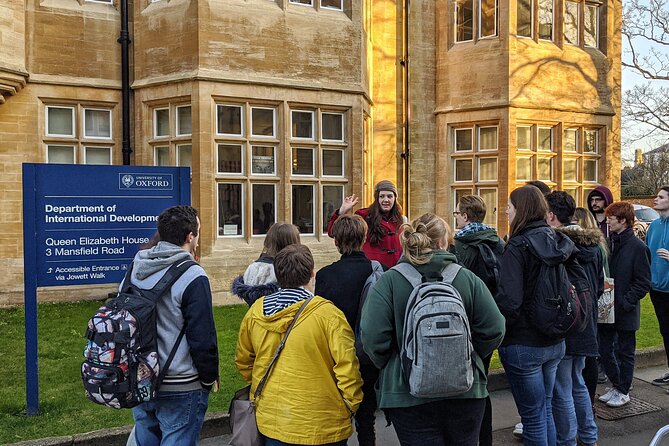
Next up is New College, outside the building in about 10 minutes. This stop focuses on plague and historical epidemics. I like that it’s not treated like a detached textbook topic. You’re placed at a real Oxford landmark, and the talk frames outbreaks as something that shaped the community’s experience—not just a distant historical event.
This is also where the tour starts feeling more human. Plague isn’t just a word for the past; it becomes a lens for how societies changed their thinking about health, risk, and care.
Stop 3: Inside the Bodleian Library, anatomy and early medical study
The route then brings you into the Bodleian Library for about 15 minutes. This is where the tour shifts from epidemics to study—specifically anatomical dissections and early medical research linked to the University.
Even if you’re not a science person, this stop works because it’s concrete. You’re learning how medical understanding advanced when people began studying the body more directly. And you’re doing it in a library environment, which helps the story feel anchored in the exchange of ideas: learning, documentation, and the slow building of medical knowledge.
If you enjoy seeing how “knowledge” was stored and taught, you’ll likely appreciate the change of pace here.






Stop 4: Clarendon Building, prostitution and public health
At the Clarendon Building, you get around 10 minutes in a setting that connects to health in an unexpected way. The discussion centers on the history of prostitution and public health.
This is one of the tour’s more socially direct segments. The value is that it treats public health as more than hospitals and medicines. It acknowledges that health systems are influenced by labor, policing, stigma, housing, and behavior—factors that are hard to ignore when you’re trying to understand why outbreaks and health problems persist.
One consideration: if you prefer tours that stay strictly medical and clinical, this topic may feel sharper. But it’s also exactly the kind of context that makes the rest of the history make sense.
Stop 5: King’s Arms (Oxford), pubs and early inoculation
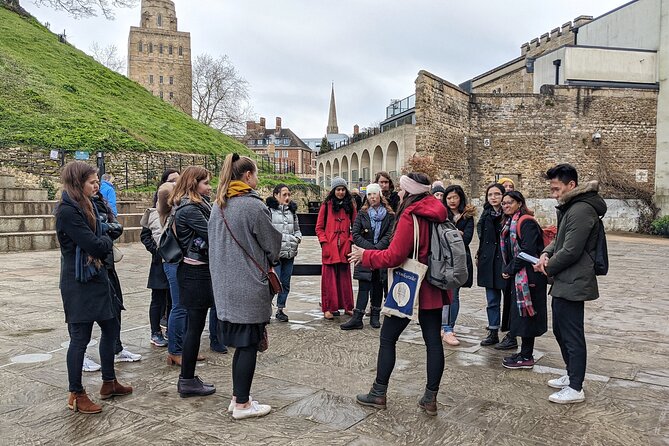
Then you’re at King’s Arms, Oxford for about 15 minutes. The story here is surprising in a useful way: pubs served as original places for inoculation in the city.
That single detail does a lot of work. It shifts your mental image of medical care. Inoculation wasn’t only something done in formal institutions; it also happened in community spaces. That changes how you think about access and how public health can become normalized through everyday routines.
If you like history that connects to real social spaces, this is a highlight.
Stop 6: Oxford University Museum of Natural History, science, medicine, and empire

Outside the Oxford University Museum of Natural History, you’ll spend about 15 minutes focused on how science and medicine transformed in the 18th century through imperialism.
This stop gives context for why medical science didn’t develop in isolation. It shows that knowledge, materials, and scientific reach were shaped by the era’s power structures. The practical takeaway is that medicine’s progress also carried an entire political and global background—something you don’t usually see on a quick university tour.
This part may prompt some heavy thoughts, but it’s also where the tour’s “systems” perspective really shows.
Stop 7: St Giles’ Memorial Garden, wartime developments in practice
Next is the War Memorial Garden—listed as St. Giles’ Memorial Garden—with about 15 minutes of reflection. Here, the discussion connects major developments in medical practice to the First and Second World Wars.
I like that the tour doesn’t treat war medicine as a single event. It frames it as a driver of medical change. The garden setting also helps this feel less like a lecture and more like a human pause—an acknowledgment that advances often come with deep costs.
If you’re the type who likes to understand why institutions and practices shift over time, this stop is one of the strongest for linking events to lasting medical effects.
Stop 8: St Luke’s Chapel end point, penicillin trials and the NHS
The final stop is St Luke’s Chapel, outside the former city hospital area, where you’ll spend about 15 minutes. This is the wrap-up thread: early trials of penicillin in the city and the founding of the NHS.
This is a smart finish because it turns the entire tour into a line you can track. You started with disease patterns shaped by place. You moved through how people studied bodies and responded to epidemics. Then you touched public health, the social spaces of inoculation, and major shifts after the world wars. Ending with penicillin and the NHS brings that arc into modern healthcare.
And then the tour ends at the Radcliffe Observatory Quarter area at Radcliffe Humanities, which keeps you close to a central university district for your next stop (coffee, museums, or a proper Oxford wander).
The guide experience: interactive, source-based, and human
The tour is led by a certified Uncomfortable Oxford™ guide, and that really shows in the pacing. The best moments aren’t just the facts. It’s the way the guide keeps you moving mentally: setting up questions, encouraging discussion, and sharing sources.
In a walking tour, this matters. If the guide only talks at you, you start zoning out at the second or third location. Here, the conversation style keeps you engaged. I also like the fact that the topics connect to social impacts, not only medical milestones. It helps the tour feel bigger than a narrow lecture.
One detail I’d call out from the experience vibe: the group format is designed so you can participate without it becoming awkward. With a max of 15 people, there’s room to ask follow-ups rather than shouting into the wind.
What you should know before you go
A few practical notes will help you enjoy it more.
- You’ll walk through multiple Oxford landmarks, with stop times ranging from 10 to 15 minutes. Plan for a steady pace.
- Admission tickets for the listed stops are noted as free as part of the tour. You’re not meant to buy separate entries at each location.
- The tour is offered in English and uses a mobile ticket.
- If you’re traveling with a service animal, this tour allows them.
- Since topics include prostitution/public health and penicillin/NHS, you should come with curiosity rather than a “must be strictly clinical” expectation.
Who this tour suits best (and who might not love it)
This is a great fit if you like:
- history that connects medicine to society
- walking tours that make you think
- a short format with a clear arc from medieval to modern
It may be less satisfying if you want:
- lots of time inside each building
- a purely scientific focus without social context
- an unbroken, gentle narrative (the subjects can be blunt)
For most people who enjoy Oxford, it lands in a sweet spot: short enough to do between other sights, but structured enough that you leave with a coherent story.
Should you book the History of Medicine Tour in Oxford?
I’d book it if you want an efficient way to understand how Oxford’s medical story connects to the city itself, not just to famous institutions. The small-group feel and the guide’s discussion-driven approach make it feel more like a smart conversation walk than a cold checklist of stops.
I’d skip it if you’re looking for a long, slow, “see everything inside” experience or if topics like public health tied to prostitution feel like a hard no for you.
If you’re on the fence, here’s the simplest decision rule: if you’d rather learn why health changed over time than just memorize dates, this tour is a solid bet.
FAQ
How long is the History of Medicine Tour?
It lasts about 1 hour 45 minutes.
How big is the group?
The tour has a maximum of 15 travelers.
Is the tour offered in English?
Yes, it is offered in English.
Where does the tour start?
It starts under the Bridge of Sighs at New College Ln, Oxford OX1 3BL, UK.
Where does the tour end?
It ends at Radcliffe Humanities, Radcliffe Observatory Quarter, Woodstock Rd, Oxford OX2 6GG, UK.
Is admission included for the stops?
Admission is listed as free for the tour’s stops.
What is included in the price?
A certified Uncomfortable Oxford guide and a souvenir postcard are included.
Is a mobile ticket used?
Yes, the tour uses a mobile ticket.
Can I cancel for free?
Yes. You can cancel up to 24 hours in advance for a full refund. Tips are not included.