REVIEW · BRIGHTON
Immersive City Treasure Hunt – Brighton
Book on Viator →Operated by Solve The City · Bookable on Viator
Brighton has a way of turning a stroll into a story. This city treasure hunt turns you into a team of mystery solvers, using phone-based clues, quick outdoor challenges, and real interactions on the ground. The premise is simple: Alice is missing, and your job is to crack the trail before the next twist.
What I like most is the mix of escape-room-style puzzles with a clue hunt you control on your phone. The second big win is how often the game pulls you into everyday Brighton—small businesses, coffee shops, and even staff conversations—so you’re not just walking past sights, you’re using them.
The one thing to consider is the obvious one: it’s an outdoor activity, so you’ll want decent weather and comfortable walking shoes for a few hours. If you’re hoping for a fully indoor experience, this probably won’t be your best fit.
In This Review
- Key things worth knowing before you play
- A Phone-Driven Escape Room in Brighton
- The Missing Alice story and how the game really works
- Start on New Road: what you’re doing before the first clue
- Solving clues outside: walking, logic, and those funny moments
- Password moments: interacting with local shops and staff
- Time on the clock: getting value from 3 hours 30 minutes
- Who this treasure hunt fits best
- Practical tips so your team enjoys the hunt
- Price and value: is $29.87 worth it?
- Should you book this Brighton treasure hunt?
- FAQ
- How long does the Brighton treasure hunt take?
- What is the meeting point for the experience?
- How many people are in each team?
- Is this activity private?
- When will I receive confirmation after booking?
- Is it suitable for families?
- Does it run in bad weather?
- How much does it cost per person?
Key things worth knowing before you play

- Phone clues plus on-the-ground help: you’re not stuck guessing in the dark.
- Teams of 2–6: easy to form with friends, siblings, or a small group.
- Real shop interactions: at certain stops, you’ll need the secret password or a set phrase to get the next clue.
- Built for puzzle logic: you’ll use reasoning more than trivia facts.
- Balanced difficulty: challenges are designed so most groups can find a path to success.
- Back where you start: the adventure finishes at the meeting point, so your day stays simple.
A Phone-Driven Escape Room in Brighton
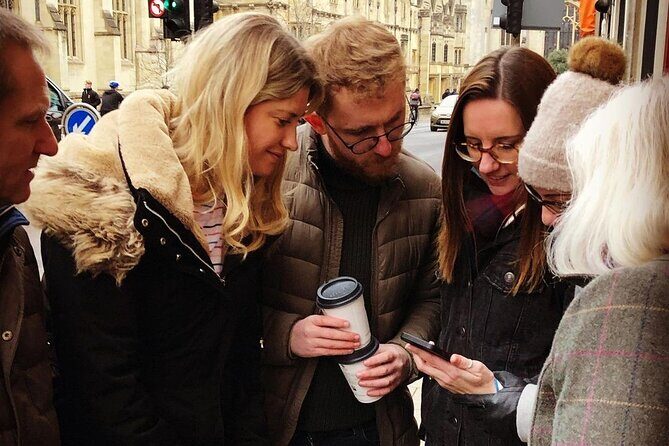
This game feels like an escape room, but with Brighton’s streets as your game board. Instead of sitting in a room and searching for physical locks, you follow a treasure trail on your phone. The mystery story is the glue that holds it together: you’re solving clues connected to Alice’s disappearance.
The best part is how the format stays playful. You’re not just answering questions. You’re moving, thinking, and trying combinations. Even when you’re stuck, the design pushes you toward logic, not random luck. And because it’s outdoors, you get to experience the city while you solve.
At the same time, it still has that structured game feel. You’re given a flow, you work through steps, and there are moments meant to be memorable and a little humorous. In practice, that means you can enjoy it whether your group is puzzle-leaning or you just want something fun to do without overthinking every detail.
You can also read our reviews of more city tours in Brighton


The Missing Alice story and how the game really works
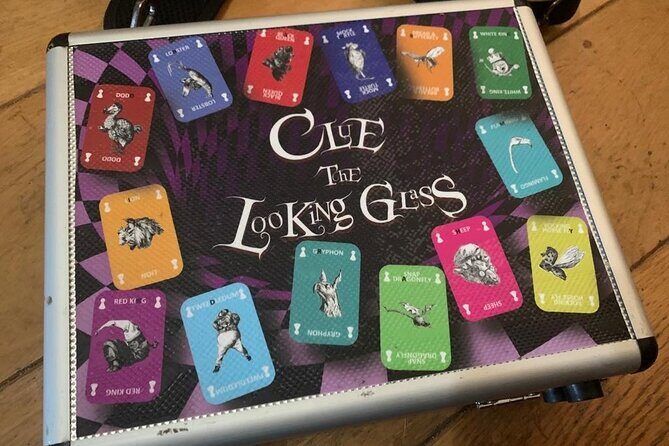
The storyline gives you a reason to play. Alice is missing. Nobody knows where she is. And the person who might know isn’t interested in giving everything away up front. Your role is to piece together what’s going on by solving a sequence of clues that lead you from one point to the next.
You’ll do this as a team. The game is made for 2 to 6 people, which is a sweet spot: small enough that everyone can participate, but large enough that you can share ideas without the pressure of a one-person brain.
Here’s the interaction style that makes this different from a basic scavenger hunt: you’ll sometimes have to contact agents on the ground and/or interact with staff at local spots. The phone handles the route and clue flow, while the live moments keep things human. That’s what turns it from walk-and-read into an actual game with feedback in real time.
Also, the clue design is meant to be fair. Groups seem to like that it’s not a one-way street of easy answers. You’ll get moments where you feel clever, and other moments where you need to slow down and think. That balance matters because it keeps the team engaged for the full 3 hours 30 minutes.
Start on New Road: what you’re doing before the first clue
Your start is at New Rd, Brighton and Hove, Brighton BN1 1UG. The game ends back at the same meeting point, which is great if you hate the stress of figuring out how to get home after an activity.
Before you begin, you’ll use your mobile ticket. The exact check-in details aren’t spelled out here, but the important part for you is simple: have your phone ready and don’t plan to rely on flaky signal. This kind of phone-led clue hunt usually depends on quick access to your game materials.
Once the hunt starts, the pace is built around you moving through the city in steps. You’re not expected to marathon nonstop. The structure gives you short bursts of “figure it out now” followed by “walk to the next point.” That rhythm helps keep energy up, especially for groups with kids or mixed attention spans.
If you’re coming as a group, arrive together and decide how you’ll work. I like assigning two people as clue-solvers and one or two as spotters. Even if everyone solves, having roles prevents the classic problem where everyone talks at once and nobody is checking the details on the screen.
Solving clues outside: walking, logic, and those funny moments
The core experience is an outdoor treasure trail with puzzles. You’re not just collecting items or hunting for random facts. The clue tasks push you toward logic and interpretation. One nice detail from real feedback: people appreciated that the challenges require a different skill set than traditional fact-finding. In other words, it’s not a test of knowledge—it’s a test of reasoning.
As you move, you’ll notice that the city becomes part of the game. Brighton’s streets and storefronts are the scenery, but they’re also the cues. The best part is that you get to walk through parts of the town that many people miss on a typical sightseeing loop.
The humor and memorable moments come from the live interactions and the way certain clues lead you into situations you wouldn’t plan to do on your own. If your group enjoys laughing at your own mistakes (the best kind of mistakes), you’ll probably have a great time.
Practical reality: it’s a city walk game. You’ll want comfortable shoes and a little flexibility in pace. If you try to power through like a race, you may miss the clue detail you need. The game seems designed for steady progress, not sprinting.
Password moments: interacting with local shops and staff
One of the most praised parts is how the hunt uses local businesses as game checkpoints. At some points, you’ll head into places like a bar or a coffee shop and interact with staff.
The key requirement is that you’ll need a secret password (or a specific phrase) to receive the next clue. That’s a clever design choice. It makes you slow down just enough to engage with the environment, and it also prevents the hunt from feeling purely solitary.
You should think of these stops as mini payoffs. You’re working your way through a puzzle sequence, and then you earn access to the next step through a quick conversation. That keeps it lively and adds a social layer even if your team is split on ideas.
A practical tip: when you reach a staff interaction, keep your team calm and quick. One person can speak while others handle the phone or confirm the clue instructions. You’ll save time and avoid the awkward delay that happens when everyone tries to talk at once.
Also, this is where the “discover small businesses you didn’t know existed” effect kicks in. Even if you’ve visited Brighton before, these password stops can redirect you into places you might otherwise skip.




Time on the clock: getting value from 3 hours 30 minutes
The duration is about 3 hours 30 minutes. For this kind of game, that’s a very reasonable length: long enough to feel like you got a full experience, short enough that you don’t have to plan your entire day around it.
At $29.87 per person, the value depends on what you want from your time. If your goal is to get a guided, structured activity that mixes walking with thinking, you’re paying for the game design and the live interactions—not for a museum ticket. For many groups, that makes it feel like a good deal, because you’re not just viewing things; you’re participating in a story.
There are also group discounts, which matters if you’re traveling with friends or family. A game like this can be a lot more expensive if you do it individually, but teams let you keep costs controlled while still giving everyone something to do.
Finally, the private format is a plus. It’s private for your group, meaning you’re not competing with strangers for space or dealing with someone else’s team pacing your progress. That improves the “we’re in this together” vibe.
Who this treasure hunt fits best
This one is built to work for a range of ages and group types. It’s described as suitable for families, friends, and team-building events, and the reactions line up with that.
Families: kids can join in, and the puzzle difficulty seems to be set so children aren’t totally left behind. One helpful example from feedback: families with kids around 10–13 found that the directions and clues let everyone participate. That doesn’t mean it’s dumbed down—it means the clue design gives multiple entry points for different problem-solving styles.
Friends: if you enjoy doing something active that still feels like a brain game, this hits the sweet spot. The best teams are the ones that communicate well and don’t get frustrated when the answer isn’t instant.
Team-building: because it’s a shared challenge with structured steps, it naturally forces collaboration. People have to delegate, share interpretations, and stay aware of what the phone says while someone else scans the surroundings. That’s practical teamwork, not forced icebreakers.
Most travelers can participate, and service animals are allowed. It’s also near public transportation, which helps if you’re pairing this with other plans in Brighton.
Practical tips so your team enjoys the hunt
Here are a few “show up prepared” tips that will make a real difference once you’re playing.
- Charge your phone fully before you start. This is a phone-based clue game, so don’t gamble on low battery.
- Wear comfortable shoes. You’re outdoors and walking between points for the full 3 hours 30 minutes.
- Use team roles. Pick one person to focus on the clue text, another to watch directions, and the rest to sanity-check interpretations.
- Don’t sprint the logic. If you rush, you’ll miss tiny details that unlock the next step.
- Be ready for staff interactions. Keep your group ready to speak clearly when you’re asked for a password or phrase.
If your group is competitive, set a friendly rule. Try to be “quick and correct,” not “quick and careless.” The game rewards attention.
Price and value: is $29.87 worth it?
At $29.87 per person, you’re paying for a structured city game that blends several things at once:
- puzzle solving that feels closer to an escape room than a trivia quiz
- an outdoor walking format that keeps the day moving
- real live interactions with agents and local staff at checkpoints
- a private group experience, plus group discounts
If you compare it to the cost of typical paid attractions in a big city, the value stands out when you want something interactive rather than purely observational. It’s also a solid choice if your group gets bored easily with “see this, then see that” itineraries. This gives you a reason to move and a reason to talk.
The biggest value factor for me is the social design. You’re doing tasks as a unit. That tends to keep everyone engaged—especially in mixed-age groups where some people may not love long sightseeing walks.
Should you book this Brighton treasure hunt?
I’d book this if you want a city day that doesn’t feel like homework. You’ll be walking around Brighton, yes, but you’ll also be actively solving puzzles, working together, and hitting checkpoints that involve real conversation. It’s the kind of activity that can turn a familiar city into something new, because you’re not just looking—you’re playing.
Book it if:
- you enjoy logic puzzles and team challenges
- you like the idea of using your phone for a game route
- you want to explore Brighton while getting pulled into small businesses
- you’re traveling with family, friends, or a group that enjoys interaction
Skip it if:
- you hate walking outdoors for a few hours
- you want a purely self-guided sightseeing plan
- your group wants a guaranteed quiet, low-energy activity
If your group thrives on shared problem-solving and laughs along the way, this is one of those rare tours that can feel both structured and spontaneous—which is exactly what makes a good city game work.
FAQ
How long does the Brighton treasure hunt take?
It runs for about 3 hours 30 minutes.
What is the meeting point for the experience?
You start at New Rd, Brighton and Hove, Brighton BN1 1UG, UK, and the activity ends back at the same meeting point.
How many people are in each team?
You play in teams of 2 to 6 people.
Is this activity private?
Yes. It’s a private tour/activity, so only your group participates.
When will I receive confirmation after booking?
You’ll receive confirmation at the time of booking, unless you book within 2 hours of travel. In that case, confirmation is received as soon as possible, subject to availability.
Is it suitable for families?
It’s described as suitable for families, friends, and team-building events, and it can work well for children around the 10–13 age range.
Does it run in bad weather?
The experience requires good weather. If it’s canceled due to poor weather, you’ll be offered a different date or a full refund.
How much does it cost per person?
The price is $29.87 per person.