REVIEW · BRIGHTON
Seven Sisters Tour
Book on Viator →Operated by CANNONBALL TOURS BRIGHTON · Bookable on Viator
Chalk cliffs have a way of grabbing you. This private Seven Sisters tour mixes big-sky coastal drama with teach-you-stuff stops, all run from Brighton with hotel pickup and a guide-led pace. If you care about why places look the way they do, this route gives you answers, not just photos.
I especially like the pickup convenience and the way the guide keeps the day comfortable and well-timed. People also highlight guide Colin, and that matches the feel of the tour: friendly, patient, and tuned to what the group needs.
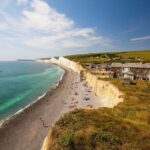
I also love the balance of views plus breaks. You get standout panoramas at Seaford Head and Seven Sisters-class cliff viewpoints, with short optional walks so you can choose your effort level without turning the trip into an all-day grind.
The main thing to consider is time and weather: the day is about 4 to 6 hours, with quick hit stops, and it needs good weather to run as planned.
In This Review
- Quick hits before you go
- Price and logistics: what $205.67 really buys
- The 9:30 AM flow from Brighton (and why it helps)
- Devil’s Dyke: Victorian attraction meets Ice Age science
- Seaford Beach and the unsung work of sea defenses
- Seaford Head Nature Reserve: optional walk, big payoff
- Cable House 14: telegraph messages to wartime gun emplacement
- Belle Tout Lighthouse and the cliff-to-Birling Gap idea
- Birling Gap at sea level: photos, beach time, and snack breaks
- East Dean: lunch option at the Tiger Inn (and a smugglers vibe)
- Long Man Brewery: a quick local break
- Wilmington’s ancient yew tree: history you can spot fast
- The Long Man of Wilmington: one stop, many theories
- St Andrew’s Church: the South Downs cathedral nickname
- Alfriston time: books at Much Ado and history at the George Inn
- Who this Seven Sisters tour fits best (and who should choose another plan)
- Should you book this Seven Sisters day from Brighton?
- FAQ
- How long is the Seven Sisters tour?
- How much does it cost per person?
- Is hotel or Airbnb pickup included?
- What’s included in the tour price?
- Is lunch included?
- Is this a private tour?
- What if the weather is bad?
Quick hits before you go
- Brighton pickup + private transport makes this feel low-stress from the start.
- Colin’s guiding is a big part of the high marks, with extra care for comfort and pacing.
- Iconic cliff viewpoints with optional walking keeps the trip accessible.
- Real coastal history and geology from Devil’s Dyke to shingle management.
- Many stops are free to enter (often listed as Admission Ticket Free), so you’re not paying surprise add-ons.
- Optional extras like the Tiger Inn lunch and a cellar-door tasting let you shape the day.
Price and logistics: what $205.67 really buys
At $205.67 per person for a private 4 to 6 hour experience, you’re paying for more than scenery. You’re getting a guide, hotel/Airbnb pickup within Brighton, an air-conditioned vehicle, WiFi on board, plus light refreshments and bottled water. That matters because you’re not just moving from point to point—you’re learning while you travel, and you’re not stuck figuring out parking or transit schedules.
It’s also a smart value if you’re staying in Brighton and want the South Downs and coastline without the hassle of building your own route. The tour operator notes it’s often booked about 66 days in advance, which is a hint that the timing and viewpoints are popular.
You can also read our reviews of more tours and experiences in Brighton.



The 9:30 AM flow from Brighton (and why it helps)
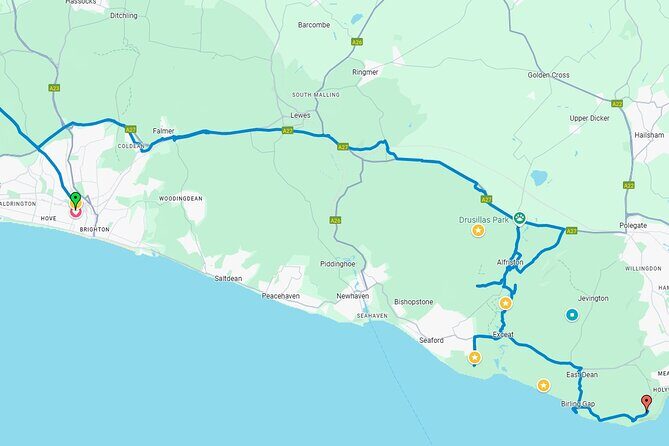
This tour starts at 9:30 am. Pickup can happen at your hotel reception area (or outside Brighton Train Station), and there’s also a specific note for people coming from London by train: the guide can pick you up from the station. That’s useful if you want a smooth day that doesn’t start with sprinting across town.
Because the schedule is tight but not frantic, the best mindset is: be ready to move, then slow down when you arrive. Some stops are quick photo moments. Others include short optional walks you can tailor to your energy level. That pacing is exactly where this kind of private format shines.
Devil’s Dyke: Victorian attraction meets Ice Age science
Devil’s Dyke is one of those places that looks dramatic right away—about 100 metres deep and shaped like a V-shaped dry valley. You’ll stop at the top and get time to walk around the rim while the guide explains what happened here.
What I like about Devil’s Dyke is that you get a clear story: it wasn’t carved only by recent rivers. The valley is tied to solifluction and river erosion, with a cold-climate history where chalk was frozen under permafrost conditions. In summer, thawed surface layers moved downslope because the water couldn’t seep into the frozen chalk below. Then, later, when the Ice Age ended, rivers formed across Sussex—and helped finish the valley shape.
Practical takeaway: bring decent walking shoes, because even a short “top walk” can feel exposed on a windy coast-day. Also, if clouds roll in, the valley edges still photograph well—just expect lighting to shift fast.
Seaford Beach and the unsung work of sea defenses
Next comes Seaford Beach, and here the tour turns from big cliffs to real-world problem-solving. The point isn’t abstract history. It’s about what happens when the sea keeps moving shingle along the shoreline through longshore drift.
You’ll learn how this constant movement created ongoing pressure on the beach’s integrity and the town’s protection from erosion and flooding. The tour even highlights the modern fix: heavy machinery like bulldozers and dumper trucks moving pebbles around, especially near structures like the Terminal Groyne. That’s a refreshing contrast to purely romantic coastline talk.
If you like seeing how humans manage nature instead of pretending they can stop it, this stop clicks.
Seaford Head Nature Reserve: optional walk, big payoff
This is where the day gets calmer. At Seaford Head Nature Reserve with the Sussex Wildlife Trust, you’ll park and then have a short 10-minute walk to the main viewpoint. The walk is completely optional, which is a smart design if you’re traveling with mixed energy levels.
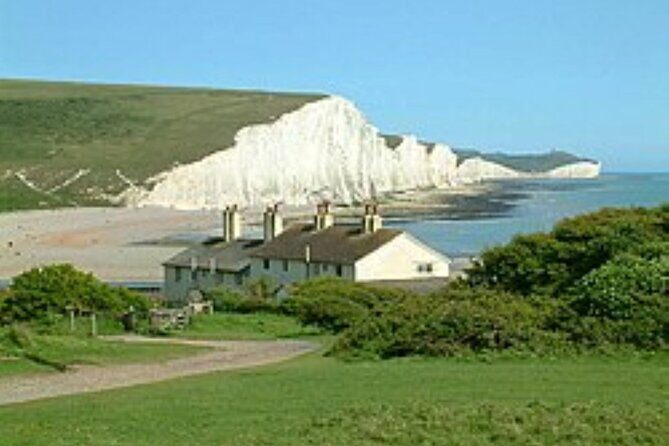
From here, you look toward the Seven Sisters cliffs and the Cuckmere Estuary. The guide frames it as one of the last remaining undeveloped river mouths on the South Coast, and it’s a conservation-focused stop. You’re told about nationally rare and significant species of plants, birds, and insects. Even if you don’t spot everything (and you might not), the explanation helps you understand what you’re seeing.
One consideration: this is “nature reserve” time, not “keep your group together indoors” time. If it’s windy, hold onto hats and plan for quick photo stops rather than long wandering unless conditions are good.



Cable House 14: telegraph messages to wartime gun emplacement
Then the tour turns technical in the best way. Cable House 14 sits along the newly named King Charles III England Coastal Path route, and it’s described as the birthplace of an undersea cable station network that connected the world.
Built in 1900 as a relay station to carry telegraph messages under the sea to France, it later changed roles in World War II, when it was converted to a gun emplacement at Cuckmere Haven.
This is a standout stop because it shows how coastal places aren’t just about fishing or vacations. They were infrastructure hubs—and strategic points—long before the modern era. If you like “how did they do that?” history, you’ll enjoy this one.
Belle Tout Lighthouse and the cliff-to-Birling Gap idea

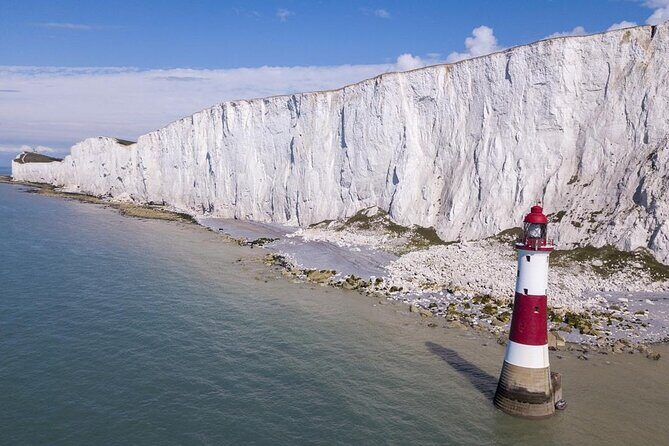
From there you drive along the coast to the Belle Tout Lighthouse area near Birling Gap. The lighthouse came into operation on 11 October 1834, manned around the clock by two keepers.
The design is fascinating: the light was planned so it could be visible for 20 miles out to sea, but also obscured by the edge of the cliff if sailors came too close. That balance makes sense when you think about navigation and the risk of getting too near shore.
Then there’s the twist. Being high on the cliffs meant it was often in cloud. In 1900, it stopped operating and Beachy Head lighthouse took over.
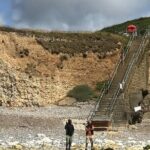
You’ll also have an optional chance to walk from the lighthouse down along the cliffs toward Birling Gap—about 20 minutes. It’s a great way to turn a viewpoint into a mini walk, but keep it optional in your head until you feel the wind and footing.
Birling Gap at sea level: photos, beach time, and snack breaks
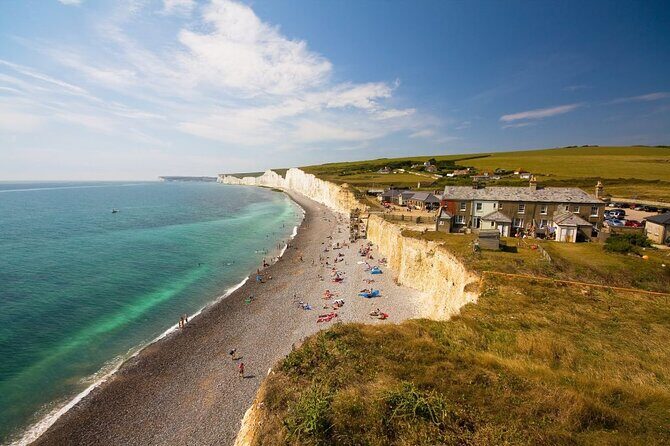
At Birling Gap, you’ll view the Seven Sisters cliffs from sea level. That shift—from looking down from above to seeing the cliff face at ground level—is what makes the photos feel different even if it’s the same coastline.
You can walk the beach and get pictures, plus there’s time for a snack or drink at the visitors centre. This is a good place to reset before the day moves inland.
East Dean: lunch option at the Tiger Inn (and a smugglers vibe)
East Dean Village is centered around a village green with a war memorial and a medieval church, plus the long-running inn called The Tiger—Tiger Inn. The tour frames it as a place where smugglers used to meet, and it’s described as serving ales, wines, and food to locals, farmers, soldiers, walkers, smugglers, lovers, and brewers since the 15th century.
The key detail is that this stop includes an optional lunch break. Lunch isn’t included in the tour price, but you can use this timing to eat without planning your own route.
If you don’t want a full meal, even a quick drink here can feel like a true Sussex pause rather than a quick roadside stop.
Long Man Brewery: a quick local break
If you want something more casual than a pub, there’s also a stop at Long Man Brewery, described as a local brewery and cafe. It’s optional, and you get time to enjoy it without forcing the day into a long detour.
Wilmington’s ancient yew tree: history you can spot fast
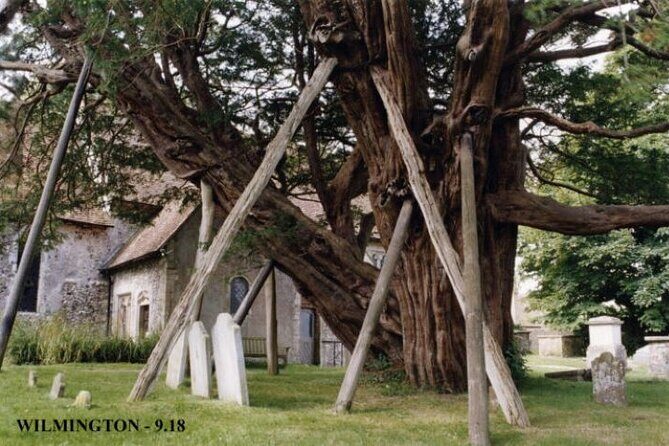
In Wilmington, you’ll get a brief look at a downland village of Saxon origin. The church you’ll see is said to have been first built around 1200 as a chapel to the adjacent priory.
The headline here is the churchyard’s ancient yew tree, estimated at 1600 years old, with a trunk girth of 23 feet. And the tour includes a practical safety note: don’t eat the red berries because they’re poison. The tour also mentions you can eat the berry but not the pip—so either way, the warning is clear: don’t snack casually.
This is the kind of stop that works even if you only have a short time slot. You can learn the story, then look at the tree and immediately understand why it’s famous.
The Long Man of Wilmington: one stop, many theories
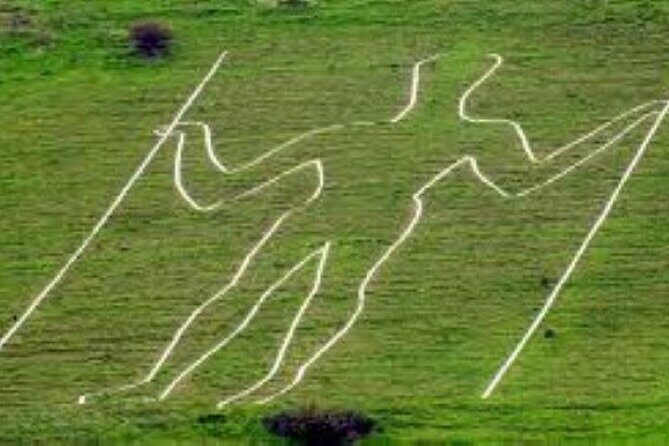
The Long Man of Wilmington (also called the Wilmington Giant) is a chalk figure on Windover Hill above Wilmington. This is a “wait, what is that?” moment. The origins and meaning have puzzled historians for centuries.
The tour doesn’t push one answer. Instead, it lays out theories: it could be a fertility symbol, an ancient warrior, or even an 18th-century folly. Dating theories include prehistoric possibilities, Roman-era connections based on similar figures on coins (4th or 5th centuries), Anglo-Saxon parallels, or work by an artistic monk connected to Wilmington Priory between the 11th–15th centuries.
The practical value: you’ll likely leave with more questions in your head—in a good way. It’s one of those local mysteries that makes the English countryside feel alive.
St Andrew’s Church: the South Downs cathedral nickname
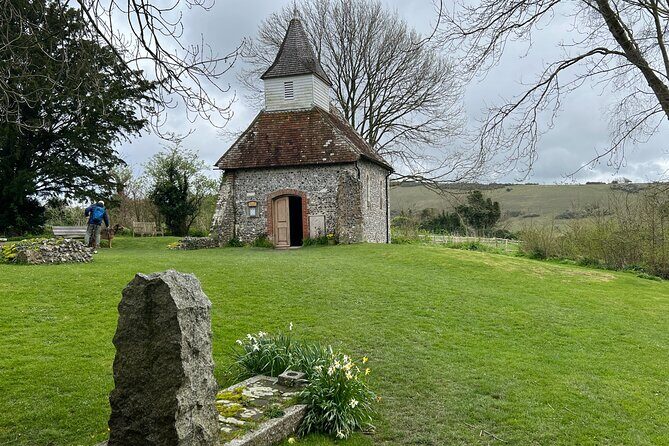
At the Church of St. Andrew, you get a proper heritage stop. It was founded in the 1360s and is described as a good example of a 14th-century parish church near the winding Cuckmere River. It sits beside the Old Clergy House, which is noted as the first National Trust property.
The tour’s description is that the church is unusual because it was built all at one time with no major later additions. The interior is known for soaring arches, a spacious feel, and fewer memorials. The nickname is Cathedral of the South Downs, and it makes sense—this is the kind of church where you pause and look up.
One detail that adds character: six bells are placed below the spire, and regular bell ringers perform from the center of the church. Even if you don’t catch a ringing moment, the explanation makes the space feel more active.
Alfriston time: books at Much Ado and history at the George Inn
Alfriston is where the day turns more leisurely. You’ll get about 30 minutes for village sightseeing, enough to wander, reset your legs, and pick a favorite corner.
Two stops make this town especially fun:
First, Much Ado Books. It’s described as a two-floor shop in a charming medieval village setting, with new books plus vintage, antiquarian, and secondhand volumes. It also has atmosphere: it was formerly a builders’ yard, includes a book-filled shepherd’s hut, and a bower with bargain paperbacks.
Second, The George Inn. It’s first licensed in 1397, with foundations dating back to 1250. The building is flint stone and half-timbered, and the tour notes a network of smugglers’ tunnels leading from its cellars. Inside, the bar is described as the oldest part, with an inglenook fireplace, a huge copper hood, oak floors, and Sussex hop bines on the walls. There’s also a rear garden and a heated terrace for cooler evenings, plus good-quality food.
This combination—books plus an old inn with smugglers links—helps the day feel more like a story than just a checklist.
Who this Seven Sisters tour fits best (and who should choose another plan)
This tour suits you if you want:
- Major coastal viewpoints without long hard hikes (most walking is optional and short).
- A day focused on real explanations: chalk geology, coastal change, and coastal history tied to infrastructure and war.
- Pickup and a guide, so you can avoid logistics headaches from Brighton.
It might not be ideal if you want to spend hours hiking directly along the longest parts of the South Downs coastline. Because the day is 4 to 6 hours, time at each place is measured. You’ll see a lot, but you won’t camp out in one spot.
One more practical tip: plan for wind. Even when the itinerary looks mild on paper, cliff country can feel strong. Bring a light windproof layer and shoes you trust on uneven ground.
Should you book this Seven Sisters day from Brighton?
I think you should book it if you value comfort plus context: pickup, a guided day, and a route that teaches you why the coast looks the way it does. The fact that guide Colin is repeatedly praised for keeping people comfortable and finding good spots for viewing makes a difference on a day where weather and timing matter.
Don’t book it if your dream is a long self-paced hike with minimal stops. This tour is built for smart pacing and short walks. You’ll get the best version of it when you’re okay with that style—and you’re lucky enough to get good weather.
FAQ
How long is the Seven Sisters tour?
The tour runs for about 4 to 6 hours.
How much does it cost per person?
The price is $205.67 per person.
Is hotel or Airbnb pickup included?
Yes. The tour includes drop off and pick up to your hotel or Airbnb within Brighton.
What’s included in the tour price?
It includes a tour guide, air-conditioned vehicle, light refreshments while travelling, bottled water, private transportation, and WiFi on board. You also get a mobile ticket and the tour is offered in English.
Is lunch included?
No. Lunch is not included.
Is this a private tour?
Yes. It’s a private tour/activity, so only your group participates.
What if the weather is bad?
The experience requires good weather. If it’s canceled due to poor weather, you’ll be offered a different date or a full refund.