York stacks centuries on its narrow streets. What makes J & M York City Walking Tours work is the local-guide storytelling that turns landmarks into a timeline you can walk. You’ll move from medieval walls to the Shambles to castle myths, with enough stops to keep it fun and never feel like homework.
I especially love the easy route flow. You get guided turns through winding streets, so you’re not constantly checking your map while trying to enjoy York’s atmosphere. One possible drawback: most major sights are explained from the outside, and key interiors like York Minster and York Castle Museum are not included in the ticket price.
In my view, this is the kind of tour that helps you start strong, even if York is a one-day stop. With a small-group cap (up to 30) and guides such as Nick or James noted for clear, engaging delivery, you should get good chances to ask questions and keep moving at a comfortable pace.
In This Review
- Key highlights to expect
- Why York Works Best on Foot (and Why This Tour Starts Fast)
- Starting Point: From York Minster Yard to a Convenient End Location
- York Minster: Largest Gothic Cathedral in Northern Europe (But Know What’s Included)
- Castle Motte (1069) and the Dark Secrets Tour-Style Tells
- Medieval Levels, Guild Power, and Why Women Mattered Here
- Shambles: Butchers’ Street, a Shrine, and the Oldest-Street Feeling
- St Cuthbert’s Church and the Devil’s Door Myth
- York City Walls: Roman, Danish, Medieval Sieges, and Victorian Changes
- Constantine the Great Statue: Origins, Emperors, and Christianity in York
- The Black Swan Area: Quebec Battle Links and Black Cats Nearby
- Merchant Taylors’ Hall, Shambles Market, and How Money Shaped York
- Monk Bar: A Gate in the Walls and Legends That Stick
- Ogleforth and King’s Square: Saxon Streets, Insurance After London, Jorvic Clues
- York Castle Museum Outside: Dick Turpin, Prison Reform, and Why You Might Go Inside
- Pace, Group Size, and What Makes This Tour Feel Easy
- Should You Book This York Walking Tour?
- FAQ
- How long is the J & M York City Walking Tours tour?
- How much does the tour cost?
- Where does the tour start and end?
- What language is the tour offered in?
- Do I need to buy entry tickets during the tour?
- Is the tour ticket a mobile ticket?
- What is the maximum group size?
- What if the weather is bad or I need to cancel?
Key highlights to expect
- A local guide’s straight-to-the-point history across Romans, Vikings, medieval York, and Victorian changes
- York Minster context before you decide whether you want to go inside
- Shambles + St Margaret Clitheroe in the same leg, with a stop for the Devil’s Door myth
- A Roman-to-Victorian walking wall story, including Danish earthworks and siege history
- Curious York details like the Black Swan’s Quebec links and spotting black cats nearby
Why York Works Best on Foot (and Why This Tour Starts Fast)
York is built for walking. The medieval street plan twists, the buildings crowd close, and the best views tend to appear when you turn a corner, not when you plan ahead. This tour is designed for that reality: you don’t spend your time figuring out where to go next. You simply follow the guide, absorb the story, and keep your bearings.
I also like how the walk is framed as a city-wide narrative. Instead of treating York as a pile of separate attractions, the guide connects layers of the past—ancient tribes and Romans, then kings and queens, then the medieval economy—so the place starts making sense quickly. That matters if you have only a day or two and want to choose later visits with confidence.
Finally, it’s a good fit for people who get restless on long museum-style tours. You’re moving most of the time, stopping often enough to break things up, and learning why specific spots matter.
You can also read our reviews of more tours and experiences in York.



Starting Point: From York Minster Yard to a Convenient End Location
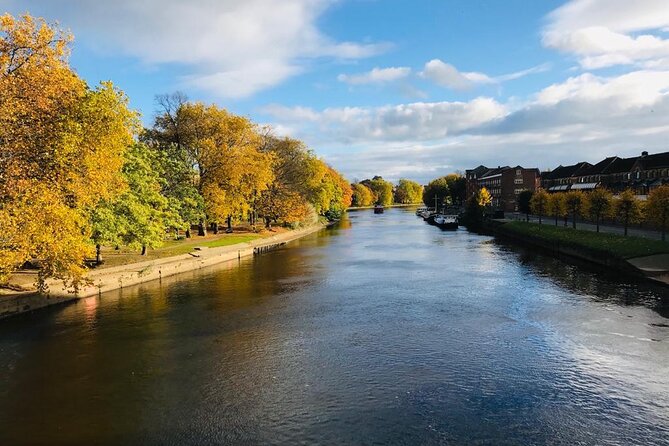
The tour meets at Constantine the Great, 4 Minster Yard, York (YO1 7JB). That location is handy because it puts you close to the Minster area right away, and it also makes it easy to pair this with other nearby plans after the tour.
The walk ends at the Parish of All Saints, Pavement High Ousegate, York (YO1 8RZ), though the exact end point may vary. The end area is useful for re-planning on the fly: you’ll be roughly a six-minute walk from the start, and the surroundings give you quick access to places like Jorvik Viking Centre, Castle Museum, and the river walk, plus the Shambles area is just a couple minutes away.
If you like practical travel, this layout helps. You can do the tour in the morning, then spend the afternoon focusing on whatever you found most interesting—Minster interiors, the castle museum, or walking the river.
York Minster: Largest Gothic Cathedral in Northern Europe (But Know What’s Included)
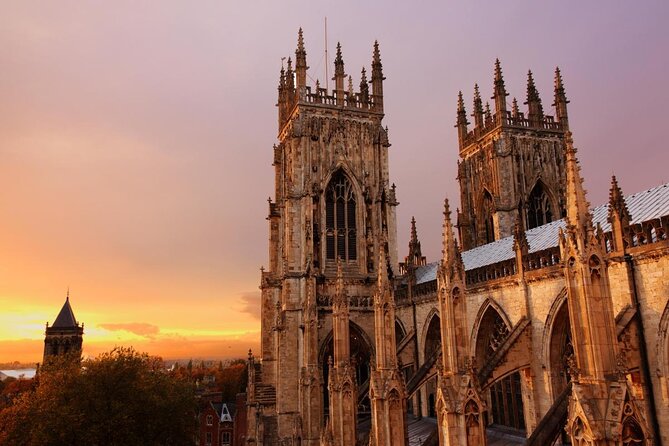
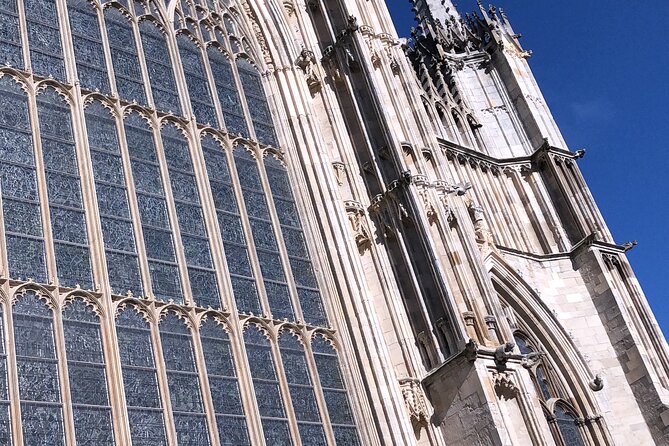
Your first big anchor stop is York Minster. The key detail you’ll hear here is that it’s the largest Gothic cathedral in Northern Europe and took 252 years to build. That “long build” fact changes how you look at the building: you start noticing how it’s more like a project that grew with time, not a single moment of design.
The tour time here is about 20 minutes, and Minster interior admission is not included. Inside, there are Minster guides, and tours last about an hour. That means you’ll get context either way, but if you want the full interior experience, you’ll still need to plan for tickets on your own.
Practical tip: if you’re the type who likes to spend time inside cathedrals rather than just glance at them, set aside extra time after this tour. The story you hear at the start will make the interior visit more meaningful.
Castle Motte (1069) and the Dark Secrets Tour-Style Tells
Next you head toward the motte of the castle built in 1069. This stop isn’t about staring at a souvenir view. It’s about imagining the site when it was active, and hearing the guide bring alive the danger and conflict that surrounded medieval power.
You’ll walk in the grounds of what would have been one of the finest castles in England. Even if you don’t become a medieval architecture enthusiast overnight, it helps you understand why York mattered strategically. It’s the difference between seeing ruins and understanding why someone would fight to control them.
If you prefer your history story-driven rather than textbook-driven, this is one of the stronger parts of the tour.
Medieval Levels, Guild Power, and Why Women Mattered Here
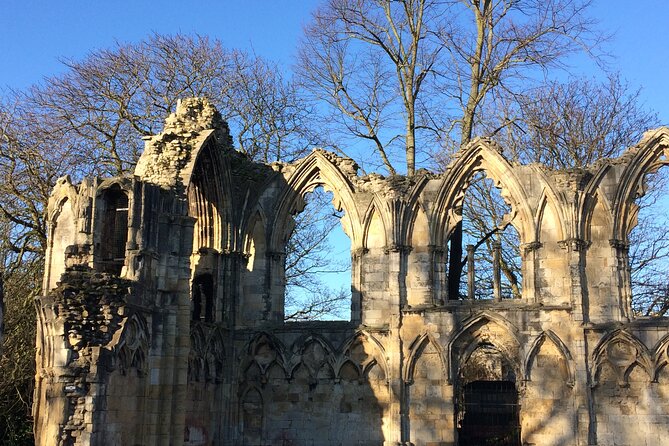
One of the most compelling segments comes from walking the medieval levels of the city. This is where York stops feeling like “pretty old buildings” and starts feeling like a working city with social rules.
You’ll learn about the richest guild in York, the role traders played in York’s prosperity, and how important women were in this guild. That last point is a smart change of pace. It moves beyond kings, battles, and famous faces into the everyday structure that kept money moving and power organized.
If you like history that explains how people lived and earned, you’ll appreciate this section.






Shambles: Butchers’ Street, a Shrine, and the Oldest-Street Feeling
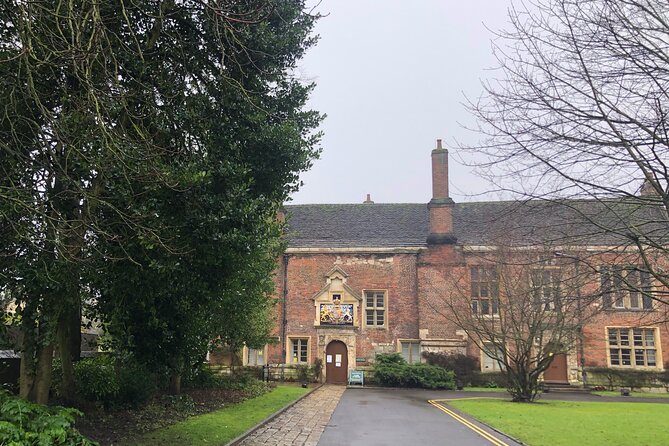
The tour then lands on Shambles, the famous street of the butchers. Expect a quick but meaningful stop rather than a long shopping crawl.
You’ll also be guided to the shrine of St Margaret Clitheroe. The guide ties this into what makes Shambles one of York’s oldest streets, and you’ll come away with a better sense of what you’re looking at beyond the postcard vibe.
There’s a 10-minute stop here, and admission isn’t a problem because the focus is outside exploration. If you’re planning lunch afterward, this is also a convenient time to decide where to go next.
St Cuthbert’s Church and the Devil’s Door Myth
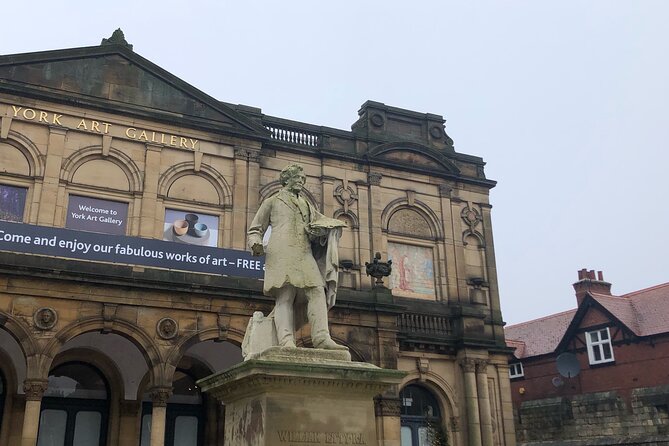
After Shambles, you move to St Cuthbert’s Church, where the guide connects several eras in one building. You’ll hear that it’s built partially from Roman brick work, and it includes Saxon and Norman architecture.
The most fun part of this stop is the discussion of the Devils Door—and the guide untangles the truth behind the myth. This is one of those places where the details are exactly what make a stop memorable. Even if you pass similar churches in other cities, the story here gives you a reason to care.
This stop is around 6 minutes, and it’s free to visit.
York City Walls: Roman, Danish, Medieval Sieges, and Victorian Changes
If you love a layered view of a place, the York City Walls segment is a highlight. You’ll see a section of walls where you can trace the idea of defense changing over centuries.
You’ll look at Roman defences, Danish earthwork, medieval past with sieges, and even Victorian alterations. You also pass by the old Jewish quarter, which adds another layer to the city’s story.
Important reality check: you’re not doing a full marathon of the wall system. This is a narrative walking section. One review theme was that some people expected more wall time, so if you specifically want a long stretch along the top, plan that separately after the tour.
This stop lasts about 15 minutes, and it’s free.
Constantine the Great Statue: Origins, Emperors, and Christianity in York

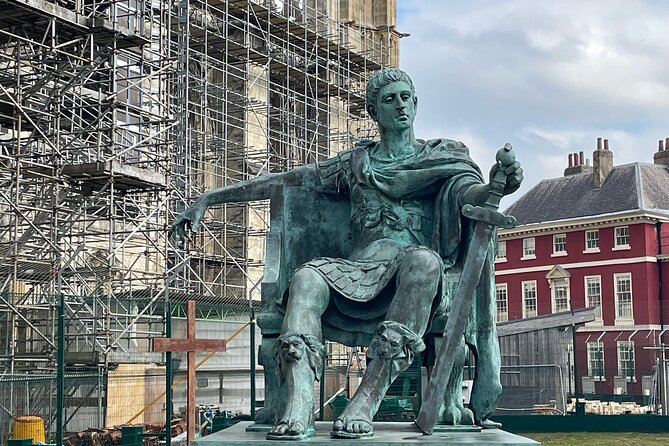
You’ll then reach the Statue of Constantine the Great. This part of the tour explains how York connects to early imperial visiting and why York matters for the development of Christianity in the area.
It’s a short stop—around 10 minutes—but it does something valuable. It gives you a thread from York’s origins into later religious history, so the earlier Minster stop feels less random.
If you like your facts tied to specific locations (instead of abstract history), this is a good use of time.
The Black Swan Area: Quebec Battle Links and Black Cats Nearby
Next is the Black Swan, approached as you enter the old Hungate Parish area. Here, the guide shares the Swan’s famous residents and its links to the battle of Quebec. That’s the kind of surprising detail York tours often miss, and it’s exactly why this walking format can feel fun even when you’re learning.
You’ll also get a practical bit of observation: there’s a chance to spot one of York’s famous black cats nearby. Add in the chance to notice a building whose architecture reflects Irish heritage, and you’ve got a stop that feels grounded in place rather than just names and dates.
Time here is brief—around 5 minutes—and it’s free.
Merchant Taylors’ Hall, Shambles Market, and How Money Shaped York
This stretch is about the city’s economic engine. You’ll pass by Merchant Taylors’ Hall, and the guide explains how guilds became the economic centre of cities like York. You’ll learn about the Taylors’ significance to York and what their role looks like today.
Right after that, you visit Shambles Market, also free, and you’ll hear how markets mattered to York’s economic growth.
These stops take only a few minutes each, but they’re useful. They help you connect York’s physical beauty to the fact that it was built and sustained by trade and the people who organized it.
Monk Bar: A Gate in the Walls and Legends That Stick
You’ll then reach Monk Bar, one of six gates in York’s defenses. The guide explains the gate’s role in city security and talks through the legend of the Wild men of York.
There’s also a darker side to this stop, including references to the bars’ more gruesome uses. If you like stories that make you look twice at a stone wall, this is a great moment.
This is about 5 minutes, and it’s free.
Ogleforth and King’s Square: Saxon Streets, Insurance After London, Jorvic Clues
On Ogleforth, you walk along what’s described as a Saxon street. You’ll hear about the Dutch House and how architecture changed after the Great Fire of London, along with the emergence of insurance policies. That’s a clever link between York and national events, showing how big changes ripple into local planning and building style.
Then comes King’s Square, where you’ll learn about the meaning behind street names and pick up on thinner Viking heritage. You’ll also hear about the city’s centre at Jorvic—another way the guide keeps York feeling like one connected story rather than isolated stops.
Each of these sections is short—about 5 minutes each—but they’re packed with “wait, that’s why that’s there” moments.
York Castle Museum Outside: Dick Turpin, Prison Reform, and Why You Might Go Inside
The final major stop on the ground is the York Castle Museum, and you’ll mainly see it from the outside. The guide points to its links with prison reform and the building’s past uses. You’ll also hear stories and myths about Dick Turpin, including how the legends connect to the real character.
Admission to the museum is not included, and you’ll spend about 7 minutes here. Still, the outside context is helpful. If you found Turpin or prison reform interesting, you’ll know what to look for when you decide whether to buy a ticket.
This ending is smart for another reason: it sets you up to continue exploring in the same area, rather than dragging you back toward the start point.
Pace, Group Size, and What Makes This Tour Feel Easy
This tour is about 2 hours (approx.) with a maximum of 30 travelers. That matters. In a group this size, the guide can keep the story moving while still fielding questions without losing the thread.
The walk is also built for people who don’t want route math. The idea of no planning your way through York’s winding streets is real value, especially if you’re navigating while jet-lagged or juggling other plans.
You’ll also notice that stops often balance time and detail: short segments at multiple sites, and deeper context at the two biggest anchors (Minster and castle area). It’s a good “sampling” method, not a single long site visit.
Finally, it’s in English, uses a mobile ticket, and is described as suitable for most people. Service animals are allowed.
Should You Book This York Walking Tour?
Book it if you want a fast, story-led introduction to York that helps you choose what to do next. The big win here is the way the guide ties together the city’s layers—Romans, Vikings, medieval trade, walls, and famous legends like Dick Turpin—so York stops feeling like a list and starts feeling like a place with momentum.
Skip or adjust expectations if you’re mainly after long interior time. York Minster and York Castle Museum interiors aren’t included, so you’ll want to budget extra tickets if you want to go inside. And if you dream of a long, continuous walk along the top of the city walls, this tour’s wall segment is more of a guided slice than a full wall hike.
FAQ
How long is the J & M York City Walking Tours tour?
It runs for about 2 hours.
How much does the tour cost?
It costs $18.02 per person.
Where does the tour start and end?
The start is at Constantine the Great, 4 Minster Yard, York YO1 7JB. The tour ends at the Parish of All Saints, Pavement High Ousegate, York YO1 8RZ, and the exact end point may vary.
What language is the tour offered in?
The tour is offered in English.
Do I need to buy entry tickets during the tour?
York Minster and York Castle Museum admission are not included. Other stops mentioned (like Shambles, St Cuthbert’s Church, and York City Walls) are described as free.
Is the tour ticket a mobile ticket?
Yes, the tour uses a mobile ticket.
What is the maximum group size?
The tour has a maximum of 30 travelers.
What if the weather is bad or I need to cancel?
The tour requires good weather. If it’s canceled due to poor weather, you’ll be offered a different date or a full refund. You can cancel for a full refund up to 24 hours in advance of the start time.