REVIEW · YORK
History and Hauntings Self Guided Walking Tour in York with App
Book on Viator →Operated by Tourific · Bookable on Viator
York’s ghosts walk on Roman streets. That’s the vibe here: a self-guided route through York’s big landmarks and wall sections, paired with an offline app so your audio keeps going even when data dies. I also like how the tour uses clear stop photos and an interactive map to get you oriented fast. One thing to keep in mind: parts of the wall-walk area can be closed, and if you start very early, some access points may be locked before later morning.
This is priced at $7.88 per person and runs about 1 hour 30 minutes from 29 Marygate to Clifford’s Tower. You’ll hear AI-narrated audio plus written prompts for 18 locations, with a “history and hauntings” angle that links Roman York, Viking-era power, medieval York, and the darker stories people still tell today—without needing a human guide or paying entry fees, since it’s designed for outside viewing only.
In This Review
- Key things I’d note before you go
- What this self-guided York walk really delivers
- Price and value: paying for guidance, not entrances
- How the app tour works on the ground (and what to do if it hiccups)
- The route arc: from Abbey shadows to Clifford’s Tower
- Stop-by-stop: what each place adds to the story
- St. Mary’s Abbey: where the city’s past got torn apart
- Multangular Tower: twelve sides of stubborn Roman survival
- The abbey-to-King’s Manor transition: Henry VIII, plus a modern comparison
- Bootham Bar: a toll gate you can almost picture working
- Robin Hood Tower: walls, ruin, and preservation battles
- Monk Bar: home to someone important, and a stage for proclamations
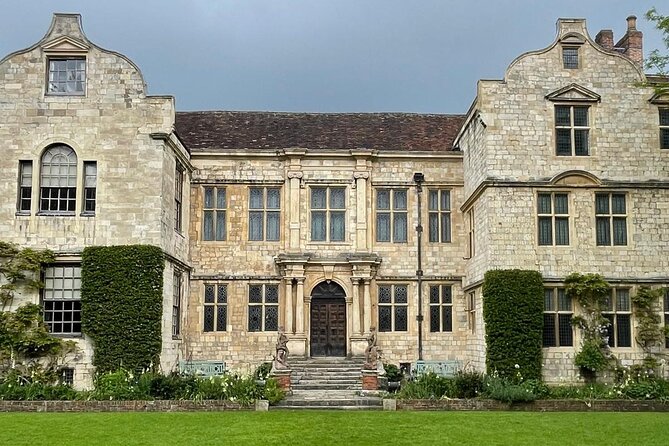
- The mansion with spectral Roman soldiers: elite life and hauntings
- Statue of Constantine the Great: a modern marker for an old proclamation
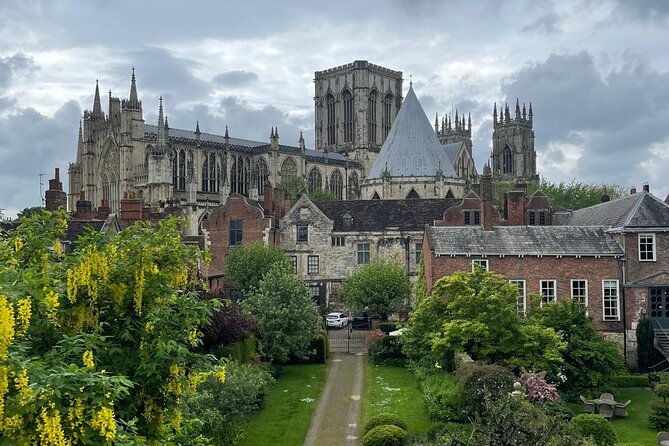
- York Minster: exterior views and a good pause point
- Stonegate: a shopping street on an older Roman road
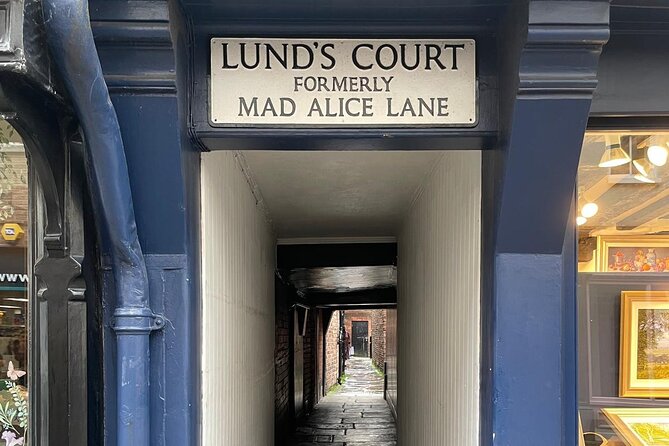
- Mad Alice Lane: the ghost story that sticks
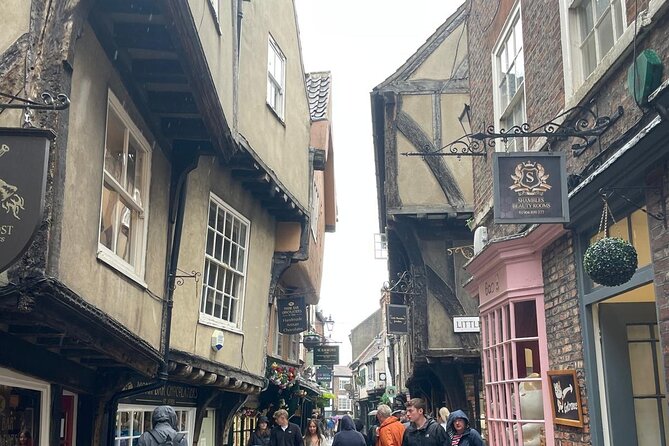
- The Shambles: medieval butcher lines and a shrine story
- The Golden Fleece: York’s haunted pub moment
- Merchant Adventurers’ Hall, Vikings, and York Castle Museum: extra context threads
- Clifford’s Tower: the ending view that closes the loop
- Who this walk is best for (and who should skip it)
- Quick practical tips so you get the most out of it
- Should you book this History and Hauntings self-guided tour?
Key things I’d note before you go
- Offline-first audio means you can download once and keep walking without internet.
- 18 AI-narrated stops cover Roman, Viking, medieval, and modern York in a tight loop.
- Photo ID + map support helps you find the right doorway, tower, or street corner quickly.
- Wall sections and gate timing can affect routes, so plan for a start later in the morning.
- Outside-only format avoids entrance lines, but also means you won’t tour interior rooms.
- Haunted pub and ghost stories add spice to the usual stone-and-timeline sightseeing.
What this self-guided York walk really delivers
A good self-guided tour does one key thing well: it helps you not miss the best parts. This one is built around York’s most recognizable story-world—Roman walls and towers, medieval “bars,” the Minster’s shadow, and the old lanes around the Shambles—then it layers on spooky legends like Mad Alice and spectral soldiers.
The practical win is that you aren’t locked into one strict schedule. Once your phone has the tour downloaded, you can use it later the same day or even return on another day during the app’s one-year access window. That flexibility matters in York, where weather changes fast and you might decide to linger at the Shambles for five extra minutes.
At under eight bucks, you’re not paying for a bus or a live guide. You’re paying for a curated walk with audio cues, stop recognition, and context that helps you look at familiar places and suddenly see them differently.
You can also read our reviews of more tours and experiences in York.



Price and value: paying for guidance, not entrances
$7.88 for roughly 90 minutes is a low-risk way to test-drive York’s history through the lens of a walking loop. The value isn’t just the audio. It’s the combination of:
- Mobile ticket access (you’re not juggling paper)
- Offline use once downloaded
- Images to help you spot each stop
- Audio + written guide so you can switch modes depending on how loud the street is
And importantly, the tour is designed to be experienced outside, so you’re not being nudged into ticketed interiors. That can be a major savings if you’re already planning to choose what to enter elsewhere.
Still, you should know what you’re giving up: no human guide, and no guaranteed interior access. If you want guided explanations inside York Minster’s rooms or museums at a leisurely pace, this isn’t that format.
How the app tour works on the ground (and what to do if it hiccups)
You’ll rely on your smartphone for everything: the audio, the written notes, and navigation. The app includes an interactive map and stop photos, which is great because York has a lot of “wait, where exactly is it?” corners.
Two tips that keep this smooth:
- Download the tour before you go and verify audio plays offline. You don’t want to discover you missed that step when your phone shows no service.
- If the map doesn’t align perfectly, use it as a hint, not a command. York is walkable but twisty. Street names and landmark sightlines (like the Minster) still do the heavy lifting.
One caution from real-world experience: if a wall-walk section is closed or gates are locked, the app can still describe the spot, but you may have to reroute how you approach it. That’s not the tour being “wrong”—it’s York being York.
The route arc: from Abbey shadows to Clifford’s Tower
This walk is structured like a history spine. You start on Marygate and work your way toward the Clifford’s Tower area at the end, passing Roman remnants, medieval defenses, historic gates, and the iconic lanes where modern York still feels medieval.
Think of it as three layers as you go:
- Roman York and its hard edges (towers, defenses, and the Constantine connection)
- Medieval power and its transitions (abbeys, Henry VIII’s shake-up, elite residences, and civic bars)
- Street York with ghosts attached (Minster views, Stonegate, Shambles, and haunted pub stories)
Because the time is tight—about 1.5 hours—you’ll get short stops (think around five minutes each) and then keep moving. It’s ideal if you like momentum. If you’re a slow wanderer, you’ll want to pause for photos and still finish without feeling rushed.
Stop-by-stop: what each place adds to the story






St. Mary’s Abbey: where the city’s past got torn apart
St. Mary’s Abbey is your opening act, and it does something smart. It connects York’s Roman roots to Viking power and then to medieval grandeur—so you understand why these stones matter before you start hunting for walls and towers.
The Dissolution of the Monasteries theme here is the hinge. Even if you’ve read about Henry VIII before, it lands better when you’re standing near what’s left of the abbey footprint and imagining what used to sit there.
Multangular Tower: twelve sides of stubborn Roman survival
Next comes the Multangular Tower, a twelve-sided Roman relic turned medieval stronghold. You’re not just seeing a tower. You’re seeing how York reused what it already had—because walls and corners don’t care what century you’re in.
If you like architecture that looks like it’s “been there forever,” this stop is a win. The shape alone gives you something to visually track while the audio connects the dots.
The abbey-to-King’s Manor transition: Henry VIII, plus a modern comparison
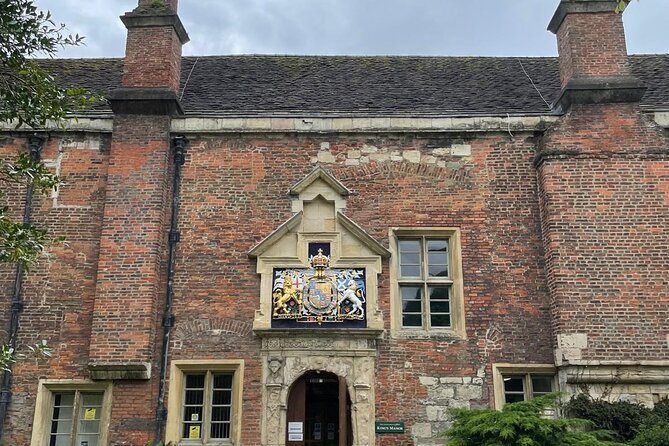
This segment focuses on how a religious site became part of the King’s Manor after Henry VIII’s monasteries were dissolved. The tour also makes a comparison to modern politics (including Brexit), which can be surprisingly effective: it helps you grasp how “big decisions” reshape physical spaces and local lives.
The drawback is that if you aren’t interested in modern parallels, you might tune out for a minute. But even then, it’s a useful reminder that history isn’t just costumes—it’s policy.
Bootham Bar: a toll gate you can almost picture working
At Bootham Bar, you get the medieval “bars”—York’s gate system that once acted like toll points and barriers. The best part is the shift from “this is a cool gate” to “this is civic infrastructure.”
Listen for how gates controlled access and movement, because that’s the kind of detail that makes later wall sections feel purposeful instead of decorative.
Robin Hood Tower: walls, ruin, and preservation battles
Robin Hood Tower links York’s city walls to a much later story: romantic ruins, then preservation efforts, and even legal battles that changed what could be done and how the public could experience the walls.
This is one of the more interesting “why it looks like it does today” stops. You get a clear sense that York’s walls didn’t just survive by luck; people fought to keep them.
Just remember the earlier caution: wall-walk access can be limited at certain times or sections may be closed. If you’re starting in the morning, aim for later than very early hours and be guided by on-site signage.
Monk Bar: home to someone important, and a stage for proclamations
At Monk Bar, the tour reframes a familiar gate by telling you it wasn’t only a barrier. It also served as a home and as a place for public proclamations.
That’s a small but powerful historical move. It turns the gate from a line item into a character in the city—someone lived, spoke, and managed news there.
The mansion with spectral Roman soldiers: elite life and hauntings
Then you hit the “hauntings” portion more directly. You learn about the opulent lifestyle of York’s elite and hear about reported sightings of spectral Roman soldiers and other supernatural stories tied to a mansion setting.
This is where the tour becomes more than a timeline. The audio steers your imagination toward darker legends, but it still ties them to physical locations so it feels grounded, not generic.
Statue of Constantine the Great: a modern marker for an old proclamation
The Statue of Constantine the Great ties into York’s AD 306 connection and his proclamation as Emperor, including the legalization of Christianity. It’s one of those stops that could be easy to skip if you’re only chasing medieval grit.
Don’t. It’s a reminder that even modern monuments can be “footnotes you can walk up to” and that York’s importance didn’t stop when the Roman era did.
York Minster: exterior views and a good pause point
York Minster is the big moment most people already know about. Here, you’ll focus on the Minster’s exterior and you can pause if you want to consider entry.
Because the tour is outside-only, you should treat the Minster segment as a view-and-context stop. If you want to go inside, you’ll need to do that separately on your own schedule.
Stonegate: a shopping street on an older Roman road
At Stonegate, the walk turns lively. You’re on a major shopping street, but the tour reminds you it sits atop an ancient Roman road—then links its later Viking and Norman layers.
This stop is practical. It’s a good place to adjust your pace, grab a drink or snack, and keep the story moving while the city buzz wraps around you.
Mad Alice Lane: the ghost story that sticks
At York, the tour brings you to the tale of Mad Alice, a haunting linked to a narrow lane once called Mad Alice Lane.
The key value here is not whether you believe in ghosts. It’s that the story gives York’s small street detail a reason to matter. It’s easier to remember a location when it’s tied to a person—even a legendary one.
The Shambles: medieval butcher lines and a shrine story
The Shambles is exactly the kind of stop that benefits from audio. You get the narrow medieval lanes, timber-framed buildings, and the sense of an old primary butcher area.
The tour also points out historical sites like the shrine of St. Margaret Clitherow. That adds depth to what can otherwise be a “just shops” stop.
If you’re choosing between pausing for shopping or listening carefully, I’d do both in sequence: listen first so you know what you’re looking at, then shop when the story is “in your head.”
The Golden Fleece: York’s haunted pub moment
Next is The Golden Fleece, pitched as York’s most haunted pub, with stories of more than 15 spirits including Lady Alice Peckett and One Eyed Jack.
Even if you don’t go inside, this is a memorable emotional shift. The tour stops being mostly architecture and becomes folklore and mood—York at night, even if it’s daytime.
Merchant Adventurers’ Hall, Vikings, and York Castle Museum: extra context threads
Between the major landmarks, the audio weaves in additional threads tied to:
- the Merchant Adventurers’ Hall (14th-century)
- Vikings in York
- York Castle Museum
These help you connect the dots without turning the walk into a lecture. It’s the kind of support that makes you feel oriented for later reading or museum visits.
Clifford’s Tower: the ending view that closes the loop
The tour ends at Clifford’s Tower, near Tower Street. This is a strong finish point because it pulls together the defensive theme: towers, walls, and the idea of York as a city shaped by protection, power, and change.
If you still have energy after the audio ends, linger. York’s topography around the castle area can give you a “looking back” perspective on what you just walked through.
Who this walk is best for (and who should skip it)

This is a great pick if you:
- want a self-guided way to see York’s highlights without paying entrance fees for each stop
- like short stop-and-go sightseeing rather than long museum-style visits
- appreciate haunted folklore mixed into real locations
- want an app you can use offline and repeat later within a year
Skip it (or at least think twice) if you:
- want a human guide to answer questions on the spot
- plan to rely on the tour to handle locked gates or closed sections without any detours
- need guaranteed interior access or a museum plan
Quick practical tips so you get the most out of it
- Start at a time that matches on-site access. If you’re tempted to begin very early, don’t. Build in buffer time for locked areas.
- Bring earbuds only if you need them. The tour doesn’t include headphones, so you’ll be using your phone’s audio setup.
- Wear shoes for uneven streets. York’s streets can be old and a bit irregular, and the walking pace is continuous.
- If navigation gets confusing, use landmarks. The Minster and major gates/walls are obvious anchors.
Should you book this History and Hauntings self-guided tour?
Yes—if your goal is a smart, low-cost way to get oriented in York while mixing in hauntings and civic history. The price-to-time ratio is hard to beat, and the offline app approach makes it easy to control your own pace. I’d especially recommend it as an “early day” history primer before you pick specific places to go inside later.
I’d think twice if you hate navigation-by-phone, start very early, or want interior access and a live guide. In those cases, you might feel frustrated when a gate is locked or a wall section is closed.
If you want a fun, story-led walk that keeps moving and gives you something to look for at every turn, this one is a solid choice.