York can feel obvious. This tour makes it complicated—in a good way.
What I like most is the discussion-first style. You’re not just watching a slideshow by a curb; you’re prompted to think about how heritage is presented, and why certain stories get left out. I also like that it stays practical: six focused stops across the center, with just enough time at each place to keep moving without feeling rushed.
One possible drawback: it’s an outside-only tour. If you’re hoping to go inside York Minster or Barley Hall, this route won’t do that for you, and any entry is on your own.
In This Review
- Key things I’d mark on your map before you go
- A 90-Minute Walk That Reframes York
- Price and What You Get for $24.55
- Meeting Point to Riverside Finish: How the Route Feels
- Stop-by-Stop: York Minster to Tower Gardens in Six Conversations
- Stop 1: York Minster Cathedral (Heritage Spaces, How We Stage Meaning)
- Stop 2: Barley Hall (Medieval York and the Gaps in What We Assume)
- Stop 3: Kings Square (Chocolate History and Commercialisation)
- Stop 4: Pavement Street (Rowntree Grocer’s and International Trade Networks)
- Stop 5: Friargate Quaker Meeting House (Medieval Friargate and Early Women in Confectionery)
- Stop 6: Tower Gardens (Jewish History From Early Medieval to Modern)
- Why the Tour’s Discussion Style Matters
- Who This York Tour Is For (and Who Might Want a Different Plan)
- Should You Book the Original Uncomfortable York Tour?
- FAQ
- How long is the Original Uncomfortable York Tour?
- Where does the tour start?
- Where does the tour end?
- Is admission to York Minster included?
- Does the tour go inside buildings or attractions?
- Is the tour available in English?
- What is the maximum group size?
- Is there a mobile ticket?
- Is free cancellation available?
- Final Decision: My simple recommendation
Key things I’d mark on your map before you go
- Outside-only, walk-and-talk format so you can see the key spots fast
- York Minster to Tower Gardens in about 1.5 hours, with steady pacing
- Heritage as a debate, not a lecture, with lots of group questions
- Unheard stories called out directly, including women, queer people, and people of colour
- Chocolate, trade, and religion woven into one coherent city story
- Small group size (max 20), which makes discussion more than a show
A 90-Minute Walk That Reframes York
This is the kind of York tour that changes what you notice the moment you step outside. It starts at York Minster and keeps circling back to a simple question: who gets to define history, and how does that affect what you think you’re seeing?
The timing is a big part of why it works. At about 1 hour 30 minutes, you get enough time to learn the threads and still have room to explore on your own afterward. Each stop is roughly 15 minutes, so you don’t spend long stretches in one place hoping the group catches up.
The vibe is also intentionally human. People come away talking, because the tour pushes you to respond, not just listen. In the feedback I saw, the guide made a point of asking questions and inviting different viewpoints, which fits this “uncomfortable” idea: history should feel a little tense when you pay attention to who’s missing.
And yes, it’s fun. The tour uses York’s familiar landmarks and then ties them to stories that don’t usually get center stage. If you like learning that challenges the “default version” of a city, this format makes it easy.
You can also read our reviews of more tours and experiences in York.


Price and What You Get for $24.55
The price is $24.55 per person, and the value comes from what’s included: a dedicated Uncomfortable York guide and a structured route with clear stops. You’re not paying for entry fees or for a building tour, so the cost stays low even if you’re visiting during a busy season.
You’ll also appreciate the small-group approach. With a maximum of 20 people, it’s easier for the guide to keep the energy moving and still handle questions. That matters because the main feature here is conversation, not just sight-seeing.
A second value point is the coverage. You get a walk through six locations that touch religion, medieval life, commerce, gender, and community histories. It’s a compact way to pick up context before you start choosing your own “deep” stops inside museums or paid attractions.
Two practical notes to keep in mind:
- The tour doesn’t go into buildings or attractions.
- Some stops list tickets as not included, which matters only if you decide to add optional visits later on your own.
Meeting Point to Riverside Finish: How the Route Feels
You start at Bennett’s Cafe and Bistro, 30-32 High Petergate, York YO1 7EH. That’s handy because High Petergate is close enough to the core sights that you can roll right into the walk without a complicated transit plan.
The tour ends at the riverside of Tower Gardens. That’s a good natural finish if you want to keep walking afterward or grab a drink nearby, instead of ending in the middle of nowhere.
Logistically, it’s designed for an easy participation level. The tour notes say most people can take part, and it’s near public transportation. If you need service animals, they’re allowed.
My advice: wear shoes you can trust. You’re walking between major landmarks, and you’ll be stopping, starting, and regrouping at street corners. The structure is steady, but this still feels like a real walking tour, not a slow amble.
Also, you’ll get a mobile ticket, and confirmation is received at booking. So you’re not scrambling for paperwork once you arrive.
Stop-by-Stop: York Minster to Tower Gardens in Six Conversations
This tour is set up like a set of arguments you can walk alongside. Each stop adds a new angle on York—then turns it into questions about modern understanding.
Stop 1: York Minster Cathedral (Heritage Spaces, How We Stage Meaning)
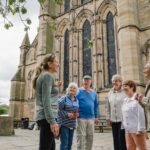
You meet outside York Minster Cathedral, and the guide frames the tour around what heritage spaces are supposed to do. You’ll talk about the “staging” effect—how a place can guide your interpretation without you even realizing it.
This is a smart opener. Minster-area York is full of big visual cues, so you get a chance to slow down and think about why those cues persuade you. Expect this stop to set the tone: history isn’t just facts; it’s also presentation.
A key consideration: the tour is outside only. If you want to go inside York Minster, that’s not part of the tour, and any ticket would be separate.




Stop 2: Barley Hall (Medieval York and the Gaps in What We Assume)
Next you’re at Barley Hall. Here the message shifts from “how heritage works” to “what we get wrong.” The focus is on the holes in modern understandings of medieval York.
This stop is valuable if you think you already know York. The tour’s premise is that even familiar stories can be incomplete, and this is where you start noticing the missing pieces.
Again, no building entry is part of the tour. The ticket note here is mainly about separation: you can’t treat this as a combined exterior walk plus interior admission.
Stop 3: Kings Square (Chocolate History and Commercialisation)
At Kings Square, the tour moves into a topic that feels everyday: chocolate history and how it connects to commercialisation. You’ll learn how a local story links to bigger forces—business, branding, and how products become identity.
This is one of the best stops for people who like learning that mixes culture with economics. You don’t need a background in confectionery or trade to follow along, because the guide ties the explanation to what you’re seeing nearby.
Ticket note: this stop is listed as free, and since you’re not entering attractions on the tour route, that lines up with the outside-only format.
Stop 4: Pavement Street (Rowntree Grocer’s and International Trade Networks)
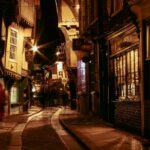
Then you head down the historic street called Pavement. This stop is where the tour earns its “uncomfortable” label in a more grounded way: it talks about Rowntree Grocer’s and the beginnings of international trade networks in the city.
The takeaway is about connections. You’re seeing York as part of wider systems, not isolated by time or geography. If you’ve ever felt that UK history tours stay too locally focused, this is the moment that widens the frame.
This stop is also marked as free, and you’ll be learning via street-level context, not ticketed entries.
Stop 5: Friargate Quaker Meeting House (Medieval Friargate and Early Women in Confectionery)
At Friargate, the tour visits the Quaker Meeting House area. The theme here is medieval Friargate, plus the guide’s discussion of early women in the city’s confectionery world—specifically, the first female confectionaries in York.
This is where the tour hits one of the most praised ideas: it centers voices that are often treated as footnotes. If you’re interested in gendered history—who had work, who had recognition, and how records survive—this stop is a strong hit.
It’s also part of the tour’s social-history approach. The guide tends to turn the facts into questions: not just what happened, but how later storytelling handled (or failed to handle) people like this.
This stop is listed as free, and you’ll remain outside.
Stop 6: Tower Gardens (Jewish History From Early Medieval to Modern)
The final stop is Tower Gardens, finishing near the riverside of Tower Gardens. The theme is Jewish history in the city, running from the early medieval period to the modern day.
Ending here works. You get a “through line” across time, instead of ending on a single era. And because the group is already walking, it feels like the tour is closing a circle: York’s story isn’t one chapter; it keeps unfolding.
This stop is marked free. Since the whole tour avoids buildings, you don’t need entry tickets to follow the main story.
Why the Tour’s Discussion Style Matters
The best tours don’t just give you information. They change your questions. This one consistently pushes you to think about the experience of history—how you see it, who you’re taught to trust, and what counts as the official version.
In feedback I read, the guide worked hard to spark discussion. That means the tour isn’t only a monologue, and it isn’t only an “everyone be quiet while the guide talks.” You’ll be asked to consider issues like who is missing from typical narratives and how those gaps shape what people assume about a city.
Another praised theme is inclusion. The tour’s approach spotlights women, queer people, people of colour, and migrant communities. That doesn’t come across as vague moralizing. Instead, it’s woven into concrete topics like confectionery, trade networks, and the city’s religious history.
I also like the way this approach fits with York’s well-known sites. You’re standing outside major landmarks, but you’re not forced to worship them as untouched icons. You get to treat them as objects of interpretation, which is a more honest way to travel.
One small caution: if you hate discussion-based tours, this might feel slow at points. But if you enjoy talking through ideas—even briefly—this is exactly the kind of tour where your brain stays active.
Who This York Tour Is For (and Who Might Want a Different Plan)
This is a strong pick for:
- First-timers who want context fast, without paying for multiple entries
- International visitors who appreciate a guided explanation that links themes together
- Students and conference groups who need an efficient, thoughtful city intro
- People who like history that treats power, identity, and records as part of the story
It’s also a good option when you want to see main landmarks while still staying open-minded. York Minster, Barley Hall, Kings Square, and the rest are familiar shapes on the map, but the tour gives you a reason to care beyond architecture.
You might skip this (or pair it with other plans) if:
- You want mostly indoor time and paid attractions
- You prefer a traditional lecture style with minimal interaction
- You dislike tours that focus on interpretation and social issues
Should You Book the Original Uncomfortable York Tour?
Book it if you want a low-cost, small-group walk that turns York into a set of questions, not just a list of sights. The structure makes it easy to follow, the themes are practical and city-based, and it’s especially worth it if you care about marginalised histories and how heritage narratives get built.
Skip or pair it if you’re chasing interior access. Since it’s outside only, plan other time for York Minster or Barley Hall if those are top priorities for you.
FAQ
How long is the Original Uncomfortable York Tour?
It runs for about 1 hour 30 minutes.
Where does the tour start?
The meeting point is Bennett’s Cafe and Bistro, 30-32 High Petergate, York YO1 7EH, UK.
Where does the tour end?
It finishes at the riverside of Tower Gardens in York.
Is admission to York Minster included?
No. The tour starts outside York Minster and lists admission ticket not included.
Does the tour go inside buildings or attractions?
No. The tour does not go into any buildings or attractions.
Is the tour available in English?
Yes. The tour is offered in English.
What is the maximum group size?
This experience has a maximum of 20 travelers.
Is there a mobile ticket?
Yes. You’ll have a mobile ticket.
Is free cancellation available?
Yes. Free cancellation is available up to 24 hours before the experience starts for a full refund.
Final Decision: My simple recommendation
If you want York with sharper questions and better-than-average storytelling, this walk is a great buy. It’s short, affordable, and built for discussion—just don’t expect any indoor visits.