REVIEW · YORK
York Private Walking Tour with a Professional Guide
Book on Viator →Operated by Global Guide Services · Bookable on Viator
York’s stories make more sense on foot. This private walking tour is a fast way to hit major landmarks like York Minster and the Shambles, while your guide links them to Roman and Viking York. I like that you get a real back-and-forth with your guide, not just a headset script, and I like the route logic that keeps you walking between the city’s most meaningful sites.
One thing to plan for: entrance fees aren’t included. That means if you want to step inside places like the JORVIK Viking Centre, you’ll pay extra on the day, on top of the tour price.
In This Review
- Key highlights worth knowing
- Starting at York Minster Yard: why the meeting point matters
- York Minster to St Michael-le-Belfrey: fast orientation with big context
- Stonegate and All Saints Church: seeing the Middle Ages as lived-in streets
- The Shambles: a famous street with a guide that makes it click
- Merchant Adventurers’ Hall: where commerce meets power
- JORVIK Viking Centre: making Viking history tangible
- York Castle Museum and York Crown Court: empire, people, and justice
- Clifford’s Tower: a landmark with a kingdom-era storyline
- How the private 2-hour format keeps you from missing key York
- Price and value: what $390.55 buys you in real terms
- Who this York private walking tour suits best
- Booking decision: should you book this York walking tour?
- FAQ
- How long is the York private walking tour?
- How much does the tour cost?
- Where does the tour start and end?
- Is the tour private or shared?
- Are entrance fees included for places like JORVIK Viking Centre?
- Do I get a ticket on my phone?
- How far in advance should I book?
- Is there free cancellation?
- Is the meeting point easy to reach by public transport?
Key highlights worth knowing
- A private guide for your group only means time for questions and on-the-spot route tweaks
- 2 hours focused on landmark-to-landmark walking so you see more than a slow wander
- Roman, Saxon, Viking, and medieval storylines tied to the streets and buildings you’re standing in
- JORVIK Viking Centre and Clifford’s Tower give you anchor points for the Viking and kingdom-era narrative
- Start and end at Minster Yard so you’re not stuck with an awkward mid-city meeting
- Mobile ticket makes last-minute check-in easier once you’re in York
Starting at York Minster Yard: why the meeting point matters
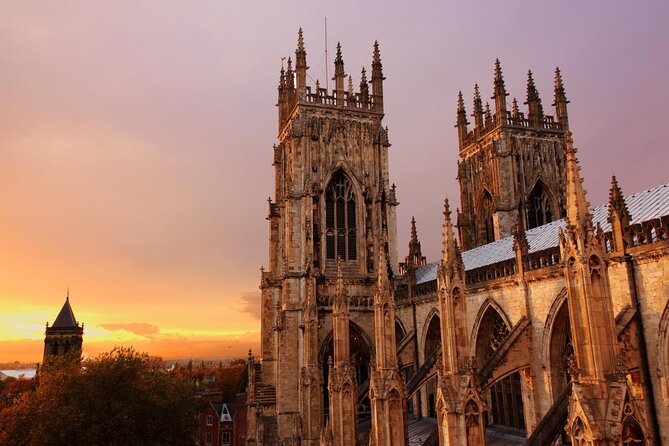
You start at the Cathedral and Metropolitical Church of St Peter in York, Deangate, Minster Yard (YO1 7HH). In plain terms, that’s an easy “York hub” spot. It’s central, it puts you close to the historic core right away, and it makes the walking route feel natural instead of like you’re being shuttled around.
I also like that the tour ends back at the meeting point. It removes the mental load of figuring out how to get yourself across the city after a guide-led walk. For a 2-hour experience, that convenience matters.
If you’re coming in on public transport, you’ll also find this area is well connected. And because it’s a private format, you can move at a pace that works for your group—slower for photos, faster if everyone is ready to power through York’s highlights.
You can also read our reviews of more tours and experiences in York.



York Minster to St Michael-le-Belfrey: fast orientation with big context
The route begins with York Minster, and from there you move to St Michael-le-Belfrey. Even if you’ve seen lots of cathedrals in the UK, York Minster usually feels different because it’s wrapped into the city’s identity. With a local guide, you don’t just get a view—you get the storyline that explains why people built here, kept returning here, and how different eras left their marks.
From that cathedral setting, you continue into the smaller-scale religious landmark of St Michael-le-Belfrey. This is the kind of stop that helps you slow down just enough to notice details you’d otherwise miss. Instead of treating York like a photo checklist, you start reading it like a timeline.
A private guide makes this part work especially well: if something clicks—Roman York, Saxon rule, the Vikings—your guide can adjust what they emphasize as you go. You’ll walk away with a clearer sense of where the city’s power shifted over time.
Stonegate and All Saints Church: seeing the Middle Ages as lived-in streets
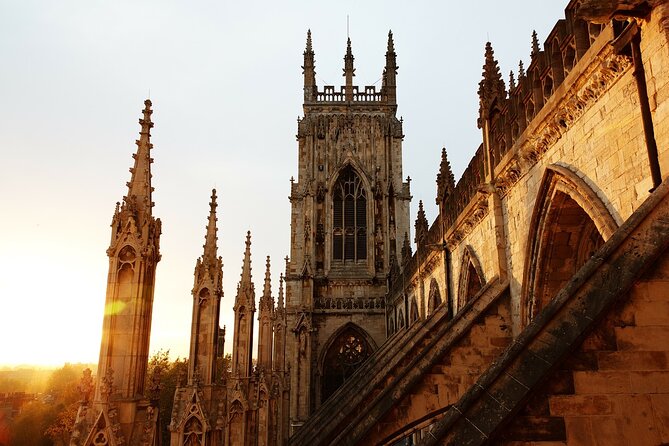
Next up is Stonegate, with a stop at All Saints Church. Stonegate is the kind of street where the buildings and the street layout do a lot of the storytelling for you. Walk it with a guide, and it stops being just a pretty corridor and starts feeling like a place people moved through daily—trades, errands, civic life.
All Saints Church adds a layer of depth. Religious buildings often anchor communities, and in York you can use that to connect the dots between the medieval age and the broader changes that followed. Your guide’s job here is to connect the place names to the bigger transitions they represent—Saxon rule, Viking arrival, and the medieval road to the kingdom.
The benefit of doing this early in the tour is simple: once you grasp the city’s structure—where the important roads and landmarks sit—you’ll understand later stops better. You won’t feel like you’re jumping randomly from one attraction to the next.
The Shambles: a famous street with a guide that makes it click
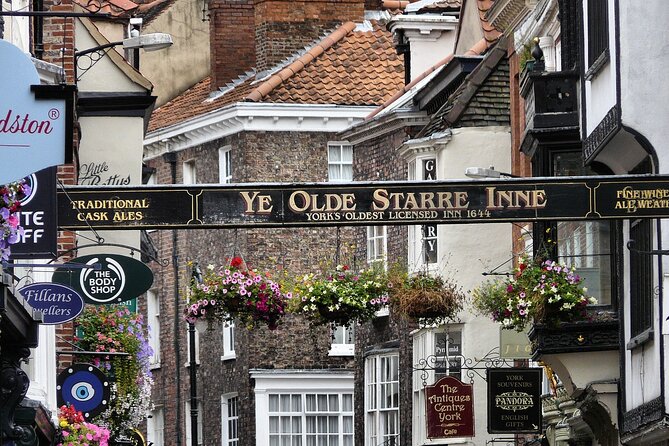
Then comes one of York’s headline sights: the Shambles. This is the sort of place that many people have seen in photos, but in real life you feel how narrow, enclosed, and old it is. With a guide, you don’t just look around—you get a sense of how York’s medieval character shows up in the street itself.
Your tour also ties the Shambles into the wider narrative of medieval York. The city’s evolution isn’t only about kings and battles; it’s also about how ordinary urban life shaped the streets and commerce. Standing in the Shambles helps you connect those dots without needing a museum floor to do the work.
One practical tip: since you’ll be on foot, use the Shambles stop for the photos you truly care about. It’s an easy place to spend extra time, and you don’t want to rush it—yet you also want to keep enough energy for the Viking and castle-era landmarks that come after.
Merchant Adventurers’ Hall: where commerce meets power
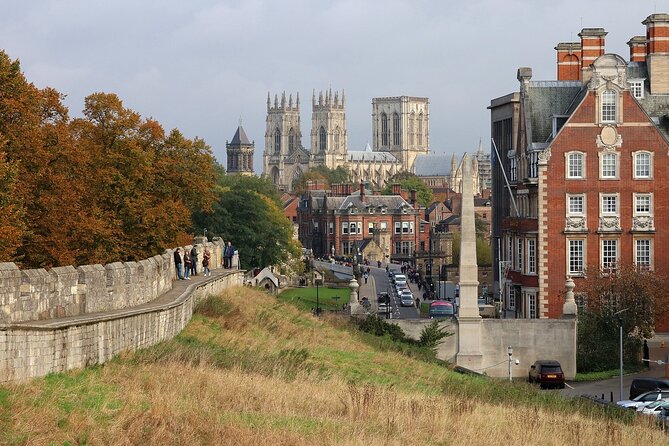
Next you’ll see Merchant Adventurers’ Hall. This is a turning point in the tour because it shifts your focus from religious and residential spaces into local influence—people and institutions that helped shape how York functioned.
Your guide connects this stop to the broader medieval-to-early modern arc: how power worked, how the city’s identity developed over time, and how later national events echoed back into places like York. If you like history that explains why cities mattered, this part tends to land well.
It’s also a great example of why a private walking tour is worth it. A shared group might pass by quickly to keep the schedule. Here, you can ask why this building matters, what role merchant groups played, or how your guide is linking it to the Saxon-to-Viking-to-medieval timeline.
And if you’re traveling with kids or teens who get restless, this is a good moment to ask your guide to tell the story in a way that feels more like people than dates.





JORVIK Viking Centre: making Viking history tangible
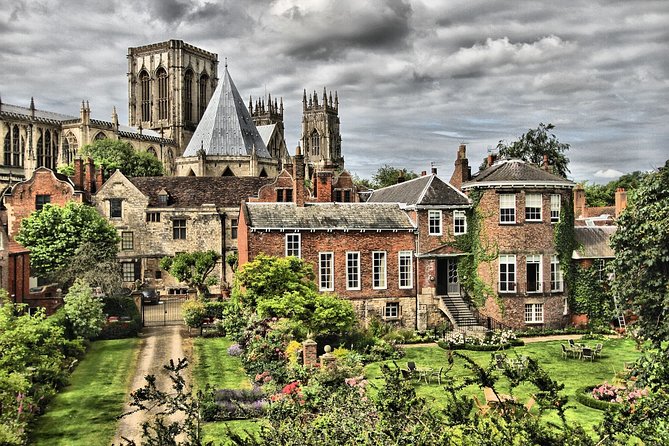
The tour includes the JORVIK Viking Centre. Even if you decide not to go inside (since entrance fees are not included), the stop still helps you understand what Viking York was like as a chapter in the city’s long story.
This is where your guide’s narrative really matters. Your tour covers the arrival of the Vikings, and JORVIK is the natural anchor point for that theme. The Viking era can sound abstract until you’re standing in a place designed to connect the past to the visitor experience.
If you do want to enter, treat it as a separate decision based on time and interest. The tour is about 2 hours overall, so you’ll want to be realistic about whether you’ll have room to add museum time without feeling rushed. Your guide can also talk to you about how the Viking story fits into what you’ve already seen earlier in the walk.
This is one of the stops where I think the private format pays off most: you can tailor how much emphasis you want on Vikings versus Roman and medieval themes.
York Castle Museum and York Crown Court: empire, people, and justice
After the Viking anchor, you move toward two very different York experiences: York Castle Museum and York Crown Court. Together, they broaden your view of history beyond the romantic stuff.
York Castle Museum connects well to the theme of how York moved from ancient eras toward the modern age. The tour storyline includes the Industrial Revolution and the arrival of the modern age, and a museum setting is a natural place to understand that transition.
Then York Crown Court brings the “what happens next” feeling—how law and civic life operate through changing times. It’s a reminder that history doesn’t only live in battles and ruins. It lives in institutions that handle conflict, organize society, and shape daily outcomes.
The challenge in stops like these is crowding and pacing. Because this is a private tour, you’re not forced to follow a rigid herd. You can ask questions when something catches your attention and spend a minute longer if your guide can explain the connection in a way you actually enjoy.
Clifford’s Tower: a landmark with a kingdom-era storyline
Clifford’s Tower is included as a major stop, and it’s one of the sights that tends to stick in memory. It’s visually dramatic, but more important, your guide ties it into the story arc of York’s medieval age and the road to the kingdom. That context turns the tower from a standalone viewpoint into a chapter in the city’s political evolution.
Your tour’s background includes William the Conqueror and the Scottish Wars. Even without heavy textbook talk, a good local guide can connect those national stories to what they meant on the ground. Clifford’s Tower helps you do that because it’s hard to ignore while you’re standing there.
This is also a good place to ask your guide what era matters most to York’s identity. If you care more about Vikings, you’ll want to reference the Viking arrival story you heard earlier. If you care more about the shift from ancient to medieval, Clifford’s Tower naturally supports that.
In a private setting, you can finish with a stronger takeaway. You don’t just leave with pictures—you leave with a mental map.
How the private 2-hour format keeps you from missing key York
This tour is about 2 hours, and it’s designed to “tick off” major York landmarks without feeling like a sprint through a museum. The best part is not speed for speed’s sake; it’s the fact that the walking format gets you to places that are harder to reach well by bus.
You also get customization on the spot. That’s a big deal if your group has mixed interests: one person wants Roman York, another wants Vikings, and someone else just wants the best streets and buildings for photos. Instead of forcing everyone into one script, you can guide your route using your guide’s knowledge while you’re actually in York.
Group size matters too. It’s priced per group up to 15. With a private guide for your party only, the tour feels like a conversation rather than a chore. And because confirmation is received at booking time and the ticket is mobile, you’re not juggling a paper process on the ground.
Price and value: what $390.55 buys you in real terms
The price is $390.55 per group (up to 15) for about 2 hours. That sounds high if you’re thinking per person. But as soon as you do the math, it becomes clearer.
- If you had the full 15 people, you’d be around $26 per person.
- If you had 4 people, you’d be about $98 each.
So the value depends on your group size. This is the kind of private tour that makes sense when you’re traveling with friends, family, or a small club—basically anyone who can spread the cost.
The other value piece is time. You’re not spending hours bouncing between attractions independently. You’re getting a structured walk with a guide who can answer questions while you’re standing in front of the landmark. Entrance fees are extra, but the guide service itself is the core product.
Given the tour is typically booked about 51 days in advance on average, it’s smart to plan ahead if your dates are fixed. The more tight your travel window, the more booking early helps.
Who this York private walking tour suits best
This tour fits well if you want structure without losing flexibility. I’d especially recommend it if:
- You love history that moves across eras: Roman Empire and its fall, Saxon rule, Viking arrival, and medieval power shifts
- You want York highlights packed into a short visit
- Your group includes people with different interests and you want a guide who can adjust
It’s also a solid choice for people who prefer walking over buses. Since some key sights aren’t always the best by bus, the on-foot route is the point.
From the practical side, most travelers can participate, service animals are allowed, and the meeting area is near public transportation. It’s also private, meaning only your group takes part—no unexpected strangers joining your questions mid-walk.
Booking decision: should you book this York walking tour?
If your goal is to get your bearings fast and learn the why behind York’s landmarks, I’d book it. The private format is the big draw: you get answers in real time and can shape the route around what your group cares about most.
If your group is only 1 or 2 people, consider whether the private price matches your style. This tour becomes a standout value when you can share the group cost up to the 15-person cap.
One more thought: since entrance fees aren’t included, decide in advance whether you want to add stops like JORVIK Viking Centre inside. With that choice made, you’ll enjoy the walking portion even more because your day has a clear plan.
FAQ
How long is the York private walking tour?
It runs for about 2 hours.
How much does the tour cost?
It costs $390.55 per group, up to 15 people.
Where does the tour start and end?
It starts at the Cathedral and Metropolitical Church of St Peter in York, Deangate, Minster Yard (YO1 7HH) and ends back at the same meeting point.
Is the tour private or shared?
It’s private. Only your group participates.
Are entrance fees included for places like JORVIK Viking Centre?
No. Entrance fees are not included.
Do I get a ticket on my phone?
Yes. It uses a mobile ticket.
How far in advance should I book?
On average, it’s booked 51 days in advance, so booking early is a good idea for fixed travel dates.
Is there free cancellation?
Yes. You can cancel up to 24 hours in advance for a full refund.
Is the meeting point easy to reach by public transport?
Yes, it’s near public transportation.