REVIEW · LONDON
Winston Churchill’s London – A Very Small Group Walking Tour
Book on Viator →Operated by Richards Tours · Bookable on Viator
Churchill’s London is not museum quiet. This small-group walk turns the city into a timeline, with sharp stops that connect his childhood, style, and politics to the actual streets. I especially love the pace and storytelling: you get little-known details (including his U.S. connections and the hands-on way he shaped what he wore). One thing to consider: the tour keeps each stop brief, and the big indoor finish at the Churchill War Rooms requires a separate ticket you’ll want to book ahead.
With a maximum of six people, you’re not lost in a crowd. I also like that the tour isn’t just “look at a building” history; it mixes show-me-and-tell-me moments like the cigar shop and the tailored-suit addresses, then lands at the Cabinet War Rooms with context for what you’ll see next. If you’re hoping for long museum time during the tour itself, plan to add that separately.
In This Review
- Key highlights you’ll feel quickly
- Walking through Churchill’s life, not just his landmarks
- Mayfair: Churchill’s youthful ambition, homes, and the Allies Statue pause
- Savile Row at Henry Poole and Co.: bespoke suits with Churchill DNA
- St James’s shopping streets: aftershave, cologne, and Churchill’s favorite stops
- Spencer House: family roots, Blenheim beginnings, and the Spencer-Churchill link
- Turnbull & Asser: the romper suit and Churchill’s comfort under pressure
- James J. Fox & Robert Lewis: cigars as a personality you can taste
- St Margaret’s Church and Parliament Square: marriage, peerage decisions, and public life
- Whitehall and the Red Lion: tradition served one Prime Minister at a time
- Downing Street and the Churchill War Rooms: the final story landing
- Price, timing, and whether $94.65 feels fair
- Who should book this Churchill walk (and who might want something else)
- Should you book Winston Churchill’s London with a very small group?
- FAQ
- What’s the group size for Winston Churchill’s London?
- How long is the walking tour?
- How much does the tour cost?
- Is entry to the Churchill War Rooms included?
- Where does the tour start and end?
- Is the tour offered in English?
- Are service animals allowed?
Key highlights you’ll feel quickly
- Six people max: easier Q&A and a more personal rhythm as you move between landmarks
- Tailoring stops that connect to Churchill’s wardrobe: Henry Poole and Co., plus Turnbull & Asser with the suit story
- Cigars as a character trait: Romeo y Julieta and even a seat in his chair at the merchant
- Marriage and politics in the same walk: St Margaret’s Church to Parliament Square without whiplash
- A guided landing at the Churchill War Rooms: what was once top secret, explained right before you go in
Walking through Churchill’s life, not just his landmarks
This tour works because it treats London like a set of clues. You move through Mayfair, Savile Row, St James’s, Parliament Square, and Whitehall in a way that feels like following a person’s habits—home life, dress, friends, and leadership. Instead of big “monument stops,” you get a sequence of places tied to specific phases of Churchill’s life.
The small group cap of six matters. With fewer people, the guide can keep the story flowing without talking over you, and you can ask follow-up questions when something sparks your interest. One praised constant in the experience is the guide’s ability to adjust the tour for the group, which usually means you won’t get stuck with a rigid script.
You’re also given a practical, mobile-ticket setup and lots of outdoor time. Many stops are ticket-free, which makes the walking route feel efficient for a 2–3 hour window.
You can also read our reviews of more tours and experiences in London.


Mayfair: Churchill’s youthful ambition, homes, and the Allies Statue pause
Mayfair is where the tour starts by setting tone. This is the part tied to the young, ambitious Churchill—before Prime Minister, before wartime myth—when he was building a name and testing what he wanted from the world.
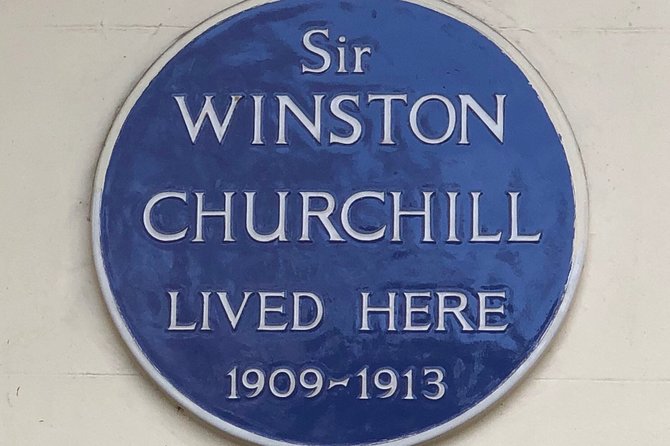
You’ll see several key personal addresses: his first childhood home, a bachelor pad, and the home he set up with his wife, Clementine. You also get a visit related to his favorite tailors, which is a nice early hint that his style choices weren’t random; they were part of his identity.
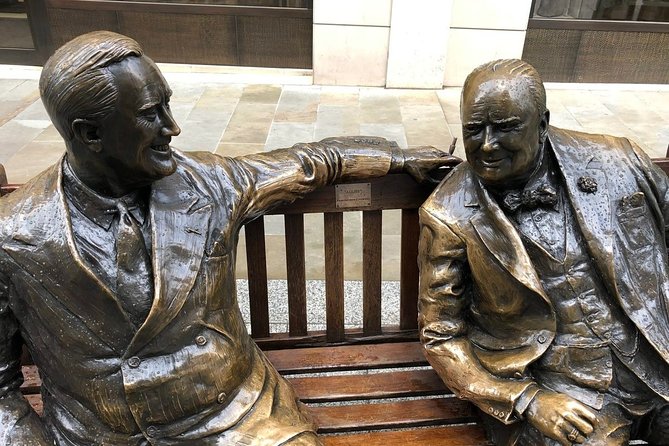
Then there’s a quick photo moment at the Allies Statue, featuring Churchill and Roosevelt. Even if you skip photos, the point is the story behind the partnership and how Churchill positioned Britain in the wider world. This is a smart use of time—short stop, high payoff.
Potential watch-out: the Mayfair portion is still time-boxed (about 45 minutes). If you like to linger and read plaques slowly, you’ll need to rely on your own extra wandering later.
Savile Row at Henry Poole and Co.: bespoke suits with Churchill DNA
Next stop is Savile Row, where clothing becomes history. Savile Row is famous for bespoke formal wear, but here it’s connected directly to Churchill’s family and his own lifelong relationship with tailoring.
You’ll stop at Henry Poole and Co., a historic tailor with a long association with the Churchill family. The details that make this stop memorable are the connections: Winston’s father, Randolph, and Winston himself are tied to suits made by this shop, including the pinstripe suit made famous by Churchill in the well-known Tommy Gun photo.
The tour also shares a fun-sounding tradition: when suits came back for alterations, cigar stubs were reportedly found in pockets. It’s the kind of anecdote that makes a historical figure feel human instead of distant.
There’s also a film tie-in mentioned here: Henry Poole and Co. was called upon to make Gary Oldman’s suits for The Darkest Hour. That doesn’t replace the real history, but it shows how Churchill’s look continues to influence modern storytelling.
This stop is brief (around 10 minutes), but the aim is clear: give you enough to understand why Churchill’s silhouette became part of his public image.
St James’s shopping streets: aftershave, cologne, and Churchill’s favorite stops
St James’s is the tour’s “gentleman’s London” chapter. It’s an exclusive shopping area, and the point isn’t brands as trophies—it’s that Churchill’s preferred shops and products are treated like part of his routine.
You’ll get an overview of how this area catered to discerning gentlemen with deep pockets, including the kind of stores associated with a James Bond-style London vibe. You’ll also see shop types Churchill frequented: aftershaves, Cologne, and even a cheese monger.
That last detail is oddly perfect. It helps you remember Churchill wasn’t only a war leader. He lived in London as a working man with preferences, habits, and small pleasures that sat alongside enormous responsibilities.
How to get more out of this stop: if you’re the type who likes to read storefront names like clues, take a moment to write down what catches your eye. Since the stop is about 20 minutes, you won’t have time to browse deeply, but you can revisit later on your own.
Spencer House: family roots, Blenheim beginnings, and the Spencer-Churchill link
Spencer House is a key pivot from “street-level Churchill” to ancestry and family structure. The tour reminds you that Churchill was born at Blenheim Palace in 1874, but early years were spent in London. That blend matters: you’re seeing how his story is anchored in both the country estate world and the city life that shaped him.
You’ll start at Spencer House and also at a smaller house next door where young Winston grew up. The guide ties his father, Lord Randolph Churchill, to the 7th Duke of Marlborough and explains the family name Spencer-Churchill.
Then the tour adds a connection to Diana Spencer (Princess Diana). The relationship is presented as part of the family story, helping you see Churchill in a longer lineage of British social history rather than as a stand-alone icon.
This stop is short (around 10 minutes). Still, it gives you a mental framework: who he came from, and why London addresses matter in his early formation.




Turnbull & Asser: the romper suit and Churchill’s comfort under pressure
Now you get one of the most practical-sounding chapters: what Churchill wore when life got rough. Even if you’re not into fashion, this stop is interesting because it’s functional history.
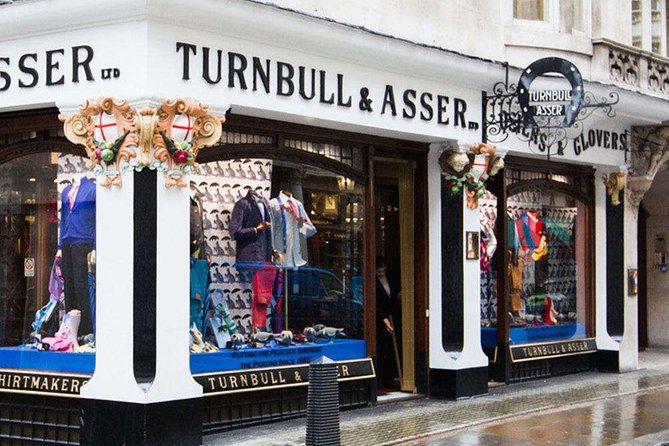
Turnbull & Asser is where the tour connects Churchill’s “snappy dresser” image to the reality of staying comfortable in hard conditions—like cold nights at Chartwell watching bombs fall over London. The guide talks about the so-called romper suit (also known as the Siren suit), made to Churchill’s specifications for those conditions.
It’s also tied to royalty in a specific way: Turnbull & Asser was the first company Prince Charles gave a Royal Warrant to. That detail helps the shop feel more than a costume stop—it’s a sign of enduring British craftsmanship.
Time-wise, you’re only here about 10 minutes, but the reason this works is that it reframes Churchill’s brand: style wasn’t just image. It was equipment for surviving his world.
James J. Fox & Robert Lewis: cigars as a personality you can taste
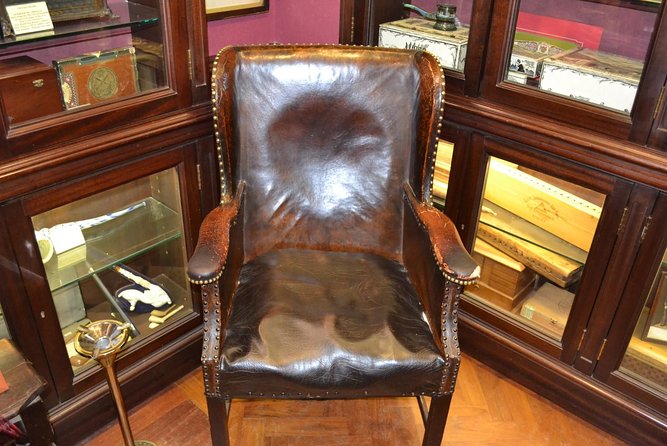
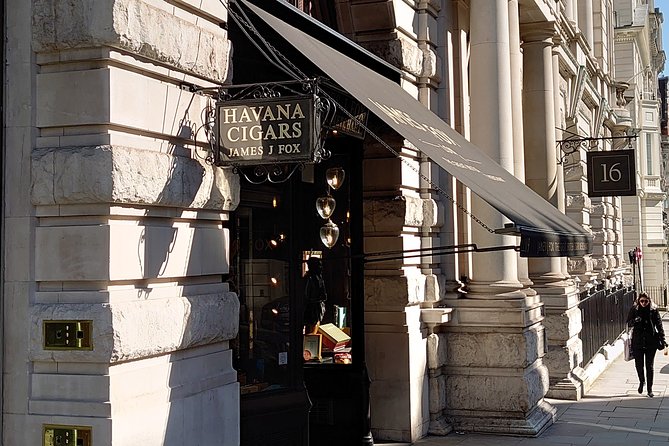
Churchill’s cigar shows up as a genuine character trait on this tour. You’re taken to the cigar merchant where he bought his cigars, and the experience includes the chance to sit in his chair.
The brand mentioned here is Romeo y Julieta, which becomes a kind of anchor for the story. Then there’s an option that’s more than window-dressing: you can even sample a cigar in the upstairs lounge.
If you don’t smoke, no problem—this still works as a cultural moment. You learn how Churchill’s habits were visible enough to become part of the public picture, but without turning the tour into pure “look at the famous guy” theater.
This stop is around 10 minutes. Again, it’s quick, but it’s also sensory, which is exactly what you want in a walking tour full of addresses and plaques.
St Margaret’s Church and Parliament Square: marriage, peerage decisions, and public life
Then the tour moves from personal life to political life with a clean transition.
At St Margaret’s Church on Parliament Square, you learn that Churchill married Clementine Hozier there on 12 September 1908. It’s right next to Westminster Abbey, and the guide frames it as a church tied to events in the life of the House of Commons—celebrations, memorials, and thanksgiving.
This is one of those moments where you get a human timeline: major life event, in the exact area tied to governance and power.
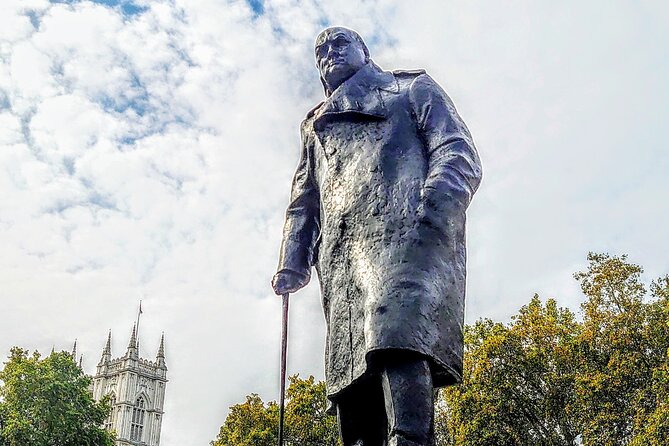
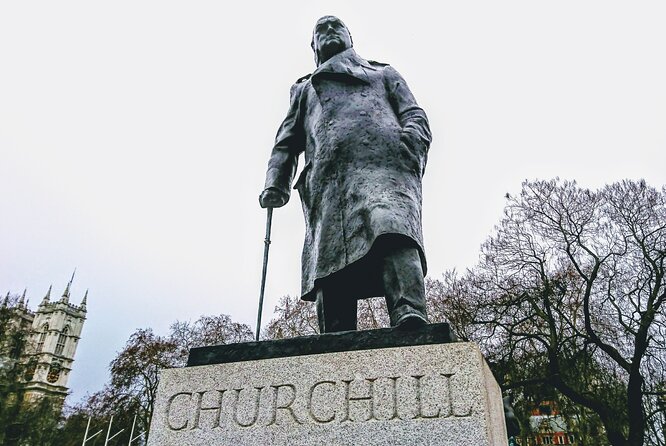
Next is Parliament Square, across the road from the Houses of Parliament. You pause for the statue of Sir Winston Churchill, and the story shifts to the choices he made about status. Churchill was offered a peerage and a dukedom, but he declined both because accepting would stop him (and his male descendants) serving in the House of Commons.
That detail is one of those “wait, that matters” facts. It explains how he valued a specific kind of political role over conventional honor. It also helps you understand why Churchill’s relationship to Parliament wasn’t just symbolic.
You only have about 10 minutes at each of these stops, so don’t plan to read everything slowly. Instead, use the time to catch the big story beats, then keep your curiosity for later.
Whitehall and the Red Lion: tradition served one Prime Minister at a time
Whitehall brings a down-to-earth pause to the route. The tour includes a brief look at the Red Lion pub, with a connection to all British Prime Ministers.
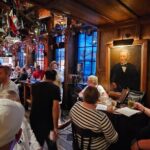
The guiding idea here is tradition and continuity: the pub has served every Prime Minister a drink, including Churchill. And yes, the tour leans into the fact that Churchill loved a drink and loved tradition. It’s a simple, almost cheeky way to show how routine and ritual lived alongside high politics.
This stop stays short (around 10 minutes), but it’s memorable because it’s not a grand “state” setting. It’s a human-scale place that helps you imagine the habits behind the headline moments.
Downing Street and the Churchill War Rooms: the final story landing
The tour’s penultimate stop is 10 Downing Street. The guide frames it as the official residence of the Prime Minister since Robert Walpole. Then the detail that’s easy to remember: the door Winston Churchill walked through as Prime Minister in 1940 is preserved and on display in the Churchill War Rooms.
This helps the tour avoid a common walking-tour problem—ending with a famous place but leaving you unsure what to do next. Here, you know why you should care about the War Rooms finish.
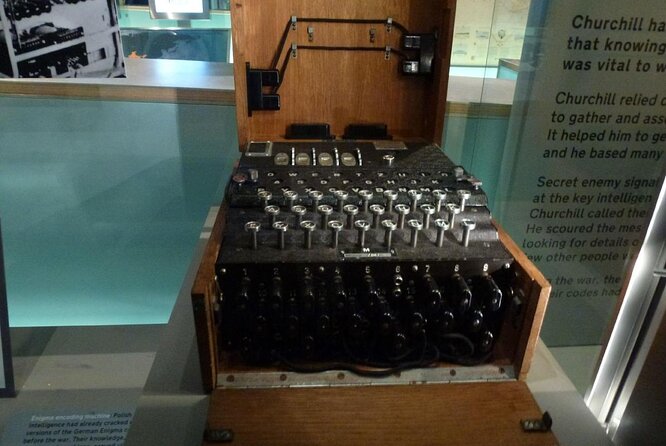
Finally, you end at the Churchill War Rooms, including the Cabinet War Rooms and Churchill Museum. Your guide gives context about how this once top-secret bunker served as the base from which Churchill directed the British side of World War II.
One practical note: the tour finishes outside, and entry to the War Rooms is not included. If you want to go inside, you should book tickets in advance. That matters because this place is popular and can sell out.
The good part is that your guide won’t just say random facts. The story you hear at street level is meant to click with what you’ll see behind the doors.
Price, timing, and whether $94.65 feels fair
At $94.65 per person for about 2–3 hours, the value depends on what you want from London.
If your goal is a focused Churchill narrative tied to addresses, this price can make sense. You get a max 6-person group, a guided storyline across multiple neighborhoods, and a route that many visitors would not piece together on their own without spending a lot of time researching.
The trade-off is that several stops are brief by design, and the most famous indoor element—the Churchill War Rooms—requires a separate ticket. So I’d treat this as a guided prelude plus a street-level explanation, not as a full “everything included” day.
The good news: a lot of the stops you’ll experience are ticket-free, so you’re not paying entry fees at every corner. You’re paying for the guide’s ability to connect the dots quickly.
Also, this tour tends to be booked ahead (around 78 days on average). If you’re traveling in peak season or want a specific day, it’s smart to secure your slot early.
Who should book this Churchill walk (and who might want something else)
This tour fits best if you:
- like biographies told through real places, not only museum rooms
- enjoy the human details—what Churchill wore, what he ate, what he drank, how he chose political roles
- want a manageable time commitment that still covers a lot of ground in central London
You might want to skip or pair this with another plan if you:
- need lots of indoor time during the tour window
- hate quick stops and would rather linger at fewer sites
- want the Churchill War Rooms visit to be fully baked into the ticket you buy (since entry isn’t included here)
It’s also a good choice if you want local texture. The route includes tailored shops, a cigar merchant experience, and a pub tied to the rhythm of government life—settings that feel like London lives there, not like an exhibit was dropped in.
Should you book Winston Churchill’s London with a very small group?
Yes—if you want a smart, story-driven introduction to Churchill’s London with a guide who can make the details connect. The six-person limit helps, and the stops are chosen to reflect how Churchill behaved: in Mayfair, in tailor shops, in places of civic life, and finally in the War Rooms setting where the wartime decisions took shape.
Book this tour when you’re also willing to add the Churchill War Rooms ticket on top. If you do that, you’ll get the full “street to bunker” effect: you’ll understand what you’re looking at before you step inside.
If you’re on the fence, here’s my practical rule: if you like biographies that explain choices (not just dates), this is a strong use of a few hours in London.
FAQ
What’s the group size for Winston Churchill’s London?
The tour is capped at a maximum of 6 travelers, which keeps things personal and helps the guide manage questions.
How long is the walking tour?
It runs about 2 to 3 hours, depending on the pace and timing of stops.
How much does the tour cost?
The price is $94.65 per person.
Is entry to the Churchill War Rooms included?
No. The tour finishes outside the Churchill War Rooms, and entry is not included. If you plan to visit, the tour recommends booking in advance.
Where does the tour start and end?
It starts at 1–3 Arlington St, London SW1A 1RA and ends outside the Churchill War Rooms at King Charles St, London SW1A 2AQ.
Is the tour offered in English?
Yes, the tour is offered in English.
Are service animals allowed?
Yes, service animals are allowed.