REVIEW · LONDON
The Freemasons Tour of London
Book on Viator →Operated by Ye Olde England Tours · Bookable on Viator
London hides Masonic clues in plain sight. This 3-hour, private Freemasons Tour of London threads together religion, military lore, and real City-of-London landmarks, from a little-known well in Clerkenwell to the headquarters at Freemasons’ Hall. With optional hotel pickup and a route paced for a single morning walk, you’ll cover a surprising amount without feeling like you’re sprinting through major sights.
What I especially liked is how the tour uses small, specific places to build a larger story. I love the way it spotlights Clerkenwell’s connections to the Knights of St John and then keeps that momentum through gates, priory gardens, and order museums. I also like the finish near Holborn and Covent Garden, so you can keep exploring after the tour instead of being stranded across town.
One possible drawback: the itinerary is tight and includes several stops where you’re mostly seeing exteriors, plus a few museums that are closed on certain weekdays. If you want slow, museum-heavy time, plan on using this tour to get oriented and spot the next places you’ll return to.
In This Review
- Key Highlights You’ll Feel on This Tour
- Entering The Story: How a Freemasons Tour Feels in Real Life
- Price and Value for a Private Morning at $253.66
- Getting There: Hotel Pickup, Start at Farringdon, End Near Covent Garden
- Stop-by-Stop Walk: Clerk’s Well to Freemasons’ Hall
- 1) Clerk’s Well: A “London doesn’t advertise everything” start
- 2) Marx Memorial Library: Clerkenwell’s political echo
- 3) St John Priory Church Garden and its unexpected military artifact
- 4) St John’s Gate and the Knights of St John world
- 5) Museum of the Order of St John: the only real “inside” punch before it moves on
- 6) The Charterhouse: plague pits and a newly found Black Death victim
- 7) St Bartholomew the Great: a crusader-built church
- 8) St Bartholomew’s Gatehouse: near-800-year-old stone
- 9) William Wallace Memorial: where Braveheart died
- 10) Christ Church Greyfriars Church Garden: ruins under St Paul’s shadow
- 11) Christopher Wren’s Temple Bar: a gate with a past that can turn gory
- 12) St Paul’s Cathedral: the symbol moment
- 13) Blackfriars: the name lives on, the institution doesn’t
- 14) Crypt on the Green: off-the-map monastic remains
- 15) Middle Temple Lane: TV and Dickens vibes
- 16) Temple Church: crusader inspiration with an included ticket
- 17) Inner Temple: the calm side of legal London
- 18) Fleet Street: newspaper trade and a lost monastic ruin
- 19) The Old Curiosity Shop: Dickens still leaves fingerprints
- 20) The Seven Stars: early Freemasons meeting place
- 21) Lincoln’s Inn: Great Fire story in a rarely visited square
- 22) Freemasons’ Hall: the finale at the headquarters
- Day-of-Week Planning: Museums You Might Not See
- The Guide Factor: What Makes the Best Sessions Click
- Who This Tour Suits Best (and Who Might Feel Underwhelmed)
- Should You Book the Freemasons Tour of London?
- FAQ
- How long is the Freemasons Tour of London?
- Where does the tour start and end?
- Is hotel pickup included?
- What language is the tour offered in?
- What parts of the tour include admission tickets?
- Are any museums closed on certain days?
- Are tube tickets included?
- Is the tour private?
Key Highlights You’ll Feel on This Tour
- Hotel pickup in central London lets you start at Farringdon without wrangling transport right away
- A single-morning route from Farringdon to Freemasons’ Hall covers City landmarks efficiently
- Clerkenwell to the Knights of St John pairing makes the medieval-to-Masonic connection easier to follow
- Street-level archaeology vibes at places like the Crypt on the Green and Charterhouse area
- Temple Church and Inner Temple are included stops, giving you two “legal + crusader” anchors
- Day-of-week closures matter: the Order of St John museum closes Mondays and Tuesdays
Entering The Story: How a Freemasons Tour Feels in Real Life
This is not a museum on rails. It’s a guided walk built around places tied to Freemasonry-adjacent themes: medieval orders, crusader-era architecture, military references, and the way faith and power used to share the same streets.
If you like London for its layers, you’ll like this format. You’ll start in a working-city pocket near Farringdon Station and move through the City of London where gates, churchyards, and institutions still leave clues in the stone. The guide’s job is to connect those clues, so the day feels less like random sightseeing and more like solving a map.
Also, it’s private. Only your group participates, so you can ask questions without shouting over other people. That matters when the subject is detailed: knights, crusaders, and institutions that don’t always explain themselves from across the road.
You can also read our reviews of more tours and experiences in London.


Price and Value for a Private Morning at $253.66
At $253.66 per person (for about 3 hours), you’re paying for three things: guide attention, a planned route through hard-to-find corners, and hotel pickup in central London.
That price can feel high if you compare it to big-bus tours. But you’re not buying volume. You’re buying a tight itinerary with time for the guide to answer questions and point out what most casual walks skip.
Here’s how I’d judge value before you book:
- You’re getting hotel pickup, which reduces friction in the morning. That’s especially useful when your tour start is at Farringdon, a spot that’s not always convenient depending on where you’re staying.
- You’re getting a focused theme (religion and military, plus Freemasons connections) rather than generic “famous landmarks only.”
- You’re spending time at multiple included-or-priority interiors: the tour includes the Museum of the Order of St John, plus Temple Church and Inner Temple.
If you’re the kind of traveler who enjoys noticing details—inscriptions, gatehouse shapes, the purpose of church compounds—this becomes good value quickly. If you’re mainly after big, iconic postcard stops, you might feel like you wanted more “top five” monuments instead of half-day City specialists.
Getting There: Hotel Pickup, Start at Farringdon, End Near Covent Garden
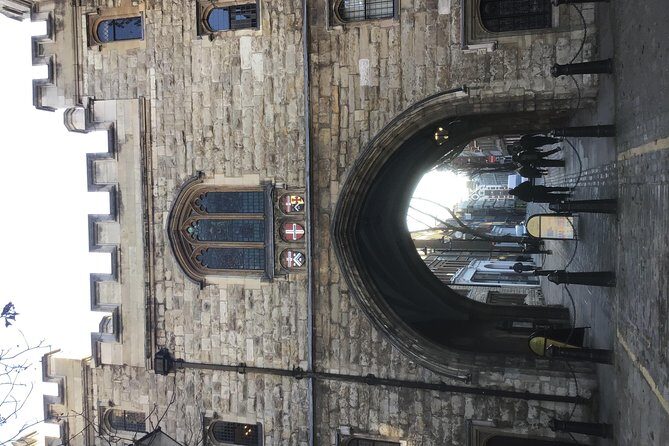
The tour starts at Farringdon Station (Cowcross St, EC1M 6BY) at 9:30 am. The official end point is Freemasons’ Hall (60 Great Queen St, WC2B 5AZ), which is a short walk from Holborn and Covent Garden Underground Stations.
Pickup is offered for central London hotels. You’ll be met in the reception area, then you’ll go to the start by Underground or taxi. One key detail: tube tickets before and after the tour are not included, so budget for that segment if you’re not picked up at the door.
Practically, I like ending near Covent Garden/Holborn. It helps you turn the tour into a half-day that doesn’t end with you searching for your way back.
One more note I’d respect: the tour lists moderate physical fitness. The stops are short, but it’s still a walking route with lots of short “look now, move on” moments.
Stop-by-Stop Walk: Clerk’s Well to Freemasons’ Hall
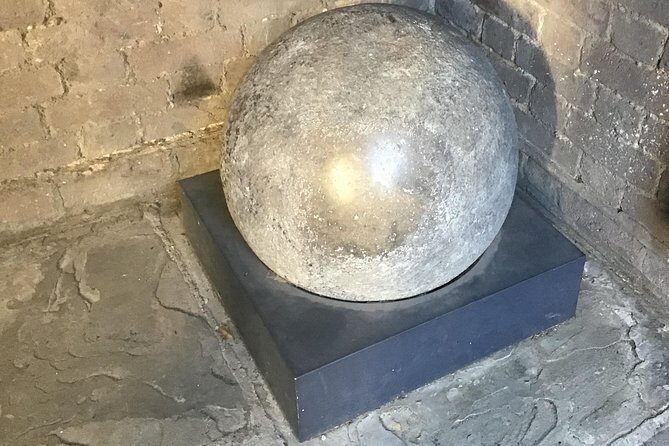
This itinerary moves fast, but it’s designed so each stop adds a piece to the theme. I’ll walk you through what to expect and what to watch for.
1) Clerk’s Well: A “London doesn’t advertise everything” start
You begin at Clerk’s Well, a hidden well even many Londoners don’t know. The attraction here is the story: an old knights well helped give its name to the district of Clerkenwell.
Even if you only spend a few minutes here, it sets the tone. The tour keeps rewarding you for looking past the obvious.




2) Marx Memorial Library: Clerkenwell’s political echo
Next is the Marx Memorial Library, described as a working institute connected to communist heritage. You’re there briefly, but it’s a reminder that London’s institutions don’t only reflect medieval roots. They also reflect the 1800s and 1900s, and the people who fought to change what London would become.
This stop is more “institution” than “monument,” so if you love architecture, you’ll get less stone-and-mortar drama here.
3) St John Priory Church Garden and its unexpected military artifact
At St John Priory Church, you’ll see the church garden with traditional medicinal plants. The surprise is an ancient military weapon the tour highlights.
That mix is a good match for this theme. It’s the kind of place where a normal tourist might focus on the plants, while your guide connects them to the broader order-and-defense mindset of the time.
4) St John’s Gate and the Knights of St John world
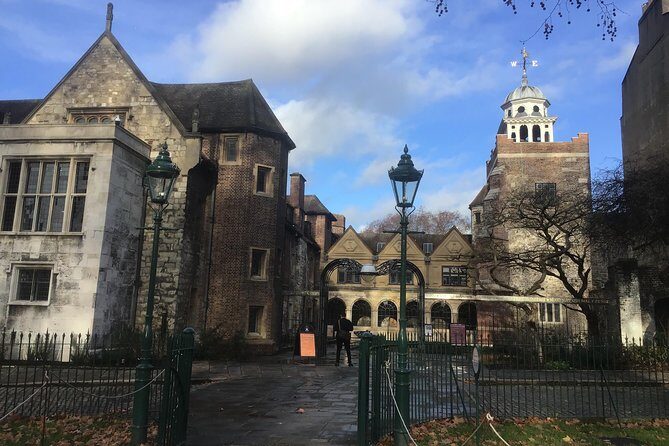
Then you reach St John’s Gate, an impressive gatehouse/tower once used as an entryway to the Knights of St John compound. This is one of those stops where the structure itself does the talking.
If gates are your thing, plan to pay attention to the entry layout and what you can infer about who came in and why.
5) Museum of the Order of St John: the only real “inside” punch before it moves on
At the Museum of the Order of St John, the tour says the gatehouse belongs to the Crusaders’ order and gives you a quick look inside their weapons and armour. The ticket is included here.
Two practical cautions:
- The museum is closed on Mondays and Tuesdays.
- Your time inside is short, so don’t treat it like a full museum day. Treat it like a focused introduction.
6) The Charterhouse: plague pits and a newly found Black Death victim
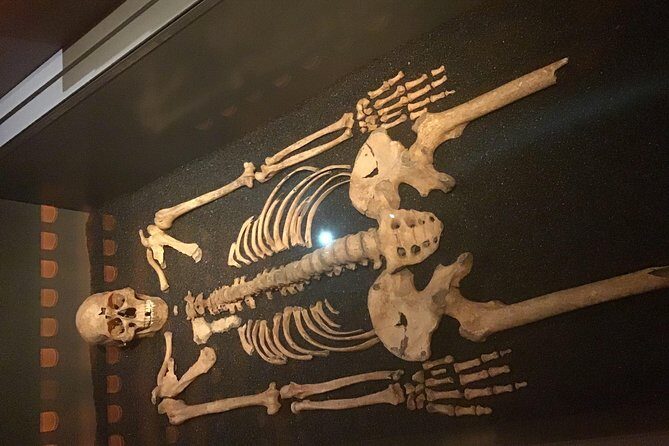
At Charterhouse, you’re in the area of one of the largest plague pits before entering the Charterhouse chapel area. The tour also highlights a recently discovered Black Death skeleton.
This is heavy material for a morning walk, and that’s part of the value. It puts the later medieval-and-order stories in context: London’s institutions formed alongside massive public tragedy.
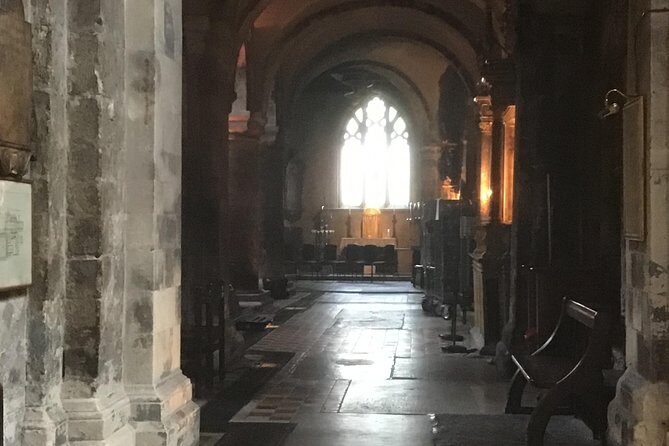
7) St Bartholomew the Great: a crusader-built church
Church of St. Bartholomew the Great is described as one of London’s oldest churches, built by a Crusader. The stop is brief, and the ticket isn’t included, so you’re likely there for the exterior and quick orientation unless your guide has additional instructions on the day.
If you want to linger, this is one of those places you may circle back to after the tour.
8) St Bartholomew’s Gatehouse: near-800-year-old stone
Next is St Bartholomew’s Gatehouse, described as dating back almost 800 years. It’s a classic City-of-London “what am I looking at” moment, and your guide should help you read the structure.
9) William Wallace Memorial: where Braveheart died
The William Wallace Memorial is the stop that takes you out of medieval institutions and into the myth-and-memory layer of Scottish history, tied to where Braveheart died. You get a short explanation of other notable events tied to the location.
It’s a change of pace, which can help keep the morning from feeling like one long academic lecture.
10) Christ Church Greyfriars Church Garden: ruins under St Paul’s shadow
At Christchurch Greyfriars Church Garden, you’ll see ruins forming a garden under the shadow of St Paul’s Cathedral. The setting is the point here: you’re looking at something that is both fragment and place to pause.
Again, short stop, but it breaks up the heavier themes.
11) Christopher Wren’s Temple Bar: a gate with a past that can turn gory
Christopher Wren’s Temple Bar is the old gate of the City of London, with a past described as sometimes gory. This is another “read the architecture for the story” stop.
If you’re sensitive to violent details, you might want to ask your guide how they frame the story so it stays in your comfort zone.
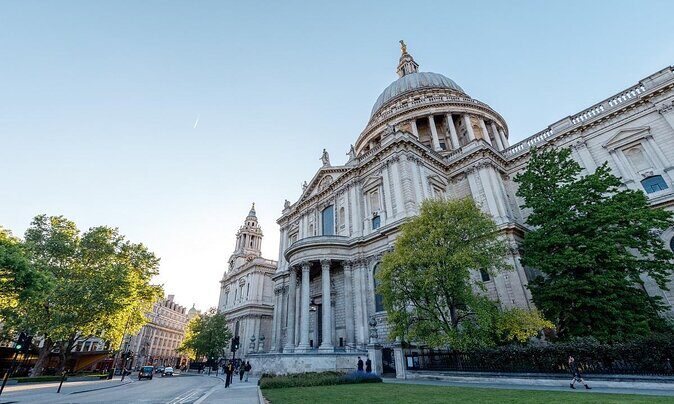
12) St Paul’s Cathedral: the symbol moment
You pass St Paul’s Cathedral as a beautiful symbol of the City of London. Admission isn’t included, so treat this as orientation and atmosphere, not a cathedral visit.
It helps anchor the route visually. From here, you’re always a few blocks away from the next layer.
13) Blackfriars: the name lives on, the institution doesn’t
The tour then points to Blackfriars, described as the remains of an institution that gave the area its name. It’s said to be in a small yard reached down a tiny alley.
This is exactly the kind of London detail that’s invisible unless someone shows you where to look.
14) Crypt on the Green: off-the-map monastic remains
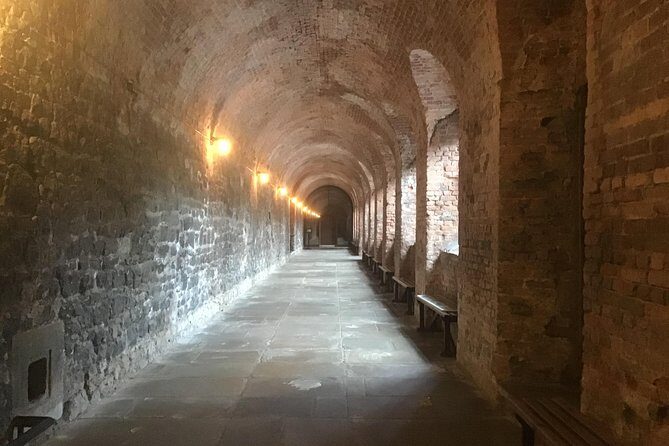
Next is Crypt on the Green, remains of a monastic building well off the beaten path but right in your route toward one of the world’s most famous churches. Expect a quick stop with a “how did I walk past this before” feeling.
15) Middle Temple Lane: TV and Dickens vibes
At Middle Temple Lane, the tour focuses on this beautiful area often used in films and referenced in Dickens and Downton Abbey–style London imagery. Admission isn’t listed, so it’s another “walk, look, understand” stop.
If you like how London becomes a backdrop for stories, this helps you see why directors love the City lanes.
16) Temple Church: crusader inspiration with an included ticket
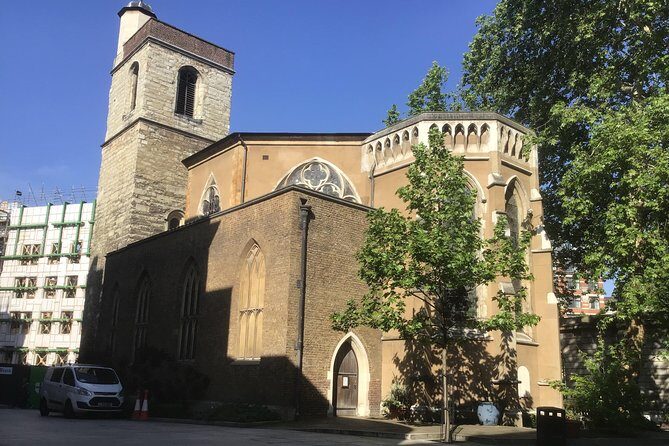
The tour includes Temple Church, inspired by what the Templars saw in the Holy Land. You get a longer visit here (and the ticket is included).
One practical thought: Temple Church is often discussed in different ways. If you care about the exact inspiration details—Holy Sepulchre connections versus other comparisons—ask your guide directly. You’ll get the version that matches their teaching, and you can decide if it lines up with your own interests.
17) Inner Temple: the calm side of legal London
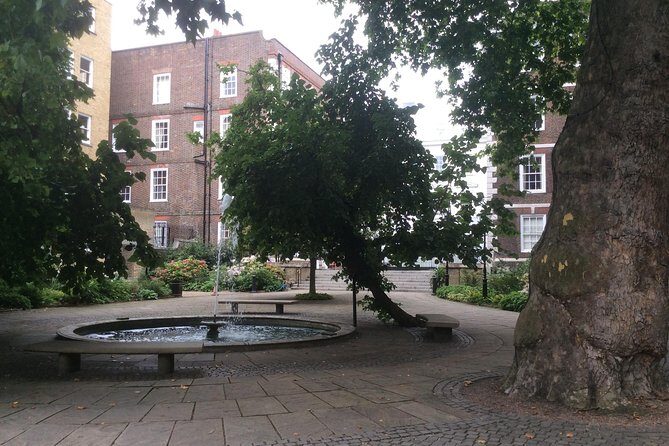
Inner Temple is the next included stop. It’s described as a tranquil refuge, and your time here is short.
This is a good place to reset your brain. After gates, weapons, and plague, quiet courtyard energy feels like a relief.
18) Fleet Street: newspaper trade and a lost monastic ruin
Then it’s Fleet Street, famous for the British newspaper trade, plus a long-lost ruin connected to a monastic order. You’ll walk along the street and get the “this is what this area used to be” explanation.
Fleet Street can be loud and touristy, but the guide’s job is to pull the thread back to older institutions.
19) The Old Curiosity Shop: Dickens still leaves fingerprints
You pass The Old Curiosity Shop, identified as the oldest shop in London and tied to Dickens. This is quick, but it’s fun to have the tour frame it as more than a shop sign.
20) The Seven Stars: early Freemasons meeting place
At The Seven Stars, you’ll see a tiny pub described as an early meeting place of the Freemasons. This is one of the most directly themed stops on the route.
Even if you just look from outside, it’s a real-world bridge between lodge lore and everyday London life.
21) Lincoln’s Inn: Great Fire story in a rarely visited square
Lincoln’s Inn is next, described as the largest square in London that most tourists don’t visit. The key story is the Great Fire of London connection.
This stop is valuable because it anchors major national events in a place that doesn’t always get the spotlight. You come away with better mental geography.
22) Freemasons’ Hall: the finale at the headquarters
The tour ends at Freemasons’ Hall, headquarters of the United Grand Lodge of England and the Supreme Grand Chapter of Royal Arch Masons of England. It’s also a meeting place for local Masonic lodges.
The tour notes the Freemasons Museum is closed on Mondays. If you’re touring Monday, that means you’ll still end at the headquarters but may not get the museum component. I’d plan around this by checking your day of week before you build the rest of your schedule.
Day-of-Week Planning: Museums You Might Not See
A few parts depend on the weekday:
- Museum of the Order of St John: closed Mondays and Tuesdays
- Charterhouse: closed Mondays
- Freemasons Museum (at Freemasons’ Hall): closed Mondays
If you book close to travel, this is worth double-checking so you know which stops will be in full form versus “street and exterior only.”
The Guide Factor: What Makes the Best Sessions Click
The pacing and storytelling depend heavily on your guide. I’ve seen a recurring theme tied to a guide named Kevin: long-time London perspective, pride in details, and an ability to connect church, knights, and civic power into one line you can remember.
When it works well, you don’t just hear facts. You learn how to spot the next clue on your own. That’s the real payoff of a themed walking tour like this.
If your group includes people who ask lots of questions (history nerds, curious parents, architecture fans), a good guide is even more valuable because the tour gives you short time at each stop. The Q-and-A is where many of those “wait, I want to know more” moments get handled.
Who This Tour Suits Best (and Who Might Feel Underwhelmed)
This is a strong fit if you:
- want City-of-London corners that most sightseeing loops don’t reach
- enjoy medieval orders like Knights of St John and Templars
- like churches, gates, and institutional buildings as story-machines
- prefer a private morning plan with pickup and a clear end point
You might feel less satisfied if you:
- mainly want iconic London highlights like Big Ben and the Tower of London (this route is more specialized)
- expect long museum time for every site (many stops are short by design)
- need guaranteed interior access at every stop on a specific weekday (some museums have fixed closures)
Should You Book the Freemasons Tour of London?
I’d book it if you want a compact, guided City route with an unusual theme and a real chance to see places you’d miss on your own. The best reason to choose it is the structure: each stop is brief, but together they create a coherent thread from medieval orders to Freemasons’ institutions.
If the price makes you hesitate, do the math this way: you’re paying for private time, hotel pickup, and a plan that gets you into a few key interiors (Order of St John museum, Temple Church, Inner Temple). That combination is where the value lives.
Also, there’s a practical safety net: the tour offers free cancellation, with full refund if you cancel at least 24 hours in advance. That’s useful if you’re still shaping your London schedule.
FAQ
How long is the Freemasons Tour of London?
The tour lasts about 3 hours.
Where does the tour start and end?
It starts at Farringdon Station (Cowcross St, London EC1M 6BY) and ends at Freemasons Hall (60 Great Queen St, London WC2B 5AZ).
Is hotel pickup included?
Yes. Hotel pickup is offered, and you’ll meet the group in the reception area of your central London hotel before going to Farringdon by Underground or taxi.
What language is the tour offered in?
The tour is offered in English.
What parts of the tour include admission tickets?
The Museum of the Order of St John has an included ticket, and both Temple Church and Inner Temple are listed as admission tickets included.
Are any museums closed on certain days?
Yes. The Museum of the Order of St John is closed on Mondays and Tuesdays. The Charterhouse is closed on Mondays. The Freemasons Museum at Freemasons’ Hall is closed on Mondays.
Are tube tickets included?
No. Tube tickets before and after the tour are not included.
Is the tour private?
Yes. It’s a private tour/activity, and only your group participates.