REVIEW · YORK
Discover the Best of York with 3 Self-Guided Audio Tours
Book on Viator →Bookable on Viator
York hits different when you control the pace. This set of 3 self-guided audio tours lets you explore the city wall, medieval streets, and the spookier side of York with GPS-synced playback in the VoiceMap app.
I like that you can start and stop on your schedule, so you can linger when something catches your eye—without feeling rushed. I also like the practical tech: offline audio and maps, plus turn-by-turn directions that help you stay on track. One thing to plan for: if you wander into lanes or gates that close, you can get off the route and the soundtrack may not line up with where you are.
In This Review
- Key highlights before you go
- How the VoiceMap audio tours actually work in York
- Three themed routes: walls, medieval streets, and haunted York
- York Minster, Shambles, and Clifford’s Tower: the sights that anchor every route
- Past St Mary’s Abbey, Merchant Adventurers’ Hall, and St Leonards Hospital
- Bootham Bar and the York “pub-and-street” flavor
- Museum Gardens and the “pause spots” that keep walking enjoyable
- The Roman Wall and the wall-gate chain effect
- Timing your haunted walk near Micklegate Bar
- Duration and how to plan a realistic day in York
- Price and value: why $17 can work (or not)
- What’s included, what isn’t, and what to budget
- Who this works best for (and who should skip it)
- Should you book this York audio set?
- FAQ
- How do I start the tours in the VoiceMap app?
- Do the tours work offline?
- How long does each walking tour take?
- Are museums or attractions included when you pass them?
- Where do the three tours end?
- Do I need to bring my own phone and headphones?
- Can I get a refund if I cancel?
Key highlights before you go
Three themed routes: wall-focused history, medieval York streets, and haunted spots
GPS playback in the VoiceMap app: automatic audio triggers when you’re at the right location
Offline-ready: audio, maps, and geodata available without signal
Lifetime access in English: reuse the tours during future trips and at your pace
Outside-only sightseeing: you hear about major sights, but you don’t go inside as part of the tour
How the VoiceMap audio tours actually work in York
The magic here isn’t a guide herding you down streets. It’s the VoiceMap mobile app running three different walking storylines around York, with audio that plays when you reach specific spots. After booking, you get a ticket with instructions plus 3 codes. In the app, you enter those codes and it takes care of the rest.
Each tour shows you how to get to its starting point, then you put on your headphones and tap start when you’re there. The route guidance uses your phone’s location, so you’re not guessing which way to go at street level. And because it’s designed for offline use, you can still keep moving even if your phone’s data signal is weak.
There’s also a virtual tour option if you want to preview York at home first. That’s a nice way to learn the general flow of the streets and landmarks before you spend real time walking them.
Two practical points I’d take seriously: first, you’ll need your own smartphone and headphones. Second, this is a self-guided format, so you’re responsible for buying any tickets if you decide to enter museums or attractions mentioned along the route.
You can also read our reviews of more tours and experiences in York.



Three themed routes: walls, medieval streets, and haunted York
You’re getting three walking experiences, each ending in a different spot, which helps you shape your day. All three tours include plenty of overlaps, but each has its own mood and theme.
One route is focused on the city’s battlements and wall line, with the experience ending near Lendal Bridge Landing. Another route centers on Medieval York, ending at the York Art Gallery. The third route leans into the darker side of the city and ends near Micklegate Bar as part of Europe’s Most Haunted City.
Even if your only plan is a single afternoon, the structure is good for real sightseeing. You can do one shorter loop, or stack them if you want the full story arc from Roman-era foundations through medieval street life and on to the haunted atmosphere.
A key detail: you’ll hear from James Easton, a local resident and the producer. That matters because the narration doesn’t feel like it’s coming from a generic script. It feels rooted in York, with the stories tied to places you can actually see as you walk past them.
York Minster, Shambles, and Clifford’s Tower: the sights that anchor every route
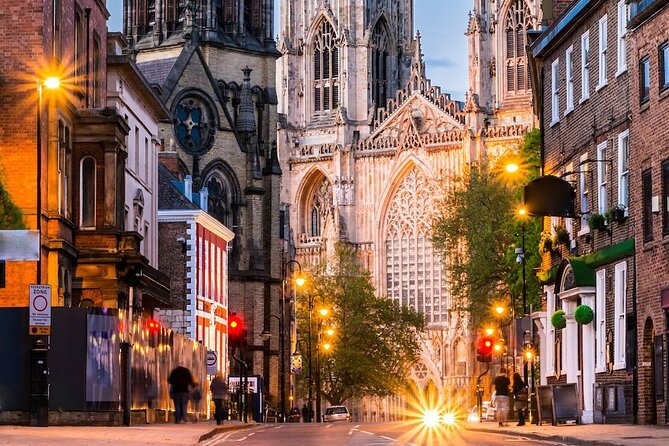
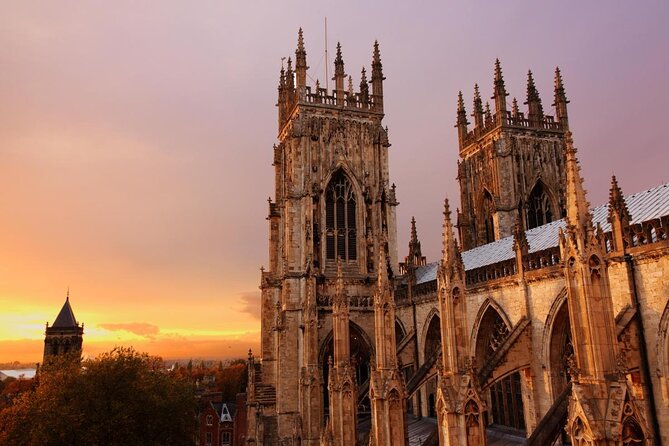
No matter which route you choose, you’ll pass by York Minster from the outside. That’s the kind of anchor landmark that keeps you oriented, especially when the streets twist and the city wall routes fork.
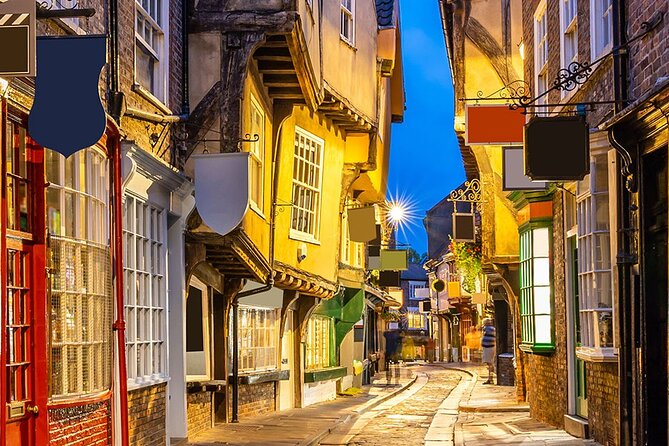
Two of the three routes also take you through the Shambles, which is the kind of street people talk about for a reason: it’s a strong medieval-feeling spine of York’s older core. Even without entering anything, walking the length of the street while the audio tells its story helps you understand why it still draws people in.
You’ll also pass by Clifford’s Tower on two of the three routes. It’s another place that works as a visual marker while the audio expands the context around York’s past. The advantage of having it appear more than once is simple: you get the same landmark, but you hear different angles depending on which themed tour you’re on.
If you’re the type who hates rushed itineraries, these repeats are helpful. They let you circle back to what you liked without forcing a strict plan.
Past St Mary’s Abbey, Merchant Adventurers’ Hall, and St Leonards Hospital
One route brings you past St Mary’s Abbey from the outside. You won’t be entering as part of the tour, but that doesn’t mean it’s a weak stop. Exterior storytelling works well in a city like York because the surrounding streets and ruins give you the visual cues while the audio fills in the context.
Another route includes stops outside Merchant Adventurers’ Hall and St Leonards Hospital. Those names point to very different facets of York’s story, and that variety is part of the value. Instead of only chasing big-ticket sights, you get the sense of how different communities and institutions shaped daily life.
Just keep expectations realistic: the tour is designed for walking and listening, not for museum-style time inside buildings. If you decide you want to go in, you’ll need to pay for those visits separately.
Bootham Bar and the York “pub-and-street” flavor
One stop shows up on all three tours: Bootham Bar. When a place appears on every route, it usually means it’s a key piece of the city’s walking rhythm. You’ll hear about it as you move along, which makes it a good checkpoint when you’re managing time and deciding whether to keep going.
Several of the tours also add a very York-specific flavor by passing iconic inns and street anchors, including Ye Olde Starre Inne and the Whippet Inn on different routes, plus other named stops like the Golden Fleece and Yorkshire bars including Micklegate Bar (on two routes) and other gate areas.
You also pass by the York Theatre Royal on one route and Whippet Inn on another. That combination is useful if you don’t want your day to feel like a string of only churches and walls. York’s older buildings aren’t just historic; they’re still part of daily street life.
A small but smart tip: treat these stops as moments to pause, remove your headphones, and check your bearings. When you take a quick break, you’ll naturally reset your focus for the next audio segment.






Museum Gardens and the “pause spots” that keep walking enjoyable

Two of the three routes pass through Museum Gardens. This is the kind of stop that can save your feet. A garden segment gives you a breather and helps break up the day so you’re not walking non-stop with audio constantly playing.
The more you like to linger, the more you’ll appreciate this. The tour design supports it: you can linger at stops en route rather than feeling trapped in a strict group schedule.
You’ll also pass by several church and civic exteriors—like St Crux, Holy Trinity Church, and York Mansion House—which work best if you enjoy observing details from the outside. Even without entering, these stops can help you understand the way York’s story shifts block to block.
The Roman Wall and the wall-gate chain effect
If you want the city’s structure in your head, the wall-focused route is the one to pick. You’ll pass by the Roman Wall on two of the three tours, and you’ll hear its connection to York’s older foundations as you move along.
On top of that, you’ll encounter a chain of wall and gate names that turns the city into a walkable map: Red Tower, Walmgate Bar, Fishergate Bar, Fishergate Postern Tower, Baile Hill, and Victoria Bar all appear across the routes.
Even if you don’t memorize dates, this “chain effect” helps you think like a walker. You start to see York not as random streets, but as a connected set of defensive and boundary points. That’s a satisfying way to do history in real time.
For best flow, do this when your energy is highest. These are the legs that can feel long if you’re already tired. But the payoff is clear: as you reach each named spot, the audio gives you a reason for why it matters.
Timing your haunted walk near Micklegate Bar

The haunted route is Europe’s Most Haunted City, and it ends near Micklegate Bar. This is a nice way to shift the mood later in the day, especially if you like the contrast between daylight York and evening York.
Keep your walking pace steady and pay attention to your surroundings as you follow the GPS triggers. There’s a real-world consideration here: if you end up in an area where gates or alleyways close, it can throw off the route timing. When that happens, the soundtrack might not match where you are, which can turn a fun spooky walk into a frustrating scavenger hunt.
So if you’re going after the haunted vibe, I’d plan your route so you’re not racing against closing times.
Duration and how to plan a realistic day in York
You can spend anywhere from about 1 hour to 4 hours 30 minutes, depending on how many of the audio points you actually enjoy and how often you stop. The app gives you control, but you still want a plan—especially if you’re pairing this with other York activities.
Here’s the simple strategy I recommend:
- If it’s your first time in York, start with the route that matches your interests most strongly.
- If you’re not sure, do the wall-focused one first because it gives you a physical sense of the city’s shape.
- If you want mood and atmosphere, finish your day with the haunted walk near Micklegate Bar.
Because each route ends in a different place—Lendal Bridge Landing, York Art Gallery, and near Micklegate Bar—you can also plan your next meal or stop around those endpoints.
Price and value: why $17 can work (or not)
At $17 per person, this sits in the “good value” category for a self-guided format with three distinct themes. The big value isn’t only the number of tours. It’s the combination of lifetime access, offline audio and maps, and the ability to repeat visits later.
Lifetime access matters because York is a city where the street plan makes repeat walks feel new. You can come back next year and use the same codes again without buying another pass. And if you’ve got time flexibility on your trip, you’re not locked into a fixed meeting time.
What might make it less good value for some people: if you strongly prefer a live guide who can answer questions, this won’t replace that experience. It’s also outside-only. If you want inside access to attractions you pass, your total spend may rise once you start adding admission tickets.
What’s included, what isn’t, and what to budget
Included with your purchase:
- Lifetime access in English
- The VoiceMap app for iOS and Android
- Offline access to audio, maps, and geodata
Not included:
- Your smartphone and headphones
- Transportation
- Food and drink
That’s straightforward. The tour is built around walking and listening. If you pack snacks, carry water, and plan a break, you’ll have a smoother day. If you’re trying to see a lot of indoor attractions too, budget extra for those tickets because the audio walk doesn’t handle entry.
Who this works best for (and who should skip it)
This is a strong fit if you want:
- Flexibility on timing and pace
- A walking day built around major York landmarks without booking a bunch of separate tours
- Offline navigation and audio guidance you can use even when phone signal is unreliable
- Storytelling tied to real streets, gates, bars, and buildings
It may be a weak fit if you:
- Want a group guide to manage the details and keep you on schedule
- Need inside access at major sights as part of the core experience
- Are worried about tech setup and code activation on the day you go
Also note: there have been tech hiccups reported where a code didn’t register in the app. That’s rare, but it’s a reminder to test the app and code entry before you’re far from your hotel.
Should you book this York audio set?
I think you should book if you want a low-stress way to see York’s big landmarks and several lesser-known exteriors, with GPS-guided audio that keeps you oriented without a live guide. The price is reasonable for three themed routes, and the lifetime access means you’re not wasting your money if you come back later.
Skip it only if you need a guided, inside-and-out history lesson with staff on hand for questions. This is best when you’re happy to walk, listen, and make the calls on where to linger.
FAQ
How do I start the tours in the VoiceMap app?
After booking, you receive a ticket with instructions and 3 codes. Install the VoiceMap app, enter the codes in the app, then follow the on-screen directions to the start point and press start when you’re there.
Do the tours work offline?
Yes. The experience includes offline access for audio, maps, and geodata, so you don’t have to rely on mobile data during your walk.
How long does each walking tour take?
The full set is listed at about 1 hour to 4 hours 30 minutes, depending on how you pace yourself and how long you spend at stops.
Are museums or attractions included when you pass them?
No. The tour includes walking and audio storytelling. You can choose to enter museums or other attractions on your own, but you’ll need to pay for those separately.
Where do the three tours end?
They end in different places: Europe’s Most Haunted City ends near Micklegate Bar, Battlements of History ends at Lendal Bridge Landing, and Medieval York ends at the York Art Gallery.
Do I need to bring my own phone and headphones?
Yes. The experience does not include a smartphone or headphones, so you’ll need both to use the VoiceMap app and listen to the audio.
Can I get a refund if I cancel?
This experience is listed as non-refundable and cannot be changed for any reason.