REVIEW · LONDON
London in WW2 Walking Tour with Churchill War Rooms Visit
Book on Viator →Operated by Urban Saunters · Bookable on Viator
Westminster can feel like a museum. This tour makes it feel like a newsreel. You’ll walk the WWII-era corridors of power while your guide connects famous landmarks to the fear, politics, and decisions that shaped the war.
I especially like two things: small group pacing (15 people or fewer) and the fact that Churchill’s War Rooms entrance is included with an audio guide. It’s a neat way to go from street-level Westminster to the underground nerve center without losing time.
One consideration: a lot of the Westminster part is outside and time-limited, so if you’re hoping to linger inside big buildings like Parliament or Westminster Abbey, you may need a separate visit.
In This Review
- What makes this tour worth your time
- Why this WWII walk works so well in Westminster
- Meeting at Victoria Embankment and finishing at Churchill’s War Rooms
- Westminster Bridge: the WWII detail hiding in plain sight
- Parliament area and Big Ben going quiet
- Parliament Square and Westminster Abbey: democracy symbols under pressure
- Whitehall and the Ministry of Defence area: where decisions carry weight
- Horse Guards Parade near Buckingham Palace: photos and pageantry in wartime context
- Churchill War Rooms: the underground centerpiece you’ll want to linger in
- Small-group format: how 15 people changes the whole feel
- Price and value: what you’re actually paying for
- How long to set aside, and what to expect from the pace
- A few smart expectations before you go
- Should you book this Churchill War Rooms walking tour?
- FAQ
- How long is the London in WW2 Walking Tour with Churchill War Rooms?
- What is the maximum group size?
- Is the Churchill War Rooms visit included?
- Are Westminster Abbey and other major buildings included inside the tour?
- What’s included in the guided walking portion?
- What is not included?
- Is the tour in English?
- Are service animals allowed?
- Is it easy to get there using public transportation?
- What if my plans change?
What makes this tour worth your time
- 15-person max means more back-and-forth and fewer crowd squeezes around photos
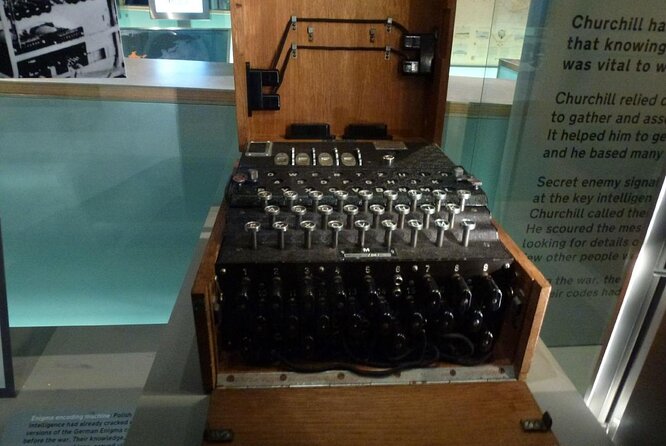
- Churchill’s War Rooms ticket + audio guide saves you the hassle of figuring out the underground on your own
- Short, punchy outdoor stops keep the story moving across Parliament Square, Whitehall, and key memorials
- Guides with personality are a big theme here, with names like Nathan, Babs, Jeremy, Paul, Francis, and Richard showing up in guide-led praise
- Memorial moments outside (including the Cenotaph and Women in WW2 monuments) add a respectful, human layer before you go underground
- A mix of serious and lighter context can show up in the storytelling, including pop-culture-style detours that make the walk fun rather than dry
Why this WWII walk works so well in Westminster
If you love history, you can read about WWII. If you love London, you’ll want to see how WWII pressure played out on real streets and real institutions. This walking tour is built for exactly that.
Westminster is where government life happens. WWII made that life feel terrifying and urgent. On this tour, you’re not stuck with one site. You move across the political landscape—bridges, squares, government buildings, memorials—then you drop underground into Churchill’s command center.
The payoff is how the story changes as you walk. At street level, the message is power and symbolism. At the War Rooms, the message becomes planning, triage, and decision-making. That contrast is the whole point.
You can also read our reviews of more tours and experiences in London.



Meeting at Victoria Embankment and finishing at Churchill’s War Rooms
The tour starts at Boadicea and Her Daughters, Victoria Embankment (SW1A 2JH). This is a useful anchor point because it’s in the heart of central London and near public transportation, so you’re not scrambling to reach some far-flung meeting spot.
The walk ends at the Churchill War Rooms on King Charles St (SW1A 2AQ). That end point matters because the War Rooms portion is the star attraction, and you’ll head there when the outdoor time is done.
Plan to treat this as a true walking experience. Even though the itinerary is only about 3 hours, it’s spread across several exterior locations with short pauses for context and photos. Wear shoes you’re happy to walk in, and bring what you need for London weather because conditions can shift fast.
Westminster Bridge: the WWII detail hiding in plain sight
Your first stop is Westminster Bridge. You’ll get a quick view of why the bridge is tied to the Houses of Commons, including the detail that it’s painted green for that governmental connection.
Then your guide adds a grim detail that turns a scenic bridge into a wartime reality: WW2 bombs are still found on or around the area even today. That’s the kind of fact that changes how you look at the river view. It stops being just postcards and starts being geography with consequences.
This stop is outside and short (about 5 minutes). It’s more about setting the tone than letting you wander. If you want a slower start, you might feel a touch rushed. But if you like getting context quickly, this is a good opener.
Parliament area and Big Ben going quiet
Next up: Houses of Parliament. You’ll be outside, taking in the official setting while your guide explains how parliament reacted to the looming threat from the Third Reich.
The guide’s storytelling leans on sound and atmosphere: the bell of Big Ben went quiet and London’s skies filled with planes from the Luftwaffe. Whether you already know the broad WWII arc or not, this kind of guided framing helps you connect a landmark to human fear, not just dates.
Time here is about 10 minutes. That’s long enough to get a clear story and short enough that you won’t get stuck in one place while the day moves on. Just keep expectations realistic: this is not an inside tour of Parliament. Your time is for the exterior story and the political context.
Parliament Square and Westminster Abbey: democracy symbols under pressure
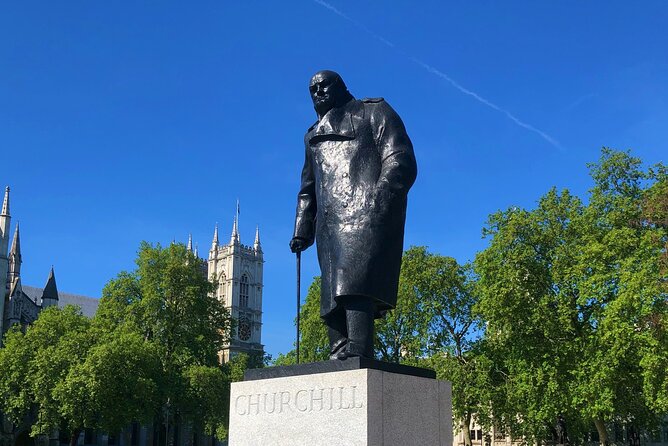
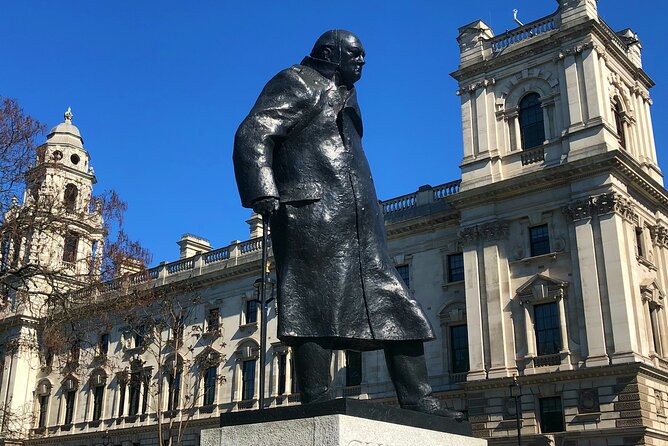
Then you’ll head to Parliament Square. This is where the tour uses public art and statues as shortcuts into civic meaning. You’ll see icons tied to democracy and rights, including Mahatma Gandhi, Millicent Fawcett, and Honest Abe.
Your guide ties those symbols to what people needed during WWII: stability, democratic values, and the idea that government isn’t abstract when people are afraid. It’s a good reminder that the war wasn’t only fought with weapons. It was also fought through institutions, speeches, and public morale.
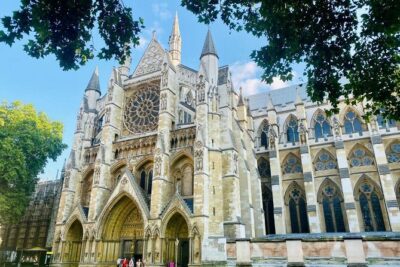
You’ll then stop near Westminster Abbey. The tour doesn’t promise an Abbey interior visit, and entrance to Westminster Abbey is not included. What you do get is more of the same guiding theme: how public places and national identity mattered during the war years.
If you want to go inside Westminster Abbey, you’ll have to plan that separately. But if your goal is the WWII narrative anchored in the surrounding streets, this timing works.




Whitehall and the Ministry of Defence area: where decisions carry weight
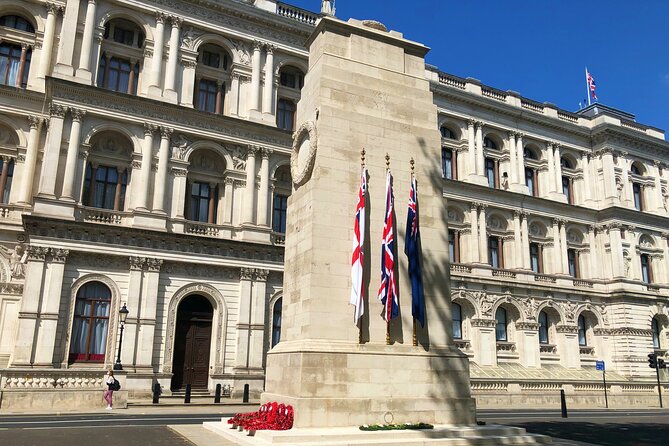
After the square and Abbey area, you shift to Whitehall, home to the Ministry of Defence. Whitehall is where wartime decisions became operational. Seeing it on foot helps the area feel less like a name and more like a place.
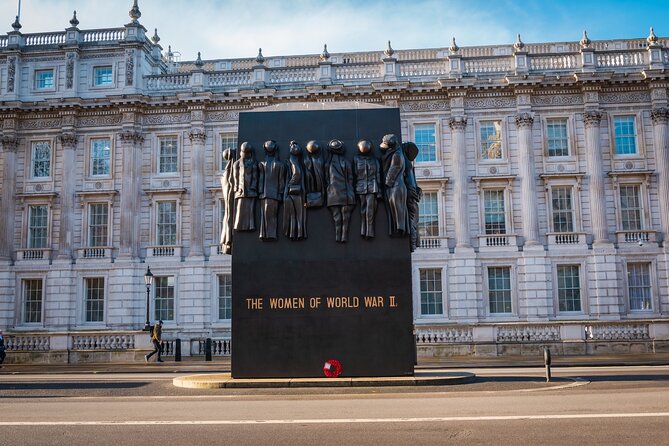
The tour includes stops for remembrance at the Cenotaph and the Women in WW2 monuments. This part is where the tour becomes more than storytelling. It becomes a respectful moment where the theme turns toward sacrifice and the people behind the headlines.
These are exterior stops (about 10 minutes). You’re not here to linger forever. But the guide’s framing gives these memorials meaning, and it helps you slow down for a moment instead of just snapping pictures.
Horse Guards Parade near Buckingham Palace: photos and pageantry in wartime context
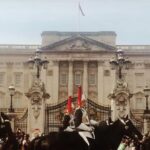
One of the easiest spots to enjoy on this walk is Horse Guards Parade at Whitehall. You’ll be able to take a photo with the mounted cavalry of the Queen’s Horseguards. The location is also described as an official entrance to Buckingham Palace, which makes it a fun contrast point after the more solemn Whitehall memorials.
It’s outside, and it’s brief (about 10 minutes). Still, it’s an effective pacing reset. Your brain has been processing government fear and wartime sacrifice. Horse Guards brings back the classic London scene, but your guide keeps it tied to the broader story.
It’s also practical: the photo moment is easy to do without needing to hunt for viewpoints. If your schedule is tight, that matters.
Churchill War Rooms: the underground centerpiece you’ll want to linger in
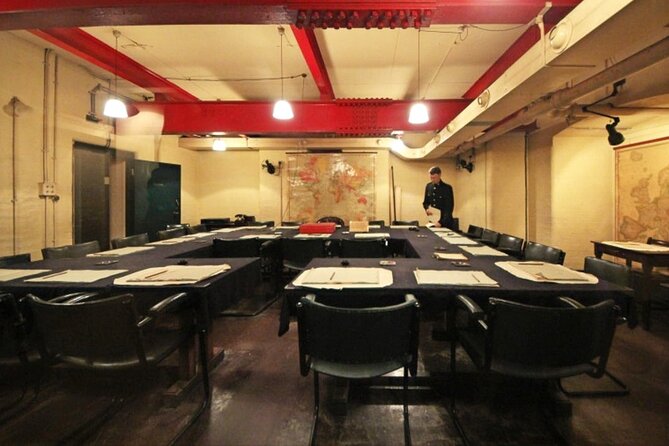
Now comes the reason most people book this tour: Churchill War Rooms. The tour includes about 1 hour here, and the entrance ticket is included.
Here’s the important structure: your walking guide brings you into the War Rooms, but the time inside is self-guided. That means you can move at your own pace, stop where something grabs your attention, and spend extra time on the rooms that click for you.
An audio guide is included, which helps you interpret what you’re seeing without feeling like you need to memorize everything your guide says on the walk. From a visitor comfort point of view, that’s a big deal. The War Rooms can be intense and packed with information, so having an audio track keeps it from turning into sensory overload.
What makes this portion special is the physical shift. You go from daylight Westminster to the underground places where wartime command got real. The War Rooms are famous for a reason, but the guided-to-self switch makes the experience feel less rushed and more personal.
Practical tip: go in with the mindset that you will not see every detail in one hour. Pick a few rooms that interest you, and let the audio guide steer the rest.
Small-group format: how 15 people changes the whole feel
This tour is capped at 15 travelers. That matters more than it sounds, because Westminster is crowded and famous for a reason. With a small group, your guide can keep you together without forcing you into a stampede.
It also helps with questions. WWII history can get specific fast: timelines, decisions, political arguments, names. When you’re in a small group, it’s more realistic to ask a question and get an answer that matches your level of interest.
You’ll also notice a recurring theme from guide-led praise: the best tours here aren’t just about dates. They’re about storytelling style—some guides mix humor with context, and they’re good at switching gears for what the group seems to care about.
Names that show up in guide praise include Nathan and Babs, plus others like Jeremy, Paul, Francis, and Richard. That signals something useful for you: Urban Saunters seems to staff guides who can bring personality, not just lecture mode.
Price and value: what you’re actually paying for
At $104.02 per person, this isn’t a budget walking tour. So the real question is value.
The best way to think about it: you’re paying for (1) a guided Westminster walk focused on WWII context and (2) included Churchill War Rooms entrance plus an audio guide. If your plan includes the War Rooms anyway, the included ticket makes the price easier to swallow.
You’re also paying for time efficiency. Instead of piecing together a self-guided route and trying to interpret what you’re looking at, you get a guided framework across multiple exterior landmarks, then a supported visit underground.
One more value factor: the group is small. Even if the story content is similar to what you’d find elsewhere, the pacing and ability to ask questions are often where the money goes.
If you’re the type who wants to spend half a day in museums, this 3-hour structure may feel tight. But if you want a focused WWII sampler with one major anchor visit, the pricing makes sense.
How long to set aside, and what to expect from the pace
The tour is about 3 hours. Most stops are short exterior segments (often 5–10 minutes), followed by about 1 hour at the War Rooms.
That pacing is ideal if you like a clear route and steady momentum. It’s not ideal if you want deep reading at every stop or you’re very slow on your feet. You might also want more time in Parliament Square or around Westminster Abbey if you’re the kind of person who loves photographing details.
If you’re traveling with teens or family, this format can be a win because it breaks up history into scenes: bridge, parliament, square, memorials, photo spot, then the underground command center.
A few smart expectations before you go
Based on how the tour is structured, here’s how I’d set expectations:
- You’ll spend most of your time walking and listening, with short viewing windows at each landmark.
- You’ll likely get the War Rooms experience in a way that feels easier than total self-planning because your guide gets you inside and then you use the audio on your own.
- Westminster Abbey is not included, so don’t assume you’ll go inside during this tour.
Also, bring a realistic plan for photo time. Some stops are perfect for quick shots, while others are more about looking and listening than hanging out.
If you want to add extra value, pair this tour with a self-guided walk afterward focused on the rest of Westminster. This area rewards repeat wandering, even if your feet are complaining.
Should you book this Churchill War Rooms walking tour?
I’d book this tour if you want a clear WWII storyline tied to real Westminster landmarks and you know you want to visit Churchill’s underground nerve center. The included War Rooms ticket and audio guide are the core reason. The small-group size is the reason it feels enjoyable instead of chaotic.
Skip it or plan carefully if you need long museum time elsewhere, you’re hoping for inside visits of major buildings besides the War Rooms, or you’re sensitive to a brisk walking pace with short outdoor stops.
If you’re deciding between doing the War Rooms alone and taking a guided walk, I’d choose this for first-time visitors to WWII Westminster. The guide gives you a mental map. Then you get to decide how long you personally want to sit with Churchill’s world underground.
FAQ
How long is the London in WW2 Walking Tour with Churchill War Rooms?
It runs for about 3 hours.
What is the maximum group size?
The tour is limited to 15 travelers or fewer.
Is the Churchill War Rooms visit included?
Yes. Entrance to Churchill’s War Rooms is included, and there’s an audio guide in the War Rooms.
Are Westminster Abbey and other major buildings included inside the tour?
Westminster Abbey entrance is not included. Houses of Parliament is described as an outside stop.
What’s included in the guided walking portion?
You get a guided walking tour of Westminster with an English-speaking local expert guide, plus the Churchill War Rooms entrance.
What is not included?
Hotel pick-up and drop-off, and food and drinks.
Is the tour in English?
Yes, it’s offered in English.
Are service animals allowed?
Yes, service animals are allowed.
Is it easy to get there using public transportation?
The meeting location is described as near public transportation.
What if my plans change?
There is free cancellation up to 24 hours before the experience start time for a full refund.