REVIEW · POOLE
Poole Jurassic Coast Circular Cruise
Book on Viator →Operated by Coastal Cruises Poole · Bookable on Viator
A quick boat ride, big coastline payoff. This Poole Jurassic Coast Circular Cruise trades long bus days for sea breeze, close-up views, and onboard stories that help the coast make sense.
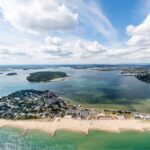
You get a sweep of Brownsea Island, Sandbanks, Studland Beach, and Old Harry Rocks—UNESCO Jurassic Coast country—without needing to be a geology expert.
What I like most is the balance: you’re out for about 2 hours 15 minutes, yet you still come away with real sense of place, plus plenty of time to shoot sky, sea, sand, and chalk. I also love the option to relax on deck in good weather or stay cozy inside when the wind kicks up. The main thing to consider is that the route can be shortened if conditions are poor, so the “full” coastal views may not happen on every sailing.
In This Review
- Key highlights worth your attention
- Poole’s quick start: from the Quay to open water
- Brownsea Island: history you can spot, stories you can follow
- Sandbanks from the water: the view is the headline
- Studland Beach and the 4-mile sweep of sand
- Old Harry Rocks: chalk, sea spray, and the pirate-name link
- Inside vs on deck: where you’ll feel comfortable
- The commentary that turns scenery into understanding
- Price and value: what $30.32 buys you (and what it doesn’t)
- Timing, group size, and who it suits best
- When things go off-script: weather and the one-off complaint to know
- Should you book the Poole Jurassic Coast Circular Cruise?
- FAQ
- How long is the Poole Jurassic Coast Circular Cruise?
- Where does the cruise start and finish?
- What sights will I see during the cruise?
- Will I stay on the boat the whole time?
- What should I bring for deck time?
- What if the cruise is cancelled due to poor weather?
- How many people are on the cruise at once?
Key highlights worth your attention
- Brownsea Island pass with local history shared as you go by, not in a classroom
- Sandbanks Millionaires Row seen from the water, including the tiny cluster of 13 houses
- Studland Beach views of a 4-mile stretch of golden sand with sheltered waters
- Old Harry Rocks tied to Jurassic Coast World Heritage, plus the pirate-name connection
- Captain and crew commentary that mixes facts and banter, with an easy pace
Poole’s quick start: from the Quay to open water
The cruise begins at The Quay, Poole BH15 1HJ, and it returns back to the same area. That matters because Poole is one of those places where parking and timing can make or break your day—this trip keeps things simple. If you’re near Poole Quay Boat Haven, you’re close to where you need to be.
It’s also a smaller-scale outing: the group max is 100 travelers, so you’re not packed in like sardines. You’ll still hear the commentary through the boat, but it doesn’t feel like you’re fighting for a viewpoint the whole time.
Physically, plan for some moderate walking at the start and end, plus getting around the boat deck if you choose to stay outside. If you prefer to stand less, you can keep things relaxed by staying seated and rotating your view between deck and interior spaces.
For me, the best way to think about this cruise is as a sampler: it gives you a strong first impression of the Jurassic Coast area around Dorset and the Poole Harbour side, all in one stretch of sea time.
You can also read our reviews of more tours and experiences in Poole.
Brownsea Island: history you can spot, stories you can follow
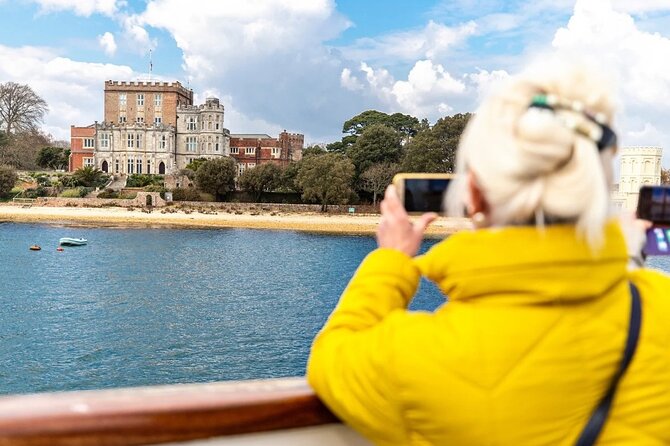
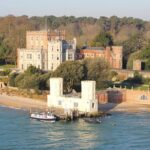
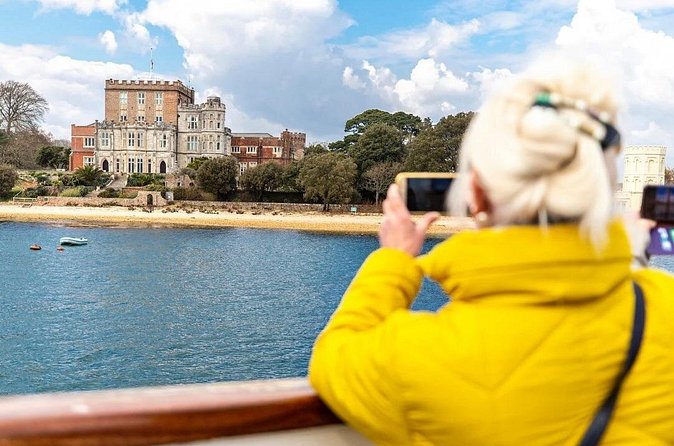
The first big feature is the pass by Brownsea Island, which is the largest of the islands inside Poole Harbour. You don’t dock here. Instead, you slide past it while the captain and crew share what makes it interesting—especially the island’s history.
This is one of those stops that works even if you’re not sure what you’re looking at. As the boat moves, you get the visual context first (island shape, harbour water, the sense of scale), then you get the story behind it. That pairing is what turns a simple sighting into something memorable.
The practical upside: you don’t lose time climbing on and off. The boat keeps rolling, which helps when your day is already packed or you’re traveling with a mix of ages.
If you’re the type who likes photography, this part is also an easy warm-up. Light on water can be gorgeous here, and you’ll be ready to chase the best angles before the cruise gets to the chalky coastline territory.
Sandbanks from the water: the view is the headline
Next comes Sandbanks Peninsular—the part people talk about as Millionaires Row. The cruise frames it well: you see the shoreline with houses along it, and you get the detail that it’s made up of just 13 houses, once described as the most expensive stretch of coastal real estate in the world.
Seeing it from a boat changes the feel. On land, you tend to see façades and gates. From the water, you see how the peninsula sits against the sea and the way the coastline curves, plus you get a cleaner line of sight for photos.
A real tip: aim for a position where you can keep both the horizon and the shoreline in your frame. The boat’s motion means wide shots can work best early on, and then you can tighten your photos as the coastline angles come into view.
This is also a good moment to decide your “base.” If the wind is mild and the sun is out, deck seating is a treat. If it’s breezy, the interior gives you shelter without cutting you off from the experience.
Studland Beach and the 4-mile sweep of sand
After leaving Poole Harbour, you get the chance to see Studland Beach, known for its four-mile stretch of golden sandy beach. The description that comes with it is clear: the water is sheltered, which makes it a family-friendly day-out spot.
This stop is less about standing still and more about appreciating scale. You’ll catch the long run of sand, the way the shoreline stretches, and how it contrasts with the harbour side you’ve been viewing up to this point.
If you’re thinking of the Jurassic Coast as chalk cliffs and dramatic rocks, Studland is a good counterpoint. It reminds you that this UNESCO coastline isn’t only about jagged drama; it’s also about wide beaches, calmer water pockets, and the real-life side of coastal life.
Photo-wise, beach light can be tricky in the midday sun. If it’s bright, keep your lens aimed slightly away from glare and let the sand-to-water boundary do the work. You’ll often get more texture that way.
Old Harry Rocks: chalk, sea spray, and the pirate-name link
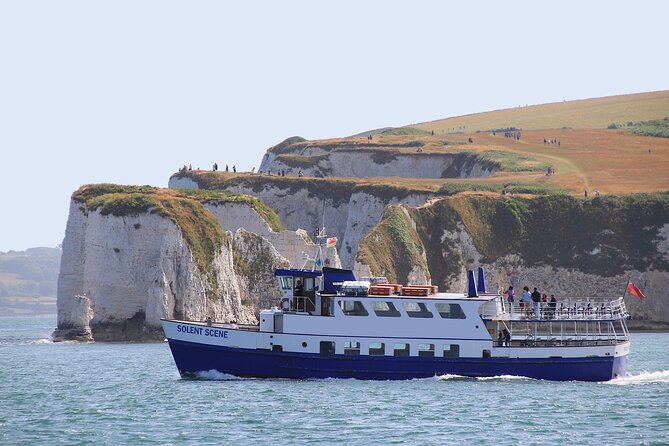
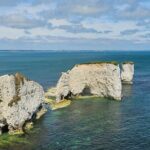
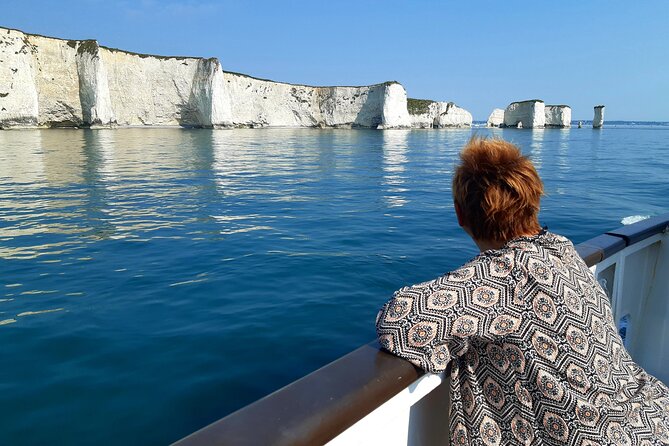
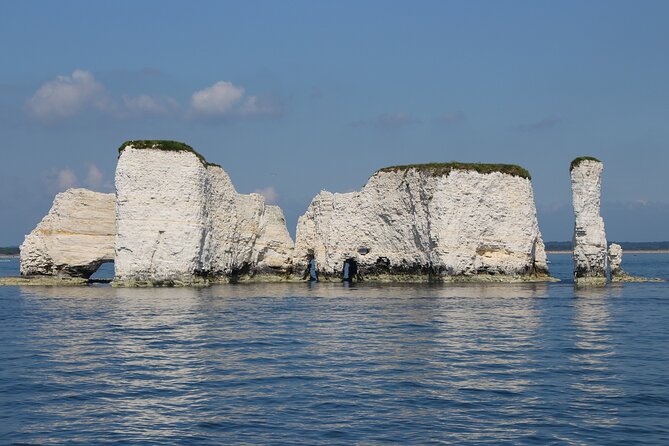
Old Harry Rocks are where the cruise really leans into the Jurassic Coast World Heritage story. You’ll sail past them as you head along the coastline. And there’s a fun detail attached to the name: they’re said to be named after the notorious pirate Harry Paye.
This is the part where the cruise’s storytelling starts to click for most people. You’re seeing pale rock formations that look made for close-up photos, but the commentary also helps you connect what you see with why it’s geologically significant. One key advantage of doing it by boat is that you get a changing perspective—angles shift as the coastline curves, and the rocks can look different depending on sun and spray.
From reviews, a lot of people specifically liked the chance to catch chalk cliff views between Dorset and Swanage, with the boat getting close enough for photos. Even if you’re not a hardcore photographer, that closeness matters. It turns “I saw it” into “I captured it.”
If you’re sensitive to wind, plan ahead. Coastal boats can feel cool even on warm days, especially when you’re out in open water. Deck time is worth it, but keep a layer handy.


Inside vs on deck: where you’ll feel comfortable
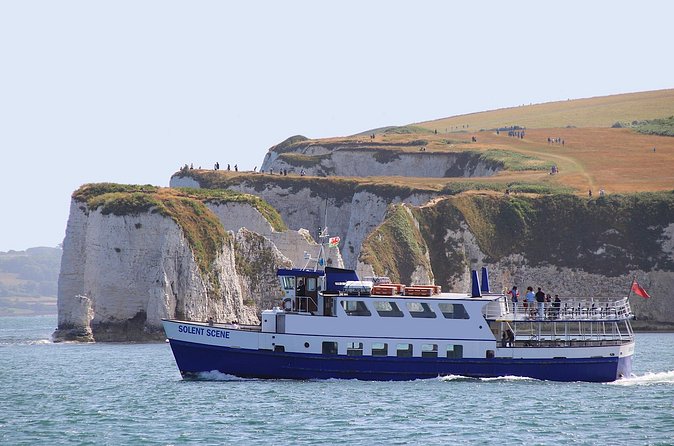
One of the nicest things about this cruise is that it lets you choose your comfort level. You can stay on deck to soak up sun and sea breeze, or move inside if you want to stay warmer and drier when conditions change.
That flexibility matters on this particular route because you’re dealing with open water after Poole Harbour. A breeze can show up fast. If you’re traveling with mixed preferences—someone who loves to be outside, someone who hates wind—this layout prevents conflict. You can split your own time between areas without missing the key sights.
Here’s how I’d approach it:
- Start on deck for the first coastline pass, especially around the harbour-to-coast transition.
- If the wind increases or you notice spray, hop inside for calmer viewing.
- When the boat approaches the chalkier rock formations, make a point of getting back to deck if you can, because the view contrast is part of the magic.
Also, bring sunscreen even if you think you won’t need it. On sunny departures, people tend to roast quickly out on the water, and shade options are limited.
The commentary that turns scenery into understanding
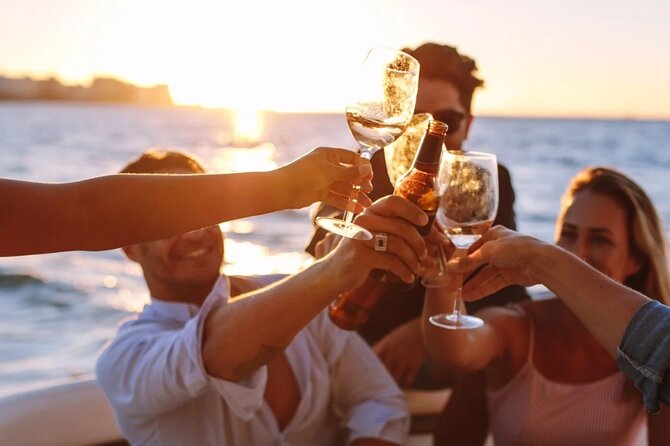
A big reason people rate this cruise highly is the onboard commentary style. You’re not stuck with a dry script. The captain and crew share history and geology, with a tone that can include humor and easy banter.
I’ve seen one specific mention of a commentator named James being especially good, with jokes along the way. Even if you don’t get the exact same voice, the format is clearly designed to keep things moving: you get facts tied to what you’re seeing right now.
What you’ll likely learn:
- How Poole Harbour fits into the wider coastline picture
- Why the Jurassic Coast is more than a label
- The local stories behind features like Brownsea Island and Old Harry Rocks
- The day-to-day geography that makes places like Studland feel different from the chalk sections
The practical value is that it helps you decide what you might want to explore more deeply later. One common “next step” idea is spending more time on land around places like Swanage if the cliffs and chalk formations grab you.
If you’re the kind of person who normally skips narration tours, this is a case where it’s worth paying attention. The commentary works best when you treat it like a running guide to the scenery in front of you.
Price and value: what $30.32 buys you (and what it doesn’t)
At about $30.32 per person for roughly 2 hours 15 minutes, this cruise is priced like a proper activity, not a luxury splurge. The value comes from the mix of things you get in a short window:
- Multiple landmark views without changing locations
- Onboard context so the scenery feels meaningful
- Plenty of opportunity for photos, especially around the chalk formations and rocks
But it’s still a cruise, not a full-day sightseeing package. You don’t get to wander on beaches or climb viewpoints in a structured way. The trade is time and simplicity versus depth on the ground.
Weather is the biggest “value variable.” The experience depends on good conditions, and on rough days or poor sailing conditions, you might see a shortened route. That can mean you miss some of the exterior coastline that makes this trip special. It’s still likely to be enjoyable on the water, but the Jurassic Coast payoff can lessen if you don’t get the full run.
If you’re booking, aim for the kind of day where you’re mentally ready for sea time. This is ideal when you want a break from constant walking and still want something scenic and educational.
Timing, group size, and who it suits best
The cruise is typically booked about 8 days in advance on average. If you’re going in peak summer or on weekends, I’d treat that as a hint that departures can fill. You’ll get the best chance of your preferred sailing time by reserving early.
The group size max is 100 travelers, which makes it large enough to feel lively, but small enough that staff attention doesn’t vanish.
This trip suits:
- Families who want a simple, scenic outing without long transfers
- Couples who want a romantic sea view with clear context
- Solo travelers looking for an easy “see more in less time” plan
- Photo lovers who want chalk and coastline angles without hiking
It may be less ideal if you strongly prefer land stops and hands-on exploration. The format is about seeing and learning from the water, not getting off at multiple locations.
When things go off-script: weather and the one-off complaint to know
Let’s be honest: this is the coast. If weather shuts things down or forces changes, you’re not the pilot. This cruise does rely on good weather, and there’s a risk of the route being altered.
In one account, the cruise was cut shorter due to bad weather outside the harbour, with some compensation offered. Even when you’re still on the water, it’s the longer coastal stretch that people come for, so a shortened route can feel like you paid for one thing and got another version.
Now, a separate and serious note: there is an unhappy review that claims homophobic comments were made over the loudspeaker. I can’t verify what was said from the information here, but it’s a clear red flag if that topic would make you uncomfortable. If you’re concerned, it’s worth contacting the operator before booking so you can understand how staff are briefed and how complaints are handled.
Bottom line: most sails sound fun and informative, but you should book with realistic expectations about weather and know what to do if something makes you uneasy.
Should you book the Poole Jurassic Coast Circular Cruise?
I’d book this if you want a straightforward, good-value way to get Jurassic Coast scenery without turning your day into logistics. It’s especially compelling if you like:
- coastline photos from a boat
- short, story-driven learning
- a mix of bright beach views and chalk rock perspectives
I would hesitate if:
- you need guaranteed full-route coastline views no matter the conditions
- you dislike humor in narration or want a perfectly formal tone every time
- you’re extremely weather-sensitive and would feel disappointed by route changes
If you’re flexible, bring sunscreen, keep a light layer for wind, and pay attention to the commentary as you go by. This cruise is short enough to fit into a packed itinerary, but it still gives you real impressions of the Dorset coast and the geology behind the drama.
FAQ
How long is the Poole Jurassic Coast Circular Cruise?
It runs for about 2 hours 15 minutes (approx.).
Where does the cruise start and finish?
It starts at The Quay, Poole BH15 1HJ, UK and returns to the meeting point.
What sights will I see during the cruise?
You’ll pass Brownsea Island, Sandbanks, view Studland Beach, and sail past Old Harry Rocks, which are part of the Jurassic Coast World Heritage site.
Will I stay on the boat the whole time?
Yes. The cruise includes viewing from onboard, with a brief stop on some sailings where passengers may embark.
What should I bring for deck time?
If it’s sunny, bring sunscreen. It can also get breezy, so consider a light layer even in warm weather.
What if the cruise is cancelled due to poor weather?
If it’s cancelled because of poor weather, you’ll be offered a different date or a full refund.
How many people are on the cruise at once?
There is a maximum of 100 travelers.