REVIEW · LONDON
Private Beatles Taxi Tour of London
Book on Viator →Operated by Tours Of The UK · Bookable on Viator
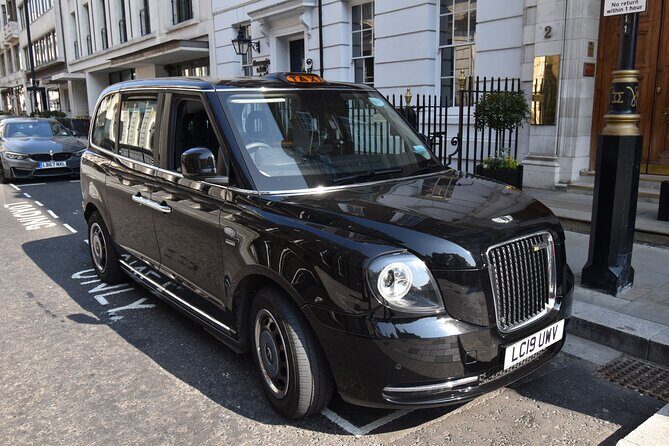
Beatles in London, but on real streets. This is a private taxi-style tour built around where the band (and Brian Epstein) actually moved, hung out, and made their early London name. You get frequent photo stops plus real context about the songs and the scenes that shaped Beatlemania.
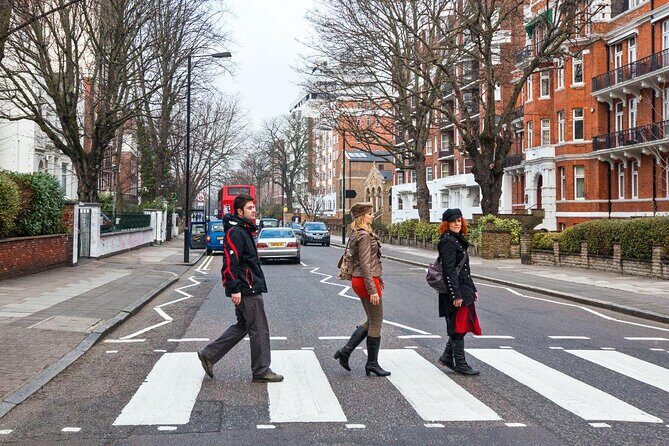
What I like most is the way the tour mixes music history with tight, practical sightseeing. It’s not only looking from the curb: at big moments like Abbey Road, you get out and do the walk and photos, and guides often bring old photos for comparison right there on the street.
One thing to consider: it’s a packed route, so many stops are brief (think quick walk-bys and photos). Also, this tour’s start point is fixed at Sloane Square, so if you’re hoping for hotel pick-up, plan on meeting there unless you’ve arranged otherwise far ahead.
In This Review
- Key things about this Beatles taxi tour
- How the 3-hour route makes Beatles London make sense
- Sloane Square and Chapel Street: the Epstein early-days storyline
- Mason’s Yard and the Indica Art Gallery: when John met Yoko
- The Army and Navy Club and Prince of Wales Theatre: surprises inside the Beatles myth
- Soho Square, Old Compton Street, and Broadcasting House: where culture met marketing and media
- Trident Studios at Saint Anne’s Court and the Soho stop-for-yourself time
- Abbey Road Studios: the photo stop that lives up to the hype
- Marylebone Station and the Old Town Hall: film locations and real romance
- Cavendish Avenue, Baker Street’s Apple Store, Montagu Square, and Savile Row
- London Palladium: how TV made Beatlemania feel inevitable
- What the guides do (and why comfort helps on a short schedule)
- Price and value: is $183.27 per person worth it?
- Who this Beatles taxi tour is best for
- Should you book this Beatles taxi tour?
- FAQ
- How long is the Private Beatles Taxi Tour of London?
- Where does the tour start and where does it end?
- Is this tour private?
- What is included in the tour price?
- What language is the tour offered in?
- Is there free cancellation?
Key things about this Beatles taxi tour
- Private car time with WiFi and air-conditioning, so the day stays comfortable
- Short, story-rich stops that focus on Beatles lives, not random London landmarks
- Real photo moments, especially Abbey Road and the famous shooting locations
- Brian Epstein is the thread, from Sloane Square to Chapel Street and beyond
- Soho hits that connect Trident Studios, famous streets, and BBC broadcasting decisions
- Guide energy matters, with many memorable guides (like Terry, Tony, and Russell) who keep the stories moving
How the 3-hour route makes Beatles London make sense
This tour is built for people who want the Beatles story in the order it felt in London: early rooms and offices, then the Soho music machine, then the big performance era, ending near a classic theatre hotspot. With about 3 hours on the clock, you’re not doing one stop at a time like a museum day. You’re doing connections—how one place leads to another.
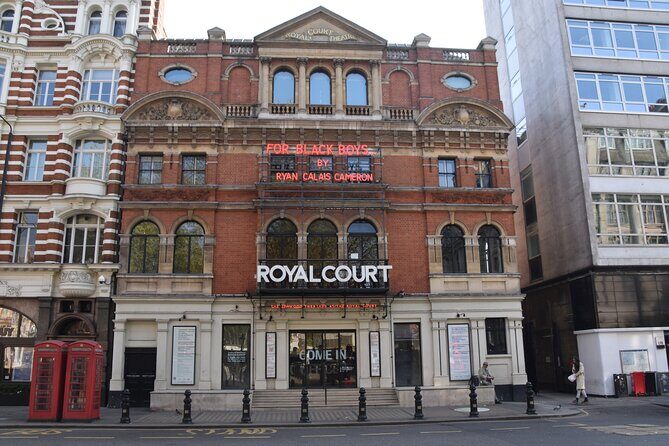
You start at Sloane Square outside the Royal Court Theatre, and the tour ends outside the London Palladium. That “start here, finish there” design is part of the value: it keeps you from zig-zagging across the city and wasting time in traffic.
Because the timing is tight, you’ll want to come with a simple game plan: decide which moments you care about most (Abbey Road, studios, or the early Epstein story), and use the quick stops to grab photos and ask questions fast. The guides are there for the human scale of a small group—so if you’re the kind of person who asks, you’ll get more out of it.
You can also read our reviews of more private tours in London
Sloane Square and Chapel Street: the Epstein early-days storyline
The first stop sets the tone immediately. You meet at Sloane Square, near the Royal Court Theatre, and the guide walks you through how the Beatles were tied to this part of London in their early days. It’s a clever way to start, because you’re not just chasing icons—you’re looking at the neighborhood that helped turn talent into a scene.
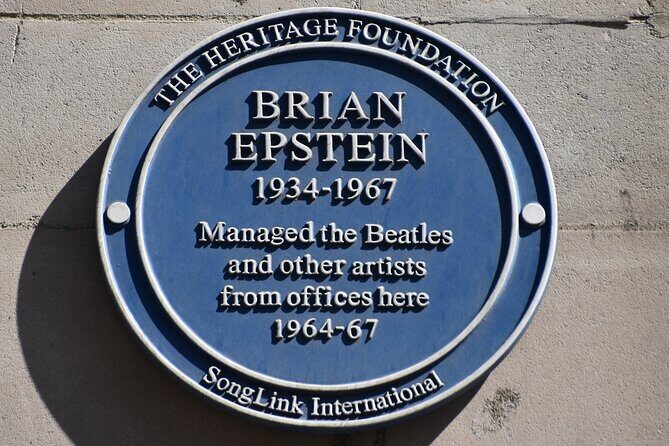
From there, you move to 24 Chapel St, the home of Brian Epstein. This is one of the tour’s biggest “wait, really?” stops. The Chapel Street visit focuses on Epstein’s role in making the Beatles visible, including the idea that this London home hosted a launch party for Sgt. Pepper and was used for some of the earliest London photos tied to the band’s rise.
Even better, this part of the experience isn’t written like a biography page. You’ll get the practical “how it worked” story: how Epstein met the band, and how he influenced their look and sound as they went from local acts to international phenomenon.
Mason’s Yard and the Indica Art Gallery: when John met Yoko
Next comes one of the most interesting thematic pivots: the tour shifts from management and image to art-world energy and personal change. At Mason’s Yard, you’re pointed toward the location of the Indica Art Gallery, strongly linked to the moment when John first met Yoko.
What makes this stop work is the way it’s framed. It’s not only about who met whom. The guide ties the art scene to the bigger question of how that meeting shifted John’s life and direction. And yes, you’ll hear the story about John paying five imaginary shillings for an imaginary nail—one of those details that feels odd until the guide explains why it’s the kind of moment that says a lot about their attitude and the times.
This stop is also a reminder of why a taxi format helps. You’re seeing a working piece of London, not a bottled museum display, and you can look at the street as part of the story rather than separate from it.
The Army and Navy Club and Prince of Wales Theatre: surprises inside the Beatles myth
A Beatles tour can easily become predictable: houses, studios, Abbey Road, repeat. This route throws in a couple of detours that actually make the bigger story more believable.
One stop centers on the Army and Navy Club, founded in 1837. The setting is the kind of place you wouldn’t expect on a Beatles itinerary, and that contrast is the point. You’ll hear one of the most daring and interesting Epstein-related stories tied to the club. The tour keeps some details wrapped up for the guide to deliver, which is good—because the payoff is the telling.
Then you head to the Prince of Wales Theatre, tied to the Royal Variety Performance in 1963. This stop is especially valuable if you like the idea of the Beatles stepping into mainstream British entertainment. The guide explains how Beatlemania is said to have started right around this moment, including the behind-the-scenes idea that the band had to be smuggled into the theatre from their nearby hotel, plus stories about interactions that didn’t go exactly like the script suggests.
If you’re picturing Beatles London as only youth clubs and late nights, these theatre and establishment links show you another side of the same wave.
Soho Square, Old Compton Street, and Broadcasting House: where culture met marketing and media
After the early Epstein story and the personal-life turning points, the tour leans hard into Soho, the place where music, image, and media collided.
At Soho Square, you’ll visit 18 Soho Square, tied to a Beatles office connected to the idea of calling it The Surgery. This stop is short but memorable if you care about the Beatles’ brand-building—because it shows how even workplace nicknames became part of the myth.
Then it’s back into the streets with Old Compton Street, connected to the Beatles’ tailor who helped shape their signature suits. The details here are practical: the shop made over 500 outfits over their time, including suits used for Hard Day’s Night. You’ll also learn how the collarless look became a visual shorthand for the Beatles’ whole era.
The tour also hits Broadcasting House, home of the BBC. This is where you’ll get the media-angle story that many Beatles fans don’t always connect. The guide explains how the BBC banned Beatles songs, including Come Together and Lucy in the Sky with Diamonds, and also how Back in the U.S.S.R was later banned 23 years after its original release. It’s a good reminder that popularity doesn’t always mean easy airplay.
If you like your music history with a bit of conflict—this stretch delivers.

Trident Studios at Saint Anne’s Court and the Soho stop-for-yourself time
At Saint Anne’s Court, the tour visits the area tied to Trident Studios. This is one of the stops that feels like it belongs on any serious music fan’s London list.
The focus here is on the studio talent gravity: artists like Elton John, Lou Reed, David Bowie, and Queen are named as part of the studio’s broader legacy, and you’re also told that the Beatles recorded Hey Jude here, along with other famous tracks.
The “why Soho” angle is what you should pay attention to. The guide explains why big names chose this part of London to record, which helps you understand why the Beatles weren’t working in a vacuum. They were part of a larger music ecosystem.
You also get a built-in break for a small snack at nearby cake and coffee spots and time to use restrooms. It’s not long, but it’s timed well, which matters when the rest of the day is mostly quick stops.
Abbey Road Studios: the photo stop that lives up to the hype
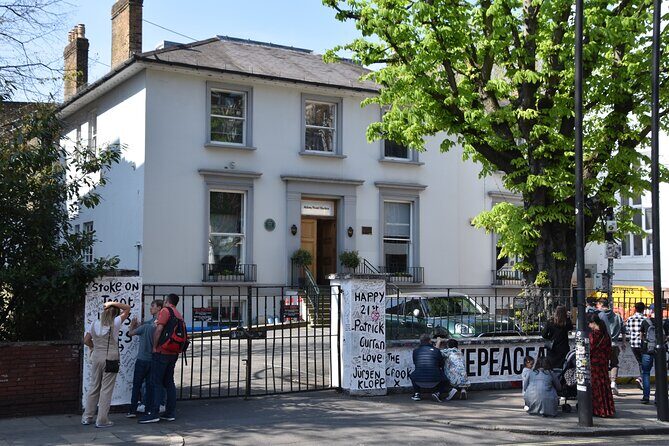
If you came for one place above all others, it’s probably Abbey Road Studios. This stop is the tour’s biggest “experience it for real” moment.
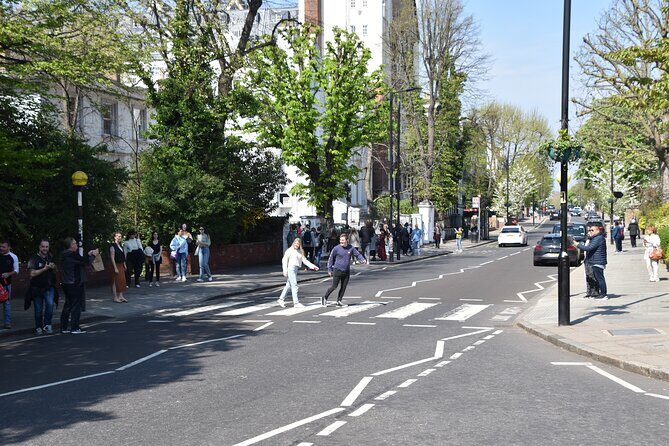
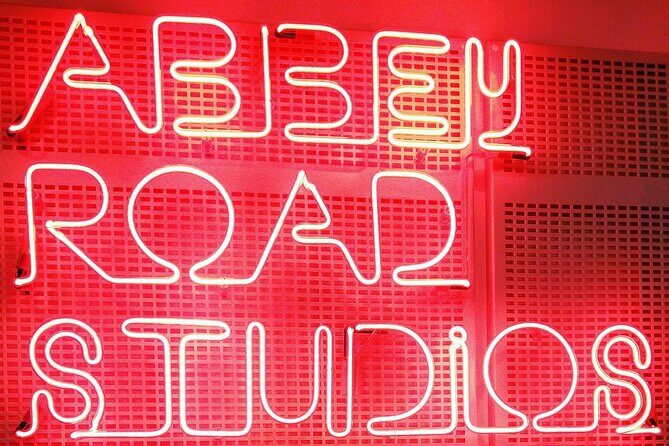
You’ll be able to walk to the famous Abbey Road crossing used for the album cover of Abbey Road. The tour gives you time to have your photo taken walking across, visit the shop, and write your name on the wall outside where visitors mark their visits each year.
A useful reality check: you’re not getting a studio tour inside the building here. You’re getting the street-level experience—plus the guide explaining how the album release initially received mixed reviews, and how it’s later considered one of the greatest Beatles albums. In other words, you’re tying the location to the story of how public opinion can swing over time.
When the guide also compares the moment to the surrounding streets, it makes the crossing feel less like a postcard and more like a snapshot from a specific year.
Marylebone Station and the Old Town Hall: film locations and real romance
The route then shifts to two places linked to A Hard Day’s Night and to the love-and-largescale life milestones that followed.
At Marylebone Station, the location is tied to Liverpool Lime Street in the 1964 film A Hard Day’s Night. The guide explains that there’s a well-known moment from the movie that was an accident caught on camera, which is the kind of detail that makes film locations feel more alive.
Then you head to Old Marylebone Town Hall, where music and Hollywood legends have married. The focus is on Beatles connections: Paul McCartney married there (twice), and Ringo married there in the 1980s. If no wedding is happening, you can step out and recreate famous wedding photo angles, like the idea of Paul and Linda kissing on the steps.
These stops work because they show the Beatles story after the “songs only” stage—when their lives became mainstream news.
Cavendish Avenue, Baker Street’s Apple Store, Montagu Square, and Savile Row
This section is the “street continuity” part of the tour. You’re moving through neighborhoods where the Beatles’ presence doesn’t feel like history behind glass. It feels like London with memory baked into it.
- Cavendish Avenue: you’ll visit the street where Paul McCartney still lives in London, with a small chance of catching a glimpse.
- Baker Street: you’ll hear about the Beatles’ connection to the Apple Store era. It’s described as a place where the band even regularly manned the tills—yet it was a financial disaster. The guide explains how something so on-brand could still fail.
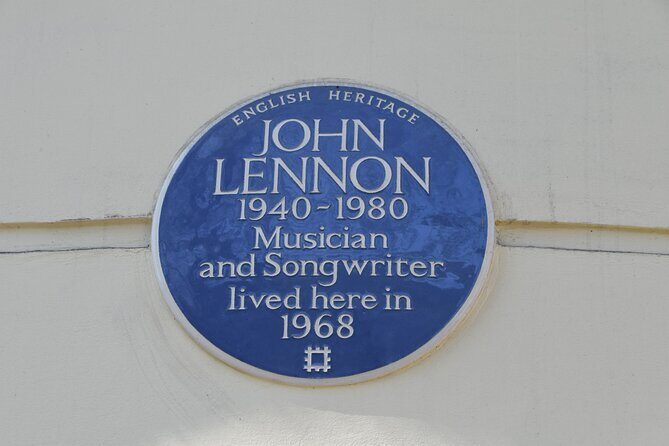
- Montagu Square: linked to Ringo Starr’s London flat in the 1960s, and later sublet to Paul McCartney, John and Yoko, and even Jimmy Hendricks. You’ll also hear about John’s 1968 arrest for cannabis, plus questions about what happened next and the arresting officer’s situation.
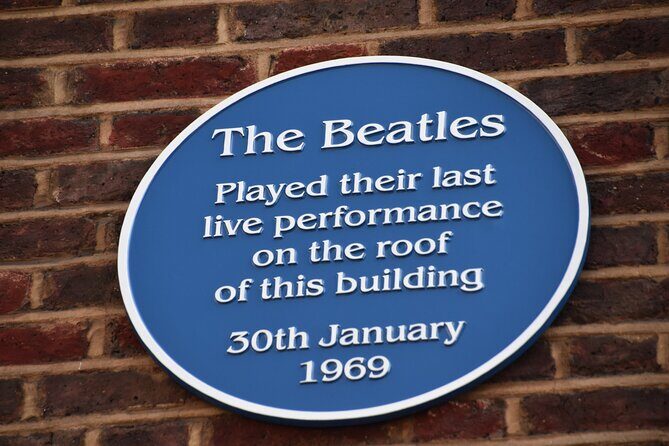
- Savile Row: tied to the Beatles’ final rooftop performance together. You’ll hear how it caused traffic to grind to a halt, how people climbed onto nearby roofs, and how the police were called.
A quick tip: this is the part where your guide’s storytelling style really matters, because the streets can start to blur together. The best guides keep it sharp—linking each place to a specific moment, not just listing names.
London Palladium: how TV made Beatlemania feel inevitable
The grand finish point is the London Palladium, and the guide explains why it mattered. From 1955 to 1967, Sunday Night at the London Palladium shaped British show business, and the Beatles’ 1963 headlining appearance is described as a turning point in how people caught Beatlemania on TV.
This stop also ties back into the bigger theme of mainstream acceptance. Even if you’re a fan of the darker, grittier music history, this part shows how the Beatles became mass media stars—and how that shift changed the word Beatlemania into something everyone used.
You also get a little “what it felt like” energy here, including the story about fans allegedly rioting in the streets after the performance.
What the guides do (and why comfort helps on a short schedule)
The tour is private, and that changes the tone fast. You’re not competing with a big crowd for a photo angle or a question. It’s you and your guide, moving from stop to stop.
On top of that, you’ll be in an air-conditioned vehicle, and there’s WiFi onboard, which sounds minor until you realize it keeps the day pleasant in summer and helps you plan your next moves after the tour ends.
The guide factor is where the experience becomes memorable. Names that come up often include Terry, Tony, Russell, Scott, Richard, Mike, Daniel, Ken, and Bluey. The common thread: guides who enjoy the story, take photos for you, and keep it entertaining rather than lecture-like. One thing you should do if you care about photos: ask the guide to take pictures at the key moments, then take a breath and enjoy the walk. You’ll get more from it when you’re not rushed.
One practical consideration: some people find certain accents harder to follow. If you’re worried, don’t be shy about asking for repetition. The tour works best when you can hear the story clearly.
Price and value: is $183.27 per person worth it?
At $183.27 per person for about 3 hours, the price isn’t cheap, but it can still be good value if you compare it to what you’d otherwise pay for separate things.
Here’s what you’re paying for:
- a private car (with air-conditioning and WiFi)
- a guide focused on Beatles-specific locations
- frequent stop-and-photo moments rather than just driving past places
- some ticket coverage (at least one stop includes an admission ticket, while other stops are described as free)
The big value test is simple: do you want a smart, guided route that hits many Beatles sites without you navigating trains and buses between tight time windows? If yes, this price can feel fair—especially since the tour is often booked around 90 days ahead, which usually means demand is steady.
If you only want Abbey Road and nothing else, you’d probably spend less going solo. But if you want Epstein, Soho, studios, film locations, and rooftop legend in one go, this tour’s structure is built to save you time and stress.
Who this Beatles taxi tour is best for
This is a strong fit if you:
- love Beatles trivia but also want the London context behind it
- want a lighter, more personal format than big group bus tours
- care about photo moments at iconic sites, not just sightseeing from the curb
- like music history told through neighborhoods (Soho, Marylebone, theatre London)
It’s less ideal if you:
- want long stays in any single location
- dislike fixed meeting points (start at Sloane Square)
- need frequent bathroom breaks beyond the planned stop
Should you book this Beatles taxi tour?
I’d book it if you’re a Beatles fan who wants the story + the streets in a single morning or afternoon, without turning London into a logistics puzzle. The route is packed, but the stops are connected: Epstein’s influence, Soho’s music machine, and the performance-and-media era that made Beatlemania explode.
If you’re budget-sensitive, compare what matters most to you. For a photo-heavy, guide-led Beatles route with comfort and a private format, the value is there. For a one-stop Abbey Road day, you can probably do it cheaper on your own.
Either way, if you go, go ready to take quick photos, ask smart questions, and enjoy the feeling of moving through London the way the Beatles’ world once worked.
FAQ
How long is the Private Beatles Taxi Tour of London?
The tour lasts about 3 hours.
Where does the tour start and where does it end?
It starts outside the Royal Court Theatre at Sloane Square, and it finishes outside the London Palladium.
Is this tour private?
Yes. It’s a private tour where only your group participates.
What is included in the tour price?
The tour includes an air-conditioned vehicle and WiFi onboard. Some stops include admission tickets while others are described as free.
What language is the tour offered in?
The tour is offered in English.
Is there free cancellation?
Yes. You can cancel up to 24 hours in advance for a full refund.