REVIEW · LONDON
Secret Gardens of the City of London Private Tour
Book on Viator →Operated by Ye Olde England Tours · Bookable on Viator
London has gardens you’d never guess exist. This private City of London tour stitches together secret gardens and churchyard greens with real stories about the people and events that shaped the Square Mile.
I especially like the short, focused stops. You get a run of different garden styles and design ideas without wasting time wandering. I also love how your guide turns each green space into a living clue—whether it’s tied to the Great Fire, Samuel Pepys, the Blitz, or London’s Roman layers.
One possible drawback: several stops are just 5–10 minutes, so it’s not a slow sit-and-stare tour. And a few major sights need separate admission (like St. Paul’s Cathedral and the Monument), so you’ll want to plan for that.
In This Review
- Key things that make this tour worth your time
- Private guide meets you in the City’s old streets
- Price and value: what $260.51 buys you
- How the route flows: St. Paul’s to the Memorial Park vibe
- Stop-by-stop: what you’ll actually see (and why it matters)
- 1) St. Paul’s Cathedral (start point with big-time scale)
- 2) St. Paul’s Churchyard gardens (where landscaping becomes history)
- 3) Festival Gardens (color pops with a Cathedral backdrop)
- 4) Reflection Garden (redeveloped during Covid, with a water feature)
- 5) Distaff Lane Garden (silver birch + cool air at the rear)
- 6) Cleary Garden (Italian inspiration over Roman ruins)
- 7) Whittington Garden (Lord Mayor tribute)
- 8) St Swithin London Stone Church Garden (almost hidden, with a sad past)
- 9) The Monument to the Great Fire of London (landmark without the long wait)
- 10) St. Dunstan in the East (the most beautiful ruin feel)
- 11) Seething Lane Garden (Samuel Pepys story stones)
- 12) St Olave’s Church (a survivor through fires, plagues, and war)
- 13) All Hallows Staining Church Tower (WWII-era meaning, with a twist)
- 14) Garden at 120 (new sky garden + citywide view)
- 15) Hogarth Court (a modern garden with anti-slavery art)
- 16) Leadenhall Market (Victorian market on top of Roman market)
- 17) St Peter-upon-Cornhill (small garden, famous grave vibe)
- 18) St. Michael’s Cornhill (cars can’t reach, and that matters)
- 19) Guildhall (standing on a Roman amphitheatre site)
- 20) St. Lawrence Jewry (in the old Jewish district, rebuilt after WW2)
- 21) Churchyard of St John Zachary (sunken garden with layered time)
- 22) Noble Street (Roman City Wall ruins from WW2)
- 23) St Mary Aldermanbury Garden (Shakespeare + Churchill links)
- 24) St Mary Staining (tree + modern architecture around it)
- 25) Postman’s Park (memorial park for everyday heroes)
- Tickets, pacing, and weather: plan like a local
- Who this tour is for (and who should pick something else)
- Should you book Secret Gardens of the City of London?
- FAQ
- How long is the Secret Gardens of the City of London private tour?
- Where does the tour start, and when?
- Is hotel pickup included?
- Are admission tickets included for all stops?
- Is this tour private?
- Can the start time be adjusted?
- What’s the cancellation policy?
Key things that make this tour worth your time
- Private, door-to-detail guiding: only your group, with a local guide plus a tour escort/host
- Hotel pickup option: meet at a Central London hotel, then tube to the St. Paul’s area
- City-of-London garden variety: from churchyard gardens to memorial parks and even a sky garden
- History you can see: Roman ruins, Great Fire landmarks, WWII memories, and diarist connections
- Good pacing for first-timers: steady walking with lots of photo-ready moments
- Capacity note at Garden at 120: small chance you can’t get in on rare occasions
Private guide meets you in the City’s old streets
This is a true private tour, which matters more here than in most places. You’re not squeezed into a crowd, so you can ask questions, linger near the best views, and get practical context fast. Your guide sets the tone early, starting right near some of London’s most famous architecture before slipping you into smaller, quieter corners.
The morning plan is built for wandering without the stress of navigation. The tour description emphasizes that your guide can collect you from your hotel (any Central London hotel) and then you’ll head to the starting point near St. Paul’s by tube. If you’d rather skip transit, you can also meet at Caffè Nero, 30 Newgate St, Paternoster Square (EC4M 8AD).
Dress smart casual is the rule, and the walk is best suited for people with moderate physical fitness. Think sidewalks, short alleyways, and lots of steps to viewpoints—manageable, but it’s not a sit-down museum circuit.
You can also read our reviews of more city tours in London


Price and value: what $260.51 buys you
At $260.51 per person for about 3 hours, this isn’t a budget “grab-and-go” activity. The value is in the format: hotel pickup, a private guide, and admission that’s included for several specific stops. You’re also paying for direction and interpretation—this route makes sense when someone explains why each place exists and what it’s connected to.
A couple stops are not included for admission, including St. Paul’s Cathedral, the Monument to the Great Fire of London, and All Hallows Staining Church Tower. That’s not a deal-breaker; it just means you should treat the tour price as covering the guided experience and the majority of the site access, then expect a few add-ons at select landmarks.
Timing helps too. It’s booked about 44 days in advance on average, which tells me this is popular with people who want a calmer, guided way into the City. If you’re traveling in peak season, locking it in earlier can save you from schedule scrambling later.
How the route flows: St. Paul’s to the Memorial Park vibe
This tour is a tight loop through the heart of the City of London, starting at St. Paul’s Cathedral and moving through a sequence of churchyard gardens, lane-side greens, and tucked-away courtyards. You’ll bounce between famous-to-tourists places and spots that feel like you found them by accident.
The bigger theme is that London’s “secret” spaces often exist because of what happened here. Cemeteries, fires, wars, and old city structures shape where green spaces are possible now. Even when a garden looks like it could be from anywhere, your guide connects it to the real plotline of the Square Mile.
And yes—some stops are deliberately brief. That can sound like a tradeoff, but it’s also part of the method. You see a lot of places, learn what you’re looking at, and then get the fun of choosing what you want to revisit later on your own.
Stop-by-stop: what you’ll actually see (and why it matters)
1) St. Paul’s Cathedral (start point with big-time scale)
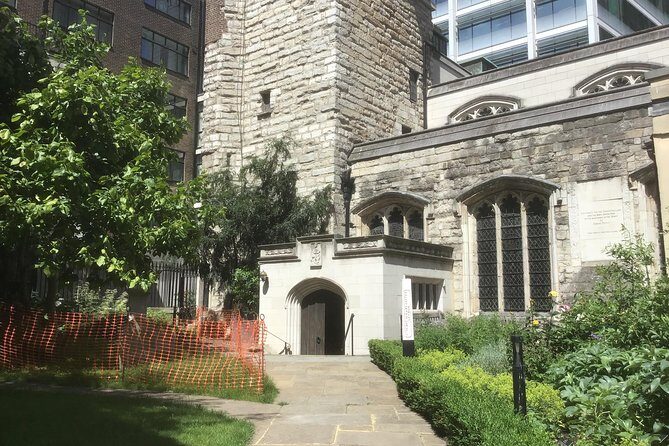
You begin under the majestic gaze of St. Paul’s Cathedral. Expect photo opportunities and a quick orientation. The admission ticket isn’t included here, so use this moment to get oriented and understand why the surrounding churchyard greens are so tied to the City’s story.
Why it’s worth it: this is your anchor. Everything you see later feels more meaningful once you’ve framed the Cathedral as the central landmark.
You can also read our reviews of more private tours in London





2) St. Paul’s Churchyard gardens (where landscaping becomes history)
Next is St. Paul’s Churchyard, including landscaped gardens around the Cathedral. Admission is free, and the time here is short, but you’ll have enough minutes to notice the planted spaces that soften the stone-heavy setting.
Why it matters: churchyard gardens in London often work like living archives—public spaces created around older sacred ground.
3) Festival Gardens (color pops with a Cathedral backdrop)
A quick stop at Festival Gardens for a splash of color with a striking view behind it. Admission is free, and the point here is simple: enjoy the contrast between formal architecture and curated greenery.
Potential drawback: if you’re expecting a long garden stroll, this is more of a quick visual hit.
4) Reflection Garden (redeveloped during Covid, with a water feature)
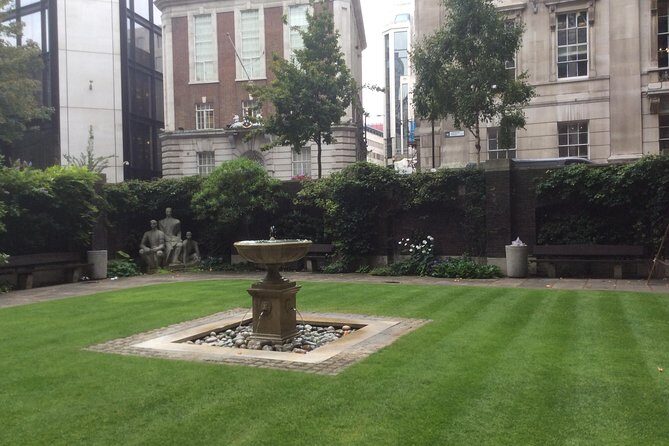
At Reflection Garden, the emphasis is on a calmer pause. It was redeveloped during Covid and includes a water feature and a view you won’t want to miss. Admission is free.
What to look for: the way the design encourages stillness in a place that’s otherwise in nonstop motion.
5) Distaff Lane Garden (silver birch + cool air at the rear)
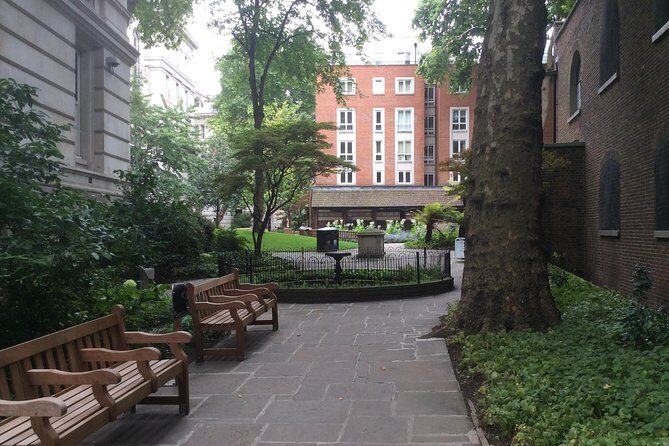
Distaff Lane Garden is described as shady, with a haven of silver birch and a cooling water feature toward the rear. Admission is free.
Why you’ll like it: it feels like a small climate break from the surrounding streets. If you’re the type who takes photos at doorways and corners, this one rewards you.
6) Cleary Garden (Italian inspiration over Roman ruins)
Cleary Garden is where the tour adds a surprise layer: it has Italian inspiration because Roman ruins lie beneath. Admission is free.
This is a great stop for anyone who likes London as a stack of time periods. You’re standing in a garden that hints at what’s under your feet—literally.
7) Whittington Garden (Lord Mayor tribute)
At Whittington Garden, the focus is on one of London’s famous Lord Mayors: Whittington, credited among other things with building the nearby church. Admission is free.
Why it’s special: it’s not just pretty plants. It’s civic storytelling in a quiet setting.
8) St Swithin London Stone Church Garden (almost hidden, with a sad past)
This garden is described as almost completely hidden from view and themed Welsh, with a sad history behind it. Admission is free, and it’s one of those “how do you even find this?” stops.
Consideration: because it’s hidden and short on time, keep your eyes open and follow your guide closely.
9) The Monument to the Great Fire of London (landmark without the long wait)
You’ll see the Monument to the Great Fire of London, a major symbol of the event that reshaped parts of the City. Admission isn’t included here, so plan on separate ticket costs if you want to go inside or climb.
Why it’s on this route: it connects the churchyard-and-garden world to the largest turning point in London’s early modern era.
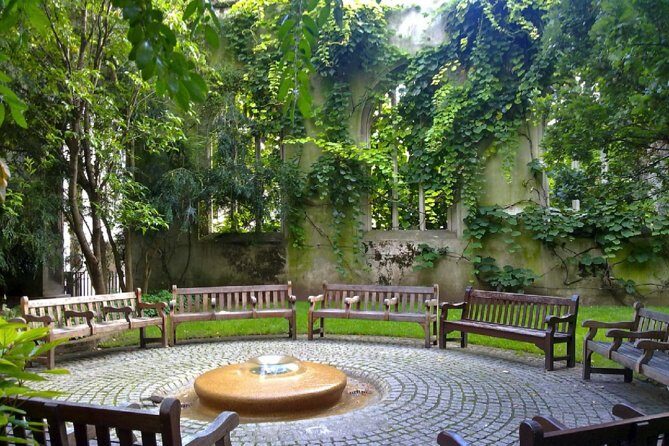
10) St. Dunstan in the East (the most beautiful ruin feel)
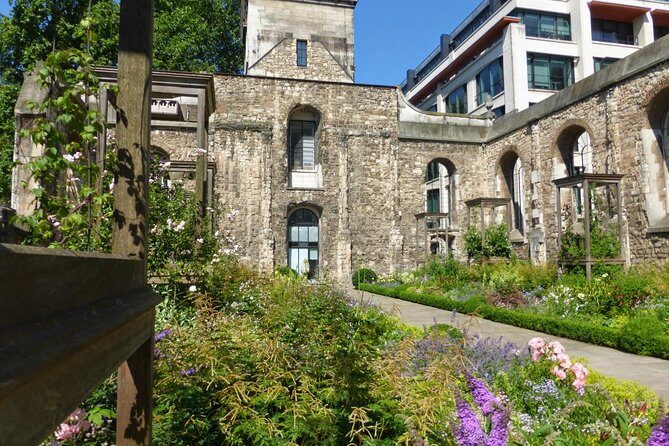
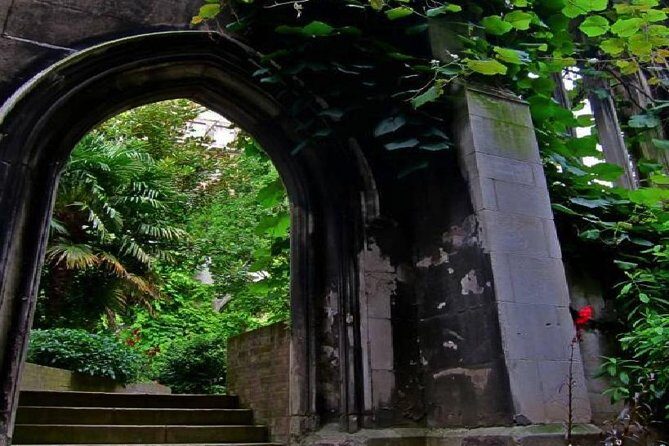
St. Dunstan In The East is called the most beautiful ruin in the old City of London, and the admission ticket is included. You’ll have about 10 minutes, which is enough to take in the space and absorb why ruins work so well in a guided format.
Why it’s worth your time: churches and ruins give context fast—survival, reconstruction, and what people decided to preserve.
11) Seething Lane Garden (Samuel Pepys story stones)
At Seething Lane Garden, the tour brings in Samuel Pepys, the diarist. The garden features decorative stones illustrating his memorable life. Admission is free.
What to look for: the stones act like a visual timeline. If you like words, this one also gives you a “read with your eyes” moment.
12) St Olave’s Church (a survivor through fires, plagues, and war)
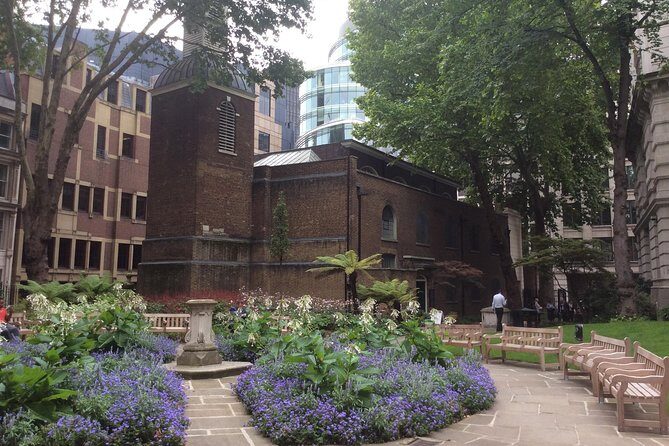
St Olave’s Church and its garden have been through the Great Fires, plagues, and World Wars—and the tour gives you that context rather than treating it like a backdrop. Admission is free.
Why this stop lands: you stop seeing it as an old building and start seeing it as a witness.
13) All Hallows Staining Church Tower (WWII-era meaning, with a twist)
All Hallows Staining Church Tower is timed at about 5 minutes and has an admission ticket not included. The real hook here is why it’s there at all—tied to one of London’s darkest moments, with the tour hinting you’ll have to understand the past to grasp the present.
Practical tip: if you want the most from this stop, listen closely—this is one of those sites where the story does the heavy lifting.
14) Garden at 120 (new sky garden + citywide view)
Next is Garden at 120, described as London’s newest sky garden with a fantastic view over where you’ve been and where you’re going. Admission is free, and it’s about 15 minutes.
Big consideration: it has a capacity of 207 people, and on rare occasions you might not get in. It’s still worth planning for because the vantage point is the payoff for all the earlier lane-walking.
15) Hogarth Court (a modern garden with anti-slavery art)
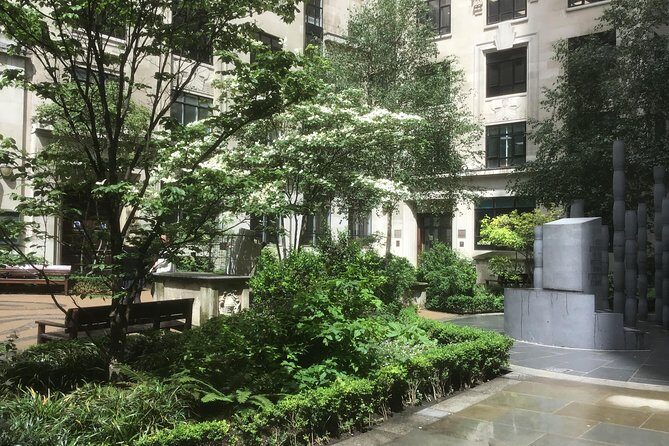
Hogarth Court is a modern garden with a poignant work of art about the slave trade, placed where two men campaigned for its destruction. Admission is free.
Why this works: it ties a quiet garden space to moral history, so you leave thinking, not just snapping photos.
16) Leadenhall Market (Victorian market on top of Roman market)
At Leadenhall Market, you’ll see a stunning Victorian market built on top of a Roman market. Admission is free. It’s also described as iconic, used in shows and movies.
Why you’ll enjoy it: it’s a sensory change of pace—architecture you can feel under your feet.
17) St Peter-upon-Cornhill (small garden, famous grave vibe)
St Peter-upon-Cornhill has a relatively plain garden, but it includes a grave that’s possibly the most famous in English literature. Admission is free.
If you’re a literature fan, this can be a quick but satisfying moment. If not, at least you get a sense of how deeply those alley churches connect to culture.
18) St. Michael’s Cornhill (cars can’t reach, and that matters)
St. Michael’s Cornhill is described as a secret garden tucked away in medieval passageways where no cars or vehicles get close. It includes a nice sun-trap spot and is surrounded by old churches, pubs, and the oldest coffee shop too. Admission is free.
Why it’s special: the lack of traffic changes how places feel. The city suddenly goes quiet in your mind.
19) Guildhall (standing on a Roman amphitheatre site)
Guildhall is the “big city center” moment. You’ll stand on top of the old Roman amphitheatre. Admission is included.
This stop is a reminder that these quiet gardens are part of a much older urban engine.
20) St. Lawrence Jewry (in the old Jewish district, rebuilt after WW2)
St. Lawrence Jewry is described as a little space in the heart of the old Jewish district, with admission included. It was almost entirely rebuilt after WW2.
Why this matters: it’s a garden-and-church stop, but the story is about community survival and rebuilding.
21) Churchyard of St John Zachary (sunken garden with layered time)
At Churchyard of St John Zachary, you’ll find a sunken garden with history that runs from ancient roots to more recent eras. Admission is included.
What to look for: the sunken shape. It naturally frames views, which makes it ideal for quiet reflection.
22) Noble Street (Roman City Wall ruins from WW2)
Noble Street brings Roman City Wall ruins uncovered in WW2. Admission is free, and the visit is short.
Why it’s worth squeezing into the schedule: you get a real connection between wartime discovery and the physical structure of the old city.
23) St Mary Aldermanbury Garden (Shakespeare + Churchill links)
St Mary Aldermanbury Garden is described as strongly associated with William Shakespeare and Prime Minister Sir Winston Churchill. Admission is included.
Why it’s fun: you don’t often see Shakespeare and Churchill linked by place. The garden gives you a concrete way to understand that London’s famous names often crowd the same few streets.
24) St Mary Staining (tree + modern architecture around it)
St Mary Staining is where the massive old tree steals the show, with incredible modern architecture around it. Admission is free.
Practical note: this stop is great for photos, especially if you like contrast—old nature against new lines.
25) Postman’s Park (memorial park for everyday heroes)
The tour closes with Postman’s Park, a beautiful but rarely visited park. Admission is included, and it features touching memorials to everyday heroes.
Why it’s a good ending: after all the fires, wars, and city layers, this one lands on human stories.
Tickets, pacing, and weather: plan like a local
Because several stops are ticketed separately, I’d treat your money like this: the tour pays for guiding and many entries, but you should budget for a few additions if you want full access at the big-name landmarks.
Also, keep your expectations realistic about time. Many stops are 5 minutes, some 10, and only a few stretch longer. That makes the tour efficient, but it also means you should decide what you care about most—views, photos, or the story—and listen for your guide’s cues.
The experience is described as especially safe during the Coronavirus outbreak thanks to generally quiet places and private touring. If you want that extra buffer, the operator suggests starting later than the usual time—around 10.30–11am—to miss rush-hour. You’re also welcome to wear masks, and your guide may wear one too.
Finally, it requires good weather. If rain is in the forecast, I’d plan for a reschedule option or bring a light rain layer.
Who this tour is for (and who should pick something else)
This is a strong fit if you want:
- A first-timer look at the City of London beyond the obvious landmarks
- A garden-focused walk where history is attached to what you see
- A private, paced morning with a guide who can answer questions on the spot
- Photo time at many stops without the hassle of planning your own route
It might not be ideal if you want:
- Long, slow garden wandering with no ticket considerations
- A tour where every stop is open for a deep visit
- A strictly budget-priced sightseeing plan
It also helps that the route is built around mostly quiet corners. For people who don’t enjoy crowds, that’s a big deal.
Should you book Secret Gardens of the City of London?
Yes, if you want a guided walk that feels like London’s hidden side, not just another checklist. The mix of churchyard gardens, Roman and WWII echoes, and a finish at Postman’s Park is a smart way to spend a morning.
I’d especially book it if you value interpretation. The standout element here isn’t just that the gardens exist—it’s that your guide ties each place to the City’s bigger story, from St. Paul’s area to the Great Fire landmark and the later memorials.
One last practical thought: if you’re the type who hates surprises, map out which ticketed stops matter to you in advance, and treat the rest as free, easy-to-enjoy garden breaks.
FAQ
How long is the Secret Gardens of the City of London private tour?
It runs for about 3 hours.
Where does the tour start, and when?
It starts at 9:30 am at Caffè Nero, 30 Newgate St, Paternoster Square, London EC4M 8AD, UK. The activity ends back at the meeting point.
Is hotel pickup included?
Yes. You can meet the guide at any Central London hotel, and then you’ll go by tube to the starting point at St Pauls. Pickup is also listed as included.
Are admission tickets included for all stops?
No. Admission ticket details vary by stop. St. Paul’s Cathedral and the Monument to the Great Fire of London are not included, while St. Dunstan In The East is included. Several other sites also have included admission, while All Hallows Staining Church Tower is not included.
Is this tour private?
Yes. It’s a private tour/activity, meaning only your group participates.
Can the start time be adjusted?
Yes. For a calmer experience and to miss rush-hour, the operator suggests starting a little later, around 10.30–11am. They may also meet you at your hotel, but they suggest meeting at the starting point for now.
What’s the cancellation policy?
You get free cancellation. You can cancel up to 24 hours in advance for a full refund, and cancellation cut-off is based on the experience’s local time.