REVIEW · LONDON
Shakespeare in the City Walk – In Shakespeare’s footsteps North of the Thames
Book on Viator →Operated by City Secrets Walks · Bookable on Viator
London turns into a playhouse on this walk. I love the full Shakespeare speeches Declan delivers, and I love how the route stays north of the Thames, so London feels fresh instead of cookie-cutter. The trade-off is simple: you cover real street distance for about two hours, so comfy shoes matter more than perfect outfits.
This is a guided Shakespeare in the City walk with a twist—less museum mode, more story mode. You’ll follow sites tied to Shakespeare’s life and London’s theatre world, including Blackfriars connections, moments tied to the Shakespeare family, and even a dramatic stop at St Paul’s Cathedral from the outside. If you’re a literature nerd, a curious history lover, or just want a fun way to spend a morning, it’s an easy “yes.”
One note before you go: the tour doesn’t focus on inside-the-building sightseeing. Even when it’s near big landmarks like St Paul’s, the experience is about what you see around the area and what you’re told in context—not going in and lingering for hours.
In This Review
- Key reasons this Shakespeare walk works
- North of the Thames: why this route feels different
- Price and value: $20.83 for two hours that actually move
- Meeting at Blackfriars Underground: where the tour starts
- Stop-by-stop: the story trail from Blackfriars to Barbican
- Shakespeare in the City Walk: the Blackfriars opening scene
- A Shakespeare statue most people miss—and the conspiracy cleanup
- The church site tied to the original Blackfriars Theatre
- Ireland Yard: the monastery fragment and Shakespeare’s themes
- Carter Lane: a quiet connector between Shakespeare and King James
- Saint Andrew’s Hill: a Shakespeare house site, plus a hidden sculpture and important document
- Queen Victoria Street: totem pole made from a Shakespeare speech
- Carter Lane (again): Shakespeare’s generosity and the daughters’ contrasting fates
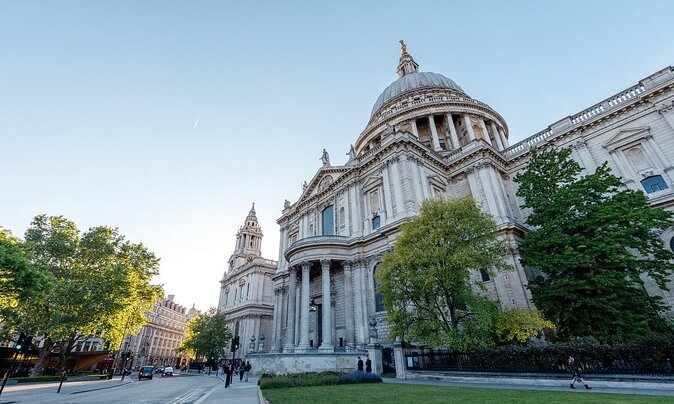
- St Paul’s Cathedral area: the exterior view, the “best seller,” and sonnets
- Cheapside: vocabulary, religion, and loneliness
- Love Lane: bust, the men who honored him, and writing-style clues
- London Wall: the second house site and the marriage story with regrets
- St Giles Cripplegate: actors, Edmund, and a goodbye speech
- Barbican: the option to continue by Underground
- Who should book this, and who should skip it
- The guide factor: why Declan’s delivery changes the whole experience
- Quick wrap-up: should you book it?
- FAQ
- How long is the Shakespeare in the City Walk?
- Where do I meet the guide for the tour?
- Where does the tour end?
- Is the tour offered in English?
- Is this tour suitable for children?
- Is there an admission cost at the stops?
- Can I get a full refund if I cancel?
Key reasons this Shakespeare walk works
- Declan’s actor background shows in how he performs key Shakespeare moments (not just reads them).
- Small groups (max 15 per booking) keep the pacing human and the questions manageable.
- North of the Thames focus gives you a side of London that many visitors skip.
- Most stops are free to enter, so you’re not stuck paying extra at each site.
- Walking route, not classroom facts: you learn through streets, churches, plaques, and odd little monuments.
North of the Thames: why this route feels different

There’s a reason this walk keeps you north of the Thames. Much of London’s famous-attraction energy pulls you toward the riverfront and the usual postcard stops. Here, you’re moving through older neighbourhood rhythms—church corners, narrow lanes, and overlooked junctions—where Shakespeare’s world can feel close instead of distant.
I also like the “different side of London” angle for locals. It’s easy to get used to your own city and tune out streets you’ve walked a hundred times. This route makes you look again. You start noticing small details: statues you would never think to seek out, plaques tucked where you’d normally just rush past, and those quiet stretches of road that suddenly feel purposeful.
And because the tour is built around Shakespeare’s life and writing rather than random city trivia, it doesn’t feel like a scavenger hunt. It’s more like a guided map of ideas—how London shaped his career, his connections, and the mythology that grew around him afterward.
You can also read our reviews of more tours and experiences in London.



Price and value: $20.83 for two hours that actually move
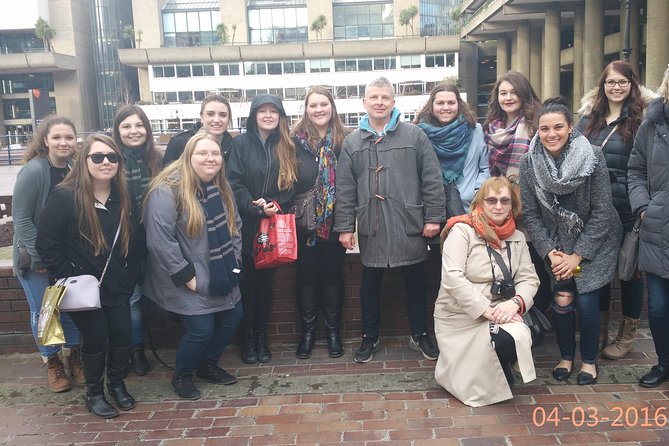
At about $20.83 per person for roughly two hours, you’re paying for three things: a professional guide, a walking route through multiple sites, and the performance element. The stops aren’t just “look at this plaque.” You get stories, interpretations, and full speech recitations delivered as live entertainment.
Another value point: the tour notes that admission at the listed stops is free. That matters because some walking tours turn into an expensive add-on parade. Here, you can spend your money on the experience itself, not constant ticket checks.
What you should mentally budget, though, is time and energy. This is a walking tour with moderate fitness expectations. If you plan your day with that in mind, the price feels fair. If you’re hoping for a mostly-stationary tour, you’ll likely feel frustrated.
Meeting at Blackfriars Underground: where the tour starts
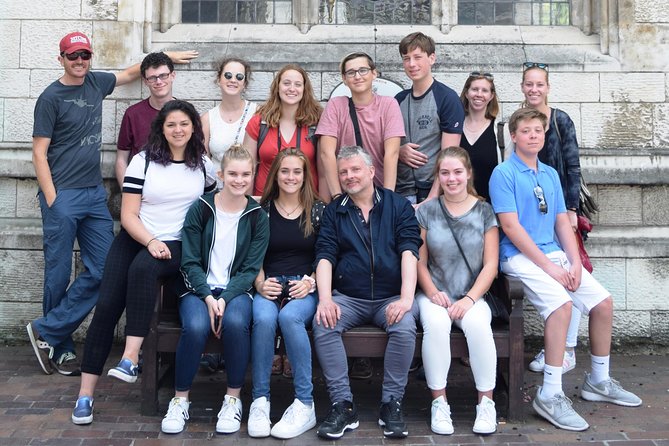
The tour begins outside Blackfriars Underground Station, specifically UNDER the Underground, not the overground area across the river. The guide meets at the one-exit setup by the Circle and District lines. The key practical tip here is location awareness: use the Underground stop, not the overground station name that looks similar.
When I think about first impressions for tours like this, I care about two things: finding the guide fast and getting oriented without stress. This start is designed for exactly that. The meeting point is straightforward, and you’ll be looking for a guide wearing a sign with Shakespeare’s face.
The start time is 11:00 am, and the tour uses a mobile ticket. It’s a nice setup for people who don’t want to mess with printing documents or scrambling for paper tickets.
Stop-by-stop: the story trail from Blackfriars to Barbican
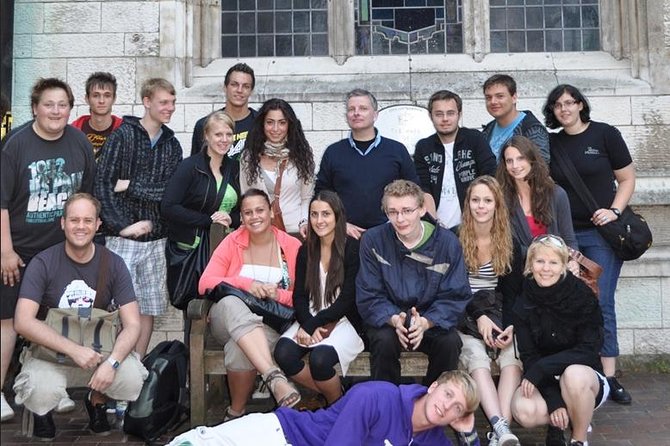
Shakespeare in the City Walk: the Blackfriars opening scene
You begin with the tour’s central theme: following Shakespeare through the London streets tied to theatre, patronage, and the city’s layered past. The guide kicks things off right at Blackfriars, which sets expectations immediately. You’re not starting in a generic “Shakespeare is everywhere” zone. You’re starting in a place that points directly at his London footprint.
This opening also helps you settle into the pace. Once the first site is explained, the rest of the walk starts to feel like one connected narrative instead of separate photo stops.






A Shakespeare statue most people miss—and the conspiracy cleanup
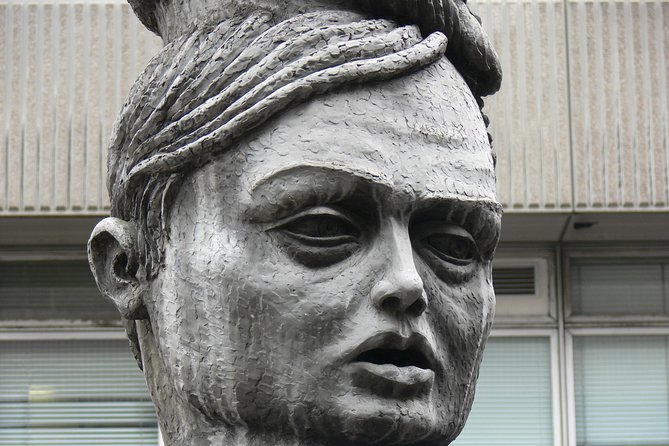
Early on, you’ll hit a Shakespeare statue that many people overlook. The tour uses that moment to talk about Shakespeare’s popularity—and then directly addresses why you should ignore conspiracy theories about him.
That’s a smart way to handle the usual Shakespeare noise. Instead of letting myths take over the conversation, you get the tour’s focus back: Shakespeare as a historical figure shaped by theatre life, patronage, and London’s social reality.
The church site tied to the original Blackfriars Theatre
Next comes the church area associated with the original Blackfriars Theatre. This is where the tour shifts from “fun Shakespeare facts” into “how theatre really worked.” You’ll hear why you had to be rich to attend, plus how Shakespeare himself became wealthy.
That’s one of the best kinds of tour storytelling: social context. It’s easy to forget that theatre wasn’t free entertainment for everyone. When you understand who could afford a seat, the Shakespeare story suddenly makes more sense.
Ireland Yard: the monastery fragment and Shakespeare’s themes
At Ireland Yard, you’ll see what remains of the Blackfriars Monastery. This stop also ties into how themes and ideas spread through the city, not just through books.
It’s a short stop, but it’s effective because it makes you look at the physical city as an active layer-cake. Even small fragments can hint at major cultural shifts—and Shakespeare’s work often reflects that kind of world change.
Carter Lane: a quiet connector between Shakespeare and King James
Carter Lane is described as lovely and quiet, and it links Shakespeare to King James. I like this kind of pause in a walking tour. The route isn’t only about landmarks; it also gives you those in-between moments where London feels calmer, and the stories can land without competing with traffic.
Saint Andrew’s Hill: a Shakespeare house site, plus a hidden sculpture and important document
Saint Andrew’s Hill is packed with “how did I not know this existed” energy. The tour points out the site of a Shakespeare house in London and discusses its fate. It also suggests the play likely written there, keeping the connection between place and creativity very close.
Then you get a church element with a hidden sculpture of Shakespeare praying, plus mention of an important document and a researcher tied to American pride. The details are delivered as part of the local story, and you end up feeling like you’re getting a behind-the-scenes view of how documents and people echo across time.
There’s also a mention of the play Richard III and how it connects to the area. It’s the kind of “wait, that’s linked?” trivia that makes a walk memorable.
Queen Victoria Street: totem pole made from a Shakespeare speech
On Queen Victoria Street, you’ll find an extraordinary hidden totem pole made from a famous Shakespeare speech. The guide also performs the speech in full, and that’s a big part of why this tour works.
This stop is one of the best examples of tour value: the monument is odd and worth seeing, but the performance turns it from a curiosity into a moment you’ll remember later. Declan used to be a professional actor, and you can feel that kind of stage control in how the speech lands.
After that, you visit the College of Arms and hear how the Shakespeare family coat of arms was honored—two months too late. You’ll also get a Ben Jonson joke at Shakespeare’s expense and information about Shakespeare’s children.
Even if you think you know the basics, the coat of arms angle gives you a different way to see “legacy.” Shakespeare becomes more than an author; he becomes a family story with social consequences.
Carter Lane (again): Shakespeare’s generosity and the daughters’ contrasting fates
You pass back through Carter Lane, this time to connect another thread: a plaque about Shakespeare’s generosity and background on his two daughters and their very different fortunes.
I like that the tour revisits streets instead of moving in a straight line only. It mirrors how history actually works. Life details repeat. Themes echo. The city holds onto information in more than one place.
St Paul’s Cathedral area: the exterior view, the “best seller,” and sonnets
The tour then reaches St Paul’s Cathedral. You don’t go inside, but you still get a revelation about what you’re seeing, plus stories tying Shakespeare’s best-selling work and his sonnets to this part of London.
You’ll also get a “reasonable interpretation” of his sexuality. If you’re cautious about biography overreach, you’ll likely appreciate that the tour frames it as interpretation, not a courtroom verdict.
One of the most fun moments comes here too: Declan shares his favorite four-word Shakespeare line, described as cosmic. It’s brief on paper, but hearing it delivered in context can make it stick.
Cheapside: vocabulary, religion, and loneliness
At Cheapside, the focus turns to Shakespeare’s vocabulary—and why even the best words weren’t enough. Then you’ll hear about the pub Shakespeare drank in and who else drank there.
This is also where religion and loneliness enter the conversation. It’s not just “what Shakespeare wrote,” but “who might have lived behind the words.” That approach is one reason the walk works for both tourists and London residents. People connect with the human angle.
Love Lane: bust, the men who honored him, and writing-style clues
Love Lane brings you to a bust of Shakespeare and a look at the men who honored him. The guide also gives insight into writing style and explains why you shouldn’t get all starry-eyed about Love Lane.
That’s a useful balancing act. You get admiration without turning the whole place into a fantasy postcard. You learn how memory gets shaped—and how physical sites become part of that shaping.
London Wall: the second house site and the marriage story with regrets
London Wall is where the walk points to Shakespeare’s second house and why he ended up there. The tour also covers a marriage that turned into regret, presented as a full local story rather than a headline.
This stop is one of those “you don’t expect this here” moments because London Wall isn’t always on a first-time visitor list. The result is a sense of discovery that feels earned, not staged.
St Giles Cripplegate: actors, Edmund, and a goodbye speech
Finally, the tour finishes at St Giles Cripplegate, where the guide ties in the church Shakespeare knew. You’ll hear about two of the best-known actors of Shakespeare’s age, and then the sad case of Shakespeare’s brother Edmund.
The close is built around a complete speech from Shakespeare’s last play, described as haunting and beautiful—again delivered as a performance rather than just summary. It’s a strong finish because the tour moves from place to meaning, and then back to an emotional ending.
Barbican: the option to continue by Underground
After the final stop, you can walk to Barbican Underground Station if you want to connect to the train system. Barbican sits on the Circle, Metropolitan, and Hammersmith & City lines, so it’s convenient for finishing your day without hunting for a route.
Who should book this, and who should skip it

If you’re the kind of person who likes seeing how stories connect to real streets, this walk fits. It’s also ideal if you want Shakespeare as performance and conversation, not just a list of facts.
You’ll likely enjoy it if you:
- love theatre culture and how it worked in London
- want a guided route through less obvious neighbourhood stops
- appreciate live delivery of speeches
You might want to choose something else if you:
- prefer tours that stay mostly outside or mostly inside landmarks without much walking
- need fully seated stops for long stretches
A moderate fitness level is recommended, and it runs in all weather, so plan for rain and bring layers.
The guide factor: why Declan’s delivery changes the whole experience
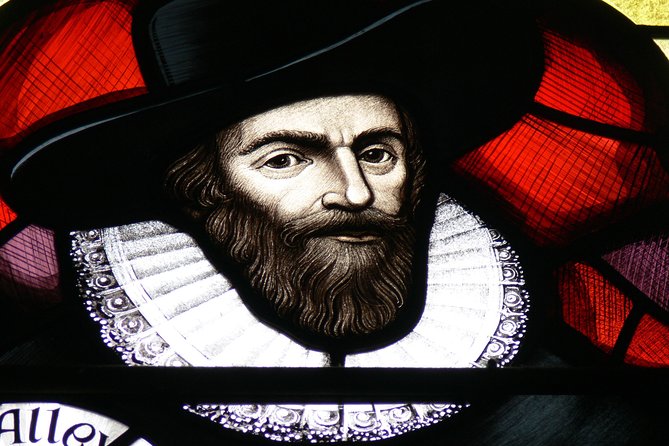
This tour isn’t only about the sites. It’s about how they’re interpreted. Declan, the guide, has an actor background, and the performance shows in the speech recitations you’ll hear at multiple points.
The practical upside is that it keeps attention. When you’re walking from stop to stop, you can’t always rely on plaques to do the heavy lifting. Here, the guide’s acting does that work—so you leave feeling like the tour made Shakespeare feel alive rather than archived.
Quick wrap-up: should you book it?
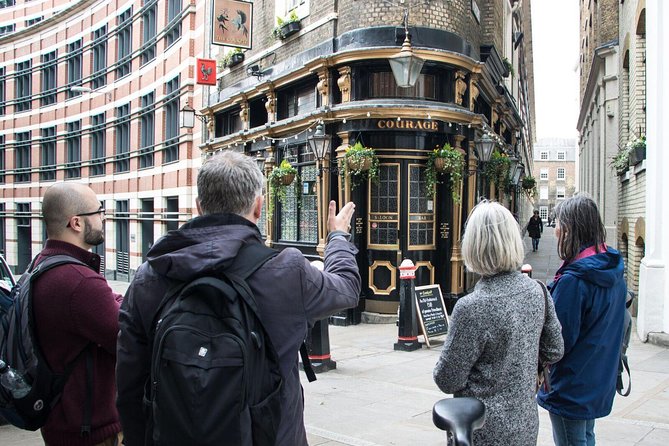
I think this tour is worth booking if your goal is a Shakespeare walk that feels like theatre, not a textbook. The combination of free-to-enter stops, a small group, and multiple full speech moments makes the $20.83 price feel more like a ticket to a guided performance than just a stroll.
Book it if you want to see north of the Thames through Shakespeare’s lens and get real story momentum from stop to stop. Skip it if you hate walking for about two hours or you want more inside-building sightseeing.
Either way, set your expectations correctly: this is Shakespeare in London as guided street theatre—played out in churches, lanes, and monuments, with Declan bringing the words to life.
FAQ
How long is the Shakespeare in the City Walk?
The tour lasts about 2 hours.
Where do I meet the guide for the tour?
Meet outside Blackfriars Underground Station at Underground Ltd, Blackfriars Rd, London EC4R 2BB. The guide is at the Underground station exit (Circle and District lines). Do not go to the overground station south of the river.
Where does the tour end?
The walk ends at Underground Ltd, Aldersgate St, Barbican, London EC1A 4JA, right by Barbican Underground Station on the Circle, Metropolitan, and Hammersmith & City lines.
Is the tour offered in English?
Yes. The tour is offered in English.
Is this tour suitable for children?
Children must be accompanied by an adult, and the recommended age is 10 years and above.
Is there an admission cost at the stops?
The listed stops are ticket free. The tour also uses a mobile ticket.
Can I get a full refund if I cancel?
Yes, you can cancel for a full refund up to 24 hours before the experience’s start time. Canceling less than 24 hours before start time is not refundable.