REVIEW · LONDON
Stonehenge Half Day Tour with Entry and Extra Time
Book on Viator →Operated by Evan Evans Tours · Bookable on Viator
Stonehenge feels real when you’re not rushed. This half-day coach trip from Victoria gives you admission included plus multilingual audio, then lets you explore for about two hours. You also get the shuttle setup that gets you from the visitor area to the monument so you can spend your time staring at the stones instead of figuring out the system.
What I like most is the entry ticket wrapped into the price, and the freedom to wander with audio in 10 languages. One thing to keep in mind: this can run longer than you expect, especially on the road back, and the meeting point details (there are many coach gates at Victoria) can catch you off guard if you arrive too late.
In This Review
- Key things that matter before you go
- Victoria Coach Station to Stonehenge: what the ride actually does for you
- How long is Stonehenge, really? The “half day” feeling
- Stonehenge audio headsets: how to get real value from the self-guided format
- Reconstructed Neolithic houses and the visitor centre: where the stones start making sense
- The walk from visitor area to the monument: shuttles, signage, and getting oriented
- What you see at the stones: scale, theories, and why two hours can feel short
- Coach comfort and the day’s temperature: Wi‑Fi is nice, AC matters more
- Who should book this Stonehenge tour (and who should look elsewhere)
- Value for $80.89: what you’re really paying for
- Should you book it?
- FAQ
- FAQ
- Is Stonehenge entry included?
- How long do I spend at Stonehenge?
- Do I need to use a shuttle bus at Stonehenge?
- Is there a live guide on the coach?
- What’s included besides admission?
- Where do I meet the tour and when does it run?
- Can I cancel for a full refund?
- Is the tour in English?
Key things that matter before you go
- Entry is included, so you won’t pay extra on arrival.
- About two hours on site gives you time to see the stones and still breathe.
- Audio is self-guided with headsets and a scannable map.
- You’ll use Stonehenge shuttles between the visitor area and the monument.
- Coach comfort features include Wi‑Fi and USB charging, but air-con can be hit-or-miss.
- It’s not truly escorted, so expect a host plus audio, not a guide-led walkthrough.
Victoria Coach Station to Stonehenge: what the ride actually does for you
Getting out to Stonehenge from London is the whole point of this tour. You leave from London Victoria Coach Station (boarding around 9:15am, departure 9:30am), ride west in an air-conditioned coach, and then drop you at the visitor area where you can switch from coach-time to Stonehenge-time.
The coach setup is practical for a day that’s mostly about one big site. You’ll have Wi‑Fi and USB charging on board, which sounds small until your phone battery is dying halfway to Salisbury Plain. Several reviews also point out that the ride is pleasant when the bus is comfortable and well-filled, though you should mentally prepare for the fact that this is a coach: seats can be tight and long drives can feel long, even when traffic is normal.
If you’re the kind of person who likes to arrive calm, this tour helps. You’re not hunting for trains, you’re not transferring buses, and you’re not timing multiple tickets. It’s the good kind of pre-planning: you trade a bit of flexibility for less stress.
One caution from real-world experience: there are multiple departure points and gates at Victoria. One guest even recommended confirming the gate in advance because there are over 25 gates. In other words, don’t treat Victoria like a single-station drop-off. Set aside enough time to find your exact gate, and check your confirmation details before you show up.
You can also read our reviews of more tours and experiences in London.



How long is Stonehenge, really? The “half day” feeling
Even though it’s called a half-day tour, you’re out for roughly 6 hours total, and the timing depends on traffic. Your on-site window is about two hours—enough for many first-timers to see the monument, take photos, and wander the visitor area without feeling completely frantic.
But that two hours can evaporate if you get delayed. Stonehenge has shuttles between the visitor area and the stones, and once you’re there, you’ll still want time to walk the perimeter paths, spot details, and watch the sun move. Add in the fact that the cafe and shop can have long lines, and you may feel more rushed than you planned if you wait until the last moment to eat.
A practical way to handle this: decide in advance what you want to do at the monument versus what you’ll leave for the visitor area. If you’re hungry, aim for food earlier rather than later. If you want photos without stress, build in a few minutes right when you arrive at the monument and then move on.
If your schedule is tight back in London (same-day reservations or plans), treat this tour like a flexible block, not a precise clock. Multiple experiences noted late returns due to traffic or confusion around drop-off location. You might be fine—but it’s smart to leave breathing room.
Stonehenge audio headsets: how to get real value from the self-guided format
This is one of the main reasons the tour works well. You get personal headsets and a scannable map, and you explore independently. Instead of a scripted lecture, the audio is there when you want it, paced to where you’re standing.
The audio experience is offered in 10 languages, which matters because Stonehenge is one of those sites where language can make or break your understanding. The audio typically covers the basic story and the competing theories people have about why Stonehenge was built the way it was. You’ll hear about the mystery around the origins of the stone circle, plus what people think it was used for.
One important expectation-setting note: the audio isn’t necessarily wall-to-wall narration. Some reviews described the on-site audio as more limited than they expected. So don’t buy this thinking it replaces a full guided tour by an expert in person. It’s better to think of it as a smart support system—enough to turn your wandering into a guided experience, without taking control away from you.
If you want to make the audio more effective, do this: listen first for orientation, then stop thinking of the headset as background sound. When you hear a specific prompt (about a stone, a viewing angle, or a theory), look for what it’s pointing you toward. You’ll get more out of your two hours that way.
Also, some departures included very helpful staff interactions at the start or during transitions. One reviewer mentioned a host named Sara assisting with shuttles and another mentioned a Jack who gave overall instructions. You won’t necessarily get a full on-site guide, but you can still get practical help when you need it.
Reconstructed Neolithic houses and the visitor centre: where the stones start making sense
Most people go to Stonehenge for the stones themselves. This tour also feeds you the context that makes the stones more than a photo spot.
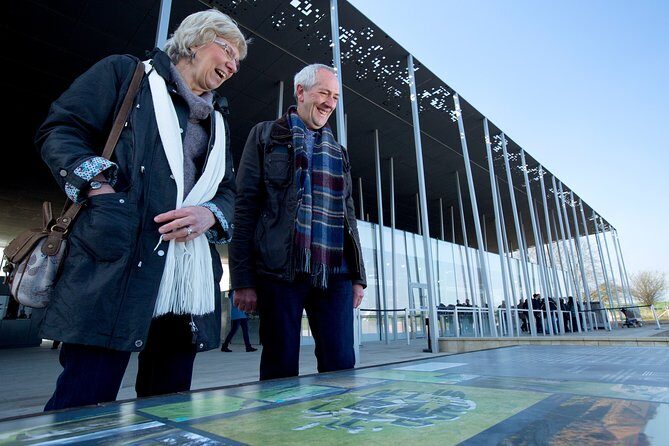
The visitor exhibition centre is built to give you an anchor point for the site. You can see a reconstructed set of Neolithic houses, furnished with replicas like axes and pottery. That matters because once you picture daily life around this era—even as replicas—the stones feel less like random rocks and more like part of a human world.
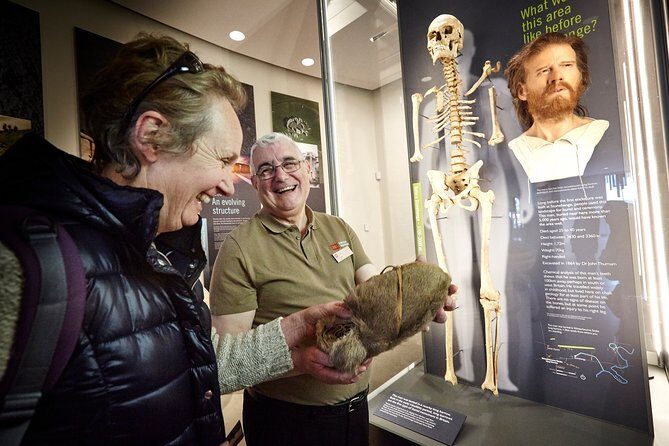
Inside the exhibition centre, you’ll come face-to-face with an interpretation of a 5,500-year-old man, and you can explore over 250 archaeological objects on display, including items like jewellery and even human remains. Whether you find that moving or intense, it helps you understand that Stonehenge wasn’t a theme park idea. It’s tied to real people and real burials.
There’s also information about the wider setting on the Salisbury Plain, including the long stretch of burial mounds (barrows). The audio and displays touch on who made Stonehenge and how it was built, plus what barrows are for. This is the part of the experience that can be surprisingly satisfying for science-minded visitors, because it turns the mystery into a set of evidence you can hold in your head.
The balance you should expect: you’ll get enough context to enjoy the monument more, but you won’t have hours to study everything in detail. Two hours on site means you’ll need to pick what you care about most.
The walk from visitor area to the monument: shuttles, signage, and getting oriented
When you arrive at Stonehenge, you don’t drive right up to the stones. You typically use shuttle buses provided by Stonehenge to travel between the visitor entrance area and the monument. The tour gives you the basic plan, and the audio/scannable map helps you follow along.
In practical terms, this transition is where first-timers sometimes feel lost. Several experiences noted that signage to the stones isn’t always obvious—especially in rain. You can reduce the stress by doing two things:
- Use the shuttle as intended instead of trying to “wing it.”
- When you get off, take a few minutes to orient yourself before you rush for your first photos.
If you’re the sporty type, one reviewer even chose to walk part of the way back to the visitor centre (about a half-hour walk) instead of waiting for the shuttle, when weather was nice. That’s not required, but it’s useful to know: you have options, depending on your energy and the weather.
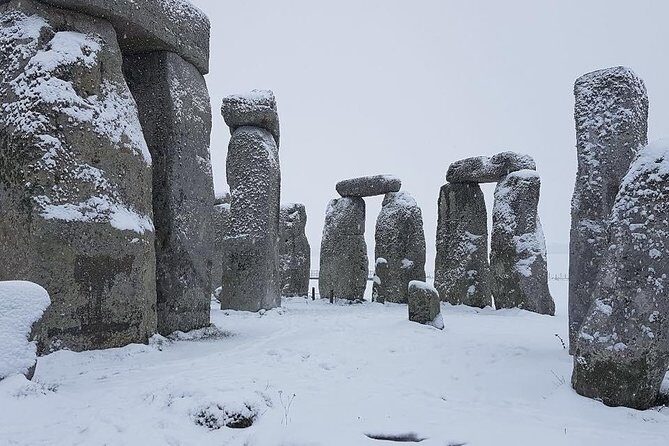
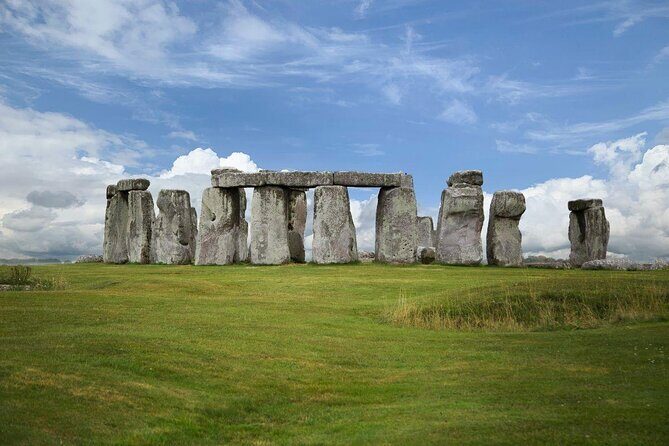
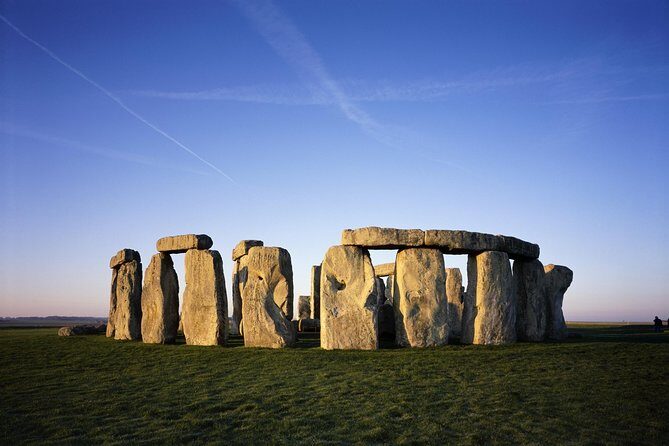
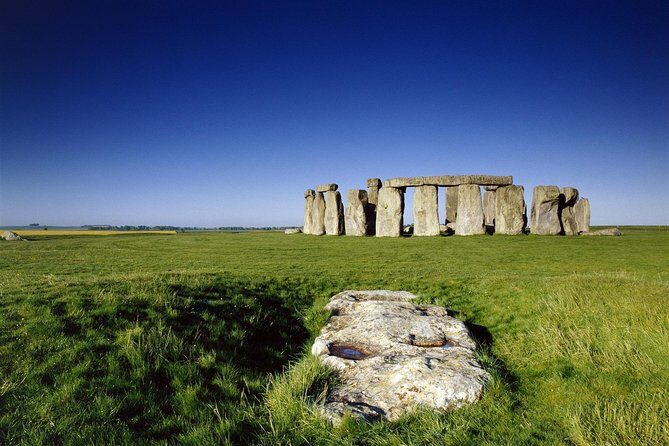
Photo tip: Stonehenge rewards slow looking. The interior has bluestones, and the stones themselves are massive enough to make scale hard to grasp until you’re actually standing close. One tour description points out that some megaliths can be over 9 metres tall and weigh more than 25 tons. When you’re there, take a minute to look from different angles—your photos will look better because you’ll stop trying to capture everything at once.






What you see at the stones: scale, theories, and why two hours can feel short
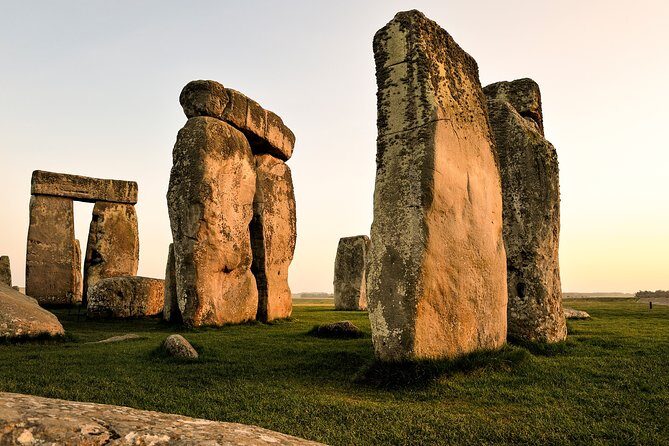
At the monument, you’ll walk around the stone circle and absorb the strange mix of science, imagination, and unanswered questions that makes Stonehenge famous.
You’ll see the massive stones up close—some descriptions mention stone weights around 40 tons (also given as 36 tonnes)—and the arrangement of the circle, including bluestones inside. You’ll also be in the middle of the “how did they do it” conversation, because Stonehenge isn’t a site that stays simple once you’re looking at it.
This is where the audio matters. It helps you connect what you see to the theories people discuss: why the site might have been designed this way and what it could have meant. You can come away believing one theory or another—or just appreciate that the mystery is the whole point. Either way, the audio helps you avoid the common trap: staring at rocks without a frame for what you’re supposed to notice.
The drawback is time. Two hours can feel perfect if you’re focused and efficient. But if you want to sit for a while, grab lunch, shop for souvenirs, and take lots of photos, you might feel squeezed—especially with cafe/shops that can get busy. One guest explicitly advised planning for lines at the shop and cafe and suggested you may need another hour if you like to eat and browse without rushing.
My practical take: if shopping matters, do it after you’ve seen the stones. Otherwise, you’ll lose momentum and start watching the clock.
Coach comfort and the day’s temperature: Wi‑Fi is nice, AC matters more
The coach is advertised with Wi‑Fi and USB charging, and for many people that’s a real quality-of-life win. You can send a message, read a little, and keep your phone alive for navigation and photos.
Comfort is a mixed bag. Some reviews say the coach is comfortable and there’s plenty of room. Others mention the bus was hot, smelly, or that air conditioning wasn’t great on the return trip. So here’s the honest advice: bring layers, especially because it can feel different between city air and countryside weather. A small travel fan or a light scarf can be worth it.
Seat size is another practical issue. One review noted seats were a bit small. If you’re tall or you hate cramped seating, consider this tour still, but expect the ride to be more about function than luxury.
One more logistics note that matters: at least one experience mentioned the return drop-off location being different than what was listed. If you’ve got a next appointment, leave time to get yourself sorted. Don’t count on the tour to land you at the exact spot you had in mind.
Who should book this Stonehenge tour (and who should look elsewhere)
This tour makes sense if you want:
- A simple one-site day without organizing transport
- Entry included, so you avoid extra ticket steps
- Freedom on site with audio in your language
- A visit window that’s long enough for most first-timers
I also think it’s a good fit for families, because self-guided audio can work well when different people want different pacing. Reviews mentioned it as a super experience for families, with the audio helping everyone get the story.
If you want a deep, teacher-style walkthrough with lots of Q&A, this probably won’t scratch that itch. It’s not built as an escorted, guide-led tour; it’s more like “coach + admission + audio + independent time.” You might prefer a different format if you like being actively led.
Also, if your day is tightly scheduled, be cautious. Traffic and timing issues can push the return later. Treat it like a travel block, not a slot you can stack perfectly.
Value for $80.89: what you’re really paying for
At $80.89 per person, the big question is value: does this include enough to justify the price compared to doing it yourself?
For me, the value comes from three things:
- Stonehenge entry is included, which removes one of the most annoying “extra ticket” moments.
- The tour handles the coach ride from central London and the timed return.
- You’re given the tools to enjoy the site—headsets with multilingual audio and guidance for shuttles—so you’re not paying to just sit on a bus.
You still need to bring your own food. Food and drinks aren’t included. But because you’re on site for about two hours, you can plan a quick snack or meal option at the visitor centre rather than hunting down a restaurant before you even arrive.
So it’s not “all inclusive.” It’s “entry + transport + audio support.” If that matches how you like to travel, the price feels fair.
Should you book it?
If your top priority is seeing Stonehenge with the least hassle, and you’re happy exploring on your own with an audio guide, then yes, this is a solid choice. The combination of admission included, about two hours on site, and headsets in 10 languages is exactly what many first-timers need.
Book it especially if:
- You want a straightforward day trip from London
- You’d rather spend your energy at the monument, not on planning logistics
- You can give yourself buffer time for the return
Skip it (or switch to a different style of tour) if:
- You need guaranteed precise timing for later plans
- You prefer a fully escorted, live guided experience
- You’re sensitive to long coach rides and uncertain air conditioning
FAQ
FAQ
Is Stonehenge entry included?
Yes. The tour price includes entry to Stonehenge, so you won’t need to pay extra for admission.
How long do I spend at Stonehenge?
You get about 2 hours to explore at your own pace on site.
Do I need to use a shuttle bus at Stonehenge?
Yes. After you arrive, you’ll use shuttle buses provided by Stonehenge to travel between the entrance/visitor area and the monument.
Is there a live guide on the coach?
This is described as an independent tour, and it notes that there is no guide on board the coach. You’ll have headsets with the audio experience once you arrive at Stonehenge.
What’s included besides admission?
You’ll have a coach with Wi‑Fi and USB charging, audio guide/headsets (available in 10 languages), and support from guest services assistance (host).
Where do I meet the tour and when does it run?
The start is Victoria Coach Station. Boarding is at about 9:15am, and the tour departs at 9:30am. It ends near Victoria Train Station around 4:00pm.
Can I cancel for a full refund?
Yes. You can cancel up to 24 hours in advance of the experience start time for a full refund.
Is the tour in English?
Yes, the tour is offered in English, and you’ll also have the audio guide in other languages.