REVIEW · CANTERBURY
The Best of Kent: a private 3 hour minibus tour with an expert
Book on Viator →Operated by Kent and Country Tours · Bookable on Viator
Kent hits different from the sea.
This private minibus-and-walking tour is built for focus: you get Dr Anthony Medhurst, a Cambridge-educated historian, plus a route that ties together Roman Canterbury, the rise of Christianity, and WWII coastal history. I especially like the way it blends White Cliffs of Dover viewpoints with a walk through key Canterbury streets, so you’re not just collecting landmarks—you’re building a mental map of the region. One consideration: it’s a fast-moving, history-heavy 3 hours, so if you prefer long stops and slow pace, you may want to save extra time for the Cathedral and the town center afterward.
The best part is that you’re not stuck in someone else’s checklist. You choose from multiple departures, ask questions as you go, and spend your time where your interests actually land.
In This Review
- Key highlights worth planning around
- A 3-hour Canterbury-to-Dover plan that beats the big-bus feeling
- Meet Dr Anthony Medhurst: the guide makes the history make sense
- Starting point at Hampton by Hilton: an easy start with a strong finish
- Canterbury first: UNESCO threads you’ll notice later
- The Ethelbert and Bertha statues, then St Martin’s Church (why “oldest” matters)
- Kent villages by minibus: small places, big character
- The White Cliffs of Dover: the viewpoint and the power of timing
- Coming back through Barham, Bishopsbourne, and Patrixbourne
- The Canterbury walking part: Roman theatre to Becket’s aftermath
- St Thomas Becket, pilgrim Canterbury, and the Cathedral Gate
- River Stour and Westgate Tower: the quiet corners with big stories
- Old Weavers’ House, a witches dunking stool, and a Chaucer statue
- Price and value: what $185.52 gets you (and when it’s worth it)
- Who this tour suits best in real life
- Should you book The Best of Kent?
- FAQ
- How long is the tour?
- Where does the tour start and end?
- What departure times are available?
- Is this tour private?
- What language is the tour offered in?
- Is admission included for the stops?
- What is included in the tour cost?
- Can I get a refund if my plans change?
Key highlights worth planning around
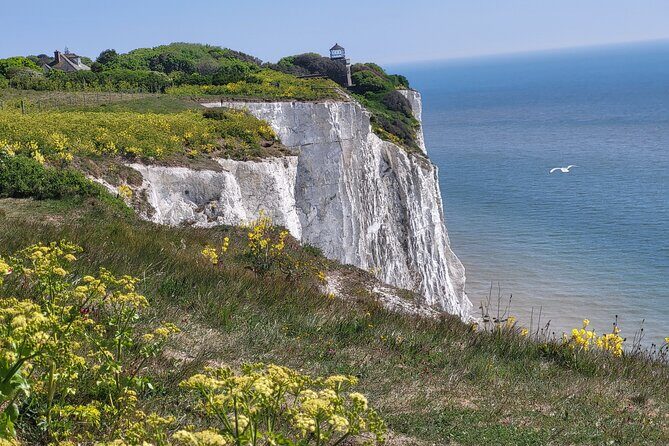
- White Cliffs of Dover, from a quieter vantage point with views toward Dover Castle, the harbor, the Channel, and (when weather allows) France
- Expert-led questions with Dr Anthony Medhurst, including Roman, medieval, Reformation-era, and WWII context
- Canterbury UNESCO sights in a single run: St Augustine’s Abbey, St Martin’s Church area, and Cathedral-area storytelling
- Kent villages you’d likely skip like Wickhambreaux, Ickham, and Wingham’s Dog Inn
- WWII details where they matter around the Dover cliffs, not just general mentions
- A second pass through Canterbury’s highlights: Roman theatre, St Thomas Becket, Westgate Tower, and the River Stour
A 3-hour Canterbury-to-Dover plan that beats the big-bus feeling
This is the kind of half-day that works when you’re short on time but still want more than the obvious. You start in Canterbury, go out through the Kent countryside, and finish with a structured look at the city again—so you end with a clearer understanding of what you saw from the roads.
The format matters. A private minibus keeps driving efficient, while the guided walking time gives you texture: street corners, crossroads, river views, and the spots where the stories connect.
You can also read our reviews of more private tours in Canterbury
Meet Dr Anthony Medhurst: the guide makes the history make sense
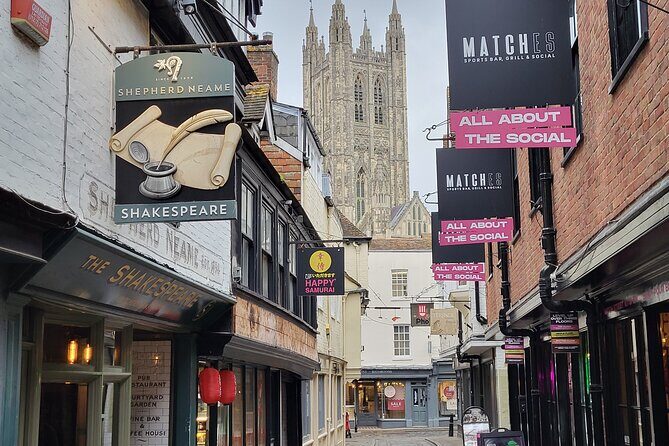
You’re not just getting dates. With Dr Anthony Medhurst, the stories come with geography—why a place mattered, who used it, and how the region changed across centuries.
The tour is built around interaction. You can ask as many questions as you like, and that’s a big deal if you’re the type who keeps wondering how one era led to the next. A good guide also keeps things understandable, and this one uses humor and energy alongside deep background.
Practical bonus: the minibus is air-conditioned, which can be a relief if you’re touring in warmer months.
Starting point at Hampton by Hilton: an easy start with a strong finish
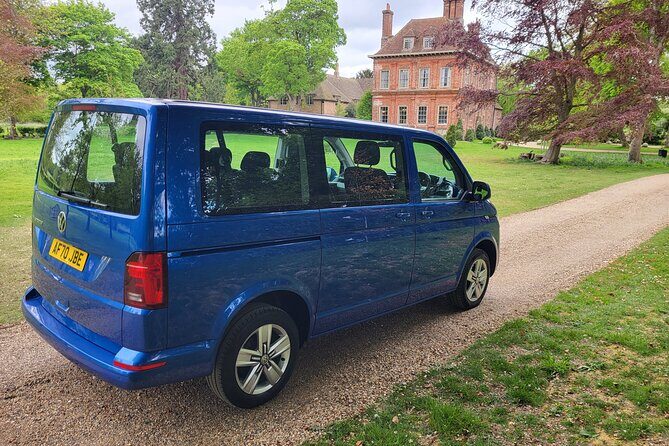
You meet at the Hampton by Hilton Canterbury, 7 St Margaret’s St. There are multiple departure times—8.30am, 12 noon, or 4pm—so you can align the tour with your broader plans (Cathedral opening hours, lunch, or an evening walk).
The way the day is set up also helps your pacing. You get a city foundation early, then you leave for the countryside and Dover, and you come back to finish with a focused walking route and photo opportunities.
Canterbury first: UNESCO threads you’ll notice later
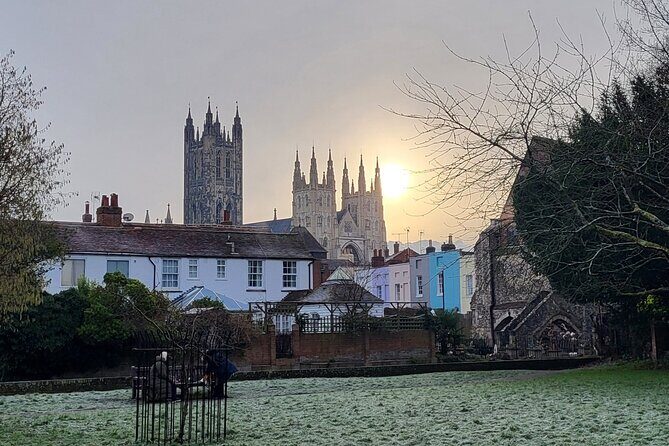
Even before you head out, you’re guided through Canterbury’s major “anchor points.” This matters because Canterbury can feel like a blur of medieval streets unless someone points out the big relationships: Roman foundations, Christian origins, pilgrimage growth, and later turning points.
You’ll pass by St Augustine’s Abbey, founded shortly after St Augustine arrived in Kent in AD 597. The guide’s storytelling connects the abbey to its role as both a residence for Augustine and his monks and a kind of learning center—where classical knowledge and English study were encouraged.
Then there’s the manuscript angle. Among illuminated texts, only a limited number survived the Reformation and the dissolution of the monasteries in 1538. The highlight here is the Canterbury Gospels, which also links to the modern world through its use in the recent Coronation of King Charles III.
The Ethelbert and Bertha statues, then St Martin’s Church (why “oldest” matters)
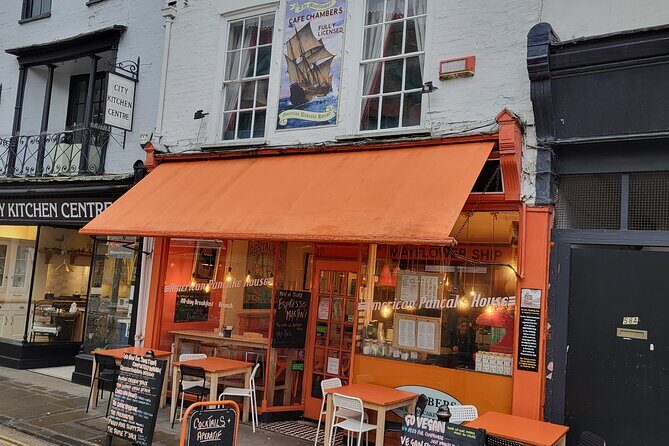
Right after the abbey, you’ll pass statues of King Ethelbert and Queen Bertha on Lady Wootton’s Green. The tour frames them as the key local figures who made Augustine’s mission possible—so the story isn’t abstract. It’s grounded in names tied to specific places.
As the route heads out of the city, you get a chance to observe St Martin’s, described as the country’s oldest surviving church, dating to about AD 597. The important part isn’t just the age—it’s the layering: Roman origins, later Anglo-Saxon and medieval additions, and the sense that people reused sacred sites over time.

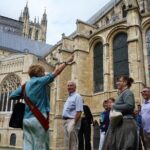



Kent villages by minibus: small places, big character
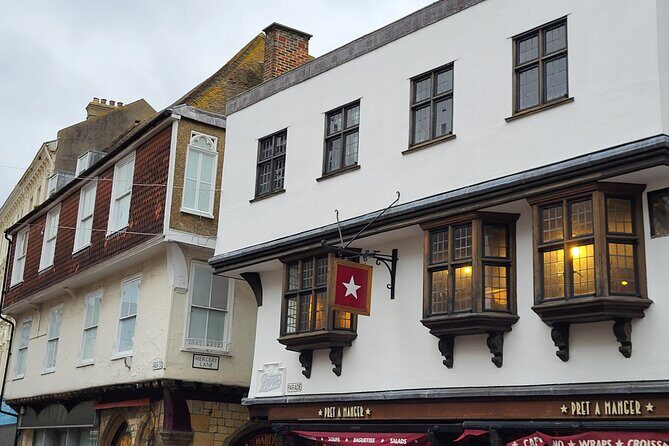
Once you leave Canterbury’s center, the tour shifts into a “road-trip with stops” style. You’ll be driven through pretty lanes and village scenes that larger buses often don’t bother with.
Wickhambreaux is one of the early standouts. You’ll see the medieval village green and the cluster around it—church, manor house, rectory, inn, and mill. There’s a quick photo stop at the 13th-century church of St Andrews, connected to WWII through Squadron Leader David Maltby: he was married there and later buried after his death in 1943.
Two extra facts make this stop feel real rather than historical-wallpaper: one mention ties to Christine McVie of Fleetwood Mac, showing how Kent’s story keeps running through modern life.
From there, you move to Ickham, known for white weatherboard cottages and a mix of listed buildings, plus a 13th-century church. The pace is brief here—more “see and absorb” than long exploration—but it’s exactly the kind of stop that helps you understand the county’s style.
Then you pass through Wingham, where many buildings date back to the 1200s, including the Grade II listed Dog Inn. This is the sort of place where a short look can be enough to spark ideas for a return visit later.
The White Cliffs of Dover: the viewpoint and the power of timing
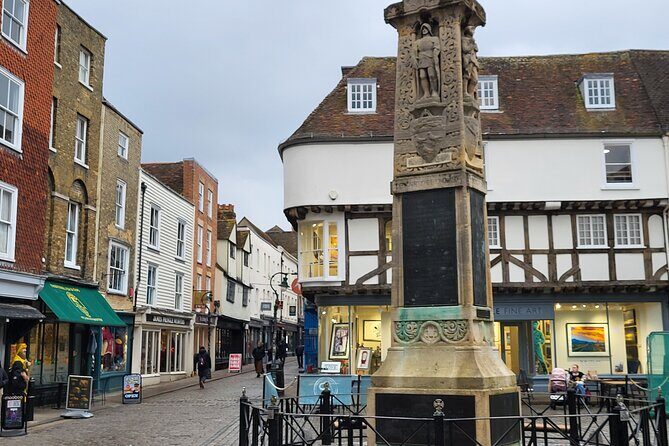
This is where the day’s emotional center lands. You drive to a special vantage point on the White Cliffs that many visitors miss. From there, you can view Dover Castle, the harbor, the English Channel, and—if conditions cooperate—the French coastline.
The guide also gives a short history of Dover that runs from Roman times to the Second World War, which is the right approach. The cliffs aren’t just scenic; they’re strategic. Seeing the view while hearing how each era used the coastline makes the whole region feel connected.
There’s a brief stop—about 20 minutes—so come ready to look, not wander for hours. If you’re a photographer, this is a strong moment to aim for your best angle: wide views first, then tighten in on whatever details catch your eye.
Coming back through Barham, Bishopsbourne, and Patrixbourne
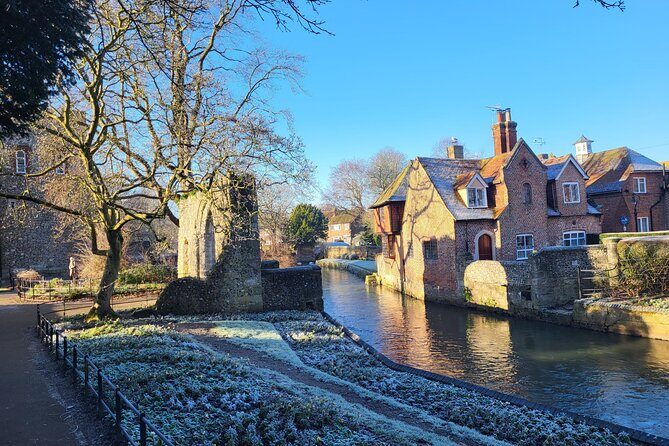
After Dover, the tour turns back toward Canterbury along country lanes and rolling hills. You’ll visit more villages that focus on architecture and local flavor.
In Barham, you’ll see rolling hills and newly planted vineyards, plus a quiet feel that contrasts with the coast. You’ll pass the 13th-century church of St John the Baptist, noted for its green copper spire and Kent-style cottages, along with a valley view that works well for photos.
Next is Bishopsbourne, inside the Kent Downs Area of Outstanding Natural Beauty. The key story here includes Bourne Park, a stately home that Mozart visited in 1865. Even if you don’t care about classical composers, it’s a useful reminder that this county wasn’t only about battles and religion—people built lives here too.
You’ll then pass through Patrixbourne, where the tour spotlights a particularly fine Norman church. It’s built with flint and stone from Caen in France, and the guide points out specific features—like the glorious south doorway in Norman style and a wheel window dating to the late 12th century. The details help you notice what you’d otherwise walk past.
The Canterbury walking part: Roman theatre to Becket’s aftermath
Back in Canterbury, the tour shifts into a one-hour walking tour that aims to hit the very best bits while keeping things chronological: Roman times to modern day. It’s your chance to choose what you’ll deepen later, whether that’s the Cathedral area, the streets and houses, or a stop by the River Stour for a drink.
Before the main walking portion finishes, you’ll hear about the Iron Age origins of Canterbury and two preliminary raids by Julius Caesar in 55BC and 54BC. Then you get into Roman settlement around AD 43–410, including the remains of the Roman theatre built around AD 80, developed into a venue for 3,000+ people, with remains located right under your feet.
The guide also points out Watling Street, the Roman road that runs straight through Canterbury between London and Dover.
St Thomas Becket, pilgrim Canterbury, and the Cathedral Gate
One of the most memorable stops comes at a crossroads point in Roman-era Canterbury. You’ll learn about the murder of Archbishop Thomas Becket by four knights acting for King Henry II. The aftermath mattered: miracles attributed to those who came into contact with Becket’s blood helped lead to sainthood and made Canterbury a pilgrimage magnet from roughly 1170 to 1538.
The tour then connects the pilgrimage vibe to physical remnants: shops, inns, and accommodation used by pilgrims. It’s a helpful way to imagine the crowds and smells of the medieval city, not just its stonework.
When you reach the Cathedral-area gate, you’ll gain insight into the gate’s connection with Henry VIII and the Tudor family, plus the Reformation’s impact on Canterbury. You’ll also hear about the Buttermarket, the cobbled square that acted as a focal point for medieval pilgrim hotels and taverns.
River Stour and Westgate Tower: the quiet corners with big stories
The River Stour crossing area ties to the Dominican friars, known as the Blackfriars. You’ll see what survives from that period—like a refectory used by Dominicans as a dining hall and separate guest accommodation quarters.
From there, you get a photo-friendly stretch by the river and a story about Christopher Marlowe, a dramatist linked to Canterbury and whose life ended in a Deptford tavern. Even though Marlowe’s name might not be on your “must see” list, the guide’s timing makes the river feel like part of literary history, not just a pretty backdrop.
Later, you’ll reach Westgate Tower, described as the largest surviving medieval fortified tower. The tour connects Roman defenses, later strengthening during the Hundred Years War, and the construction of massive gateways. Then you stroll into Westgate Gardens, with medieval houses, an ancient archway, and riverside views that are ideal for photos.
There’s also a modern science-meets-history detail: you’ll have a chance to see the submerged female figure called Alluvia, based on Ophelia from Shakespeare’s Hamlet. The sculpture also measures river temperature and cleanliness, which is a clever reminder that this river is still changing and still being used.
Old Weavers’ House, a witches dunking stool, and a Chaucer statue
As you continue, you’ll see the Old Weavers’ House at King’s Bridge, a Tudor timbered building tied to textile work. The guide explains the role of Protestant weavers who fled the Low Countries and later France in the 1500s and 1600s, contributing to Canterbury’s re-emerging wealth after the Dissolution of the Monasteries in 1538.
Right nearby, you’ll also be shown a grim reminder of earlier justice: a witches dunking stool. The tour frames the logic behind it—accused women being held underwater as a test where survival led to being considered innocent and forgiven by water.
The tour ends with a statue commemorating Geoffrey Chaucer and the Canterbury Tales, written in the late 1300s. You’ll also hear a note about Orlando Bloom, since his name is linked to the statue.
Price and value: what $185.52 gets you (and when it’s worth it)
At $185.52 per person for an approx. 3-hour private tour, this isn’t a bargain-basement option. But it’s also not paying for “time sitting on a bus.” You’re paying for a guide who can stitch together Roman, medieval, Reformation, and WWII threads into one route.
Here’s the value logic to use when you decide:
- If you want Dover plus countryside villages plus Canterbury walking in one half-day, this format saves you planning and transit headaches.
- If you’re traveling as a couple or a small group, the private minibus becomes more reasonable because you’re splitting guide attention.
- The tour includes admission tickets free for the listed stops, and it runs in English with a mobile ticket.
The main downside is the same one you’ll feel with any short guided history day: there’s not time to “wander until you get lost.” If you love slow museum time, you might prefer a longer Canterbury-focused day and treat Dover as a separate trip.
Who this tour suits best in real life
This is ideal if you:
- Want a first trip to Canterbury and you’d like a guided framework to return to later
- Like your history connected to place names, roads, and buildings
- Want White Cliffs of Dover views plus WWII context without doing it all solo
- Prefer asking questions rather than reading plaques on your own
You’ll also do best if you’re comfortable with walking on city streets and a handful of short photo stops. It’s “mostly easy” in tone, but the tour is active because it’s built to cover a lot in limited time.
Should you book The Best of Kent?
If you want Canterbury and Kent beyond the postcard version, I’d book it. The route makes sense: you start with major UNESCO-era roots, you sweep through villages that explain what the county looks like between the big sights, and you end with a Canterbury walk that turns into a practical map for the rest of your trip.
I’d only skip or adjust your expectations if your idea of a perfect day is long, quiet time in one place. This tour is for people who want a guided “big picture” hit—then a chance to pick favorites afterward.
FAQ
How long is the tour?
The tour is approximately 3 hours.
Where does the tour start and end?
You start at Hampton by Hilton Canterbury, 7 St Margaret’s St, Canterbury CT1 2TP, UK, and the tour ends back at the meeting point.
What departure times are available?
The guide meets you at either 8.30am, 12 noon, or 4pm, depending on your preferred departure time.
Is this tour private?
Yes. It’s a private tour, meaning only your group participates.
What language is the tour offered in?
The tour is offered in English.
Is admission included for the stops?
Admission tickets for the listed stops are marked as free.
What is included in the tour cost?
The tour includes an entertaining local guide (with a Cambridge PhD in History) and an air-conditioned vehicle.
Can I get a refund if my plans change?
You can cancel for a full refund if you cancel at least 24 hours before the experience’s start time. If you cancel less than 24 hours before, the amount paid isn’t refunded.