Canterbury’s quirks start right on High Street. This is a compact, story-led walking tour capped at 10 people, with guide time for questions, and it steers you past more than just the big cathedral views by mixing authors, medieval gates, and small surprises you’d miss on your own. I especially like how it weaves literary figures like Marlowe into the street scene, and how you get an easy, city-center route that ends in the middle of modern Canterbury shopping life.
One catch to plan for: a couple of stops involve optional museum-style entry, so not every attraction is “included for free,” and you may want to budget a little extra if you decide to go inside Westgate Towers or similar sites.
In This Review
- Key Highlights You’ll Notice Right Away
- Entering The Beaney: The Easy Start Point
- Why The 10-Person Group Changes Everything
- The Star Guide Style: Stories That Make Buildings Click
- Stop 1: Chaucer’s Statue and The Canterbury Tales Wayfinding
- Stop 2: Westgate Towers Museum and Viewpoint (Optional Entry)
- Stop 3: The Marlowe Theatre and Christopher Marlowe’s Impact
- Stop 4: Christ Church Gate and the Tudor-Style Twist
- Stop 5: Roman Canterbury, WWII Rediscovery, and Butchery Lane Clues
- Stop 6: St Thomas of Canterbury RC Church and The Dove-in-the-Ear Story
- Stop 7: Saint George’s Tower and The Clock-Tower Ending
- Price and Value: Is $19.44 a Good Deal?
- Who Should Book This Tour (And Who Might Pass)
- Handy Planning Tips Before You Go
- Should You Book The Canterbury Classic Tour?
- FAQ
- What is the duration of the Canterbury Classic Tour?
- How many people are in a group?
- Is the tour in English?
- Where does the tour start and end?
- Are admission tickets included for every stop?
- Is there a mobile ticket?
- Are service animals allowed?
- Can I get a refund if I cancel?
Key Highlights You’ll Notice Right Away
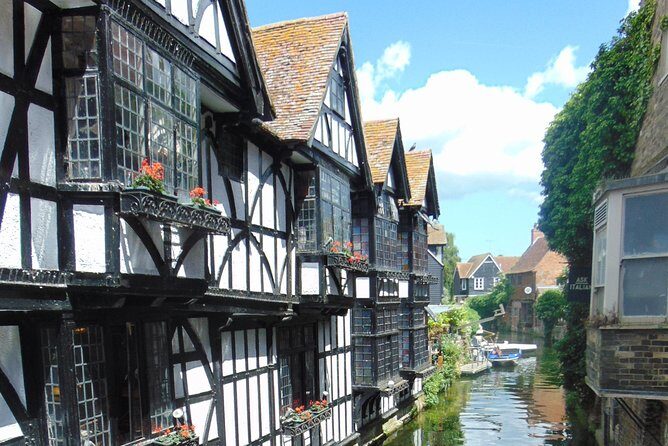
- Max 10 travelers keeps the pace relaxed and makes questions actually possible
- 90 minutes is long enough for real context, short enough for jet lag days
- Literature meets landmarks with stops tied to Chaucer and Christopher Marlowe
- Quirky details like weird clocks and symbolic creatures get explained
- Flat, central walking makes it feel manageable even if you’re not a big walker
Entering The Beaney: The Easy Start Point
You start outside the Beaney House of Art & Knowledge at 18 High St (CT1 2RA). That matters more than it sounds. It’s in the center, so you’re not hunting for a meetup spot on a fringe street, and you can use facilities before you begin.
The tour runs for about 1 hour 30 minutes, which is perfect for first-time Canterbury. It’s also a smart “connective tissue” experience: you come away with a mental map of what matters and why, so later you can choose what to revisit on your own.
You can also read our reviews of more tours and experiences in Canterbury.



Why The 10-Person Group Changes Everything
Most walking tours become a blur when groups get large. Here, the cap is 10 travelers, which keeps the guide’s attention on the people in front of them, not the whole crowd.
In practice, that means you’ll get more back-and-forth, especially if you’re the kind of person who asks one good question and then has three more. The reviews-style pattern also points to this: families and mixed-age groups tend to stay engaged because the pace and storytelling are adjusted to the group.
This is also booked fairly steadily—on average about 33 days ahead—so if you want a specific date or time, don’t wait too long.
The Star Guide Style: Stories That Make Buildings Click
The walk is led by an accredited guide, and in many departures the guide name you’ll see is Sam. What stands out is the tone: facts stay clear, but the city turns into a cast of characters.
You’ll hear about the people tied to Canterbury—writers, church figures, and the power struggles around the city walls—without drowning in dates. Instead of memorizing a timeline, you start noticing patterns: what changed over time, what got rebuilt, and what the city chose to remember.
Stop 1: Chaucer’s Statue and The Canterbury Tales Wayfinding
The first stop is the statue of Geoffrey Chaucer. It’s a quick introduction to the man who wrote the book most people associate with Canterbury: The Canterbury Tales.
Even if you’ve only heard the title, this stop helps you frame what you’re seeing. You start thinking of Canterbury not just as a place with old buildings, but as a setting where stories got tied to real streets and real landmarks.
Stop 2: Westgate Towers Museum and Viewpoint (Optional Entry)
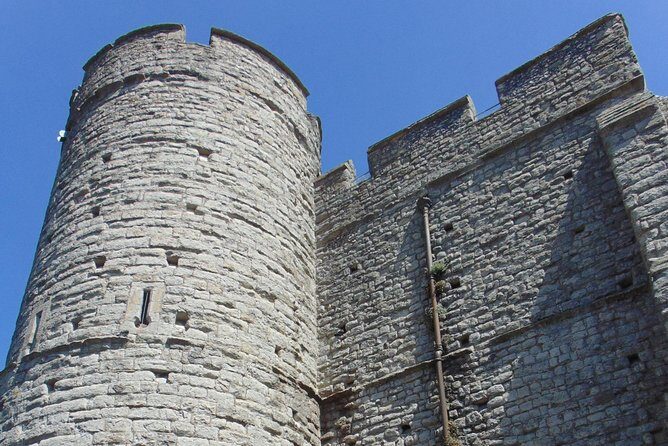
Next up is Westgate Towers Museum & Viewpoint. This is the largest surviving medieval city gate in the UK, and it’s a great place to learn how defense worked when cities had to be hard to conquer.
The key detail: you’ll hear about the multiple methods of attack and defense that made this gate innovative. That’s the kind of explanation that makes stonework feel like a machine, not just architecture.
Important practical note: the stop lists admission not included, so if you want the museum/viewpoint portion, you’ll likely need to pay separately. The good news is that even without extra entry, the gate itself is the point.



Stop 3: The Marlowe Theatre and Christopher Marlowe’s Impact
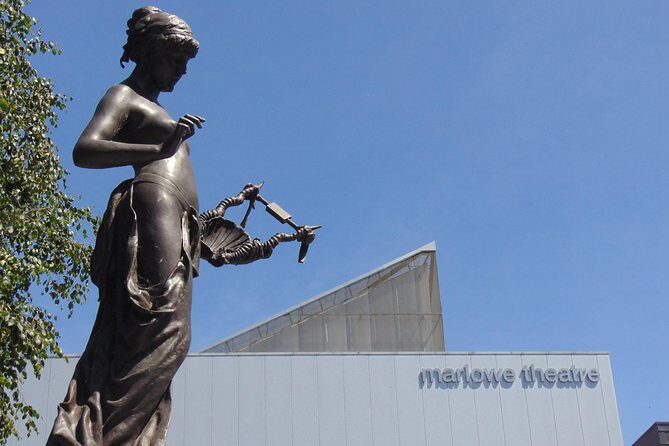
Passing by the Marlowe Theatre, you get a shift from medieval walls to a more modern Canterbury connection. The guide will link the area to the life of Christopher Marlowe and explain how written words shaped the city.
This is more than a photo stop. It’s a reminder that Canterbury’s cultural identity didn’t freeze in the Middle Ages. It kept evolving, and the arts stayed part of the city’s pulse.
If you like your history with a literary thread, this is one of the stops you’ll remember later.
Stop 4: Christ Church Gate and the Tudor-Style Twist
At Christ Church Gate, you’ll learn why it was completed to commemorate a Tudor prince and his Spanish bride—with a surprising clarification about which prince people often assume at first.
You’ll also hear how the gate changed over time. That’s a recurring theme in Canterbury: buildings don’t just age; they get repurposed, modified, and reinterpreted.
This is a great stop for your inner “why is that there?” person. If something looks slightly off, it’s often because the city layered eras on top of each other.
Stop 5: Roman Canterbury, WWII Rediscovery, and Butchery Lane Clues
Then you move toward the Canterbury Roman Museum area. Here, the story is about the Roman city and how it was rediscovered thanks to the Second World War.
That WWII connection is one of those details that sticks. It turns archaeology into a living story: the past wasn’t simply dug up long ago and left alone. It was rediscovered through the needs and disruptions of a later century.
From nearby streets like Butchery Lane, you’ll also pick up a few Canterbury symbols and cathedral-linked details—such as the Bell Harry Tower and the city coat of arms. You’ll even hear about a bull’s head and how it fits into the city’s visual language.
A practical note: this portion lists admission not included, so decide ahead of time if you want to add a museum ticket, or stick to the street-level context.
Stop 6: St Thomas of Canterbury RC Church and The Dove-in-the-Ear Story
At St Thomas of Canterbury RC Church, the conversation zooms in on Thomas Becket—specifically, the story of a major figure tied to Canterbury who is famously not originally from there.
You’ll also hear the strange, memorable image involving Pope Gregory the Great and a dove flying into his ear. It’s the kind of detail that sounds like legend until the guide puts it in context, and then it feels like the city’s symbolism makes a lot more sense.
This stop is marked with admission free, so it’s a low-cost moment where the payoff is pure story.
Stop 7: Saint George’s Tower and The Clock-Tower Ending
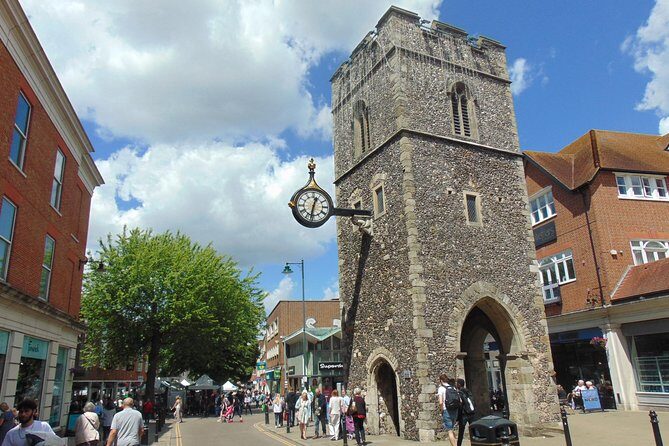
The tour finishes underneath Saint George’s Tower, at 27 St George’s St (CT1 2LE). This is the former St George’s Church clock tower, and it’s now a reminder of what used to stand in a spot that’s much more modern today.
The guide explains how this tower became a sort of timestamp for the area, even as the street around it changed. You end right in the shopping zone, which is perfect timing: you’ve got energy, but you’re also ready to wander on your own with a clearer sense of where you are.
Price and Value: Is $19.44 a Good Deal?
At $19.44 per person, this tour sits in the “small price, big context” category. You’re paying for a guide who stitches together authors, church history, Roman rediscovery, and city-defense details into a coherent walk.
The biggest value levers here are:
- Small group size (10 max), so the tour doesn’t feel like background noise
- Short and efficient timing (about 90 minutes) for orientation
- Many stops are free (like Chaucer’s statue, St Thomas of Canterbury church, and the Saint George’s Tower), while the few paid-admission areas are optional
If you’re hoping for a long museum day, this isn’t that. But if you want to understand Canterbury quickly—and then choose what to explore further—this price makes a lot of sense.
Who Should Book This Tour (And Who Might Pass)
This tour is a strong fit for:
- First-time visitors who want Canterbury orientation fast
- Families, including kids who like stories and visual quirks (you’ll cover things like odd clock details and symbolic creatures)
- People who care about architecture as a clue—not just a pretty backdrop
- Anyone who wants literature and religion history without getting buried in facts
You might think twice if you:
- Want a tour where every stop includes a museum entrance (a few admission items are not included)
- Prefer an all-day, sit-down museum format rather than a guided walk
Handy Planning Tips Before You Go
This is a walking tour in central Canterbury. Wear shoes you’re comfortable in for uneven city sidewalks and bring layers; weather can change fast, and the route is outdoors for most of it.
If you’re deciding between paying extra for museum entries, use this rule of thumb: pay for the places that match your interests most—like Westgate Towers for defense-history—and skip the rest to keep the tour light.
Also, since it’s in English and uses a mobile ticket, make sure your phone battery is good and your ticket is easy to access.
Should You Book The Canterbury Classic Tour?
Yes—if you want a smart first taste of Canterbury, with the city’s main story threads explained in a way that sticks. The small group size, the strong storytelling, and the mix of authors (Chaucer and Marlowe), Roman context, and church legends make it a good value for the time.
If you’re the kind of traveler who likes to look at a building and understand what it was built to do—or what it became—you’ll get a lot out of this walk. Book ahead if you can, and plan to use it as your springboard for the rest of your Canterbury day.
FAQ
What is the duration of the Canterbury Classic Tour?
It lasts about 1 hour 30 minutes.
How many people are in a group?
The tour has a maximum of 10 travelers.
Is the tour in English?
Yes, it is offered in English.
Where does the tour start and end?
It starts outside the Beaney House of Art & Knowledge at 18 High St, Canterbury, and ends beneath Saint George’s Tower at 27 St George’s St.
Are admission tickets included for every stop?
Not for all stops. Westgate Towers Museum & Viewpoint and some other stops list admission as not included, while several stops are free.
Is there a mobile ticket?
Yes, you receive a mobile ticket.
Are service animals allowed?
Yes, service animals are allowed.
Can I get a refund if I cancel?
You can cancel for a full refund up to 24 hours before the experience’s start time.