London’s oldest layers sit in plain sight.
This 2-hour walk threads together medieval remains, Roman traces, and the scars of WW2 damage, all inside the tight streets of the City of London.
I especially like two things. Vivienne’s storytelling makes each stop feel connected, not random. And the route is wheelchair and stroller accessible, so you can keep up without doing the London Olympics.
One thing to consider: lots of the stops are short, around five minutes each, so you’ll get smart highlights rather than long lingering.
In This Review
- Key takeaways before you go
- City of London in Two Hours: What This Walk Covers
- Start at 101 Moorgate and Step into Roman-Era London Wall Remains
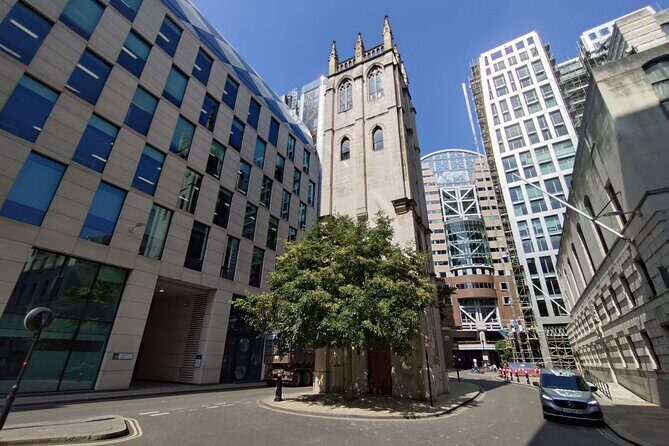
- St Alban Wood Street Church Tower: Wren vs. Modern London
- Noble Street Roman Ruins: WW2 Turns Up Something Much Older
- Postman’s Park and the Watts Memorial: A Small Pause with Big Meaning
- Old Bailey Garden Inside the Shell of Christchurch: When the City Shows the Damage
- Smithfield Market: A Thousand Years of Meat Market Memory
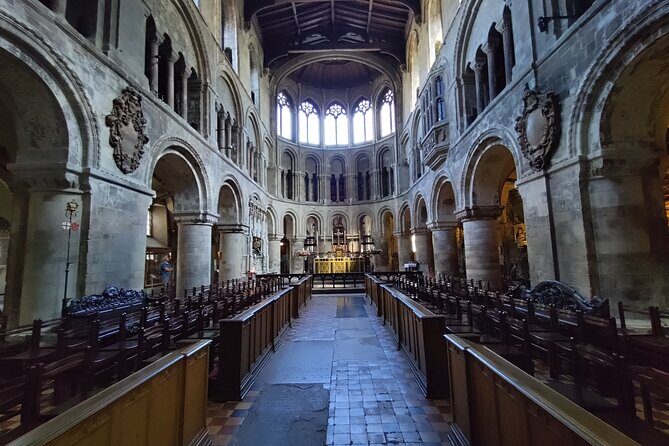
- Church of St Bartholomew the Great: The One Longer Stop Inside
- Why the Guide’s Approach Makes This Tour Feel Worth It
- Who This Walk Suits Best (and Who Might Want Something Else)
- Should You Book This City of London History Walk?
- FAQ
- How long is the tour?
- Where is the tour meeting point and where does it end?
- Is the tour wheelchair and stroller accessible?
- Is admission required for the stops?
- What language is the tour offered in?
- How large is the group?
- Can I cancel for a full refund?
Key takeaways before you go
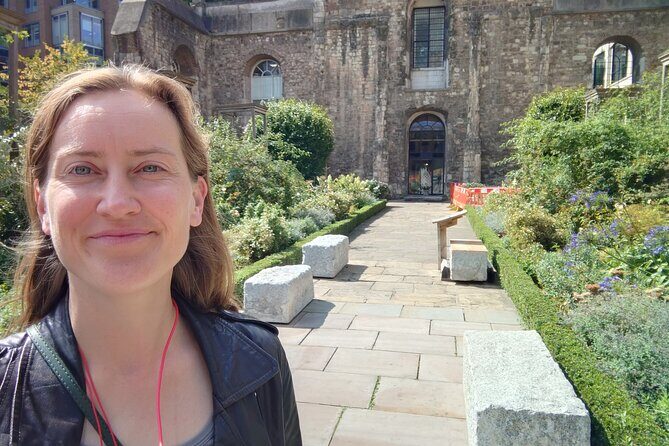
- Roman London Wall remains right at St. Alphage you can actually see, not just read about
- A Wren-era church tower in conversation with modern giants like Norman Foster, Lord Rogers, and Terry Farrell
- WW2 discovery stories, including Roman ruins uncovered after bombing
- Postman’s Park and the Watts memorial: a quieter pause amid the City’s hard edges
- One church stop with extra time inside, so you’re not rushed at the finish
City of London in Two Hours: What This Walk Covers
This is a compact history walk built for people who like context, not chaos. You spend about two hours moving through the City of London with seven stops, most of them timed at roughly five minutes—with one longer finish inside St. Bartholomew the Great.
The value is also straightforward: the price is for the guide and the route design, while the sights are set up with free admission at each stop. That matters because it turns the tour into a low-friction way to learn a lot without paying museum fees on top.
You’ll also be in a smaller group, up to 25 travelers. In a place like the City, where streets can feel maze-like, that group size helps you keep your bearings without getting swallowed by crowds.
And because the meeting point is at 101 Moorgate and the walk ends at St Bartholomew the Great, Smithfield (Barbican area), the tour is easy to plug into a longer day of sightseeing.
You can also read our reviews of more city tours in London



Start at 101 Moorgate and Step into Roman-Era London Wall Remains
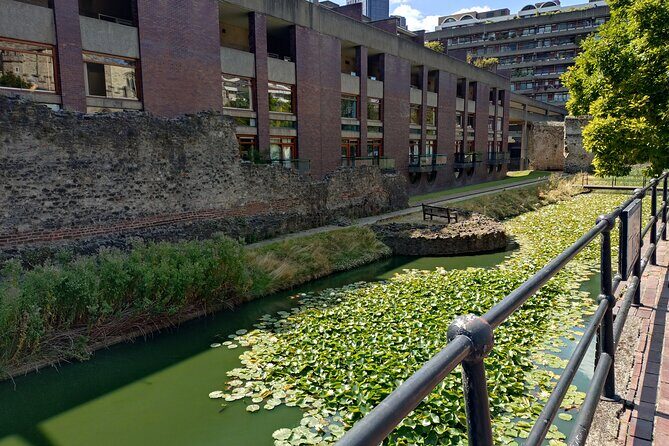
Your first stop is St. Alphage London Wall. This is where the walk makes its opening move: you see medieval church remains plus a section of the ancient London wall originally built by the Romans.
What I like about starting here is that it gives you a reference point fast. You’re not starting with a random plaque. You’re starting with stone you can look at, and then you get guided meaning right away.
A good way to use your short time:
- Stand where you can see the boundary between church remains and the wall section.
- Follow the guide’s framing on what the Romans were building versus what later centuries kept, reused, or repurposed.
This is also a nice stop for first-timers to London’s layers. You get the feeling of continuity without needing a long museum visit.
St Alban Wood Street Church Tower: Wren vs. Modern London

Next up: St Alban Wood Street Church Tower. This is not just a pretty leftover—it’s a contrast lesson.
You’ll look at the surviving tower of St Alban’s built by Sir Christopher Wren, and then you’ll see it set against surrounding modern architecture by Norman Foster, Lord Rogers, and Terry Farrell. That juxtaposition is the whole point: the City doesn’t only preserve old buildings. It also builds around them, like it can’t help but rewrite the skyline.
Even with a quick five-minute stop, this kind of sight tells you how to read the streets:
- Look at the older tower as an anchor.
- Then shift your gaze outward to see how newer architecture has moved in around it.
If you’re the type who takes photos of doors, towers, and edges of buildings, this stop will reward you. It’s architecture as a conversation across centuries.
Noble Street Roman Ruins: WW2 Turns Up Something Much Older
The third stop is Noble Street, and this one comes with a strong story thread. Here you’ll see Roman ruins, and you’ll learn they were discovered after bombing in WW2 devastated the surrounding area.
That detail changes how you view the place. Instead of thinking only in straight lines—Romans built, then everything else happened—you get a messy real-world timeline. War, destruction, and rebuilding became the mechanism that revealed what was already there.
For your visit, don’t treat this like a generic “see the ruins” moment. Let the guide’s explanation frame the ruins as evidence of survival and exposure. The best take-away here is the idea that London’s past isn’t hidden behind time alone. Sometimes it’s hidden behind events.
Postman’s Park and the Watts Memorial: A Small Pause with Big Meaning
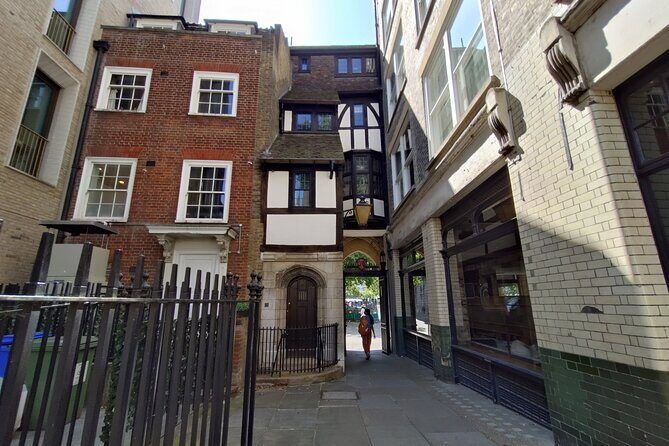
Then the walk slows down emotionally at Postman’s Park. You spend time in the park viewing the Watts memorial to those who gave their lives for others, and you’ll hear about the history of the park.
This stop is a good palate cleanser. The City can feel brisk and businesslike, and this park shifts the tone. Even though the walking continues, the memorial gives you a moment to absorb something human and reflective.
If you’re traveling with kids, this is also one of the easiest stops to manage. It’s a place where people can stand, look, and reset without having to keep power-walking between landmarks.
What to do with your time:
- Take a few seconds to read rather than just scan.
- Let the guide connect the memorial to the park’s story, so it doesn’t feel like one random monument.






Old Bailey Garden Inside the Shell of Christchurch: When the City Shows the Damage
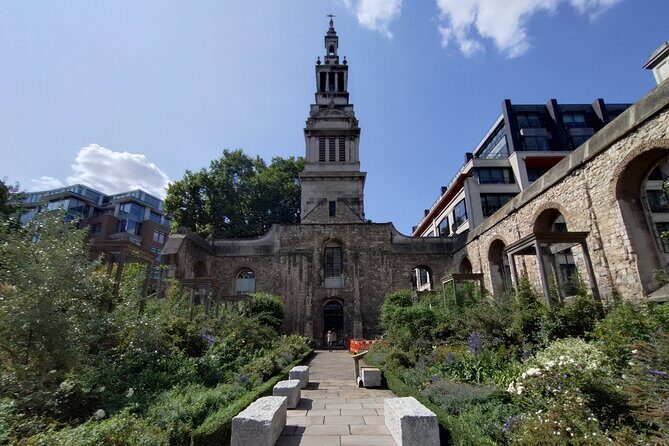
Stop five takes you to Old Bailey, but what you’re really visiting is the garden within the shell of Christchurch, another bombing victim of WW2—and then you discuss the Old Bailey itself.
This is the kind of stop that makes architecture feel like paperwork: evidence you can see. You’re not looking at history through glass. You’re looking at history that’s been physically shaped.
The garden setting matters, because it turns a difficult subject into something you can stand in. Even if you only have about five minutes here, the layout helps you slow down just enough to notice the story space.
A practical tip: keep your camera ready, but don’t let photography steal the main point. Listen for how the guide describes the relationship between the City’s judicial identity and the visible aftermath of bombing.
Smithfield Market: A Thousand Years of Meat Market Memory
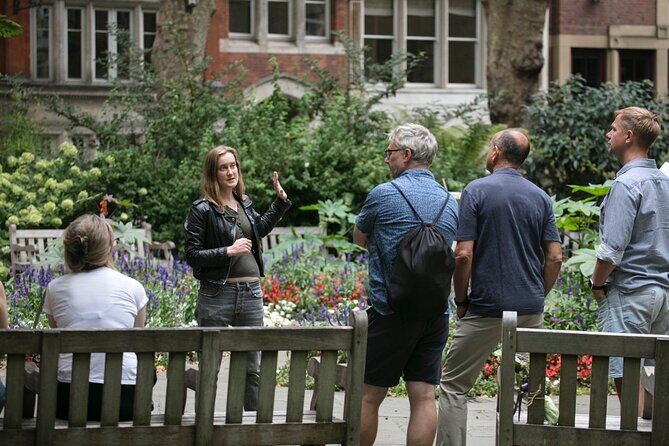
Next, you head to Smithfield Market. This stop is all about scale: you’ll hear about the 1,000 year old meat market and the historical events connected to this place that helped shape British history.
Even if you’re not a food-history person, this is useful. Smithfield Market gives you a City-of-London lens that isn’t just churches and walls. It’s economy and daily life, and it’s where you understand why the City mattered long before modern finance turned up.
Because the stop is short, focus on what the guide emphasizes: how the market fit into bigger events. That’s what turns a location into a story you can remember later.
If you like street-level history, you’ll probably find Smithfield is the stop that makes the rest of the walk click, because the City’s religious and civic landmarks start to look connected to where people worked and traded.
Church of St Bartholomew the Great: The One Longer Stop Inside
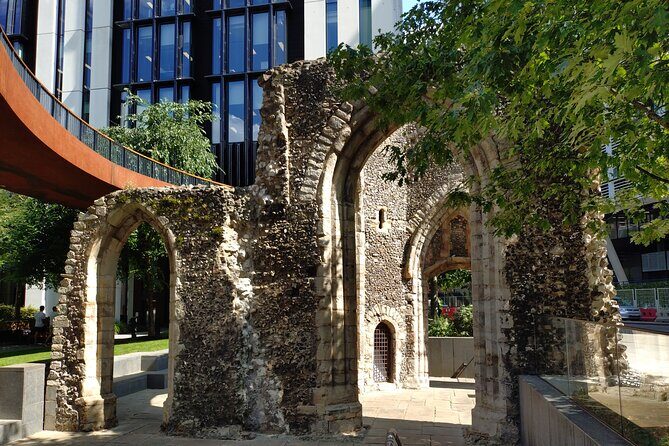
Your final stop is Church of St. Bartholomew the Great. You’ll hear about the 900 year old church outside, then you go inside for a visit.
This is the stop with real breathing room—around 20 minutes—which is exactly what you want for a church. Exterior details can be quick, but interior space tends to reward a slower look. You’ll get time to stand, look around, and let the guide’s explanation land without feeling like you’re constantly moving.
Use this time well:
- Start by getting a sense of the layout from where you’re standing.
- Then let the guide point out what’s most worth seeing inside, since you’ll naturally miss things when you’re moving too fast.
Because it’s the endpoint, it also means you finish with something tangible and memorable, instead of ending on another quick sidewalk pause.
Why the Guide’s Approach Makes This Tour Feel Worth It
The big reason this walk works is how it’s structured: short stops, clear storytelling, and strong contrasts between eras.
A five-minute stop can feel like a drive-by if the guide is just listing dates. Here, the focus is more practical:
- one visible feature (a tower, a wall section, ruins)
- one turning point (Romans, Wren, WW2 discovery, memorial purpose)
- one reason you should care (what changed, what survived, what the City kept)
That’s why people who think they are not into history still tend to stay engaged. You don’t need to be an expert. You just need someone to connect what you’re seeing to why it exists in the first place.
It also helps that the pacing is built around mobility needs. The tour is wheelchair and stroller accessible, and the route is designed for people to participate. That’s not a small detail in London, where “walkable” often means “you figure it out.”
And with a group cap of 25, you’re not stuck watching the guide from far away. You can keep your spot, ask questions, and actually hear the explanation.
Who This Walk Suits Best (and Who Might Want Something Else)
This tour is a great fit if:
- you’re a history buff who likes real street-level evidence
- you want a fast way to learn what to look for in the City of London
- you like architecture, even if you don’t know the names of the buildings yet
- you travel with a stroller or need wheelchair-friendly routes
You might want a different kind of activity if:
- you prefer long museum-style time at fewer sites
- you want deep, chapter-length explanations at every stop
- you’re the type who can read every plaque slowly and wants zero time pressure
Think of this as a history orientation walk with a thoughtful arc: start with Roman-era stone, move through Wren-era architecture and WW2 layers, then finish with a church visit that gets you room to breathe.
Should You Book This City of London History Walk?
I think you should book it if you want a high-value, low-awkwardness way to understand what you’re looking at in the City. For about $27.46 and roughly two hours, you’re buying a guided route that connects Roman wall remains, Wren’s tower, WW2-discovered ruins, a meaningful memorial, and a 900-year-old church interior—without stacking paid admission fees on top.
It’s also a strong choice for travelers who want to feel confident afterward. You’ll know how to spot the story behind the stone. And you’ll probably notice you’ve walked past some of these sites for years without knowing what they meant.
If you’re short on time but long on curiosity, this is a smart pick.
FAQ
How long is the tour?
It runs for about 2 hours.
Where is the tour meeting point and where does it end?
It starts at 101 Moorgate, London EC2Y 9AA and ends at St Bartholomew the Great, W Smithfield, Barbican, London EC1A 9DS.
Is the tour wheelchair and stroller accessible?
Yes, it is wheelchair and stroller accessible.
Is admission required for the stops?
The stops listed include free admission tickets.
What language is the tour offered in?
The tour is offered in English.
How large is the group?
The tour has a maximum of 25 travelers.
Can I cancel for a full refund?
Yes. You can cancel for a full refund if you cancel at least 24 hours before the experience’s start time. Free cancellation is available up to that point.