Bath has a darker side worth walking for. This 2-hour Bad of Bath fun walking tour blends Georgian scandals with famous Bath landmarks you’d likely miss (or misunderstand) on your own, and I love the easy, on-foot route that keeps you moving without getting lost; the main thing to consider is that the walk may run longer than expected for some groups, so plan a little cushion.
You’ll start at Abbey Churchyard at 10:00am and end back at the same spot, which makes the whole experience simple to plug into a day in Bath. The group stays small (max 15), it’s in English, and the guide (Simon) is known for mixing laughs with sharp local detail—plus he’ll even point out Bridgerton filming spots if that’s on your list. 15-person max also helps the stories feel personal.
In This Review
- Key Points Before You Go
- Why Bath’s “Bad Side” Feels So Much More Real on Foot
- Price and Timing: Does $30.50 Make Sense for 2 Hours?
- Meeting at Abbey Churchyard and Finishing Exactly Where You Started
- What Makes This Tour’s Stop List So Good: Circus, Royal Crescent, Pulteney Bridge
- The Circus: Where Bath Looks Like a Stage Set
- No. 1 Royal Crescent: Status, Performance, and the Human Side
- Pulteney Bridge: A Perfect Place for Stories That Move
- The Real Star Is the Guide: Simon’s Humor + Local Detail
- “Bad” Stories in Plain Terms: Crimes, Scams, and the Georgian Social Machine
- How Much Walking Is It, Really?
- Who Should Book This Walk (and Who Might Want Something Else)?
- Quick FAQ on the Bad of Bath Fun Walking Tour
- FAQ
- How long is the Bad of Bath Fun walking tour?
- What time does the tour start?
- Where do I meet the guide?
- Does the tour end back at the meeting point?
- Is the tour in English?
- Is the tour a small group?
- Are tickets and admissions included for the stops?
- Is there a confirmation after I book?
- Is free cancellation available?
- Should You Book This Tour?
Key Points Before You Go

- Scandal stories tied to real streets: you’ll hear notorious crimes and “shady” details woven into the sites.
- Famous Bath stops, handled efficiently: Circus, No. 1 Royal Crescent, and Pulteney Bridge are hit in a tight loop.
- Small-group pacing: with a maximum of 15 people, you get a more conversational walk.
- You won’t get stranded or confused: it’s designed so you’re never trying to navigate the city yourself.
- Humor keeps the group engaged: the tone is upbeat and interactive, including for kids.
- Local guide Simon adds extra layers: he’s praised for big city knowledge and side trips to pop-culture spots like Bridgerton.
Why Bath’s “Bad Side” Feels So Much More Real on Foot
Bath is famous for its elegant Georgian architecture—so it’s easy to think the city is all polished stone and polite tea rooms. This tour flips that expectation. You’re not just looking at buildings; you’re hearing what people did around those buildings: gambling, drinking, extortion, and other behaviors that turned the city’s social life into a messy power game.
What I like is the way the guide connects story to place. The tour doesn’t treat Bath as a museum. It treats it like a living set: streets where rumors traveled, meeting points where deals went down, and neighborhoods shaped by human appetites and ugly consequences. That mindset makes the landmarks stick in your head. You see the architecture, then you hear what went on there, and suddenly the street feels less tidy—and far more interesting.
You can also read our reviews of more walking tours in Bath

Price and Timing: Does $30.50 Make Sense for 2 Hours?
At $30.50 per person for about 2 hours, this is priced like a solid city walk rather than a premium private tour. That matters, because you’re paying mainly for three things: a guide, a structured route, and story-telling that turns major sights into a narrative.
Here’s why the value can work in your favor:
- The stops are major and efficient, so you’re not spending time “wandering to find the next thing.”
- The guide’s role is doing the heavy lifting—putting local context and humor into the mix so you’re not just reading plaques.
- Most of the featured sites involve free admission during the stops, which keeps your day from turning into a pile of extra tickets.
Timing is the other half of the deal. The tour starts at 10:00am and is advertised as roughly 2 hours, but one practical consideration shows up: the walk may run long (some people reported closer to 3 hours). If your afternoon has a hard reservation, I’d give it a buffer.
Meeting at Abbey Churchyard and Finishing Exactly Where You Started
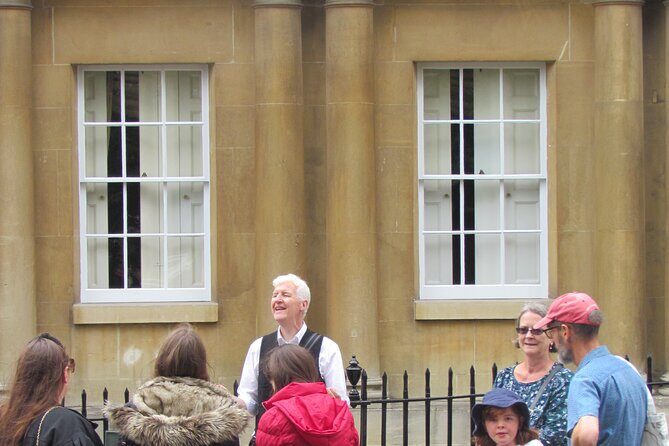
A simple start point is underrated in cities like Bath. You’ll meet at Abbey Churchyard and the tour ends back at the meeting point. That gives you two big advantages:
- You don’t have to plot a route afterward just to get home or to your next activity.
- The guide’s walking pace and stop locations stay consistent, which helps you relax and enjoy the stories.
The meeting point being near public transportation is also useful. If you’re hopping in from another part of the UK, or moving from a hotel not in the center, you’re less likely to waste time figuring out the last few turns.
And yes, the tour is designed so you don’t get lost. You’re walking a loop with guided navigation rather than chasing landmarks one by one.
What Makes This Tour’s Stop List So Good: Circus, Royal Crescent, Pulteney Bridge
This walk hits three headline locations, and the pacing makes sense: each stop is brief—about 5 minutes—so you get photos and context without the tour dragging.
The Circus: Where Bath Looks Like a Stage Set
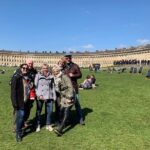
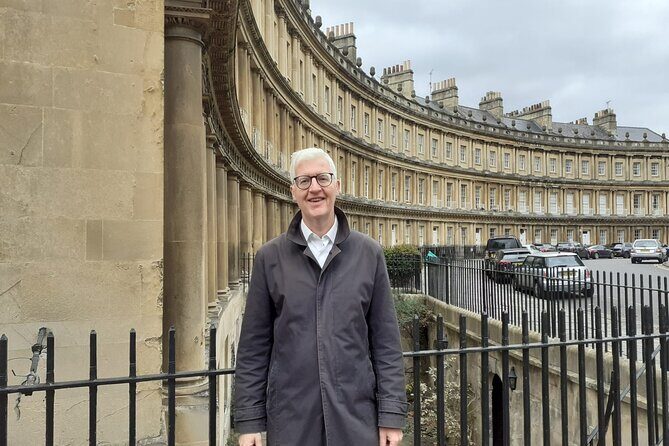
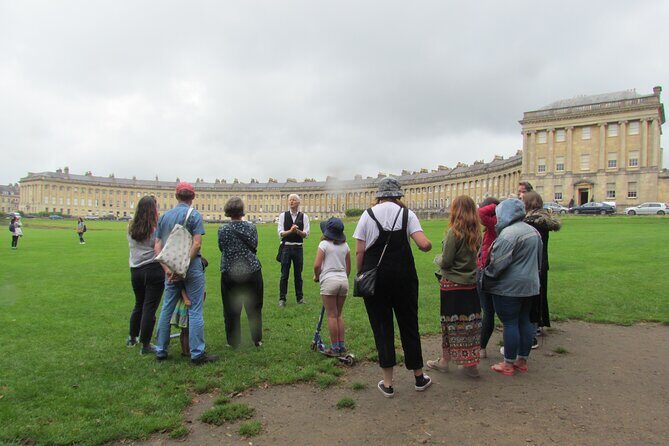
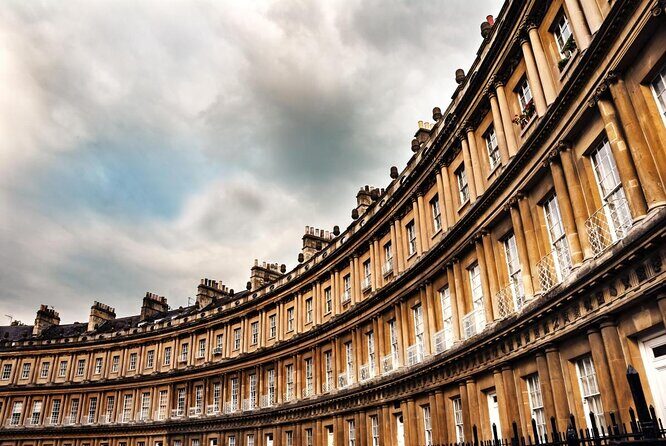
The first stop is the Circus, the sweeping arc of Georgian-style terraces that always looks dramatic, even in overcast weather. The value here isn’t just the architecture. The tour uses the Circus to set the tone: Bath’s built environment wasn’t only for beauty—it shaped social life, privacy, status, and rivalry.
In this kind of storytelling, you start noticing patterns. People weren’t just admiring buildings; they were making impressions, performing manners, and trying to outmaneuver each other. Standing at the Circus with those stories in your head makes the curves and symmetry feel less decorative and more intentional.



No. 1 Royal Crescent: Status, Performance, and the Human Side
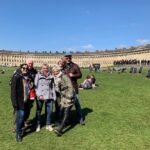
Next up is No. 1 Royal Crescent. This is one of Bath’s signature scenes, and it helps you understand what “respectability” meant in Georgian society. A crescent like this wasn’t only a home—it was a statement you could walk past like an announcement.
The tour pairs architecture with talk of vice and behavior in Bath. That contrast is the whole point. You’ll look at the grand facade and then hear how people used (and abused) the social structure around them—gambling, drinking, and other schemes that could turn life sour fast.
Pulteney Bridge: A Perfect Place for Stories That Move
The final highlighted stop is Pulteney Bridge. It’s a visual icon, and it works well for tour narration because it frames the city like a moving picture. Bridges invite motion, and the guide uses that energy to keep the story flow going as you move toward the end of the walk.
You’ll likely come away noticing that Bath’s layout and key structures weren’t neutral. They were part of daily life: where people crossed paths, where conversations happened, and where reputations could be made—or wrecked.
The Real Star Is the Guide: Simon’s Humor + Local Detail
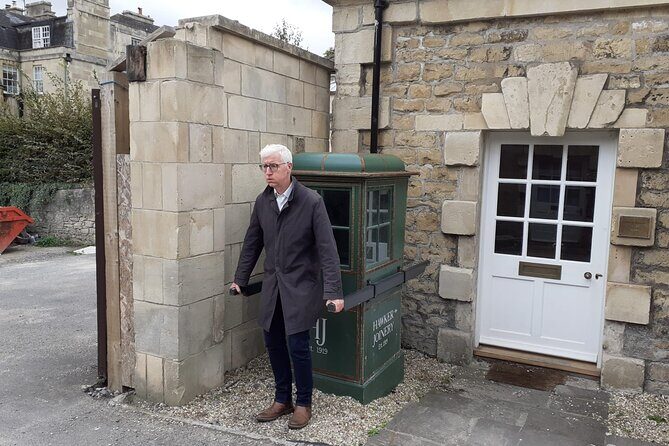
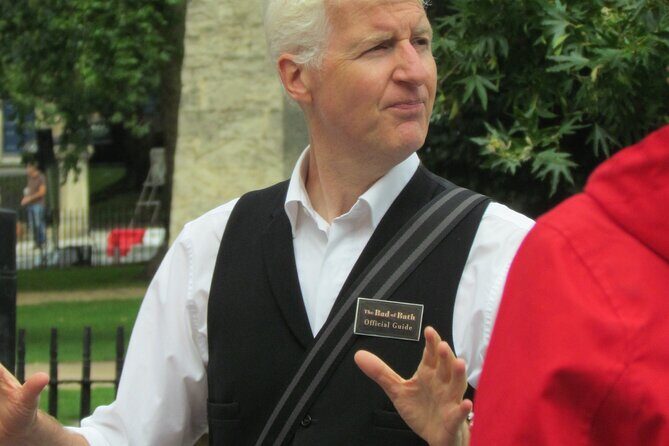
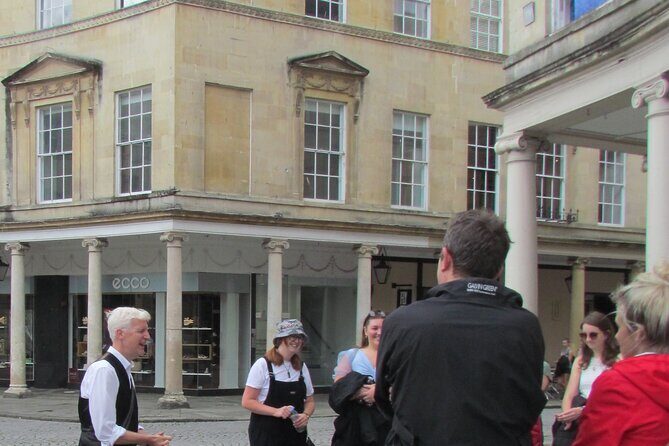
The guide is the difference between a photo walk and a memory-making walk, and this tour leans hard into a strong guiding style. Simon is repeatedly described as funny, organized, punctual, and clearly in love with his city.
The humor matters for two reasons:
- It keeps the stories from feeling like a lecture.
- It helps you remember the details, especially the darker ones.
There are also practical signs of good guiding. People mention Simon pointing out Bridgerton filming locations, and also keeping an 11-year-old engaged—so the talk isn’t just aimed at adults who want a dry history lesson. The stories are interactive in the sense that you’re encouraged to listen closely and ask questions, not just march in silence.
And the tone is explicitly about both sides of Bath. If you want a strictly wholesome, period-drama version of Georgian England, this isn’t that. If you want the social reality—polite facades with scandal underneath—this style hits the mark.
“Bad” Stories in Plain Terms: Crimes, Scams, and the Georgian Social Machine
The tour’s main promise is that you’ll hear secret stories about Bath that you probably wouldn’t uncover alone. The theme is the “shady” side of the city’s past—things like:
- gambling and other money games
- drinking culture
- extortion and intimidation
- the darker realities behind how society worked
One standout detail mentioned is a reference to a medieval wall where plague bodies were thrown over—an image that’s hard to forget. That sort of story is part of what makes this walk feel like you’re learning the city’s full emotional range, not only its postcard side.
What makes it work for a lot of people is the mix. You don’t get only grim facts. You get context—what drove people, how power operated, and why these crimes weren’t random. In a city built for social visibility, the wrong kind of attention could become dangerous.
How Much Walking Is It, Really?
This is a guided stroll through central Bath, built around the most recognizable sights. You’ll cover “a lot of ground” in the time window, but it’s structured so you’re not constantly stopping and starting between far-apart locations.
Still, there’s a practical caution. Some participants reported standing around and that the walk ran long for them. If you prefer fewer pauses, or you’re traveling with older relatives or anyone who gets uncomfortable standing, go with a plan that includes breaks (outside the tour) and a little patience.
On the flip side, the tour’s size helps. With a maximum of 15, the pace is easier to manage than giant bus tours.
Who Should Book This Walk (and Who Might Want Something Else)?
This tour is a great fit if you like:
- history that reads like real life
- humor mixed with facts
- architecture plus street-level storytelling
- learning Bath in a way that feels active, not classroom-style
It’s also good if you’re traveling with a family. The anecdotes and pacing can hold kids’ attention, and the guide’s interactive style helps keep everyone from tuning out.
On the other hand, if you’re expecting a heavy Bridgerton-themed tour, this isn’t built as a screen-spotting mission. The Bridgerton pointers are there, but the core focus is Bath’s past—especially the darker, scandalous parts.
And if your schedule is tight, remember the practical note: it can run longer than the advertised window.
Quick FAQ on the Bad of Bath Fun Walking Tour
FAQ
How long is the Bad of Bath Fun walking tour?
It runs for approximately 2 hours.
What time does the tour start?
The tour starts at 10:00am.
Where do I meet the guide?
You meet at Abbey Churchyard, Bath BA1, UK.
Does the tour end back at the meeting point?
Yes, the activity ends back at the meeting point.
Is the tour in English?
Yes, it’s offered in English.
Is the tour a small group?
Yes. The maximum group size is 15 travelers.
Are tickets and admissions included for the stops?
The stops listed include admission tickets that are free.
Is there a confirmation after I book?
Yes, confirmation will be received at the time of booking.
Is free cancellation available?
Yes. You can cancel up to 24 hours in advance for a full refund.
Should You Book This Tour?
If you want Bath that feels human—beauty on the surface, trouble underneath—this is a strong choice. The price is reasonable for a guided, structured walk that hits major landmarks and turns them into a story you’ll remember. Add in the small group size and Simon’s mix of humor and local detail, and you get a tour that’s more lively than most.
Just book with one eye on timing. Give yourself a buffer, since the tour can run long for some people. If you can do that, this walk is an easy way to see the main sights while learning the scandalous side of Bath you won’t get from a map alone.