REVIEW · BATH
Walking Tour of Bath with Blue Badge Tourist Guide
Book on Viator →Operated by Bath Walking Tours · Bookable on Viator
Bath makes more sense on foot. This 2-hour Blue Badge guided walk helps you read Bath fast, from Roman Aqua Sulis to Georgian showpieces, with guides like Jess and Andrew bringing it to life. I love the way the group covers the big architectural hits without feeling rushed, and I especially like the stop-and-story approach at Bath Abbey, where you get context before you ever buy tickets. The only real drawback: entrance to major sites is not included, so you’ll still want a separate plan if you want to go inside the Abbey or the Roman Baths.
You can pick a morning or afternoon departure, and the tour is capped at a small group size (max 20). With a moderate pace and some uphill or steps built into the walk, it’s a great fit for first-time visitors who want clarity, not a sticker-collection of landmarks.
In This Review
- Key Highlights You’ll Notice Immediately
- Where It All Starts: Abbey Churchyard and Your Blue Badge Guide
- Bath Abbey Front Stop: Gothic Drama and the Earlier Church Footprint
- Queen Square and WWII Damage: How Bath Remembers After 1942
- No. 1 Royal Crescent: Culture, Stories, and What You’re Actually Seeing
- The Circus: Geometry, Architecture, and a City That Thinks in Shapes
- Pulteney Bridge and the Avon: A View That’s Built for Film-Like Moments
- Sally Lunn’s Museum Stop: Bread-Related Stories and a Smart Snack Plan
- Second Bath Abbey Moment: Overview, Abbey Church vs Cathedral, and Q&A
- The Roman Baths Entrance View: Aqua Sulis Without the Pressure
- Price and Value: Why $30.51 Often Feels Like Good Sense
- Weather, Walking Pace, and Where to Be Ready for Steps
- Who This Tour Fits Best (and Who Might Want a Different Plan)
- Should You Book This Walking Tour of Bath?
- FAQ
- FAQ
- Is entrance to Bath Abbey or the Roman Baths included?
- How long is the walking tour?
- Where does the tour start and where does it end?
- What language is the tour offered in?
- Is the tour a good fit for people with moderate mobility?
- How many people are in a group?
- Are service animals and dogs allowed?
- Does the tour require good weather?
- Do I get a mobile ticket?
Key Highlights You’ll Notice Immediately
- Blue Badge guide leadership that keeps the route smooth and the stories accurate
- Bath Abbey orientation first, so the rest of town clicks into place
- Georgian architecture on full display at Queen Square, the Royal Crescent, and The Circus
- Pulteney Bridge and the Avon tied to local detail and movie-like views from the river
- Roman Baths relevance without the ticket: you’ll see the entrance area and get the Aqua Sulis basics
- Q&A time built into the walk, so you can ask what you actually want to know
Where It All Starts: Abbey Churchyard and Your Blue Badge Guide
Your tour kicks off at Abbey Churchyard on Abbey Street, right by Bath Abbey. You meet close enough to the action that you don’t need a map app or guesswork—just find the flag or your guide’s visible company marker at the start point.
A big part of the value here is the guide credential. These are Blue Badge tourist guides, meaning you’re getting someone trained to guide visitors through local history and major sites with care. In practice, that shows up in how your route makes sense. The walk isn’t random. It’s built to help you understand why Bath looks the way it does and why the city’s eras overlap.
Also keep in mind group size. With a maximum of 20 people, your guide can actually check in with the group and keep the pace comfortable. On a cold or rainy day, that matters more than you’d think.
You can also read our reviews of more walking tours in Bath


Bath Abbey Front Stop: Gothic Drama and the Earlier Church Footprint
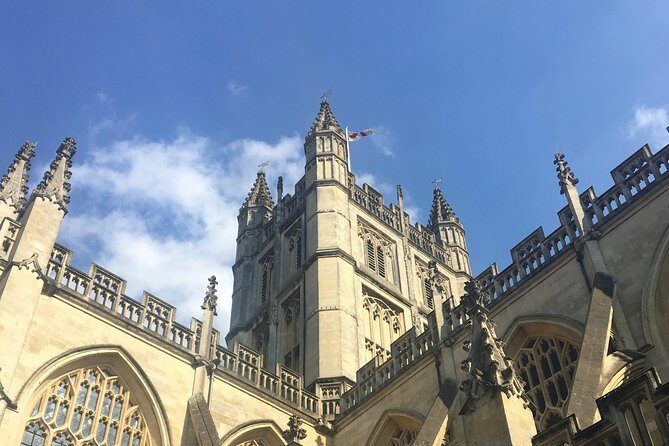
The tour begins at the front of Bath Abbey. Expect stories about the Gothic church standing there now, but also a quick history of what came before on the site. This is one of the smartest ways to start, because Bath Abbey isn’t just a pretty façade—it’s a time marker.
You’ll hear about the church’s role in Bath’s longer timeline, and your guide will set the scene for the circular walk ahead. Even if you don’t go inside during the tour, you’ll walk away knowing what to look for: the architectural language, the site significance, and the sense that Bath layers one era over another.
Practical tip: wear shoes you trust. The first part of Bath is often a little uneven, and you’ll want stable footing before you start clocking all the details.
Queen Square and WWII Damage: How Bath Remembers After 1942
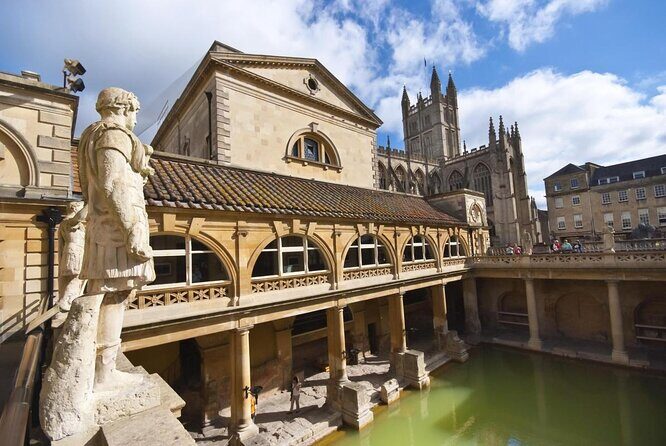
Next up is Queen Square. This stop is quick—about ten minutes—but it does something useful: it connects Bath’s elegance to real-life events. You’ll see how the city’s architecture sits alongside evidence of harm from WWII, including damage from 1942.
That’s a key reason this tour works even if you’re not a strict history buff. You’re not just looking at buildings; you’re learning how Bath got shaped, repaired, and kept going.
If your instinct is to treat Bath as only Georgian postcards, this stop is the gentle correction. It adds emotional realism to the stone.
No. 1 Royal Crescent: Culture, Stories, and What You’re Actually Seeing
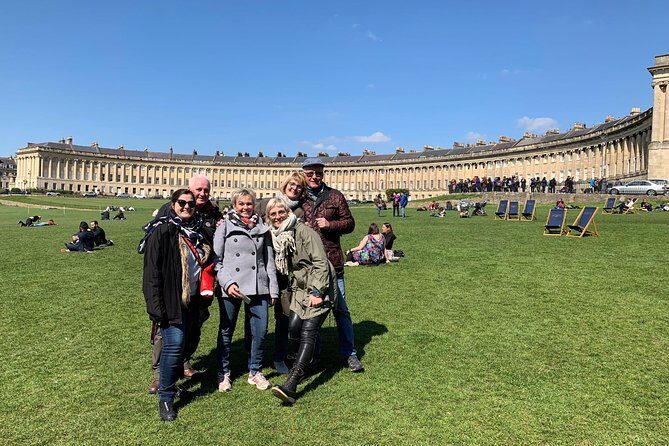
Then you move into the Royal Crescent orbit, with a stop at No. 1 Royal Crescent. Here the focus is on architecture and the stories attached to it—how the famous curved terrace became a symbol of status, fashion, and identity in Georgian Bath.
The value isn’t only in spotting the curve. It’s in having someone explain why that curve mattered and what it said to the people who lived and visited there. Once you hear the logic, it’s easier to interpret the rest of the Crescent when you see it again on your own later.
You also get cultural context, which helps you connect the buildings to the way Bath’s society worked. Even if you don’t know the names yet, you’ll start seeing patterns.
The Circus: Geometry, Architecture, and a City That Thinks in Shapes
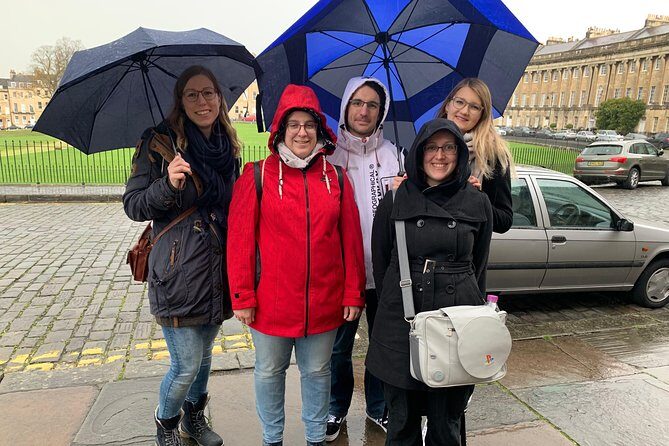
At The Circus, your guide brings the architecture to life with stories and history. This is one of those Bath stops where the building looks famous before it feels familiar.
You’ll learn what makes The Circus special—how it plays with the same Georgian love of design and order—and you’ll pick up the kind of detail that turns a quick look into a memorable one. You’ll start to notice symmetry, rhythm, and the way Bath uses repeating forms to create a sense of unity.
Drawback to note: because each stop is brief, you won’t get to linger for long photos. If photography is your main goal, treat this tour as your “first pass” that tells you exactly where you’ll want extra time later.
You can also read our reviews of more guided tours in Bath






Pulteney Bridge and the Avon: A View That’s Built for Film-Like Moments
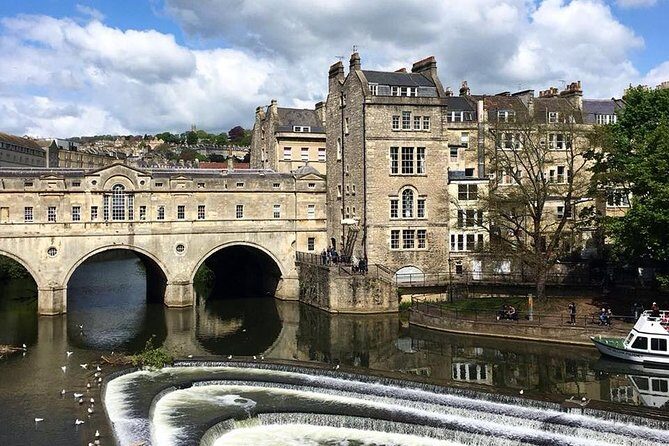
Pulteney Bridge is next, with a focus on architecture and stories, plus the river setting. You’ll learn about the river aspect of Bath—how the Avon and the bridges shape the city’s feel and how that look becomes the backdrop for everything from day-to-day life to filmed scenes.
This stop is particularly good if you like walking with a purpose. The guide points out what to notice about the bridge and the riverside setting so you understand the scene rather than just admire it.
Tip: if you can, time your photos for softer light. Bath weather changes fast, and the river can look different within minutes.
Sally Lunn’s Museum Stop: Bread-Related Stories and a Smart Snack Plan
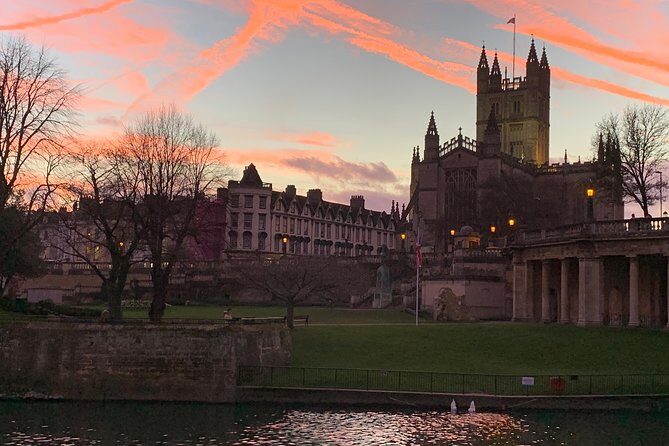
Then there’s a stop at Sally Lunn’s Museum. Expect architecture, stories, and history—plus a gentle reminder that Bath has always been a place people visited, not just lived in.
This is also a practical moment to plan your food. Even though the tour itself doesn’t include attraction entry, you’ll be near a place that’s strongly associated with Bath’s baking tradition. If you’re the type who likes to eat local without overthinking it, this is a good time to decide where lunch or a sweet treat will happen after the tour.
Because the stop is short, don’t expect a full museum experience here. Think of it as a cultural nudge that helps you choose a good break later.
Second Bath Abbey Moment: Overview, Abbey Church vs Cathedral, and Q&A
You return to Bath Abbey for a final stop that’s equal parts recap and questions. This is when the walk starts to connect in your head. Your guide revisits the church architecture and addresses the Abbey Church vs cathedral idea, which is a common point of confusion for first-time visitors.
You’ll also get an overview of the walk you already took and time for Q&A. That Q&A is one of the biggest reasons people love this tour. Instead of hearing facts dumped on you, you get a chance to steer the conversation toward what you care about—architecture, eras, or how the city evolved.
I like this structure because it turns the walk into a learning loop: see something, understand it, then ask why it matters.
The Roman Baths Entrance View: Aqua Sulis Without the Pressure
The tour ends with the Roman Baths area. You don’t go inside as part of this guided walk, but you do get a view of the entrance area and a clear explanation of Roman occupation—Bath’s Roman name, Aqua Sulis, and what that tells you about why the city mattered.
This is an important distinction. If you only have two hours, you’ll leave with enough context to enjoy the Roman Baths later on your own. And if you do plan to buy tickets for entry, your ticket day won’t start from zero.
What to watch for: since admission to attractions is not included, you’ll need to budget time and money for the actual interior visit if that’s high on your list. The tour gives you the why; it doesn’t sell you the tickets.
Price and Value: Why $30.51 Often Feels Like Good Sense
At $30.51 per person, this is priced as a solid “city orientation” tour. That’s the sweet spot. You’re not paying for entrance fees that you still have to buy anyway. Instead, you’re paying for a guide to connect the dots across multiple eras and multiple sites in one compact route.
What makes it feel like value is the combination of:
- Blue Badge guiding (small-group, professional interpretation)
- A tight 2-hour structure that keeps you moving but not sprinting
- Stops at the key Bath icons you would otherwise have to research yourself
If you only have a morning or afternoon in Bath, this tour can save you from wandering. I’d rather pay for clarity on Day 1 and then spend Day 2 enjoying the places you personally care about.
Weather, Walking Pace, and Where to Be Ready for Steps
This experience needs good weather. If conditions are poor, it may be rescheduled or refunded, so plan some flexibility if you’re coming during a wet spell.
Also, the walking level is moderate. There are hills and some steps. One of the most useful things I can tell you is to treat the tour like a real stroll: proper shoes, a light layer, and no expectation that you’ll be able to read every façade up close without moving.
If mobility is a concern, you’ll still want to consider whether the route’s ups and downs fit your comfort level. The tour is short, but Bath isn’t perfectly flat.
Who This Tour Fits Best (and Who Might Want a Different Plan)
This walking tour is perfect if you:
- Are visiting Bath for the first time and want a quick mental map
- Like architecture plus story context, not just dates
- Want a small group and the ability to ask questions
- Have limited time and want to see major sights without ticket pressure
It may not be ideal if you:
- Want to spend lots of time inside specific attractions during the same block of time
- Prefer a slower, sit-and-stare pace
- Are hoping for a fully comprehensive Roman Baths visit in one go
If that sounds like you, I’d pair this with separate ticket time afterward at Bath Abbey or the Roman Baths. The tour sets you up to enjoy those interiors more.
Should You Book This Walking Tour of Bath?
If you’re on the fence, here’s the decision rule I’d use: book it if you want to understand Bath in your first 2 hours. The tour is built for that. You’ll get a strong orientation, a guided route through the essentials, and the kind of Q&A that helps you stop guessing.
Skip it only if you already know Bath well and you’re mainly trying to maximize indoor ticket time. Otherwise, this is one of the most practical ways to start your Bath day and end it with clearer next steps for what to revisit.
FAQ
FAQ
Is entrance to Bath Abbey or the Roman Baths included?
No. Entrance to attractions is not included. The tour focuses on exterior views and guided context.
How long is the walking tour?
It runs for about 2 hours.
Where does the tour start and where does it end?
It starts at Abbey Churchyard, Abbey St, Bath BA1 1LY, UK, and ends back at the meeting point.
What language is the tour offered in?
The tour is offered in English.
Is the tour a good fit for people with moderate mobility?
The tour expects a moderate physical fitness level, and it can include uphill sections and some steps.
How many people are in a group?
The tour has a maximum of 20 travelers.
Are service animals and dogs allowed?
Service animals are allowed, and dogs are welcome with well-behaved owners.
Does the tour require good weather?
Yes. The experience requires good weather, and if it’s canceled due to poor conditions, you’ll be offered a different date or a full refund.
Do I get a mobile ticket?
Yes. You receive a mobile ticket.