REVIEW · BATH
Exceptional Bath tour guide making your visit splendidly memorable.
Book on Viator →Operated by PAUL ELLIOTT · Bookable on Viator
Bath hits you fast. The Roman, Georgian, and modern layers of Bath line up beautifully when a local guide like Paul Elliott does the connecting. You start near the old city wall area, then move through Roman Baths and Bath Abbey viewpoints, swing by Pulteney Bridge, and end with a grand finale at Royal Crescent—before finishing with a short stop at Thermae Bath Spa.
I especially like how Paul Elliott blends architecture with story. He keeps the pace lively, answers questions, and uses humor to make the details stick without turning the whole walk into a lecture.
One thing to plan for: most of the big-ticket sights are explained from the outside, and admission is not included. If you want to go inside the Roman Baths or Bath Abbey, you’ll need separate tickets.
In This Review
- Key things that make this Bath tour worth your time
- Starting Outside Abbey Hotel: A smart way to get bearings fast
- Roman Baths Explained from the outside (no entry): the 10-minute orientation you need
- Bath Abbey’s Saxon-to-Tudor story in under an hour of walking
- Pulteney Bridge, the Avon, and Guildhall Market viewpoints
- From Sally Lunn’s oldest house to medieval alleys near the old city wall
- Queen Square, The Circus, and Royal Crescent: Georgian Bath in high definition
- Downhill toward Jane Austen Centre and Thermae Bath Spa: old meets new
- Paul Elliott’s guiding style: jokes, facts, and lots of asking questions
- Price, walking time, and who this tour is best for
- Should you book this Bath walking tour?
- FAQ
- How long is the Bath walking tour?
- Where does the tour start?
- Where does the tour end?
- Is the tour in English?
- Is a mobile ticket provided?
- Are admission tickets included for the Roman Baths and Bath Abbey?
- What major sights will I see?
- How big is the group?
- Is the tour mainly walking?
- What is the cancellation policy?
Key things that make this Bath tour worth your time
- Paul Elliott’s humor with a local’s eye that turns stone-and-stucco history into real human stories
- Prime photo moments built around the Georgian showpieces like The Circus and the Royal Crescent
- A tight route that covers Roman Baths, Bath Abbey, Pulteney Bridge, Queen Square, and Thermae Spa in about 1.5–2 hours
- Small group size (max 20), which makes it easier to ask questions and keep the tour moving
- Outside-the-walls medieval alley detours that help you understand how Bath grew over centuries
Starting Outside Abbey Hotel: A smart way to get bearings fast
The meeting spot is right by Abbey Hotel Bath (a Tribute Portfolio Hotel), on North Parade (N Parade), Bath BA1 1LF. It’s an easy area to orient yourself in, and since the tour loops back to the start area, you’re not left wondering how to retrace your steps later.
What I like most about starting here is the way your walk immediately makes sense. Bath can feel like a maze of lanes and terraces until someone shows you the order: where the Romans set the stage, how the medieval city shaped the streets, and how the Georgians turned Bath into a stage set for polite society.
The group size stays limited—up to 20—so you’re not fighting for sight lines at the viewpoints. You also get a steady rhythm: short explanations, quick transitions, and frequent chances to stop for photos.
You can also read our reviews of more guided tours in Bath


Roman Baths Explained from the outside (no entry): the 10-minute orientation you need
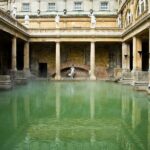
The tour’s first major history stop is the Roman Baths. You get a full explanation without entering, with time set aside for context rather than ticket lines.
Even if you’ve already read about Roman Bath, the outside approach works well here. You can look at the space, picture how the Romans used this site, and then place it in Bath’s broader timeline. Instead of scrambling for information while inside a museum, you start with the story first—then you can decide later if you want to spend extra money and time on entry.
Admission ticket not included for this stop, so your best strategy is simple: treat this as a guided primer. If the Roman Baths genuinely grab you, book tickets separately on another day or earlier/later in your trip.
Practical note: this is only about 10 minutes on the Roman Baths portion, which means you’ll likely hear the most important themes rather than every single detail. That’s not a flaw—it’s the design. The goal is to help you understand what you’re seeing as the tour moves outward into the city.
Bath Abbey’s Saxon-to-Tudor story in under an hour of walking
Bath Abbey is next, and you get the “full story” fast—from Saxon and Norman roots through to the current Tudor-era abbey. The pace here is about 5 minutes, so the guide focuses on the big turning points: how the religious and architectural identity of Bath evolved over time.
What I find valuable is the framing. A lot of people treat Bath Abbey like a pretty backdrop for photos. Paul Elliott’s approach makes it feel like a living timeline instead of a single monument. By the time you reach the Georgian streets afterward, you start noticing the contrast more clearly: the medieval and earlier layers vs. the 1700s building mindset.
Also, like the Roman Baths stop, this is an explained visit—no admission included and no long inside time. If you want to linger in the abbey, you’ll need to plan that separately.
Pulteney Bridge, the Avon, and Guildhall Market viewpoints

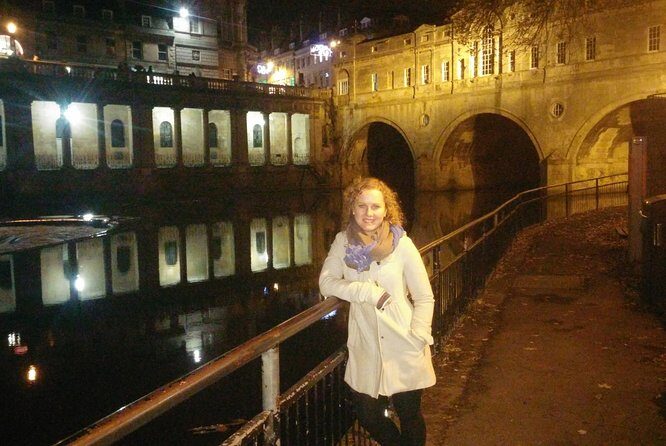
Next comes Pulteney Bridge, with a focus on the River Avon and locations tied to boat trips. You also get pointers on film set connections—information that can make a familiar landmark feel new.
Then the walk pulls you toward Guildhall Market, keeping the tour grounded in Bath as it is now. This matters because Bath can otherwise feel like a theme park of historic buildings. Tossing in market life and river activity reminders helps you remember you’re in a functioning city.
This section is also where the tour becomes practical for first-timers. You learn how the river-facing areas connect to the rest of Bath, and you start spotting where classic viewpoints come from—why certain bridges and terraces look the way they do.
From Sally Lunn’s oldest house to medieval alleys near the old city wall

Between the major landmarks, the tour includes small-but-meaningful side stops and passageways.
You pass Sally Lunn’s, described as Bath’s oldest house and tea shop. That’s a fun detour because it’s not a random commercial stop—it’s a chance to step into how long Bath’s visitor culture has been here. Even if you don’t buy anything, you’ll get a better sense of why Bath became a place people came to for leisure, health, and social life.
Then you move through old medieval alleys, heading toward the old city wall. These lanes are where Bath’s growth shows up in street form. Straight Georgian crescents and squares come later. The medieval layers are messier. Learning to see those differences is the real payoff of this walking route.




Queen Square, The Circus, and Royal Crescent: Georgian Bath in high definition
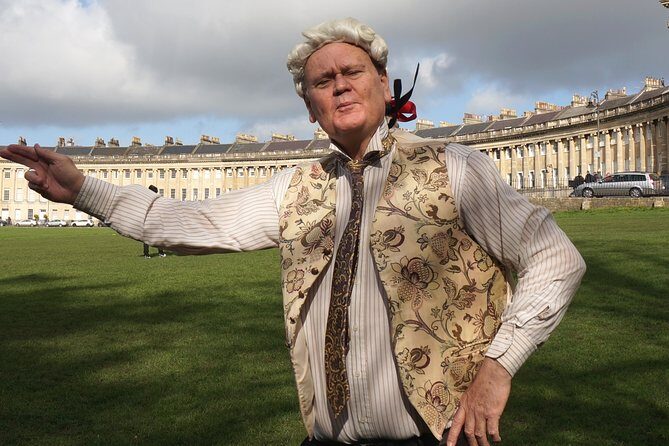
Now you hit the Georgian heart of Bath.
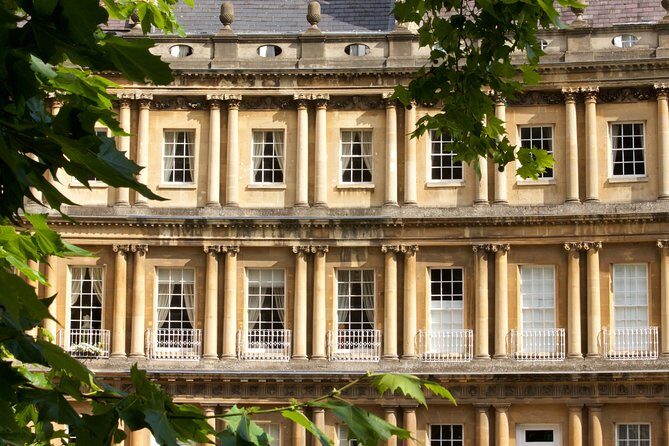
Queen Square gets explained as the start of Bath’s Georgian sector. This is the point where the guide’s architecture talk becomes more than trivia. You start understanding the Georgian design rules: the way town planning aimed for symmetry, the way facades helped create an elegant public stage, and how the city’s identity shifted toward the 1700s.
Then The Circus comes next—John Wood’s masterpiece. The Circus is one of those Bath sites where you can either look at it for 10 seconds and move on, or pause, listen, and actually see what’s going on. With the guide pointing out what to notice, it becomes a photo stop with purpose.
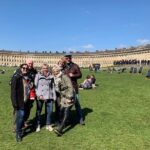
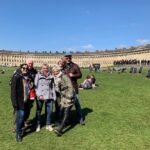
The Royal Crescent follows as the big finishing architectural statement, framed as John Wood’s masterpiece and presented as the top address in Bath. This is where the tour’s photo opportunities really pay off. You get time to take in the sweep of the crescent and position yourself for the best angles.
If you’re the kind of traveler who likes to connect what you see to who paid for it and why, this is your moment. The tour also weaves in how many famous people passed through Bath in the 1700s, including connections that you can cross-reference with America, Canada, and Australia. That thread turns the buildings into evidence of Bath’s global reputation at the time.
Downhill toward Jane Austen Centre and Thermae Bath Spa: old meets new
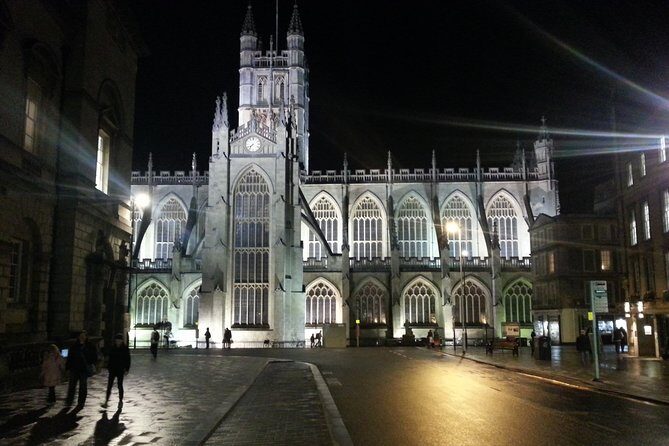
After the Georgian big hitters, the walk becomes calmer and more downhill. You pass the Jane Austen Centre and Bath Thermae along the way, then return back toward the Abbey where the tour ends.
Thermae Bath Spa is the final stop (around 5 minutes). The emphasis here is on modern Bath bathing: how Bath keeps recycling the same idea of water and health, just with today’s facilities. You’ll also hear about The Croos Bath next door, giving you a sense that Bath’s spa identity isn’t one single attraction—it’s an area and a tradition.
Even if you don’t plan to book a spa session, it’s still a smart ending. Roman Baths water culture begins the story; Thermae Bath Spa shows the modern version. You finish with a clear before-and-after feeling.
Paul Elliott’s guiding style: jokes, facts, and lots of asking questions
This is a walking tour built on communication, not just landmarks.
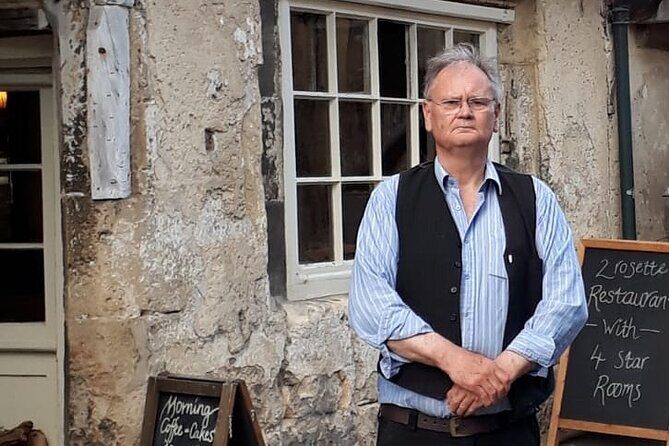
Paul Elliott is described as funny and witty, with a sense of humor that keeps the tour from feeling heavy. He also answers questions, and in small-group settings that matters. Instead of saving your questions for later, you can ask in the moment—especially when the guide points out architectural details you might not notice on your own.
A theme that comes through clearly: his style includes British wit and mild sarcasm at times. Some people love that. If you prefer a very gentle tone with zero edge, consider that humor is part of how he teaches Bath.
There’s also a practical side to his approach. He tends to keep stops timed so you still get the full route. One review noted the tour ran about 2 hours 30 minutes instead of 2 hours, which makes sense: the pace depends on the slowest walker and how much time people spend chatting or taking photos.
Plan your day with breathing room. If Bath is your main priority that day, this tour fits well. If you’re trying to squeeze it between a packed schedule, give yourself a buffer.
Price, walking time, and who this tour is best for
At about $30.53 per person for roughly 1 hour 30 minutes to 2 hours, this isn’t priced like a “single attraction” tour. It’s priced like a city orientation that bundles major sights and explanations into one guided loop.
You’re paying for three things:
- Time-saving context at the Roman Baths and Bath Abbey viewpoints
- Expert linking between medieval Bath, Georgian Bath, and modern Bath spa culture
- A route plan that takes you past the most important landmarks without you having to build the itinerary yourself
Group size also affects value. A max of 20 people makes it easier to hear and easier to move through crowded areas.
You should expect walking. The tour covers about a mile on foot with over 15 stops in the route plan. Most travelers can participate, but if you know you get tired quickly, bring comfortable shoes and keep water handy.
This tour is a great match if you:
- Love history and architecture
- Want a quick first-pass overview of Bath’s main landmarks
- Like learning with humor rather than dry facts
- Want a route that includes both the obvious sites and the in-between alleys and viewpoints
It’s less ideal if you specifically want to spend most of your time inside ticketed attractions. Here, the Roman Baths and Bath Abbey are explained without entry, so plan extra time and extra tickets if you want to go deeper.
Should you book this Bath walking tour?
I’d book it if you’re in Bath for a short time and want your first day—or first afternoon—to feel organized. The route gives you the big names (Roman Baths, Bath Abbey, Pulteney Bridge, The Circus, Royal Crescent, Thermae Bath Spa), and the guide’s style helps you understand how they connect.
I’d think twice if you’re planning this as your only visit and your top priority is spending long hours inside ticketed attractions. Since admission isn’t included and key stops are explained from outside, you’ll likely want to add separate entry later.
One final tip: book sooner rather than later. The tour is often booked about 47 days in advance on average, which usually means it fills up during peak travel weeks.
If you want a smart, funny, architecture-focused way to see Bath without getting lost, this one is a solid choice.
FAQ
How long is the Bath walking tour?
It runs about 1 hour 30 minutes to 2 hours, depending on the group pace.
Where does the tour start?
It starts outside Abbey Hotel Bath, a Tribute Portfolio Hotel, on N Parade, Bath BA1 1LF.
Where does the tour end?
The activity ends back at the meeting point area. It also includes a short final stop at Thermae Bath Spa.
Is the tour in English?
Yes, it’s offered in English.
Is a mobile ticket provided?
Yes, the tour uses a mobile ticket.
Are admission tickets included for the Roman Baths and Bath Abbey?
No. Admission is not included for those stops, and the Roman Baths explanation is done without entering.
What major sights will I see?
You’ll see or get explanations at the Roman Baths, Bath Abbey, Pulteney Bridge, Queen Square, The Circus, the Royal Crescent, and a final stop near Thermae Bath Spa, plus nearby streets and landmarks along the way.
How big is the group?
The tour has a maximum of 20 travelers.
Is the tour mainly walking?
Yes. Expect a walking city route with many stops.
What is the cancellation policy?
You can cancel up to 24 hours in advance for a full refund.