REVIEW · BATH
Jane Austen’s Bath And History Trail
Book on Viator →Operated by Ulrich Wenske · Bookable on Viator
Jane Austen walked here, and you can too. This 2.5-hour walk threads Regency stories through real Bath landmarks, with the big draw being a stop at the Jane Austen Centre and the elegant architecture around Pulteney Bridge. You get a clear sense of how the city’s streets, buildings, and social world fed Austen’s writing, without turning it into a stuffy museum lecture.
I especially liked how the tour ties Austen’s life to specific Bath addresses, including the area around her early dwelling with a name plaque you can spot as you walk. Another win for me is the way the guide uses the sights to tell bigger stories about Bath itself, from Georgian façades to the way the Circus was planned to create those dramatic sightlines.
One thing to plan for: it’s a lot of walking in a compact 2.5-hour loop, and a couple of spots may involve steep steps or uphill. Also, some major attractions you might want to enter (like Royal Crescent and Bath Abbey) are not included, so you may still pay a bit if you want full interiors.
In This Review
- Key things you’ll get from this Bath Jane Austen trail
- Bath’s Jane Austen route: from Pulteney Bridge to Roman Baths basics
- Pulteney Bridge and Great Pulteney Street: the streets set the story
- Jane Austen Centre stop: what’s actually included
- No. 1 Royal Crescent: the Georgian inside peek (and what costs extra)
- Bath Abbey and its hidden details: medieval bones under Georgian glamour
- The Circus: why Roman vibes show up in Georgian Bath
- Assembly Rooms: Regency social life, not just a pretty interior
- Thermal springs and the rooftop pool: Bath’s water story in one stop
- Roman Baths and the Pump Room: where Bath’s older self meets Austen’s fiction
- Price and time: does $40.24 feel fair?
- What to watch for on the ground
- Who this tour suits best
- Should you book Jane Austen’s Bath And History Trail?
- FAQ
- Where does the tour start?
- How long is the experience?
- Is the Jane Austen Centre included?
- Do I need to pay for entry to Royal Crescent or Bath Abbey?
- What languages are offered for the guide?
- Is audio for the Roman Baths included?
- Is the tour mostly walking?
- What if the weather is bad?
- How many people are in the group?
Key things you’ll get from this Bath Jane Austen trail
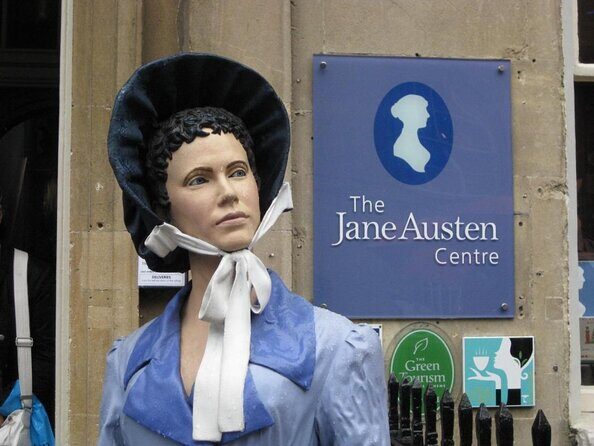
- Free entry to the Jane Austen Centre and time to visit the book shop
- Regency-life context tied to Bath’s real buildings and street layout
- Georgian showpieces like Royal Crescent and the Circus, explained in plain terms
- Bath Abbey details and interior access during the walk (entry ticket not included)
- Roman Baths focus, with a helpful note that audio tours are separate
- Natural thermal water origins (Hetling, Cross, and King’s Spring) and the rooftop pool concept
Bath’s Jane Austen route: from Pulteney Bridge to Roman Baths basics
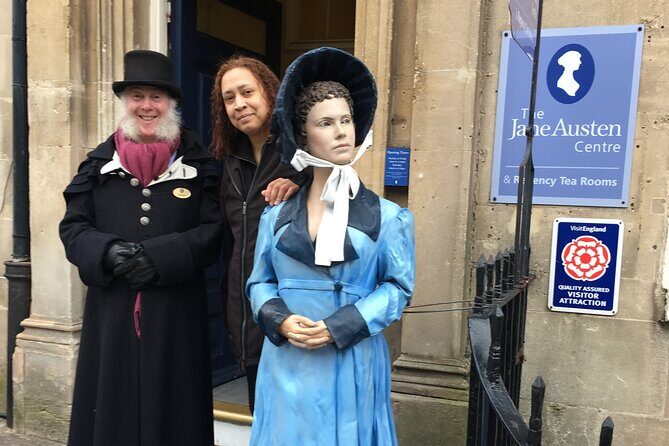
If you like the idea of seeing Bath in a way that feels practical, not performative, this tour hits the sweet spot. You start at the Pulteney Bridge Coffee Shop area and spend the next couple of hours moving through some of the city’s most iconic spaces. The format is a guided walking loop, so you’re constantly orienting yourself: where things are, how they connect, and why Bath looks the way it does.
The guide, Ulrich Wenske, comes across as friendly and hands-on. In bad weather, he’s willing to adjust—there’s mention of shelters and even a virtual option—so the experience doesn’t just stop dead if the sky turns on you. The key is that the tour is built for learning while you walk, not for sitting still and reading plaques.
You’ll also notice the pacing is designed to give you both Austen context and broader Bath history. It’s not only Jane Austen in a vacuum. It’s Bath as the machine behind the stories: architecture, social customs, and the spa-town culture that made the city famous.
You can also read our reviews of more historical tours in Bath


Pulteney Bridge and Great Pulteney Street: the streets set the story
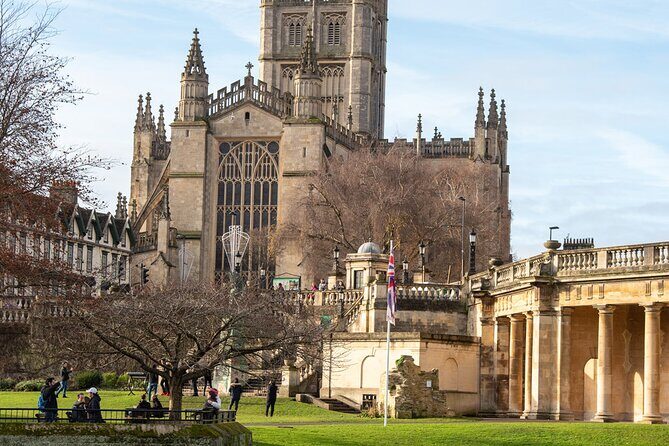
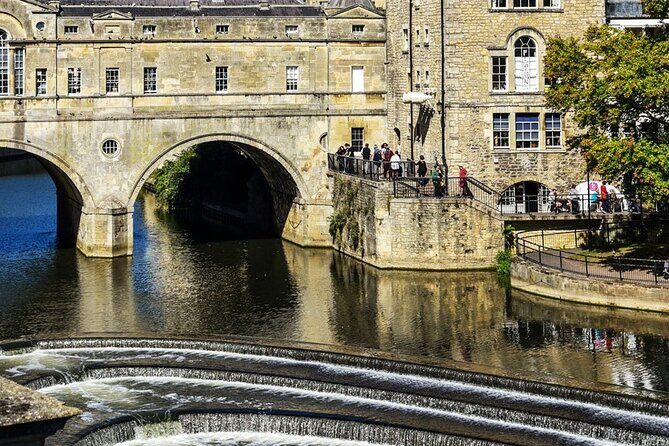
Your walk opens at Pulteney Bridge, a landmark designed in 1769 and lined with shops. It’s a great first stop because it immediately shows you the Bath style of mixing utility and beauty—this isn’t a silent monument. The guide then steers you along Argyle Street and into the orbit of Great Pulteney Street.
This is where the tour makes its first smart move: it uses street-level viewpoints to explain town-house architecture and the kind of residents these buildings attracted in the 18th and 19th centuries. You also get a useful orientation for later landmarks, including a sightline toward the Holburne Museum of Art from the general area.
A nice added touch is the idea of walking the short stretch between the bridge area and Sydney Place, where you can see a plaque marking Jane Austen’s first dwelling in Bath. The tour doesn’t pretend this is a full museum stop. It’s a quick, meaningful moment that helps you picture the scale of her world—small sign, big meaning.
Practical note: this part is outdoors and moving. If you’re wearing shoes that don’t grip well on slick stone, switch now rather than later.
Jane Austen Centre stop: what’s actually included
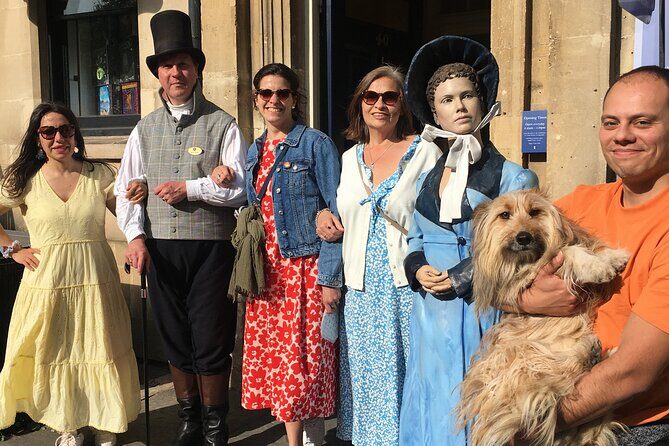
The Jane Austen Centre is the tour’s clearest “payoff” stop, because it’s not just a photo op. You get free entry as part of the experience, plus time that includes the book shop. That matters because many Austen-oriented visits in Bath either cost extra or feel rushed. Here, you’re given room to absorb the Regency vibe before you head back outside.
Even with only a short visit, the centre is designed to connect Austen’s life with Bath’s influence. You’ll see the Regency snapshot and how living in Bath affected her writing. This is also a helpful reset point mid-walk. After all the architecture, you get a more direct, story-driven explanation of the world Austen inhabited.
One practical caution: the meeting point is on Pulteney Bridge, not at the Jane Austen Centre. If you’re tempted to show up where the ads look the most familiar, don’t. Give yourself time to find the starting spot and start walking. A mix-up there can cost you the whole tour.
No. 1 Royal Crescent: the Georgian inside peek (and what costs extra)
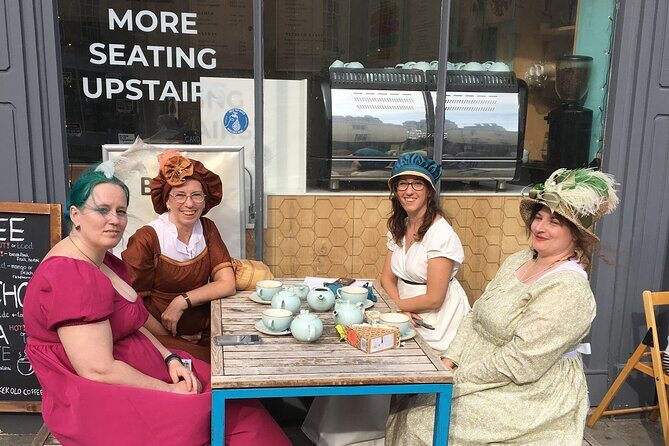
Next comes No. 1 Royal Crescent, often the most photographed Bath building. You get to hear what makes the Crescent special—built in the second half of the 18th century, with 30 terraced houses connected visually by giant Ionic columns. It’s “postcard Bath,” but the tour approach is to use it as a lens.
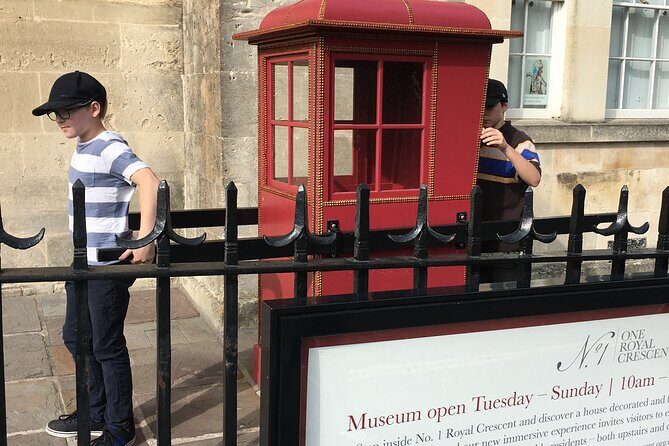
This stop is partly about the exterior impact and partly about what you can do if you want to go further. No. 1 is a museum, and the tour notes that the museum charge and tour are not included. Still, you’ll likely walk away with a clearer sense of how these rooms were meant to display status and social power.
Here’s the trade-off I’d plan around: if you love interiors, you may want to budget museum entry on top. If you’re more into the story of how the city looked and functioned, you’ll get plenty from the exterior framing plus the guide’s context.
Bath Abbey and its hidden details: medieval bones under Georgian glamour
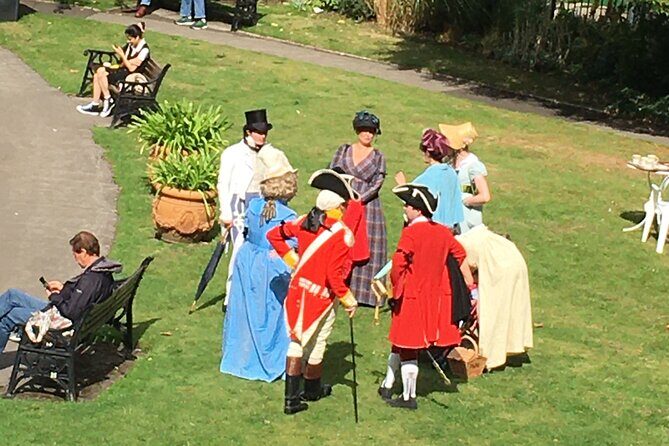
Bath Abbey is where the tour shifts gears. The Abbey’s story starts in the early 12th century, with a restoration launch by Bishop Oliver King in 1499. Completion came later, under Elizabeth I, in 1611. The tour also points out the Abbey’s famous memorials and wall plaques, plus the connection to Edgar I in 977, which anchors it deep in England’s long timeline.
What I like about this stop is that it’s not treated like a generic cathedral walk. You’re encouraged to look closely at specific features, including what’s described as special details and less-obvious elements. Then you can visit the interiors. The entry ticket for the Abbey itself is not included, so if you want every minute inside, plan for that extra cost.
Bath’s spa reputation can make you forget this city also has medieval weight. In one tour, you get both. That contrast is part of why Austen felt at home here: the past is always there, even when everyone is dressing for tea and performance.





The Circus: why Roman vibes show up in Georgian Bath
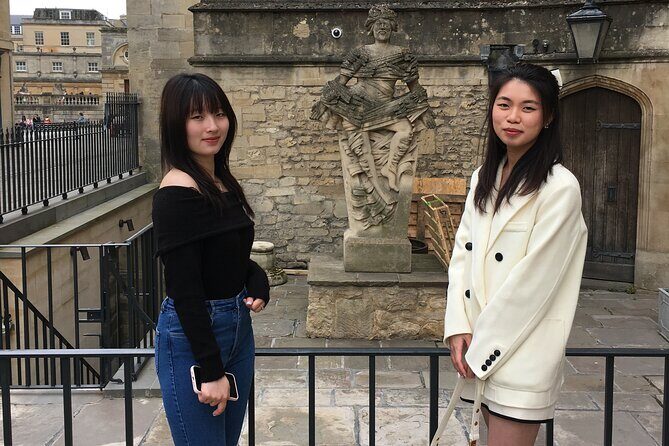
The walk through the Circus is a real palate cleanser. Work started in 1754, and the design is tied to architects John Wood and their interest in prehistoric stone circles—yet it also aims to emulate the Coliseum in Rome. That mix is pure Bath: local identity with a grand, classical attitude.
You get explanations for why the Circus feels the way it does, including what makes it unique as an iconic site. In the tour experience, the guide also points you toward a playful detail in the centre—there’s an echo effect people like to try there. It’s silly in the best way. It also helps you slow down, look around, and notice the architecture working in real life.
Like the Abbey and Royal Crescent, this stop is mostly about observation and context. The tour lists admission as free here, so you’re not forced into extra entry fees just to enjoy the space.
Assembly Rooms: Regency social life, not just a pretty interior
Then you hit the Assembly Rooms, which are tied to the social engine of the Regency era. These were the public and ball rooms where the fashionable crowd gathered. The tour highlights key spaces like the octagon, the card room, and the tea room—and notes that these rooms still host events.
This stop matters because Austen wasn’t only writing about romance. She wrote about manners, money, and who gets invited where. The Assembly Rooms are Bath’s physical reminder that social life had rules—and those rules created plot.
The experience also notes that admission for this stop is not included. So if you want to go inside and see the rooms up close, you may need separate tickets. Still, even without entry, the guide’s context helps you picture what happened behind those doors.
Thermal springs and the rooftop pool: Bath’s water story in one stop
At some point in the flow, you’re brought to the idea of bathing in natural thermal water—described as the only place in Britain where you may swim in natural thermal water, using a rooftop pool with water around 35°C, open in both summer and winter. The tour connects that to Bath’s ancient water system by explaining Hetling Spring, Cross Spring, and King’s Spring, including their origins dating back 10,000 years.
I like this part because it gives you a non-romantic, practical explanation for why Bath became what it is. If Austen’s world runs on social calls and reputation, Bath’s world runs on water—literally pulled up from deep underground. Once you understand that, the city’s spa culture stops feeling like a postcard cliché.
One caution: the tour data doesn’t clearly state whether a swim time or specific pool access is included. If swimming is a must for you, plan to treat this as a story-and-look stop rather than assuming you’ll automatically get pool access without any extra arrangements.
Roman Baths and the Pump Room: where Bath’s older self meets Austen’s fiction
The tour then lands in the area of the Roman Baths, described as Bath’s main landmark dating from the 1st century AD. You’ll learn about the Roman temple of Sulis Minerva and the pools that relate to the site’s religious and healing past.
There’s also a practical pointer: it’s recommended to book audio tours separately before or after you go, since those are not included here. That’s a smart suggestion. The Roman Baths are fascinating, but they reward attention. Audio helps you connect what you see to what it means.
Finally, you’ll get the tie-in to the Pump Room, a symbol of Bath’s Georgian golden age. This is where the fashion-conscious elite gathered for balls, tea, and to take the waters. The tour even connects the Pump Room to Austen’s fiction, noting that Catherine and Isabelle often met there in Northanger Abbey.
This sequence works well because it bridges time periods. You go from Roman spiritual culture to Georgian social theatre to Austen storytelling. If you want to understand Bath as a place Austen could write about credibly, this is where it clicks.
Price and time: does $40.24 feel fair?
The price is listed as $40.24 per person, for about 2 hours 30 minutes. For that money, you’re paying mainly for a guided walk with a tight selection of major landmarks. The value gets stronger because one of the most expensive “Austen-specific” stops—the Jane Austen Centre—is included with free entry (and includes the book shop).
Not everything is covered, though. Entrance fees for museums are specifically called out as not included, including No. 1 Royal Crescent, and the Bath Abbey ticket. So if you’re the type who always wants to go inside, your final trip cost will rise. Think of this tour as paying for the map and the story. Tickets are what you add for optional depth.
Group size is also capped at 10 travelers, which usually means you can actually ask questions without feeling like a stranger in a crowd. Reviews highlight that Ulrich will answer questions and stay approachable, even with delays in weather or timing.
What to watch for on the ground
This isn’t a slow stroller tour. You should expect a fair amount of walking, and there can be uphill and some steep steps depending on the route and your pace. Wear comfortable shoes. Bring water. If it rains, umbrellas help, but good shoes matter more than you think.
Sound can also be a factor. One review noted that at some points it was hard to hear and the guide moved quickly to the next thing. My advice: don’t let yourself drift behind the group. Stay where you can hear. If you want extra details, ask while you’re stopped.
Finally, a small but important logistics note: the tour does not start at the Jane Austen Centre. If you’re using the centre as your mental starting point, reset now. Begin at No. 17 Pulteney Bridge Coffee Shop area.
Who this tour suits best
This is a great pick if you want:
- A way to get your bearings fast in Bath while seeing real Austen-era spaces
- A guided link between Regency social life and the city’s architecture
- A short walking format that balances story with practical sightseeing
It’s also a good match if you like talking to your guide and asking questions. Reviews mention Ulrich being friendly, interactive, and willing to adjust during poor weather. If you need a calm guide with flexibility, that matters.
If you’re only after deep, ticketed museum time, you might feel the tour is too “outside focused” in places. In that case, you can treat this as the orientation walk, then do your museum visits later.
Should you book Jane Austen’s Bath And History Trail?
I think you should book it if you want Austen in context—Bath as a living setting, not just a list of famous façades. The included Jane Austen Centre entry makes the $40.24 price feel more grounded, and the mix of Pulteney Bridge, Royal Crescent, Bath Abbey, the Circus, Assembly Rooms, Roman Baths, and the Pump Room gives you a fast, coherent overview.
Skip—or at least adjust expectations—if you hate walking or you expect everything to be fully ticketed inside. You’ll still want to budget for museum admissions if you want the interiors at No. 1 Royal Crescent and Bath Abbey.
If you’re visiting Bath for the first time and you want the city to make sense through Austen’s lens, this tour is an efficient, fun way to do it.
FAQ
Where does the tour start?
The tour starts at the Pulteney Bridge Coffee Shop, specifically at No. 17 Pulteney Bridge, Bath BA2 4AY, UK.
How long is the experience?
It runs about 2 hours 30 minutes.
Is the Jane Austen Centre included?
Yes. The tour includes free entry to the Jane Austen Centre and includes time to visit the book shop. Jane Austen Centre internal tour guides are not included.
Do I need to pay for entry to Royal Crescent or Bath Abbey?
Yes. Entrance fees for museums are not included, including No. 1 Royal Crescent and Bath Abbey.
What languages are offered for the guide?
The tour offers a multilingual guide in English or German.
Is audio for the Roman Baths included?
No. Audio tours for the Roman Baths are recommended separately before or after the guided walk.
Is the tour mostly walking?
Yes. It is a walking tour with a fair amount of walking and some steep steps or uphill for parts of the route.
What if the weather is bad?
The experience requires good weather. If it’s canceled due to poor weather, you’ll be offered a different date or a full refund.
How many people are in the group?
The tour has a maximum of 10 travelers.