REVIEW · LONDON
British Museum Tour with a Qualified Archaeologist Guide
Book on Viator →Bookable on Viator
The British Museum can overwhelm you fast. This tour gives you a smart path through the galleries with a qualified archaeologist explaining what you are seeing and why it matters. You move as a group, but you also get the context that turns famous objects into real clues about ancient life.
I especially love how this visit links big-name artifacts to the civilizations behind them. You do not just point at objects. You learn the stories: Ancient Egypt and the Rosetta Stone, Greece’s Parthenon Marbles, the Moai from Easter Island, plus major finds from the Viking and Anglo-Saxon world.
The main drawback is simple: the museum is huge. Even with a tight route, you cannot see everything. So if you need a very slow pace or you hate standing and moving between galleries, you might want to plan extra time on your own afterward.
In This Review
- Key points before you go
- Why a qualified archaeologist guide changes the British Museum
- Starting in Bloomsbury and getting into the museum flow
- Stop 1 at the British Museum: from Rosetta Stone to the Moai
- Ancient Egypt and the Rosetta Stone context
- Assyria’s power plays and palace imagery
- Greece’s Parthenon Marbles: more than famous marble
- Aztec crown treasures and symbols of rule
- Easter Island’s Moai: mystery with a human footprint
- The Lewis Chessmen: a Viking-era surprise
- The Sutton Hoo hoard: royal mystery in plain objects
- How to handle the 2 hours 45 minutes pace without missing the point
- Value for money: free museum entry plus a guided path
- Who this tour fits best
- Should you book this archaeologist-led British Museum tour?
- FAQ
- How long is the British Museum tour?
- Is the tour offered in English?
- Where do I meet the guide?
- Where does the tour end?
- Is the museum admission included?
- How big is the group?
- Are service animals allowed?
- What is the cancellation policy?
Key points before you go
- Qualified archaeologist-led storytelling that connects objects to the people who made them
- A focused route that targets the museum’s most famous pieces and some lesser-seen moments
- Cross-civilization coverage from Egypt and Assyria to Greece, the Aztecs, and Easter Island
- Small group size (max 25) so the guide can keep things moving without feeling chaotic
- Service animals welcome and the tour runs in English, making it easy to follow
- Mobile ticket convenience plus a meeting point near public transport
Why a qualified archaeologist guide changes the British Museum
The British Museum is famous for a reason: it has more than eight million objects. That is exactly the problem. Walk in without a plan and you can drift from room to room, only half understanding what you are looking at.
With a qualified archaeologist leading you, the visit becomes more like a guided investigation. You are not just touring highlights. You are learning how archaeologists think: how objects move from excavation to museum display, what details matter, and why some mysteries still do not have clean answers.
I also like that the guide’s approach works whether you are a devoted history fan or a first-timer. The artifacts are widely known, but the explanations help you see the connections. A statue is not just a statue. A marble panel is not just “Greek art.” You start seeing patterns across time and geography—how empires rule, how trade spreads ideas, and how later cultures interpret earlier ones.
You can also read our reviews of more tours and experiences in London.



Starting in Bloomsbury and getting into the museum flow
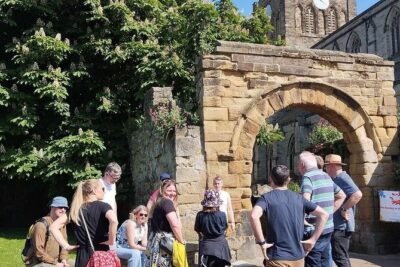
Your tour begins at 10 Bernard St (WC1N 1LT) at 10:00 am, in London’s Bloomsbury area. The ending point is by Great Russell St at the British Museum (WC1B 3DG). Since the meeting area is described as near public transportation, you can arrive without complicated planning.
The group size is capped at 25, which matters here. In a museum this big, a smaller group keeps you from losing your place every time someone stops for photos. You can also ask questions without the guide feeling buried.
Another practical plus: you get a mobile ticket. That’s one less thing to juggle in a place where you will likely be checking your route, your time, and the nearest entrance to the galleries you want.
Stop 1 at the British Museum: from Rosetta Stone to the Moai
Your whole tour focuses on the British Museum itself, and it runs about 2 hours 45 minutes. That might sound short for a museum with eight million objects, but the value is in the targeting. You cut through the clutter and go straight to major artifacts, with time spent on the “why” behind them.
Here is what you can expect to be looking at, and what the guide typically brings out in the conversation.
Ancient Egypt and the Rosetta Stone context
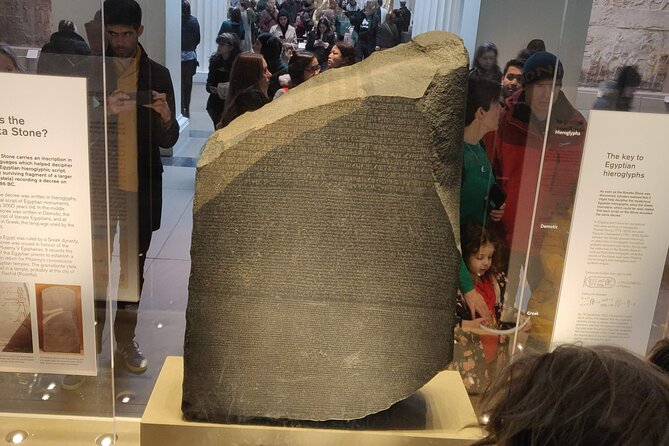
Ancient Egypt has a way of pulling you in, because so many objects are immediately recognizable in theme and style. During this tour, you spend time around the museum’s Egypt section, including the Rosetta Stone. Even if you have seen pictures before, seeing it in the museum space helps you understand what a breakthrough artifact means. It is a bridge object—something that turns confusion into reading, at least in part.
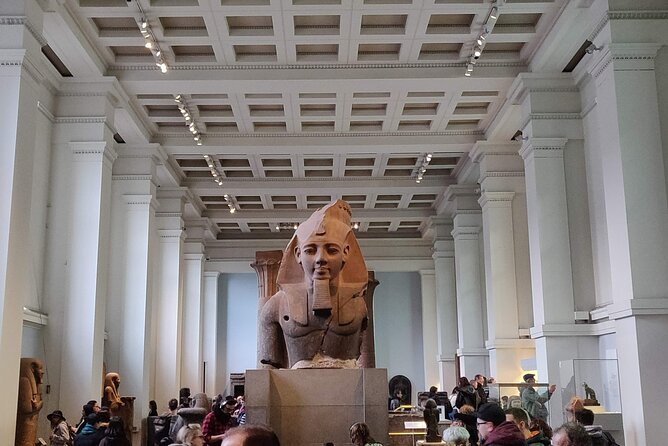
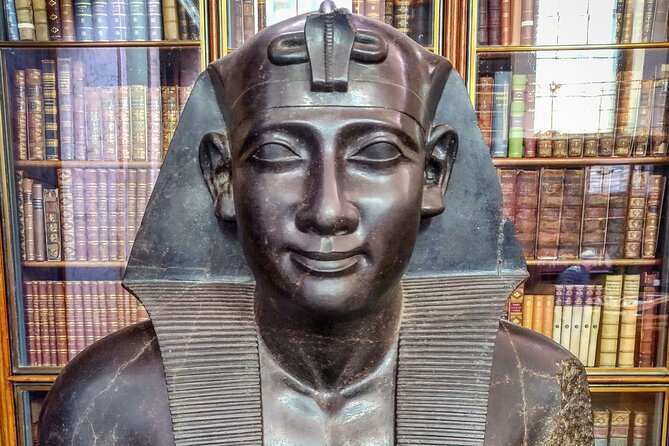
The tour also includes the colossal statue of Pharaoh Ramses II. A statue like this is not just about power. It is about how rulers wanted to be remembered, how art communicates authority, and how scale creates an emotional impact before you even get to the details.
Assyria’s power plays and palace imagery
Then you shift to the brutal world of the Assyrian Empire—especially through the palaces and their visual language. Assyrian art often feels like propaganda, and the guide helps you see it that way. You start to notice how images tell stories of conquest, control, and survival.
If you like history that feels real rather than polished, this part tends to click. You are not reading about war in the abstract. You are standing in front of the kind of visual messaging that helped empires hold onto authority.






Greece’s Parthenon Marbles: more than famous marble
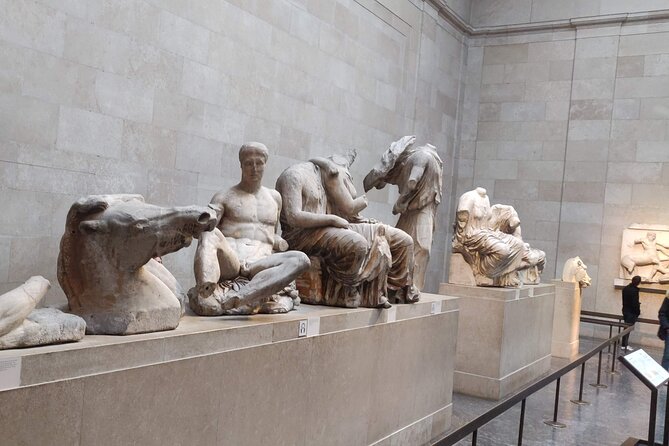
Next comes the Parthenon Marbles, tied to the greatest of all Greek temples. This is one of those museum stops where the object is so well known that you might assume you already know what to look for. A guide changes that.
You will focus on what the carvings are meant to communicate and why the design and subject matter matter. Even if you only have time for a few key views, the explanations give you a framework for interpreting them instead of just staring.
Aztec crown treasures and symbols of rule
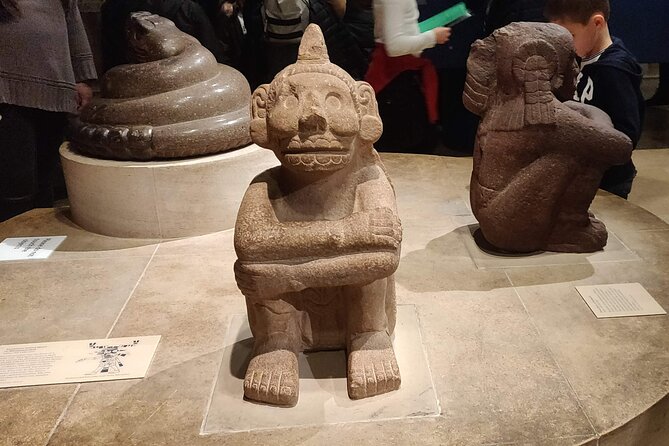
You then move to the Aztec Empire—including the crown jewels associated with power and identity. Jewelry and regalia in museum collections are easy to treat as decorative, but the guide’s archaeology lens turns them into cultural documents. You learn how materials, craftsmanship, and symbolism reinforce authority.
This is also a good reminder that empires are not just armies. They are systems of belief, production, and ceremony. That is what makes these objects valuable beyond their visual impact.
Easter Island’s Moai: mystery with a human footprint
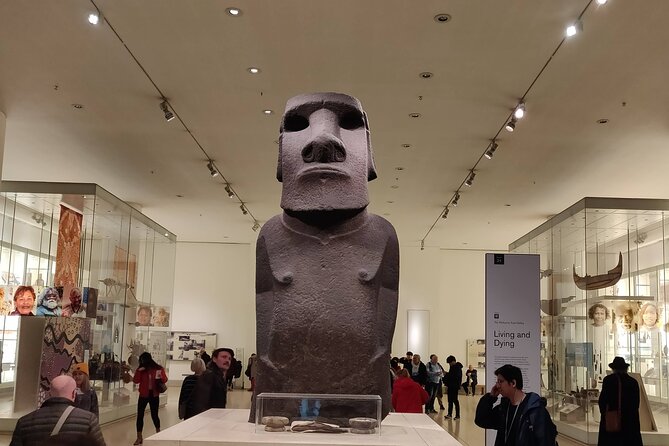
From the New World and back across the ocean, you get to the Moai statues of Easter Island. The key here is how you hold the “mystery” without drifting into fantasy. The guide focuses on what we can learn from the objects and the bigger questions archaeologists still work on.
Even if you have heard a few theories online, the tour helps you keep your feet on evidence-based explanations and avoids turning complex history into simple myths.
The Lewis Chessmen: a Viking-era surprise
Then you hit the Lewis Chessmen, described as the most astounding relic to survive from the Viking age. If you think Vikings are only about raids and ships, these pieces are a fun course correction.
Chess pieces might sound like a small detail, but they connect to everyday life: leisure, education, social games, and how far ideas traveled. It also gives you a chance to think about how items survive for centuries—and what that survival means for our understanding.
The Sutton Hoo hoard: royal mystery in plain objects
Finally, you spend time around the Sutton Hoo hoard, linked to the mysterious King Raedwald. This part is one of the emotional highlights of the tour because it sits at the intersection of power, craftsmanship, and uncertainty.
The guide helps you see why hoards matter: they can show trade links, wealth systems, and cultural identity. And they can also leave historians with unanswered questions, which is where the archaeology mindset shines.
How to handle the 2 hours 45 minutes pace without missing the point
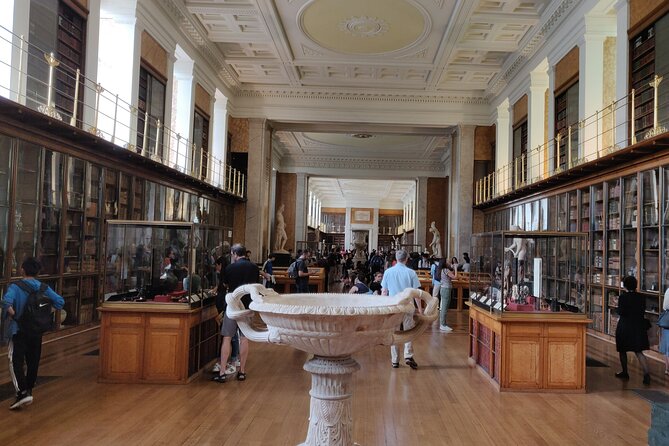
Trying to see “everything” at the British Museum is a trap. This tour does not try to do that. Instead, it gives you a route that covers major civilizations and the museum’s best-known objects, plus enough context to make your later self-guided wandering smarter.
Here’s how I recommend using the time you have on tour:
- Keep your camera ready, but listen first. The explanation helps you photograph what matters.
- Pick one or two artifacts per room to really focus on. The guide’s context gives the rest meaning.
- Wear comfortable shoes. Even with a group route, you will be on your feet and moving.
If you want the best value, plan to return after the tour. You will likely leave with a short list of what you want to see again, but now you will know where to look and what to pay attention to.
Value for money: free museum entry plus a guided path
The tour is listed with admission ticket free, which is a big part of the value. You are not double-paying to get into the museum. In practice, you are paying for the guided interpretation and the navigation help.
That matters at the British Museum, where the layout can feel like a maze. Paying for a guide is often smartest when it saves you from wasting time in the wrong rooms. Here, the route targets famous artifacts and high-impact sections, so you feel your money in the time you spend inside.
Group size also supports the value. With a maximum of 25 travelers, you are not stuck in an enormous crowd where everyone gets ignored. It is more likely you can follow the thread from Egypt to Greece to Vikings to Easter Island without losing track.
Who this tour fits best
This British Museum tour works well if you are:
- A history buff who wants the major objects plus the context that makes them click
- A first-timer who needs help navigating a museum that is too big to “figure out” alone
- Traveling alone and want a structured experience with a small group format
- Visiting London and want a high-value, central cultural stop
It may be less ideal if you:
- Need a very slow, sit-down pace
- Want to spend most of your day in one or two galleries only
- Have trouble moving between rooms for extended stretches
Should you book this archaeologist-led British Museum tour?
I think it is a strong pick if you want London culture with real substance and you like your museum time to come with answers. The combination of a qualified archaeologist and a focused route through the museum’s most important objects gives you a faster path to understanding than a self-guided visit alone.
If you are the type who loves famous artifacts but also wants the “how did we learn this” part, this tour hits the sweet spot. Just go in ready for a brisk pace, and plan a little free time afterward if you want to linger on your favorites.
FAQ
How long is the British Museum tour?
It runs about 2 hours 45 minutes.
Is the tour offered in English?
Yes, it is offered in English.
Where do I meet the guide?
Meet at 10 Bernard St, London WC1N 1LT, UK.
Where does the tour end?
It ends at the British Museum on Great Russell St, London WC1B 3DG, UK.
Is the museum admission included?
The experience is listed with admission ticket free.
How big is the group?
The tour has a maximum of 25 travelers.
Are service animals allowed?
Yes, service animals are welcome.
What is the cancellation policy?
You can cancel for a full refund up to 24 hours before the experience’s start time. If you cancel within 24 hours of the start time, the amount paid is not refunded.