REVIEW · LONDON
Burnings, Butchery & Black Death: A Walking Tour of London’s Bloody Past
Book on Viator →Operated by Historic London Tours · Bookable on Viator
London’s dark side walks fast. In two hours, you cover a 1,000-year sweep of places tied to plague, meat markets, fire, and crime, all told with quick, human storytelling (often with the guide Tom and his clear, funny style). What I love most is how the route keeps you moving through real locations and not just big-name history, and how many stops are free to enter, with only one included admission. One thing to consider: it depends on good weather, and the pacing is walk-and-listen, so comfy shoes matter.
Start at Underground Ltd on Aldersgate Street near Barbican, then drift toward Ely Place around the corner from Farringdon. The walk is capped at 15 people, so you’re not shouting over each other, and the guide can answer questions without rushing you out the door. If you like London the way it really feels—crowded streets with hidden layers—this one has that payoff.
In This Review
- Key takeaways before you go
- A 2-hour “bloody past” tour that actually fits a day
- Is $27.73 worth it? Where the value really comes from
- Stop 1: The Charterhouse and the plague pit you can’t ignore
- Stop 2: Smithfield Market, butchery roots, and why food shaped the city
- Stop 3 and Stop 4: St John’s Gate and Cloth Fair’s quieter, sharper edge
- Stop 5: William Wallace Memorial—Braveheart without the Hollywood haze
- Stop 6: St Bartholomew the Great, London’s oldest surviving parish church
- Stop 7: The Golden Boy of Pye Corner and the Great Fire’s aftershock
- Stop 8: Holborn Viaduct and the River Fleet’s open-air sewer
- Stop 9 and Stop 10: Ye Olde Mitre and St Bartholomew’s Hospital Museum finish strong
- How the guide style affects your experience
- Who should book this tour?
- When to go, and what to bring
- Should you book it?
- FAQ
- FAQ
- How long is the tour?
- What is the price per person?
- How many people are on the tour?
- Where does the tour start?
- Where does the tour end?
- Is the tour offered in English?
- Do I get a mobile ticket?
- Are any entrance tickets included?
- Is the tour weather dependent?
- Are service animals allowed?
- What is the cancellation policy?
Key takeaways before you go
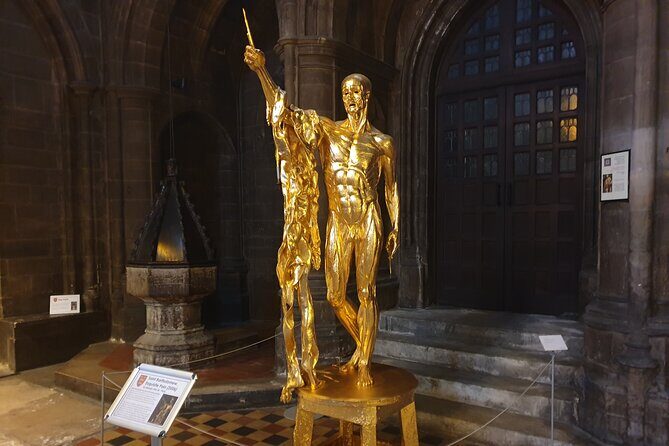
- A 2-hour route across Middle Ages to Victorian London: you’ll jump centuries without getting lost in details.
- Max 15 people on the walk: smaller groups make the stories easier to hear and ask about.
- Mostly free stops, plus one included admission: value comes from site access and focused time in each place.
- Not the usual London horror loop: expect plague, sanitation, markets, and fire, not the same old pitch.
- A strong finish at St Bartholomew’s Hospital Museum: you end with an institution that shaped real daily life.
A 2-hour “bloody past” tour that actually fits a day
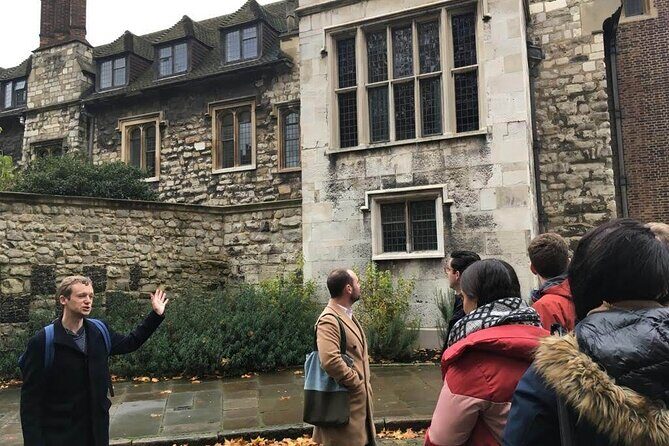
This tour is built for people who want London history but don’t want a half-day or a museum marathon. It’s short enough that you can still do other plans the same day, yet packed enough that you leave with a clearer mental map of what this part of the City of London used to be.
The value isn’t just the sites—it’s the pacing. You get quick context at each stop, then move on before the story turns into one long lecture. That matters because London’s streets can swallow your attention, and this format keeps you oriented.
You can also read our reviews of more walking tours in London



Is $27.73 worth it? Where the value really comes from
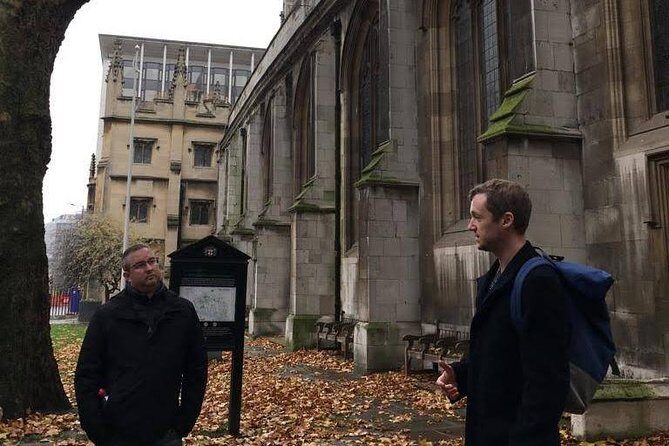
At about $27.73 per person for a roughly 2-hour walk, the ticket feels fair only if you’ll use the guide time well. In this case, you do. Most of the stops listed are free to enter, so you’re paying for the route and the commentary, not a pile of entrance fees.
You also get one paid admission included: Church of St. Bartholomew the Great. That single included ticket helps justify the price, and it anchors the walk with a church that’s described as London’s oldest surviving parish church. Add the small group size and you get something practical: a tour that doesn’t feel like a crowded bus ride on foot.
One more value point: booking is common well ahead (on average, about 47 days). If your dates are fixed, locking in early reduces your chances of missing the slot you want.
Stop 1: The Charterhouse and the plague pit you can’t ignore
The walk begins at The Charterhouse, a 14th-century monastery tied to one of the darkest chapters in European life: the plague. You’re there for about 10 minutes, so the goal isn’t a long site study—it’s to get your bearings and understand why this place had such a grim job.
What I like about starting here is the emotional logic. You don’t jump straight into random spooky stories. You start with a place whose original purpose makes the later “dark London” details feel connected: disease, burial practices, public fear, and how the city managed crisis.
Practical note: this is not all gore-and-ghosts. Expect tone and context. If you’re sensitive to sickness-related history, mentally prepare for that theme.
Stop 2: Smithfield Market, butchery roots, and why food shaped the city
Smithfield Market is next, and it’s more than a name. The area is presented as roughly a thousand years old as a meat market, which changes how you read the surrounding streets. London’s growth wasn’t just about kings and churches—it was powered by food supply chains and the messy realities of trade.
In a short stop, you’re likely to connect three dots:
- how meat markets functioned as city infrastructure
- how crowds and commerce could create tension
- how later layers of London history reused or reinterpreted old ground
The benefit for you: you’ll stop seeing Smithfield as just another neighborhood stop. You’ll see it as a system that influenced daily life, law, and public health.
Stop 3 and Stop 4: St John’s Gate and Cloth Fair’s quieter, sharper edge
Then the tour shifts from markets to governance-by-religion and military orders.
At St John’s Gate, you’re tied to the medieval Knights Hospitallers. That’s useful because it adds a different type of power to the story. It’s not only commerce and punishment—it’s defense, care, and institutional presence in the city.
A little later, you pass through Cloth Fair, described as a quiet alley with a noisy history. That contrast is the point. London can look calm on a Sunday afternoon, but old lanes often held constant traffic, disputes, and shifting identities as centuries turned.
If you want to get more out of these two stops, do this: look for how the street shape changes your sense of movement. Narrow lanes and gate areas make a difference in how people gathered and how authorities controlled space.





Stop 5: William Wallace Memorial—Braveheart without the Hollywood haze
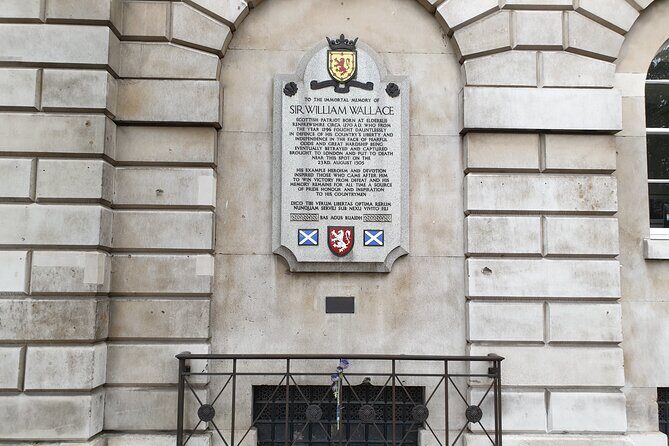
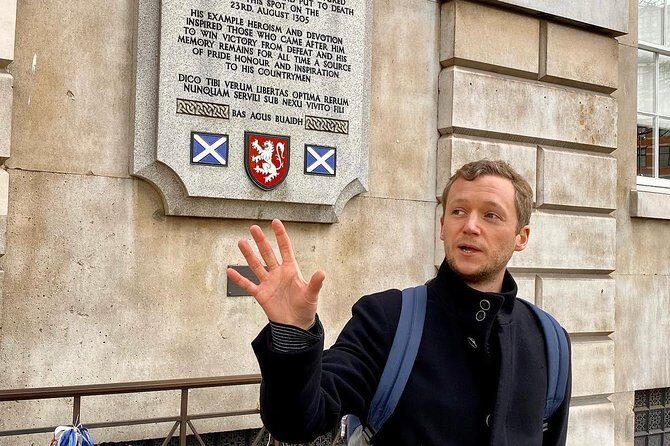
Next is the William Wallace Memorial. Even if you only know the name from pop culture, this stop helps ground the story in geography and memory—how cities honor figures and how legends get written into public space.
Because you’re there for a short time, don’t expect a full lecture. Expect a factual anchor: who Wallace was to later generations and why a memorial appears here. It’s a reminder that London’s history isn’t only local—it’s tied to broader British identity.
Stop 6: St Bartholomew the Great, London’s oldest surviving parish church
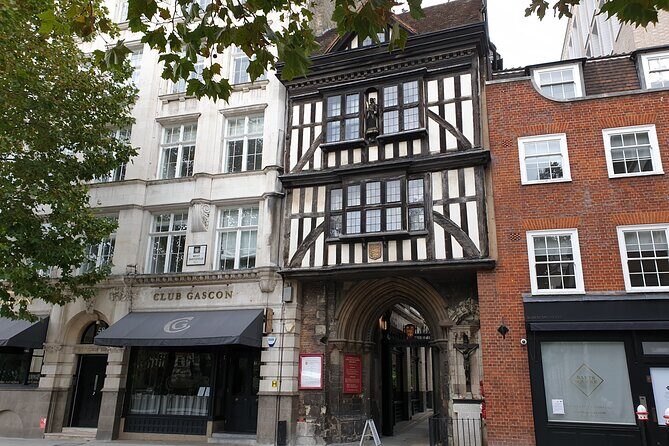
This is the one stop where admission is included, which tells you the tour wants you to take it seriously. Church of St. Bartholomew the Great is presented as London’s oldest surviving parish church.
What this adds to the walk is permanence. Markets change. Sewers get replaced. Even gates can evolve or disappear. Churches, when they survive, act like memory holders. You can feel the time jump more strongly when the building itself is old enough to be a witness.
The downside of a short church stop? You may not have the time to read everything closely. If you’re the type who likes to linger, plan to come back later on your own for a slower pass.
Stop 7: The Golden Boy of Pye Corner and the Great Fire’s aftershock
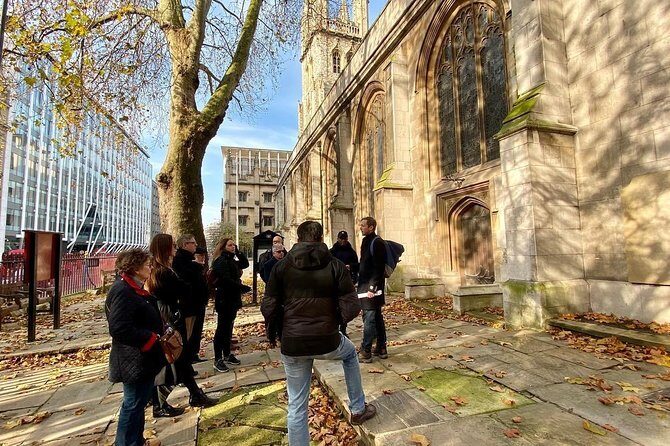
Then you hit Pye Corner, where the Golden Boy marks a dramatic moment from the Great Fire of 1666. The story here is that the fire died out at that point, and there’s also mention of 18th-century ghost hysteria tied to the area.
This combination is exactly why the stop works. You’re getting both:
- a hard, historic event tied to the city’s physical survival
- a softer layer—public fear, rumor, and ghost stories
If you’re into how people process disasters, you’ll like this stop. Fire is one of the few events that can reshape an entire city fast. Then, later, the myths grow to explain what people couldn’t control.
Stop 8: Holborn Viaduct and the River Fleet’s open-air sewer
Holborn Viaduct is next, and the tour frames it as the site of the River Fleet, which Victorian London used as a massive open-air sewer—described as the city’s largest.
This is one of the most “modern London” stops, because it connects directly to sanitation, engineering, and the way big cities hide what they can’t tolerate. Today, you move through an area that looks like solid stone and traffic flow. The story behind it shows how different Victorian London’s priorities and tools were.
Here’s how to enjoy it: listen for the contrast between what you see now and what used to run through these spaces. That’s the secret to getting meaning from a walking tour in a city this old.
Stop 9 and Stop 10: Ye Olde Mitre and St Bartholomew’s Hospital Museum finish strong
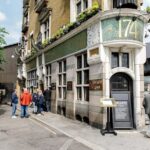
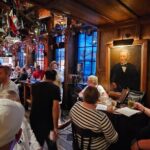
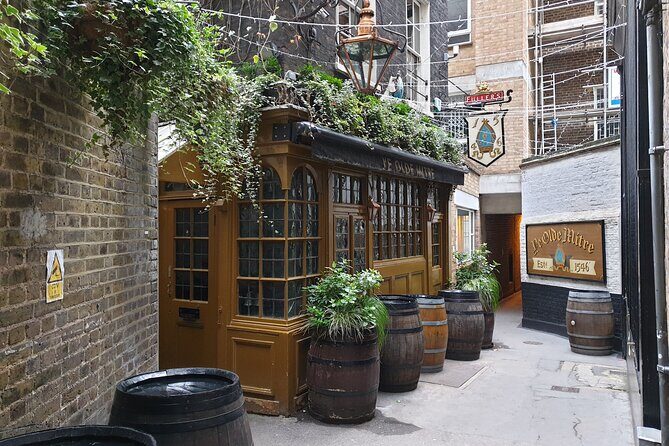
The penultimate stop is Ye Olde Mitre, described as a hidden pub down an alleyway. The point isn’t only atmosphere. It’s that you’re ending the darker portion of the walk with a place to refuel and exhale.
In particular, the pub is referenced in a few places for practical comfort food—people highlight cheese toasties and pork pies. If you’re hungry, this is the moment to grab a bite without rushing to catch another appointment.
Then you finish at Saint Bartholomew’s Hospital Museum, presented as the oldest surviving hospital in the country. Ending here gives the whole walk a final turn: from plague and sanitation into medicine and long-term care.
Why that’s valuable for you: London’s “bloody past” isn’t just about death. It’s also about systems people built afterward—training, institutions, and gradual change.
How the guide style affects your experience
A lot of walking tours can feel like info dumps. This one leans the other way. The guide Tom is specifically called out for clear speaking, humor, and the ability to answer questions on the spot.
I also like that the tour seems to pay attention to group dynamics. With a cap of about 15, you get a real chance to hear the stories and keep your questions from turning into a shouting match.
If you’re the kind of person who hates the same old London pitch, you’ll be glad this walk avoids getting stuck in one famous crime trope and instead keeps working through plague, markets, and infrastructure.
Who should book this tour?
This tour is a good match if you:
- want London history that’s tied to place, not just names
- like darker themes, but still want facts and context
- prefer a short, structured walk over a long museum day
- like small groups where you can actually listen
It may feel heavy if you dislike disease-related topics. And if you hate walking without breaks, plan your day so you’re not hopping into this after a long travel day.
When to go, and what to bring
You should plan around the weather. The experience requires good weather, and poor conditions mean you’ll be offered a different date or a full refund.
Wear shoes that can handle cobblestones and curb cuts. The stops are short, so you’ll be standing and walking more than you’d expect for a “2-hour” label. A light jacket helps too—London can change mood quickly between streets.
Should you book it?
I’d book this if you want a focused way to understand how one slice of London went from monastery life and plague management to markets, fire survival, Victorian sanitation, and early medical institutions. The price is reasonable because many stops are free, and the included church admission is a real anchor.
Skip it only if you can’t handle dark themes or you hate weather-dependent outdoor walks. Otherwise, this is the kind of tour that helps London stop being a blur and start feeling like a story with shape—one street at a time.
FAQ
FAQ
How long is the tour?
It runs for about 2 hours.
What is the price per person?
The price is $27.73 per person.
How many people are on the tour?
The tour has a maximum of 15 travelers.
Where does the tour start?
The meeting point is Underground Ltd, Aldersgate St, Barbican, London EC1A 4JA, UK.
Where does the tour end?
It ends at Ely Place Ely Pl, London EC1N, around the corner from Farringdon Station.
Is the tour offered in English?
Yes, it’s offered in English.
Do I get a mobile ticket?
Yes, the tour includes a mobile ticket.
Are any entrance tickets included?
Admission is listed as free for most stops, and admission for the Church of St. Bartholomew the Great is included.
Is the tour weather dependent?
Yes. The experience requires good weather, and if it’s canceled due to poor weather, you’ll be offered a different date or a full refund.
Are service animals allowed?
Yes, service animals are allowed.
What is the cancellation policy?
You can cancel for a full refund if you cancel at least 24 hours in advance. If you cancel less than 24 hours before the start time, the amount paid will not be refunded.