Cirencester tells stories at walking speed. This self-guided audio tour turns a simple loop through town into a sequence of surprises, from Roman traces to Tudor legend. I like that it stays light on logistics: you press play, follow the GPS, and decide when to stop for photos or pauses.
Two things I really like: you get lifetime access to the English audio, and the route is built for a low-cost day out at about 90 minutes to 2 hours. I also like that the narration isn’t just random facts; it includes a voice from Owen Bowles, a Blue Badge Tourist Guide for the Heart of England region, plus local details like Anne Boleyn lore and street-level history. One thing to consider: you do need your own smartphone and headphones, and the tour works through the VoiceMap app using your unique code.
In This Review
- Key highlights at a glance
- Price and time: a short loop with big control
- How the VoiceMap GPS tour works (and how to avoid headaches)
- Corn Hall to St John Baptist: markets, stone, and the stories behind it
- Corinium Museum pass-by: Roman mosaics without the ticket pressure
- Bathurst Estate, school and hospital: the town’s quieter layers
- Abbey Grounds Park, the Augustinian gatehouse, and that closing loop feeling
- Roman town wall remains: finishing with tangible leftovers
- Practical tips: what to pack and who this suits best
- Should you book this Cirencester audio tour?
- FAQ
- How much does the Cirencester audio tour cost?
- How long is the walking route?
- Do I need tickets or entrance fees for the stops?
- What do I need to redeem the tour?
- Can I use VoiceMap offline?
- Is this a guided group tour?
- Where does the tour start and end?
Key highlights at a glance
- Anne Boleyn silver gilt chalice story, plus a stroll that touches on Cecily Hill
- Owen Bowles narration, delivered like a real walking conversation
- Roman mosaics at Corinium Museum and the lingering Roman town wall remains
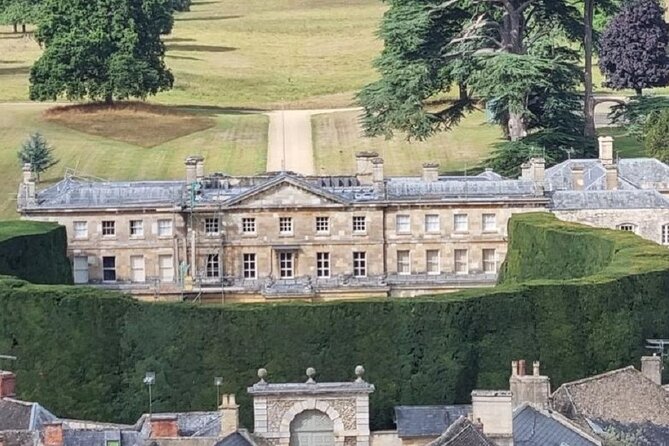
- Great Yew Hedge at Bathurst Estate Cirencester Park, said to be the tallest in the world
- A circular route that ends near St John Baptist Cirencester, so you’re not stuck wandering back
Price and time: a short loop with big control
At $9.99 per person, this is the kind of sightseeing deal you can fold into a day without doing homework first. You’re not paying for a guide’s time or for entrance tickets. Instead, you’re paying for a route, narration, and the convenience of offline maps and audio through VoiceMap.
Timing is also friendly. Expect about 1 hour 30 minutes to 2 hours. If you keep moving, it feels like a confident morning or afternoon circuit. If you want to linger, you can. The tour is designed around “pass by” stops, which makes it easier to stretch the walk: stop for a closer look at the honey-coloured stone houses, pause by the lake in Abbey Gardens Park, or take a slow look at the Norman arch gatehouse.
The trade-off is simple: because it’s built around walking by, you shouldn’t expect a museum-style visit built into the ticket. Tickets or entrance fees aren’t included, so when you reach places like Corinium Museum, you’ll mainly be getting the context from outside, then you decide if you want to go in separately.
You can also read our reviews of more tours and experiences in Oxford.


How the VoiceMap GPS tour works (and how to avoid headaches)
Once you book, you receive a mobile ticket plus instructions and a unique code shown under Before You Go. From there, you install the VoiceMap app on your Android or iOS phone. VoiceMap gives you directions to the starting point, and when you’re in the right place you tap start and listen.
A key practical plus: VoiceMap offers automatic GPS playback with turn-by-turn directions. That’s what makes this feel like a guided walk without being stuck with a group schedule. It also works offline, including audio, maps, and geodata, which is great if your phone reception is spotty.
Here’s the caution I’d take from a real redemption problem: one traveler reported the app asked them to repurchase because they couldn’t enter the code properly during download. You can’t control every app screen, but you can reduce risk. Before you leave, I strongly suggest you:
- Open the VoiceMap app and confirm you’re entering the code exactly where the app expects it
- Test playback with headphones at home so there’s no scrambling on the street
If something goes wrong, try to resolve it immediately near your starting area rather than halfway down the route.
Corn Hall to St John Baptist: markets, stone, and the stories behind it

Your walk starts at 26 Market Place, right by Corn Hall Indoor Market (a market building about 150 years old). The audio opens by setting the tone: you’ll see the main sights, get the myths that cling to the place, and also hear some lesser-known history tied to the market world. Even if you don’t plan to shop, Corn Hall is a good way to get your bearings fast. It anchors the tour in daily life, not just monuments.
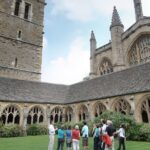
From there, the route passes St John Baptist Cirencester, often described as the town’s wool church. The narration points out the character of the building and connects it to the look of the area, including honey-coloured stone merchants’ houses you’ll notice nearby. This is a smart part of the loop because it teaches you how wealth and trade shaped the look of the center. You’re walking through the kind of town where the buildings don’t just sit there; they carry the results of old livelihoods.
This is also where the audio starts weaving in a broader thread beyond one building. As you continue through the town centre, you’ll hear the tour’s Anne Boleyn angle, including her silver gilt chalice, said to be the last thing she touched before her execution. You’ll also hear about Cecily Hill, described as one of the most exclusive streets in Cirencester. Whether you love Tudor legend or you just want the best stories for photo stops, these segments help you see why locals remember certain corners.
Corinium Museum pass-by: Roman mosaics without the ticket pressure
Next, the route passes by Corinium Museum. Even if you don’t step inside, the audio gives you something useful: Roman mosaics made by craftsmen in the town. That detail matters. It’s easy to treat Roman remains as distant leftovers. This narration connects them back to the idea that local hands built the art, not just imported stonework.
If you do choose to enter Corinium Museum later on your own time, you’ll already have the theme in your head. And if you skip it, you still gain a sense of place. The tour keeps repeating a pattern that works well for self-guided walks: it points you toward what to notice, then you decide how deep to go.
One more practical angle: “pass by” stops make this tour easier when you’re short on time. You avoid waiting in lines, paying entrance fees you didn’t budget for, and spending your only museum window on something you haven’t even seen from the outside. At the same time, you’re not missing context. The narration is doing the interpretive job for you.
Bathurst Estate, school and hospital: the town’s quieter layers
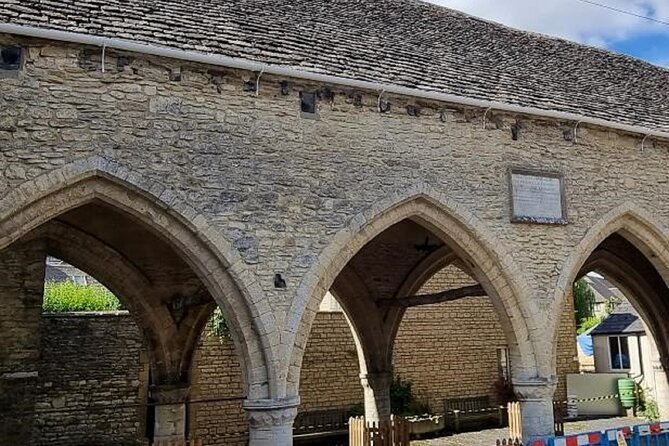
As the route moves out from the centre, it passes Bathurst Estate Cirencester Park. The star mention here is the Great Yew Hedge, described in the tour as the tallest in the world. Even if you don’t measure it (please don’t try), that claim gives you a clear reason to slow down. Yew hedges aren’t just garden stuff; they’re a kind of living monument. They also make the walk feel less like “look at buildings” and more like “watch the town unfold.”
The tour then passes Powell’s Church of England Primary School. You won’t get an attraction-style walkthrough, but the audio gives you a sense of why a school building belongs in a historical story. This kind of stop is good in a self-guided format because it reminds you that Cirencester didn’t freeze in one era. The town has kept living, and the narration helps you connect present-day community spaces to the long timeline around them.
After that, you pass St John Baptist Hospital & Chantry. The audio explains what this hospital and chantry represent while you walk by. This is one of those stops that can deepen your visit with almost no added effort. When the tour ties religious tradition to everyday care, you start noticing the layout and purpose of the buildings differently, instead of treating them as background.
If you want one takeaway from this section, it’s this: the tour doesn’t just chase famous names. It points you toward institutions that shaped day-to-day life, which is where a lot of the real texture of English towns lives.






Abbey Grounds Park, the Augustinian gatehouse, and that closing loop feeling
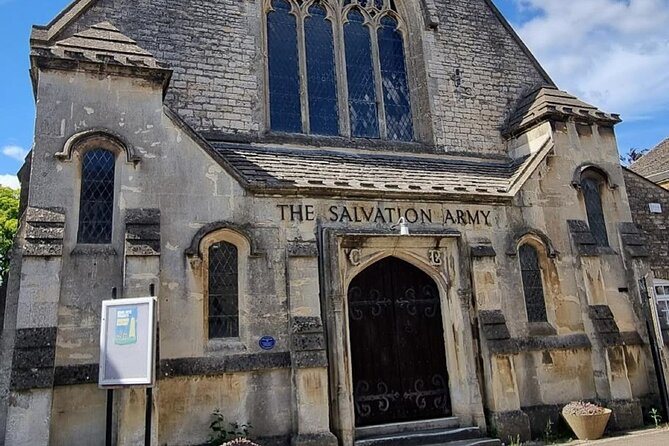
Once you reach Abbey Grounds Park, the tour settles into a gentler mode. You’ll take a stroll beside the lake before returning toward the town centre. This is more than a breather. It helps you transition between time periods. Roman traces and medieval buildings can feel intense back-to-back. A park with open views gives your brain a reset, and the audio keeps you moving without demanding your attention every second.
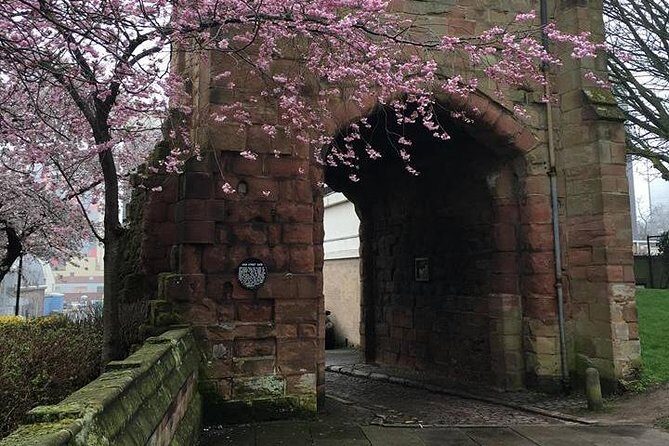
From the park area, the route passes the 12th-century Norman arch gatehouse. This is described as the only surviving building of the Augustinian Abbey of St Mary. That framing is important. When you see a single surviving structure like this, the narration helps you understand what it stands in for. You’re not just looking at one arch; you’re seeing the remainder of something much larger.
This stop is also great for photos. Even if your camera skills are average (mine are), arches and gatehouse lines give you natural angles. Plus, because the tour is self-paced, you can wait a minute for better light or for people to clear out of your shot.
Roman town wall remains: finishing with tangible leftovers

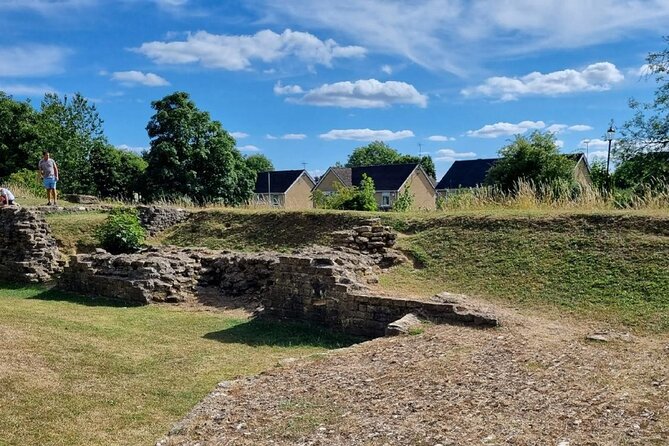
The tour eventually passes the Roman town wall remains. This is the closest you’ll get to a “last big landmark” moment, and it lands well right after the medieval gatehouse. Together, these two features give you a sense that Cirencester has layers, not just chapters.
The Roman wall section is useful even if you don’t know anything about Roman fortifications. The tour’s approach is practical: it helps you identify what you’re looking at and reminds you why it matters to the town’s identity. When you’re walking with headphones, those short explanations are exactly what keep you from staring at stones and wondering if you missed the point.
And then you’re done. The circular route ends a stone’s throw from the start, outside St John Baptist Cirencester, near the end point at 6 W Market Place. That matters because it removes one common problem with self-guided city walks: you don’t feel stranded at the far end of town.
Practical tips: what to pack and who this suits best
Bring headphones and a charged phone. The tour relies on your device for both the audio and the map guidance, and even with offline access, your battery life still matters.
Footwear counts too. It’s not described as an extreme route, but you are walking a full loop through town. I’d plan on comfortable shoes and a little time buffer for photo moments at the Corn Hall area, the yew hedge, and the gatehouse.
This tour works best if you like:
- A story-led walk rather than a stop-and-go guided lecture
- Being able to start and finish whenever you want
- Low-cost sightseeing that doesn’t lock you into museum tickets
It might be less ideal if you’re hoping for lots of indoor time at specific attractions. Since tickets and entrance fees aren’t included, and several stops are pass by, you’ll get context from outside and you’ll need to add any museum visits separately.
One more value perk: the tour offers unlimited use before your booking date and after it, plus a virtual tour option at home. That’s handy if you want to preview the route while planning, or if weather changes your day and you want to shift your timing.
Should you book this Cirencester audio tour?
I’d book it if you want a straightforward way to understand Cirencester without joining a group, paying extra entrances, or rushing. For $9.99, lifetime access, offline support, and a narration voice tied to a Blue Badge guide, the value is strong. You get a loop that moves across market life, church architecture, Roman leftovers, and even a Tudor legend thread with Anne Boleyn’s silver gilt chalice.
Don’t book it if you need a fully structured “visit” with lots of indoor time, or if you’re worried you might struggle with code redemption. If you’re tech-comfortable and you test the code and app once before you go, you’ll likely enjoy the freedom this tour gives you.
If you’re spending even half a day in Cirencester, this is a practical way to see more than you would by wandering alone.
FAQ
How much does the Cirencester audio tour cost?
It costs $9.99 per person.
How long is the walking route?
The tour takes about 1 hour 30 minutes to 2 hours.
Do I need tickets or entrance fees for the stops?
No. Tickets or entrance fees are not included. The tour is built around walking by the sights.
What do I need to redeem the tour?
You’ll get a unique code and instructions. Then install the VoiceMap app and enter your code to access the tour.
Can I use VoiceMap offline?
Yes. The included VoiceMap access includes offline access to audio, maps, and geodata.
Is this a guided group tour?
No. It’s a self-guided experience using your phone and the VoiceMap app. It’s listed as private activity for your group, but you control the walking and timing.
Where does the tour start and end?
It starts at 26 Market Pl, Cirencester GL7 2NY and ends near St. John Baptist Cirencester, 6 W Market Pl, Cirencester GL7 2NH.