REVIEW · LONDON
Winston Churchill & London in World War II Walking Tour
Book on Viator →Operated by Urban Saunters · Bookable on Viator
A Churchill story starts on the streets of Westminster. This is a guided walk through London’s political heart, stitched together with World War II details like bombs being found near Westminster Bridge and the mood shift around parliament as the sky filled with Luftwaffe aircraft. What I like most is the small-group feel and the way the tour leads you straight into the Churchill War Rooms with context you’ll actually remember. One thing to keep in mind: entry tickets (especially for the War Rooms) are not included, so you’ll want to plan ahead if you want to go inside.
You’ll also like that the stops are mostly outside, so it’s a calmer pace than the typical “see everything” sightseeing scramble. Guides are praised for story skill and humor, and names like Nathan, Babs, Richard, Francis, Jeremy, Martin, and Paul come up for exactly that reason. The only consistent caution from what people mention is that the War Rooms experience uses an audio format that may not work for everyone, and there can be a bit of wayfinding frustration when you leave.
Key takeaways before you go
- Max 15 people keeps the walk personal, not crowded
- WWII connections at Westminster Bridge, Big Ben area, and Whitehall make the landmarks feel alive
- Churchill War Rooms context first so the underground site lands with more meaning
- Mostly outside stops means an easier walk pace for most visitors
- Tickets aren’t included for Churchill War Rooms (and Westminster Abbey) so budget time and money for entry
In This Review
- WWII Westminster, in a Walkable Story Sequence
- Price and Timing: Is It Good Value?
- The Small-Group Advantage (And Why It Matters in London)
- Stop 1: Westminster Bridge and the WWII “Still Happens” Detail
- Stop 2: Outside the Houses of Parliament and Big Ben’s Silence
- Stop 3: Parliament Square’s Symbols of Democracy Under Pressure
- Stop 4: Westminster Abbey’s Blitz Survival Story (From the Outside)
- Stop 5: Whitehall, the Cenotaph, and Women in WWII Monuments
- Stop 6: Horse Guards Parade and the Photo Moment by Buckingham Palace’s Area
- Stop 7: Churchill War Rooms and the Best Use of Your Ticket Time
- What Guides Really Do Well Here (Based on What People Keep Mentioning)
- Where This Tour Fits Best in Your London Plan
- Should You Book This WWII Churchill Walking Tour?
- FAQ
- How long is the walking tour?
- What’s included in the tour price?
- Is the Churchill War Rooms entry included?
- Are Westminster Abbey tickets included?
- Where do I meet and where does it end?
- Is the tour in English and is it walk-heavy?
WWII Westminster, in a Walkable Story Sequence
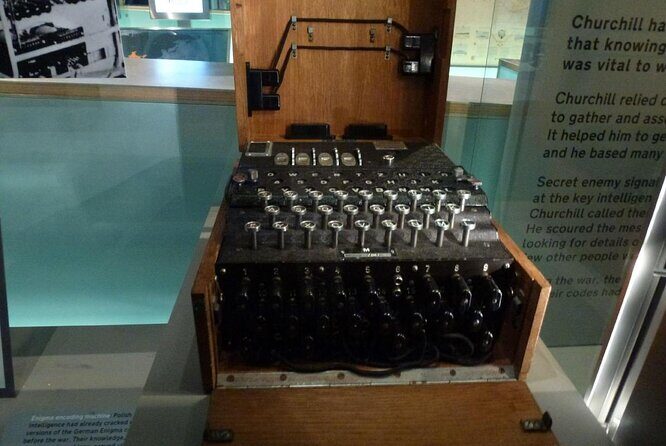
This tour focuses on a single part of London: Westminster. That’s a smart choice, because it’s where politics, national symbols, and government buildings sit so close together that you can connect ideas without wasting time on transit.
The overall structure is simple. You start above ground at classic landmarks, learn what mattered during the war, then finish at the Churchill War Rooms, the underground command center that helped Britain steer through invasion fears. If you’re a history fan, you’ll love the cause-and-effect feel. If you’re more casual, you’ll still get a clear narrative arc without needing to read a book first.
Price and Timing: Is It Good Value?
At $38.89 per person, this tour sits in the “worth it if you want guidance” category. You’re paying for a local expert, a tight route, and the way the tour turns landmarks into World War II stories. You’re not paying for museum entrances inside every stop—some are outside viewing only—so the price stays manageable.
Time-wise, you’re looking at about 1.5 to 3 hours. Most of that time is on a not-too-stressful walk with short outside segments. And because it ends right outside the Churchill War Rooms, you’re not stuck rushing across the city right after the tour.
You can also read our reviews of more walking tours in London

The Small-Group Advantage (And Why It Matters in London)
London tours can feel like a human conga line. This one caps the group at 15, which changes the vibe immediately. You get room to ask questions, and the guide can slow down when a point needs explanation.
People also mention that guides bring humor and personal storytelling, which helps a lot on a topic like WWII. It’s heavy subject matter, but you still want it to land as something human—not a lecture.
Stop 1: Westminster Bridge and the WWII “Still Happens” Detail
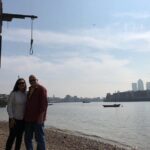
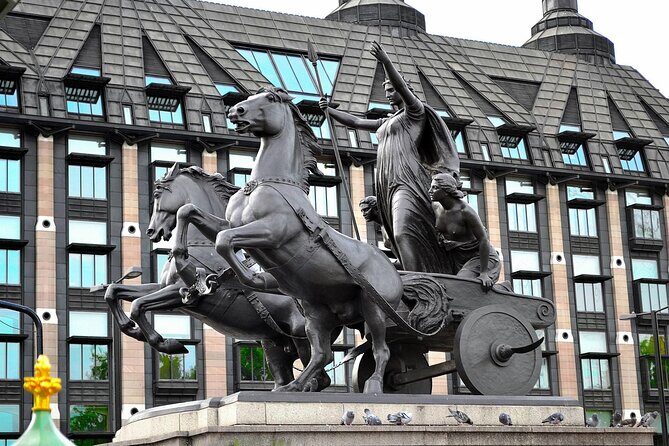
You begin at Westminster Bridge on the Victoria Embankment side near the Boadicea and Her Daughters statue. The striking detail here is that the bridge was painted green for parliament, and you’ll hear about how World War II bombs are still discovered around the area.
Even though you’re not entering anything, this stop does an important job. It sets the tone: this isn’t just old history behind glass. It’s also a place where the past has a physical afterlife. That makes everything you see next feel less like a postcard and more like a lived-in setting.
Practical note: it’s a short outside visit (about 5 minutes), so don’t expect lots of standing still. You’ll be moving along quickly.
Stop 2: Outside the Houses of Parliament and Big Ben’s Silence
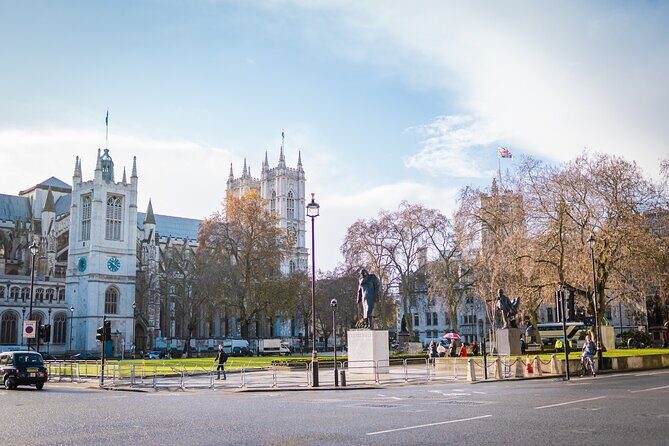
Next comes the Houses of Parliament area, where you’ll hear how parliament reacted as the threat from the Third Reich grew. The tour includes a vivid contrast: the bell of Big Ben quieting while the Luftwaffe filled London’s skies.
Why this stop works for you: it links the landmark to decision-making. When you picture WWII, you might think of battlefields and aircraft. Here, you get a reminder that governments were also reacting in real time—through fear, uncertainty, and planning.
The visit is outside, roughly 10 minutes. That’s ideal if you’re trying to see Westminster quickly but still want the war context. It’s not a “wait in line” stop.
Stop 3: Parliament Square’s Symbols of Democracy Under Pressure
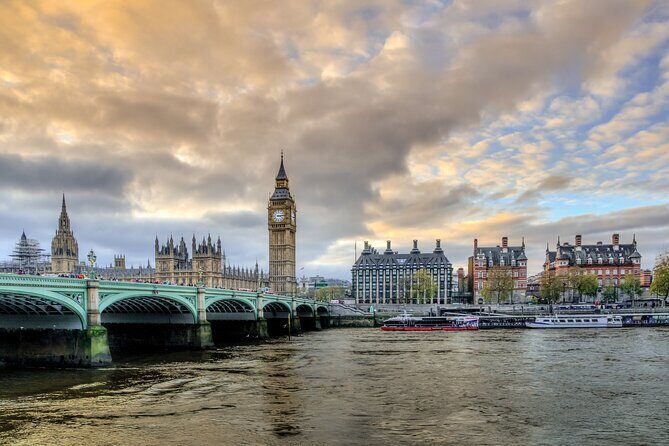
At Parliament Square, you’ll find statues tied to global democracy: Mahatma Gandhi, Millicent Fawcett, and Honest Abe. The key connection is that democracy mattered even more during the dark days of WWII.
This stop also gives your brain a break. Earlier stops build the atmosphere (air raids, government tension). Now you shift to symbols—faces and ideas you can actually picture while standing in the open air.
It’s another outside-only segment (about 10 minutes). No admission needed, and it’s free in the sense that you’re not buying a ticket to view a public square.

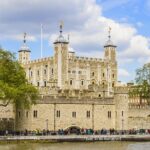



Stop 4: Westminster Abbey’s Blitz Survival Story (From the Outside)
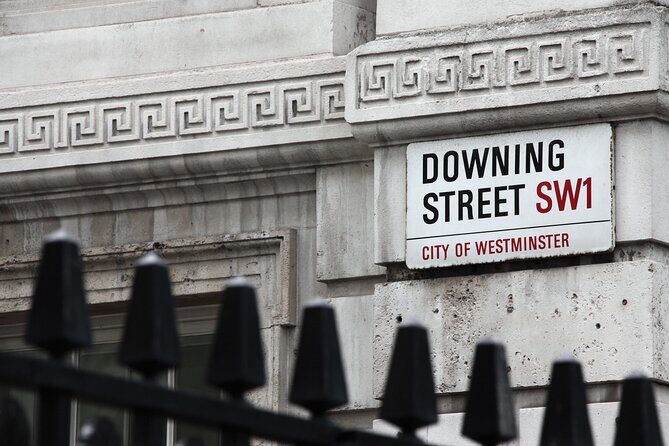
Westminster Abbey is next, but you’ll be viewing it from outside (about 10 minutes). You’ll hear about its role as a flagship of the Church of England and a dream of the last Anglo-Saxon king, plus how the abbey survived the Blitz with help from local heroes.
Here’s the value for readers: it balances the political story. Parliament and government feel central, but the war also required coordination and courage from everyday communities. An abbey surviving the Blitz is a powerful example of that.
Also, Westminster Abbey entry isn’t included. So if you were hoping to walk inside, you’ll need to do that separately.
Stop 5: Whitehall, the Cenotaph, and Women in WWII Monuments
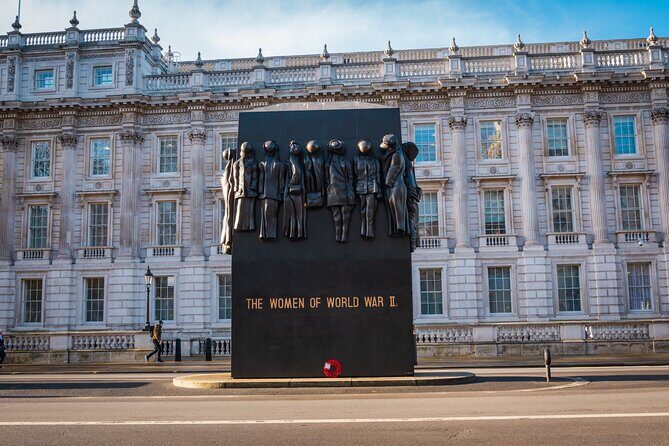
The tour then reaches Whitehall, home to the Ministry of Defence. This is where the “war effort” theme becomes physical. You’ll visit the Cenotaph and the Women in WW2 monuments to pay respects to those who laid down their lives for freedom.
This is one of those stops where you’ll feel the weight even if you’re not a “serious history” person. The architecture is monumental, and the guide’s framing turns it from a photo-op into something more reflective.
You’ll spend around 20 minutes in this stretch. That extra time makes sense here; it gives you space to absorb, not just walk past.
Stop 6: Horse Guards Parade and the Photo Moment by Buckingham Palace’s Area
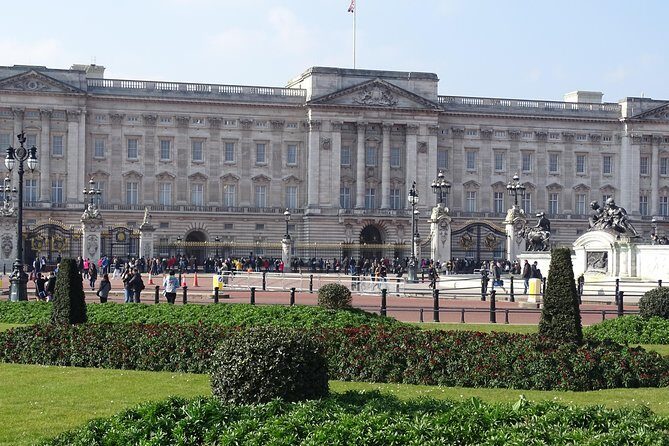
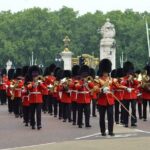
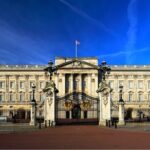
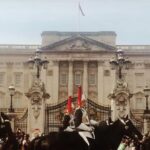
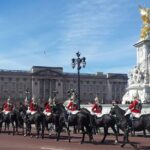
At Horse Guards Parade at Whitehall, you get a classic London view: mounted cavalry at the parade ground, plus a prime place to take a photo. The stop also lines you up visually with the official entrance area connected to Buckingham Palace.
This part is about pacing and mood. After moving through government and memorial spaces, this is lighter—still meaningful because it’s part of the same national center, but less emotionally heavy.
It’s outside viewing (about 10 minutes). It’s also one of the easier “reward” stops: you know you’re getting a great photo angle while the guide keeps the story thread going.
Stop 7: Churchill War Rooms and the Best Use of Your Ticket Time
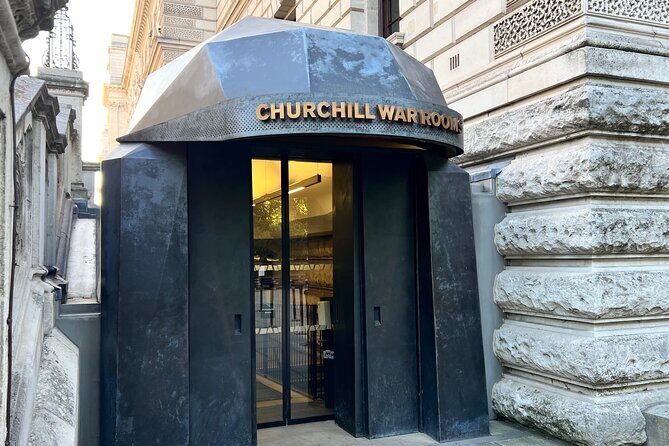
The finale is the Churchill War Rooms, ending just outside the entrance. This is where you either extend the experience or miss the big payoff. The tour itself provides the lead-in story; the entrance is not included, and the guidance strongly suggests booking it for convenience.
Why I consider this the heart of the trip: you get the Westminster context first—parliament, government, Ministry of Defence, memorials—so walking into an underground command site feels like the next logical chapter. Without that setup, the War Rooms can feel like a cool bunker museum. With it, it feels like the place where decisions were made under pressure.
Inside, people mention head sets that guide you through the rooms, and you can spend as much time as you want. That self-paced component is a plus, especially when the stories hit differently depending on what you care about.
One important caution from what’s been shared: some visitors find the audio format a letdown or struggle slightly with finding their way out afterward. If you don’t enjoy audio-led museum visits, plan to stay patient and use extra time.
What Guides Really Do Well Here (Based on What People Keep Mentioning)
What gets repeated in feedback is not just facts. It’s delivery. Guides are described as bringing WWII history to life using anecdotes, clear explanations, and humor that keeps it moving. Names that come up—Nathan, Babs, Richard, Francis, Jeremy, Martin, and Paul—are all mentioned alongside the same kind of praise: strong storytelling and pacing.
That matters because WWII can go two ways. It can become either a dry timeline or a chaotic blur. This tour aims for the middle: a coherent story that you can track from stop to stop.
Also, the walk isn’t treated like a hike. People point out it’s not strenuous, and the pace stays comfortable, which is great if you’re mixing this with other London plans.
Where This Tour Fits Best in Your London Plan
This is a great pick when you want more meaning than standard sightseeing but you don’t want a full-day museum marathon. It’s also ideal if you’re visiting Westminster anyway and want someone to connect the dots between landmarks and wartime reality.
You’ll especially enjoy it if:
- You’re interested in WWII politics and government decision-making, not only battles
- You like walking tours that end with a museum visit you can control with your own time
- You want a small group so you can actually hear and ask questions
You might think twice if:
- You strongly dislike audio-guided museum experiences (the War Rooms are described this way)
- You want a long, inside-only museum crawl rather than outside landmark segments
Should You Book This WWII Churchill Walking Tour?
Yes, I think it’s a good booking for the right traveler. The price is reasonable for what you get: a focused Westminster route, a small group, and a lead-in that makes the Churchill War Rooms feel earned rather than random.
Book it if you want to understand how London’s government center experienced WWII, then finish by seeing the command site where leadership tried to hold the line. If you’re sensitive to audio-led formats, consider setting your expectations and building a little buffer time after your War Rooms visit so you don’t feel rushed.
If you want WWII history in London that’s practical, walkable, and story-driven, this is the kind of tour that does the job.
FAQ
How long is the walking tour?
It runs about 1 hour 30 minutes to 3 hours, depending on the pace and how long you spend at the end.
What’s included in the tour price?
You get a guided walking tour of Westminster with an English-speaking local expert guide and a small group of up to 15. Entrance tickets are not included.
Is the Churchill War Rooms entry included?
No. Churchill War Rooms admission is not included, and you’re encouraged to book entrance separately for convenience.
Are Westminster Abbey tickets included?
No. Westminster Abbey admission is not included, and the stop is described as an outside visit.
Where do I meet and where does it end?
You meet at Boadicea and Her Daughters Victoria Embankment, London SW1A 2JH. The tour ends at the Churchill War Rooms on King Charles St, London SW1A 2AQ.
Is the tour in English and is it walk-heavy?
The tour is offered in English. It’s generally described as suitable for most travelers, and the walking pace is not presented as strenuous, since the stops are short and mostly outside.