REVIEW · LONDON
City of London History Tour: The Square Mile that Rose to Empire
Book on Viator →Bookable on Viator
London’s past is still written in stone. This tour guides you through the Square Mile as it grew from Roman fortification to medieval churches, livery-company power, and modern finance. The best part is the mix: you see well-known civic landmarks and also smaller, off-the-main-road places that help the story make sense fast.
I especially like how it centers on the Roman City wall and nearby church sites, so you understand where London’s core started. I also love the way the route ties trade and governance to real buildings—things like Guildhall and the Bank of England—so you’re not just looking at architecture, you’re seeing why it mattered.
One thing to consider: the stops are short (often 5–15 minutes), so if you want long time for photos or in-depth museum-style reading at each location, this may feel a bit quick.
In This Review
- Key highlights you’ll care about
- From Roman Wall to Empire Finance: What This Tour Is Really About
- Price and Value: What $30.69 Buys You
- Meeting at Barbican Green 2: Getting Started Without Stress
- Stop-by-Stop Walkthrough: The Square Mile’s Story in Real Places
- 1) St. Alphage London Wall (Salters Garden)
- 2) The Roman City Wall (Fortification)
- 3) St. Giles Cripplegate (Norman and Medieval Threads)
- 4) Salter’s Hall Garden (Trade, Governance, Sacrifice)
- 5) Brewers’ Hall (When Trade Becomes Identity)
- 6) St Mary Aldermanbury Garden (Aldermen Court and Shakespeare Connections)
- 7) City of London (The Municipal Governing Body)
- 8) Guildhall (Civic Power and Myth Layers)
- 9) St. Lawrence Jewry (A Christian Story of Sacrifice)
- 10) Guildhall Art Gallery (Roman Amphitheatre Connection)
- 11) St. Margaret Lothbury Church (Wards and Worshipful Companies)
- 12) The Royal Exchange (Legend, Adventurers, and the Golden Grasshopper)
- 13) Mansion House (Lord Mayor at the Head of Governance)
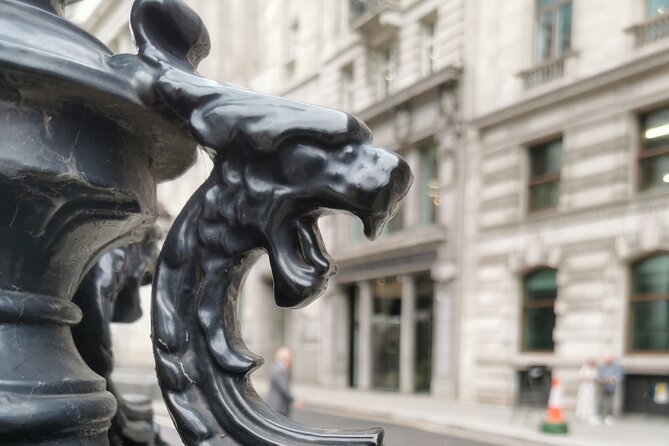
- 14) London Troops War Memorial (The Circle of 12 Dragon Lamps)
- 15) Bank of England (Traditional Power, Forward-Looking Institution)
- Who This Tour Suits Best (and Who Might Want Something Different)
- A Quick Take on the Guide Style (What Makes It Feel Helpful)
- Should You Book It?
- FAQ
- FAQ
- How long is the London History Tour?
- What is the price per person?
- Where does the tour start and end?
- Is the tour available in English?
- Do I need a printed ticket?
- What group size is it?
- Is it wheelchair and stroller accessible?
- Are admissions included for the stops?
- Will I get confirmation after booking?
- What does cancellation allow?
Key highlights you’ll care about
- A tight 2.5-hour loop that hits major City landmarks without turning it into a marathon
- Roman-to-Norman story flow starting at St. Alphage London Wall and the Roman fortification
- Livery company focus through Salter’s Hall, Brewers’ Hall, and the trade/governance thread
- Stop-ins inside City space like the Guildhall Art Gallery area linked to a Roman amphitheatre
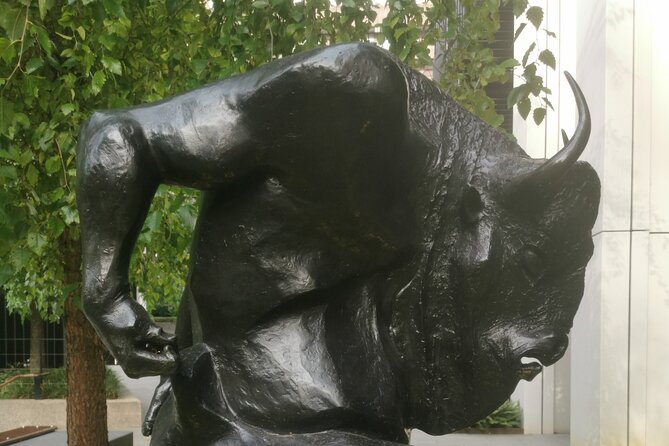
- A satisfying finish at the London Troops War Memorial, with the tour’s Minotaur/dragon-circle theme coming back
From Roman Wall to Empire Finance: What This Tour Is Really About
This isn’t a generic “top sights” walk. It’s a guided narrative of how the City of London became the political and economic engine that later powered the British Empire. You start in the layers: Romans building fortifications, then later waves of culture and authority shaping what comes next.
What makes the story click is that the route keeps pointing at physical proof—walls, church ruins, civic buildings, and corporate spaces. You’ll walk between places that still “look like” the past, and your guide helps you connect them to trade, governance, and even the harsh idea of sacrifice in the City’s religious record.
It also helps that the group is kept small. With a maximum of 8 people, you’re more likely to ask questions and get answers that actually fit the moment instead of competing with a crowd.
You can also read our reviews of more tours and experiences in London.



Price and Value: What $30.69 Buys You

At $30.69 per person for about 2 hours 30 minutes, this price sits in the sweet spot for a short guided walk in central London. The big value isn’t just the guide—it’s that the tour’s listed stop-ins are admission ticket free at every stop on the plan. That means you’re paying for interpretation and route design, not for layered museum fees.
You’ll also get a mobile ticket (easy on your phone), and the tour runs in English. If you’re traveling on a schedule and don’t want to overthink ticket hassles, this format is straightforward.
One more practical note: it’s usually booked around 39 days in advance on average. That doesn’t mean you must book immediately, but it’s smart if your dates are fixed.
Meeting at Barbican Green 2: Getting Started Without Stress
The meeting point is Barbican Green 2, London Wall Pl, Barbican, London EC2Y 5AU. It’s in the London Wall area, which is an excellent starting spot because your first scenes are literally about defense and settlement.
The tour ends at London Troops War Memorial, 1 Cornhill, London EC3V 3LN, and that finish location is meaningful. It puts you near the heart of the financial district story right when the tour’s theme reaches its closing image—dragons and the City’s mythic reminders.
The tour is listed as near public transportation, which matters because London walking routes can be long even when they look compact on a map.
If you’re bringing a stroller or traveling with wheelchair needs, the experience is described as wheelchair and stroller accessible. That’s a genuine plus for a City walk, since tight sidewalks and awkward steps can ruin a “simple” sightseeing day elsewhere.
Stop-by-Stop Walkthrough: The Square Mile’s Story in Real Places
1) St. Alphage London Wall (Salters Garden)
You begin at St. Alphage London Wall in the Salters Garden, where your guide sets up the idea that London’s core was shaped by multiple peoples and eras—from Roman foundations to Norman influence. This first stop is short, but it’s where the tour teaches you how to read what you’ll see later.
If you’re new to London history, this is a helpful orientation point. It gives you a mental map before the buildings start stacking up in your mind.





2) The Roman City Wall (Fortification)
Next comes the oldest layer: the Roman city wall section described as the oldest part of the wall. Even if you only glance at it for a few minutes, it’s the kind of sight that changes how you view everything around it.
A wall like this isn’t just “old.” It’s a reason why later London stayed grouped around the same protected core. When you understand that, the rest of the tour feels less like random stops and more like a timeline made of stone.
3) St. Giles Cripplegate (Norman and Medieval Threads)
At St. Giles Cripplegate, you’re pointed toward one of the older medieval churches in the City, traced to Norman time, with references to an even older Saxon church site. This is the kind of stop that works well because your guide links it back to continuity—how religious sites and communities evolve without fully disappearing.
The practical benefit here: church buildings (and even church ruins) often act like “history anchors.” They help you understand where people gathered, not just what rulers built.
4) Salter’s Hall Garden (Trade, Governance, Sacrifice)
Salter’s Hall Garden is where the tour grows from “ancient wall” into “City power.” You’re shown how the Roman wall physically helped fortify the City against outside influence, and you get the story connected to trade, governance, and sacrifice.
You also learn about Salter’s Hall as part of the livery-company world, described as ranked 9th among 12 among the most important livery companies. Even if you don’t care about company ranks, the bigger point is that these organizations shaped rules, identities, and civic life.
This stop is also a good place to remember that the City wasn’t only politics and money. It was also social order, faith, and the cost of conflict.
5) Brewers’ Hall (When Trade Becomes Identity)
At Brewers’ Hall, the livery company gets a no-nonsense identity moment. Your guide frames it as the company that set the standard for booze—an easy hook that makes a corporate-sounding topic more human.
Short stop, but memorable. It’s a reminder that the City’s civic organizations were tied to everyday goods and livelihoods, not only abstract governance.
6) St Mary Aldermanbury Garden (Aldermen Court and Shakespeare Connections)
St Mary Aldermanbury Garden brings you to a church ruin area tied to the name aldermen court (held at the Guildhall). Today, the garden hosts memorials that include Shakespeare and two legends associated with different livery companies.
That combination matters: you’re seeing how the City carries memory in public spaces. Even if the church itself isn’t intact, the site still functions as a “bookmark” for civic identity.
7) City of London (The Municipal Governing Body)
Then you get a brief moment at the City of London, the municipal governing body of the historic centre. It’s only listed as 5 minutes, so don’t expect a lecture—but it’s a key pivot point.
This is where your guide helps you understand that the City is not just “an area of London.” It’s a governing identity with deep roots. That context makes the rest of the landmarks easier to place.
8) Guildhall (Civic Power and Myth Layers)
Guildhall is a highlight stop—your guide covers its long presence on the current site since at least the 13th century, plus the mythology and influence stretching back through Greek, Roman, Saxon, and Norman periods.
This is one of those places where it’s worth slowing down even if the stop length is around 15 minutes. The building is civic theater: it exists to signal authority and continuity.
If you only do one City landmark with a “why does this matter” explanation, this is a strong candidate.
9) St. Lawrence Jewry (A Christian Story of Sacrifice)
At St. Lawrence Jewry, you’re pointed toward its role as an official church linked to the City of London Corporation, and your guide discusses Saint Lawrence and a story framed as a cruel sacrifice.
This stop feels especially purposeful because it keeps the tour’s theme of sacrifice from earlier in the day. The tour doesn’t treat religion as a side note—it treats it like a thread running through community life.
10) Guildhall Art Gallery (Roman Amphitheatre Connection)
Next is Guildhall Art Gallery, described as a location of the Roman amphitheatre. Even with a 25-minute window, it’s not a full museum visit. Instead, it’s a chance to connect the City’s civic center to Roman-era public space.
I like this kind of stop because it changes how you imagine the City center. You stop picturing it as purely medieval and modern and start seeing the Roman layer under everything.
11) St. Margaret Lothbury Church (Wards and Worshipful Companies)
St. Margaret Lothbury Church represents two City wards, and the guide explains how livery companies got their naming as Worshipful companies.
This is one of those “small fact, big meaning” moments. When you understand where the words come from, the corporate architecture and traditions stop feeling like random ceremony.
12) The Royal Exchange (Legend, Adventurers, and the Golden Grasshopper)
At the Royal Exchange, you hear the story of it being built by a legend where adventurers could meet—and then you get a specific detail: the golden grasshopper on top.
That detail matters because it gives you a visual souvenir in your head. If you like architectural symbolism, this is a great stop. If you don’t, it still helps you remember the building rather than just walking past it.
13) Mansion House (Lord Mayor at the Head of Governance)
Mansion House brings you close to the Lord Mayor of the City of London, described as head of governance and an international ambassador for the UK’s financial and professional services sector. The tour frames this as his home.
Even in a short stop, it helps you understand how the City keeps governance close to the center of everyday civic life.
14) London Troops War Memorial (The Circle of 12 Dragon Lamps)
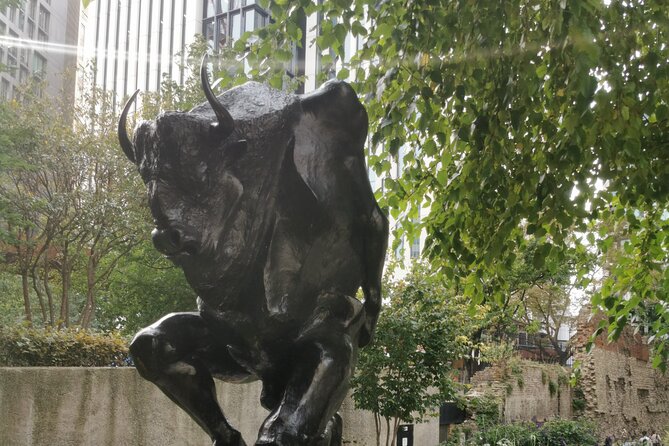
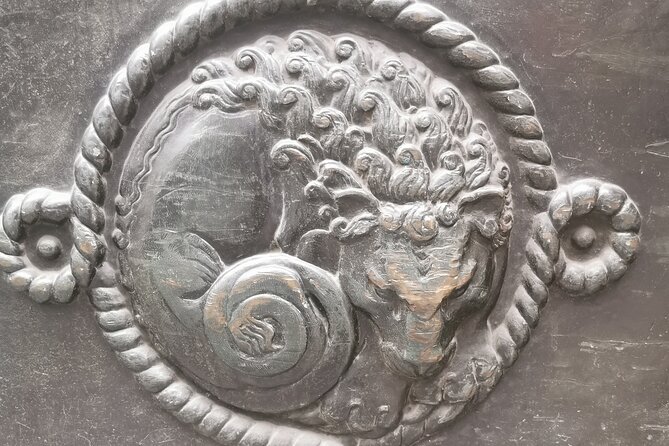
Finally, you reach the London Troops War Memorial, framed with a circle of 12 dragon lamposts representing the 12 great livery companies. Your guide highlights some notable figures remembered around the area, and then you conclude by returning to the tour’s Minotaur theme.
This is the payoff scene. The tour’s earlier focus on livery companies and governance comes together in a single symbol-heavy location—dragons, memorials, and the closing story image.
15) Bank of England (Traditional Power, Forward-Looking Institution)
The Bank of England stop rounds things out. Your guide describes it as highly influential, traditional, yet still forward-looking. You also learn about the story behind the golden statue on top.
This is where the tour shifts from “how we got here” to “what the City became.” Even if you know the Bank is important, hearing it placed at the end of a centuries-long thread makes it feel less like a standalone landmark and more like the latest chapter.
Who This Tour Suits Best (and Who Might Want Something Different)
This walk is perfect if you:
- Love history but want it tied to streets and buildings you can see
- Are new to London and want a clear, guided “Square Mile origin story”
- Like the people-and-power angle, especially the role of livery companies
- Prefer small groups and short, focused stop-ins
If you want a slow-paced tour with long stays inside major sites, you might find the brief timing at many stops a little tight. You’d get more satisfaction from a tour that gives time for museums or long interior visits.
Also, if you’re mainly interested in modern London landmarks, this won’t be your best fit. The focus is the City’s older spine and how it shaped an empire-level role later.
A Quick Take on the Guide Style (What Makes It Feel Helpful)
One guide name that comes up is Argun, praised for being informative and for choosing not-so-typical sights. That’s a big part of why this tour works: you don’t just get facts. You get context at the exact spot the fact belongs.
Because the route moves along a logical chain, you’ll usually leave with a better sense of direction in the City, not just a list of stops.
Should You Book It?
Book this tour if you want a guided walk that turns the Square Mile into a story—from Roman wall to City governance to the Bank of England—without making you pay for multiple admissions. The free stop-ins and small group size add real value for the price.
Don’t book if you’re looking for a slow, museum-heavy day, or if you hate quick “grab it and go” sightseeing. The whole format is designed for momentum, not lingering.
If you like learning where the City’s identity comes from, and you want a route that feels smarter than a standard checklist, this one is a solid yes.
FAQ
FAQ
How long is the London History Tour?
It’s approximately 2 hours 30 minutes.
What is the price per person?
The price is $30.69 per person.
Where does the tour start and end?
It starts at Barbie Green 2, London Wall Pl, Barbican, London EC2Y 5AU, UK, and ends at London Troops War Memorial, 1 Cornhill, London EC3V 3LN, UK.
Is the tour available in English?
Yes, the tour is offered in English.
Do I need a printed ticket?
No. It uses a mobile ticket.
What group size is it?
The tour has a maximum of 8 people.
Is it wheelchair and stroller accessible?
Yes, it’s described as wheelchair and stroller accessible.
Are admissions included for the stops?
The tour lists admission tickets as free at the stops.
Will I get confirmation after booking?
Confirmation is received at the time of booking.
What does cancellation allow?
Free cancellation is available, and you can cancel up to 24 hours in advance for a full refund. If you cancel less than 24 hours before the start time, the amount paid is not refunded.