REVIEW · STRATFORD UPON AVON
Daily Stratford Upon Avon Town Walking Tour with Local Guide
Book on Viator →Operated by Walking Tours in England · Bookable on Viator
Stratford’s Shakespeare story starts in plain sight. This 1.5-hour walk is an easy way to connect the dots between the town’s Shakespeare landmarks and the places that shaped how the Royal Shakespeare Company grew. You’ll follow a local guide through cobbled streets, key civic buildings, and theatre spots—mostly from the outside—so you get context fast.
I love the tone: guides like Peter (and others named in group feedback such as Rachel, Tabitha, Zeb, and Magnus) bring friendly, upbeat storytelling, with humor that keeps the group engaged. I also like the format: the tour is paced so you can ask questions and stop for photos without it dragging.
One thing to keep in mind: it’s a walking tour with mostly stop-and-talk segments and sights you view without a full entrance ticket. If you want to go inside every building, you’ll still have to plan a little extra time and tickets on your own.
In This Review
- Key things to know before you go
- The 90-minute walk that helps you read Stratford like a map
- Start at Gower Memorial: Stratford’s origins in four statues
- Shakespeare’s Birthplace and the Shakespeare Centre: outside views, heavy meaning
- Henley Street and the Town Hall: the town’s everyday power
- The American Fountain: a playful clock trick you’ll never guess
- Shakespeare’s New Place gardens: where a house used to be
- The Almshouses and Shakespeare’s old-school area: still doing the original job
- Hall’s Croft: the family home link, even in disrepair
- Holy Trinity Church: a quiet finish inside the place that holds the story
- The Other Place and Swan Theatre: performance history without the long wait
- Royal Shakespeare Theatre: closing the loop at the home base
- Price and value: how $16.67 fits a tight schedule
- Pacing, comfort, and who this walk suits best
- Practical planning tips that make the tour smoother
- Should you book this Stratford-upon-Avon walking tour?
- FAQ
- Where do I meet the guide?
- How long is the tour?
- How much does it cost?
- Is the tour in English?
- Are any admissions included?
- What if I want to go inside the famous sites?
- What’s the cancellation and confirmation setup?
- Is this tour suitable for people who use mobility aids or have limited mobility?
Key things to know before you go
- Starts at the Gower Memorial with four statues that explain Stratford’s early symbolism
- Sees Shakespeare’s Birthplace from the outside plus an info-rich stop at the Shakespeare Centre
- Walks Henley Street to spot Stratford’s main-street landmarks and statues
- Includes picture-perfect oddities like the American Fountain pendulum feature
- Ends at the Royal Shakespeare Theatre so your final stop feels like a proper closer
- Small group size (up to 20) makes it easier to keep the pace and hear the guide
The 90-minute walk that helps you read Stratford like a map
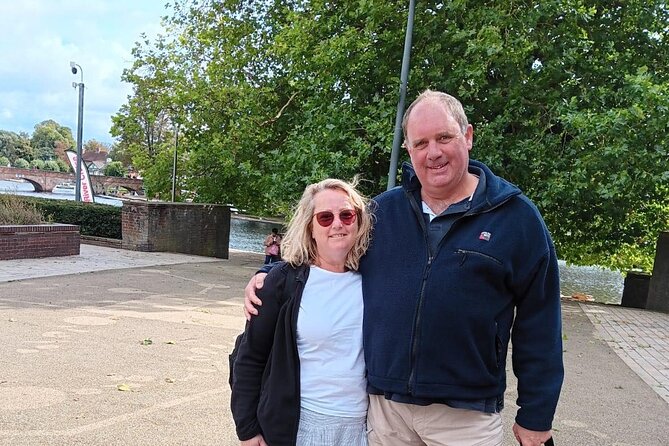
Stratford-upon-Avon can feel like a blur when you’re bouncing between names on signs: Shakespeare’s house, theatres, churches, then off to lunch. This tour gives you a clean storyline. In about 1 hour 30 minutes, you get the town’s layout, the big themes behind it, and a practical sense of where everything sits relative to each other—so your self-guided time later is more efficient.
Because you’re not spending long inside lots of paid attractions, you’re also not burning your day on lines and ticket counters. The tradeoff is simple: if you’re the type who hates looking from the outside, you may feel slightly unfinished unless you return on another day.
You can also read our reviews of more tours and experiences in Stratford upon Avon.



Start at Gower Memorial: Stratford’s origins in four statues
You meet at the Gower Memorial (Stratford-upon-Avon CV37 6YY). It’s a smart starting point because it frames the town before it frames Shakespeare. The guide points out what each of the four statues represents and ties that back to Stratford’s early identity.
This is the kind of stop that makes the rest click. When you know what the memorial is signaling, later streets and civic buildings stop looking random. You’ll also be warmed up for walking—just around 5 minutes here, no long sit-down required.
Shakespeare’s Birthplace and the Shakespeare Centre: outside views, heavy meaning
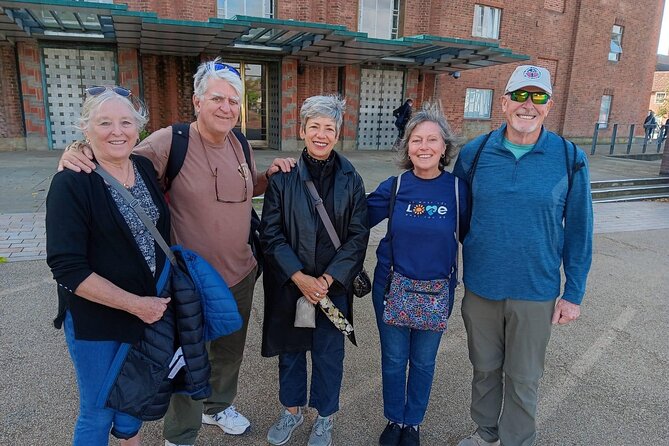
Next you’ll head toward Shakespeare’s Birthplace. You see it from the outside. The guide uses that view as a springboard into Shakespeare’s life here, and you also get architectural notes—useful because even if you’re not buying entry, the building still has things worth noticing.
Then comes the Shakespeare Centre, officially opened on Shakespeare’s 400th birthday. Even though admission isn’t included, this stop is all about knowledge. The building is presented as a place that packs in Shakespearean information, so your guide can connect what you’re seeing in Stratford’s streets with what’s known about the people behind the stories.
If you’re the kind of visitor who loves facts but hates wasting time, this combo is strong. You get the big picture first, then you can decide later if you want to go deeper with paid entry.
Henley Street and the Town Hall: the town’s everyday power
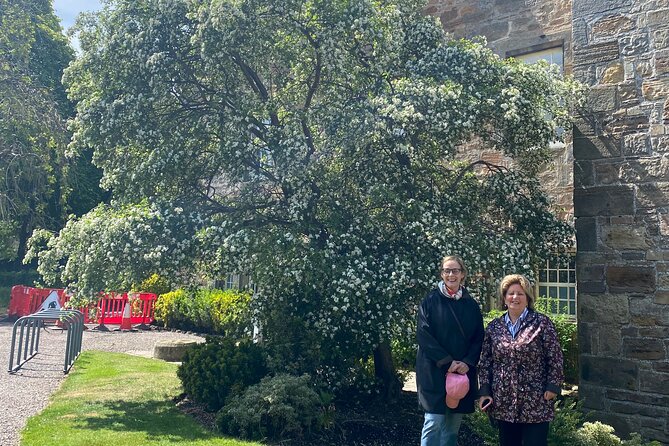
After the Shakespeare-focused stops, the tour shifts gears to show Stratford as a real working town. Henley Street is the main street, so it naturally places you in the middle of the action—shops, foot traffic, and the feeling of a place that still lives day to day, not just for visitors.
The guide also points out famous statues and interesting buildings along the way, which helps you understand why Stratford has always attracted people. It wasn’t built only for theatre—it was a market town, a civic hub, and a place where culture and commerce overlapped.
Then you’ll view the Town Hall. This is one of those moments where a building looks stately and finished, but the guide reveals a surprising history behind it. It’s a good reminder that in towns like this, the stories aren’t just in monuments—they’re in how the town governed itself over time.
The American Fountain: a playful clock trick you’ll never guess
This stop sounds like a throwaway detail until you’re standing in front of it. The American Fountain is not about water for visitors to drink or admire up close. Instead, it’s built around a swinging pendulum for the clock above.
It’s the perfect example of why a guide helps. If you were walking alone, you might admire the structure and move on. With a guide, you learn what’s actually going on and how it connects to the town’s character—quirky, public, and meant to be seen.






Shakespeare’s New Place gardens: where a house used to be
Shakespeare’s New Place is the kind of stop that changes how you see Stratford. The tour focuses on the gardens on the ground where Shakespeare’s second residence used to stand, including what happened to the house of the Bard.
You won’t just be looking at greenery. You’ll be learning how the physical site connects to the real-life story—what remained, what disappeared, and how Stratford preserved meaning even when the original structure didn’t survive. For many people, this is where the tour feels most thoughtful.
The Almshouses and Shakespeare’s old-school area: still doing the original job
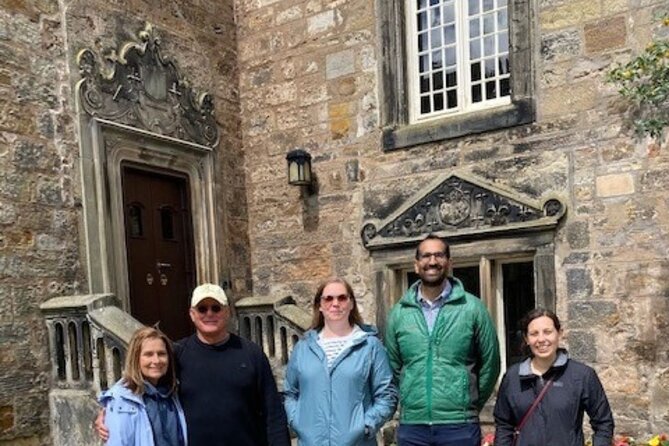
Next are the Almshouses, positioned next to Shakespeare’s old school. These are described as beautiful and, importantly, still used for their original purpose.
That last bit matters. It’s one thing to see a historic building as a museum. It’s another to see it functioning today. You get a clearer sense of continuity: Stratford’s heritage isn’t only staged—it still supports real lives.
Hall’s Croft: the family home link, even in disrepair
Hall’s Croft is one of the most beautiful houses on the route, and the tour frames it through family history—specifically that it belonged to Susanna, Shakespeare’s daughter. The house is noted as being in disrepair, but that doesn’t stop it from being visually striking.
This stop gives you a softer side of the Shakespeare story. You’re not only dealing with theatre and famous works. You’re looking at the everyday spaces that sat around family life.
Practical tip: if the weather is warm or windy, this kind of outdoor stop is where photos and slow looking can steal time. You’ll want to stay flexible and keep an eye on the pace of the group.
Holy Trinity Church: a quiet finish inside the place that holds the story
The walk continues toward Holy Trinity Church, described as Shakespeare’s final resting place. You’ll walk out toward the church first, then your guide brings you inside for a step inside the building.
This is a meaningful pause after the more street-level, outward-facing stops. Even in a short time, you’ll get natural beauty around the church and a more grounded sense of where Shakespeare’s legacy fits into Stratford’s spiritual and local identity.
The Other Place and Swan Theatre: performance history without the long wait
From here you’ll head into the world of Shakespeare-as-performance rather than Shakespeare-as-person. The Other Place is introduced with its charms, including the stars who performed there before they were famous.
Then the tour moves to the Swan Theatre. It rises like a phoenix (well, swan) after being destroyed by fire. That image helps you feel the theatre’s resilience: the building story echoes the creative story—something lost, something rebuilt, something continuing to matter.
These stops are not framed like a lecture. They’re short, visual, and story-led. If you enjoy knowing how institutions evolve, you’ll appreciate how the guide ties performance venues to the broader cultural fabric.
Royal Shakespeare Theatre: closing the loop at the home base
The tour finishes at the Royal Shakespeare Theatre, home of the Royal Shakespeare Company. Ending here feels like a proper circle: you start with origins and memorial meaning, then you trace the town’s Shakespeare connections, and you end in the modern engine that keeps the work alive.
Even if you’ve only seen the exterior before, this is a great final viewpoint because it’s a cultural landmark you can immediately orient around when you’re done.
Price and value: how $16.67 fits a tight schedule
At $16.67 per person for about 1 hour 30 minutes, this is priced for people who want the essentials without committing half a day to ticketed attractions. The tour also has practical value because it’s mostly free-of-admission stops plus a few sight-specific moments where admission isn’t included.
Here’s the useful way to think about it:
- You’re paying for story + route + context, not a bundle of entrances.
- You’ll spend time seeing key sites and learning how they connect.
- You’ll likely save time later because you now know what’s where and what you want to return to.
Group size is capped at 20, and the overall experience is described as easy-paced. That matters because you’re not fighting crowds with a giant herd. You should feel comfortable stopping for photos and questions.
Pacing, comfort, and who this walk suits best
This is a walking tour, and you should plan for cobbled streets and short stop segments. One piece of advice from group experience is that it works well for people who can walk a steady mile. That’s not extreme, but it also isn’t a sit-everywhere tour.
It may suit you if:
- you want a Shakespeare grounding without long lines
- you’re in town for a short day trip
- you prefer learning through walking and street-level landmarks
- you like an organized route that still leaves space for your own food and exploring
It may not be your best match if:
- you want lots of indoor time and ticketed entry during the same tour
- you’re struggling with mobility and need long breaks or fully step-free routes
Practical planning tips that make the tour smoother
- Wear comfortable shoes. Cobblestones look charming until your feet start bargaining.
- Bring your phone for photos, but leave room for the guide’s pace. Many stops are about quick storytelling.
- If it’s sunny, plan for shade. You’ll likely be standing during stop-and-talk moments, and shifting sides can matter.
- Since most sights are viewed without included entry, treat this as a launchpad. Decide afterward what you want to go back for.
Should you book this Stratford-upon-Avon walking tour?
Yes, if you want a smart starter plan for Stratford-upon-Avon Shakespeare sites. The biggest win is getting the town’s storyline in a short window, then using what you learn to explore on your own with less guessing.
Book it if you like friendly guides with humor and you’d rather see lots of key places than spend your whole day waiting to enter them. It’s especially good value when you’re tight on time but still want your first visit to feel organized and meaningful.
Skip it if you’re expecting a heavily ticketed, inside-everything itinerary. This tour is built to show you where to look and why it matters, not to replace separate attraction visits.
FAQ
Where do I meet the guide?
You start at the Gower Memorial (Stratford-upon-Avon CV37 6YY, UK). The tour ends back at the same meeting point.
How long is the tour?
It runs for about 1 hour 30 minutes.
How much does it cost?
The price is $16.67 per person.
Is the tour in English?
Yes. The tour is offered in English.
Are any admissions included?
Some stops list admission as free, while others say admission tickets are not included. For example, the Gower Memorial, Henley Street, and the American Fountain are marked as free stops, while places like Shakespeare’s Birthplace and the Royal Shakespeare Theatre are shown but not included in admission on this tour.
What if I want to go inside the famous sites?
This tour is mostly about seeing key sights and learning the stories as you walk. Shakespeare’s Birthplace is viewed from the outside, and at Holy Trinity Church you’ll take a step inside. If you want more interior time at other places, you’ll likely need separate plans.
What’s the cancellation and confirmation setup?
You receive confirmation at the time of booking. You can cancel for a full refund up to 24 hours before the experience starts.
Is this tour suitable for people who use mobility aids or have limited mobility?
Most travelers can participate, and service animals are allowed. The route does involve walking, so if you have mobility concerns, it’s wise to consider your comfort with a steady walking pace.