REVIEW · LONDON
e-Scavenger Hunt London: Explore the City at Your Own Pace
Book on Viator →Bookable on Viator
London works best when you call the shots. This self-guided GPS scavenger hunt lets you stroll between big landmarks on your timetable, with quirky facts delivered through a phone game. I like that it pushes you to walk beyond the usual photo stops, but you should know the route depends on your smartphone and data (so bring a charged phone).
The highlights read like a greatest-hits reel, yet the format keeps it from feeling like a typical sightseeing grind. You get a mobile ticket and an app that turns the city into a puzzle—so you’re not just passing buildings, you’re trying to answer, spot, and move on.
In This Review
- Quick Takeaways
- A Self-Guided London Hunt Starting at Big Ben
- How the App Game Turns Walking Into Momentum
- Royal Thames Views: Tower Bridge, the River, and Big Ben-Era Drama
- Hyde Park to Buckingham Palace: Facts You Can Actually Use
- Trafalgar Square and Piccadilly Circus: Famous Squares With a Reason to Look
- National Gallery and Westminster Cathedral: The Surprise Stops That Feel Rewarding
- London Eye and the Thames Factor: Big Numbers That Make the View Mean More
- Kensington Palace and Clarence House: Royal Residences Without the Lecture
- Westminster Abbey and St Paul’s: Ceremony, Seating, and Sacred City Scale
- Harrods, Imperial College London, and the Fun-Side Trivia
- Tower Complex, Borough Market, and the Walk-That-Matters Feeling
- Price and Value: Is $36.07 Worth It?
- Practical Tips That Keep the Hunt Smooth
- Who Should Book This London Game
- Should You Book e-Scavenger Hunt London?
- FAQ
- How long does the e-Scavenger Hunt London take?
- Where does the hunt start?
- Where does the hunt end?
- How much does it cost?
- Is this guided or self-guided?
- Do I need a smartphone?
- When can I play?
- Is it a private activity?
- Is it accessible for people with hearing impairments?
- Are service animals allowed?
Quick Takeaways
- Start at Big Ben, finish where you started, so you can plan a simple day around it.
- 2 to 4 hours on foot gives you time for both quick hits and extra wandering if you want.
- GPS clues keep you moving even when you’re not sure where to look first.
- Photo moments are built in, including chances around Buckingham Palace.
- You’ll learn small, specific facts tied to landmarks like Tower Bridge, Hyde Park, and London Eye.
- Some clue locations can feel fiddly, so patience helps if you like your scavenger hunts to be frictionless.
A Self-Guided London Hunt Starting at Big Ben
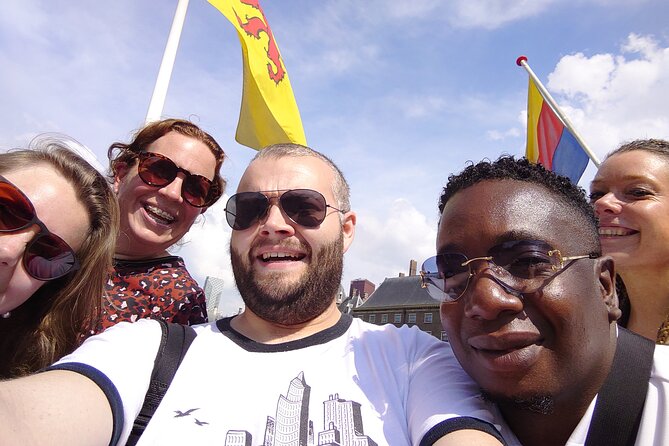
This is a city walk disguised as a game, which is exactly why it works. You’ll begin at Big Ben (London SW1A 0AA) and use your phone’s GPS to find each landmark tied to a question. Instead of following a guide with a stopwatch, you follow the city at your own pace—stop for a photo, linger near a view, or speed up when you’re feeling efficient.
I especially like the way the format breaks the mental barrier of visiting London’s famous places. It turns the day into a sequence of little “wins,” like realizing Tower Bridge’s opening has a specific royal connection or that Hyde Park used to be Henry VIII’s hunting ground. You’re still seeing the usual icons, but you’re doing it with a reason to look closely.
My second favorite part is the flexibility. London can feel crowded and loud, and a self-guided route helps you escape that herd feeling. One possible drawback: because it’s app-based, you need a smartphone that’s charged, plus mobile data since those aren’t included.
You can also read our reviews of more tours and experiences in London.



How the App Game Turns Walking Into Momentum
You’ll have a mobile ticket and an online app to play the hunt on your phone. That means the experience is less about “meeting people” and more about “getting moving.” The game format also helps when you don’t want a full guided tour but you still want direction.
Timing is a real asset here: it’s listed as about 2 to 4 hours. That range matters because it fits into different travel styles. If you’re jet-lagged, you can keep it closer to the short side. If you’re energized, you can take longer breaks without turning it into an all-day commitment.
Since it’s GPS-driven, you’ll also spend less time second-guessing where to go next. You still have to walk—there’s no shortcut sauce here—but the phone reduces the “what street is this?” moments.
For practical comfort, this is where I’d plan like a smart London walker: wear shoes you trust, and keep an eye on your phone battery. If you run out of power mid-hunt, the city becomes a lot less fun and a lot more random.
Royal Thames Views: Tower Bridge, the River, and Big Ben-Era Drama
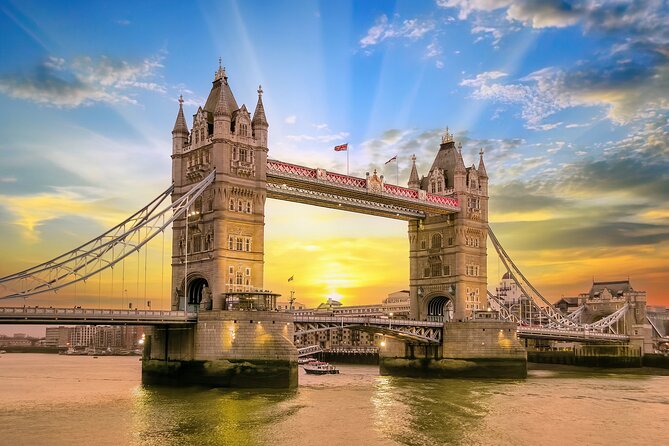
London’s most photogenic moments show up early in the mindset of the route, even if you choose your own pacing. Tower Bridge is one of the big anchors, and the fact you’re meant to learn is very specific: it was officially opened by the Prince of Wales more than 120 years ago. That detail makes the structure feel more historical than just “another bridge.”
As you keep moving through the central sights, you’ll also get the benefit of Thames-adjacent walking. The route is built around the idea of views—so you’re not stuck staring at walls for hours. When you’re near the river, the city feels larger and more navigable, and the photos tend to look better because the water adds scale.
Then there’s the sheer presence factor near royal landmarks. You’re in an area where buildings, plaques, and sightlines all feel “important.” The game uses that atmosphere to keep you paying attention—so you’re not just going from one landmark to the next, you’re reading the city like a clue sheet.
Hyde Park to Buckingham Palace: Facts You Can Actually Use

The hunt brings you into Hyde Park, and the trivia isn’t generic. You’re prompted with the story that Henry VIII appropriated the park as a hunting ground in 1536, and that before that it belonged to Westminster Abbey. I like facts like this because they change how you see the place. Hyde Park becomes not just a big green patch, but a site with a clear place in the monarchy’s backstory.
From there, Buckingham Palace shows up as a must-see stop. The question you’ll encounter centers on its role as the official residence of the British monarch, and the detail about the royal standard when the Queen is present. Even if you’re not sure what’s flying in the flagpole moment, the game pushes you to look.
One highlight here is that you’ll get a chance to snap photos of Buckingham Palace as you pass by. If you’ve ever felt like London is a blur of crowds and “quick shots,” this format gives you permission to slow down for one good picture.
Trafalgar Square and Piccadilly Circus: Famous Squares With a Reason to Look

London’s classic squares show up because they’re easy to find and hard to forget. Trafalgar Square is named after the Battle of Trafalgar (1805), and the hunt ties it into a larger idea: this area—along with Piccadilly Circus and Leicester Square—is one of London’s most famous square clusters.
When you reach Piccadilly Circus, you’re not asked to admire it from a distance. The game positions it as a major transport hub and meeting point and, of course, a top tourist attraction. That matters because it explains why you’ll see constant movement around it. The city is doing what it always does here: people-watching at full speed.
If you’re the type who wants to understand why famous places are famous, this part delivers. You’re learning the “what” (battle name, dates, royal naming) and the “why it matters today” (busy hub, meeting point, attraction).






National Gallery and Westminster Cathedral: The Surprise Stops That Feel Rewarding

This hunt isn’t only for exterior photos. It nudges you toward the kind of indoor moments that people often skip when they’re moving too fast. Near Trafalgar Square, you’ll encounter the National Gallery, with a prompt about how its collection is one of the largest in the world and that more than 6 million people visit every year. That’s the kind of stat that tells you the place isn’t just famous online—it’s a magnet in real life.
Then comes Westminster Cathedral, identified as the Catholic cathedral church of the Catholic ecclesiastical province of Westminster and seat of the Archdiocese of Westminster. This is the stop that can feel like a genuine payoff because cathedrals often surprise you when you step inside and realize the building’s impact isn’t just about the outside silhouette.
In the feedback I’ve seen, this cathedral is exactly the kind of “nice surprise” that makes the hunt feel worth it. One note to keep in mind: these are active, living places. If you plan to go inside, give yourself a bit of time and be respectful of rules that might be posted on-site.
London Eye and the Thames Factor: Big Numbers That Make the View Mean More
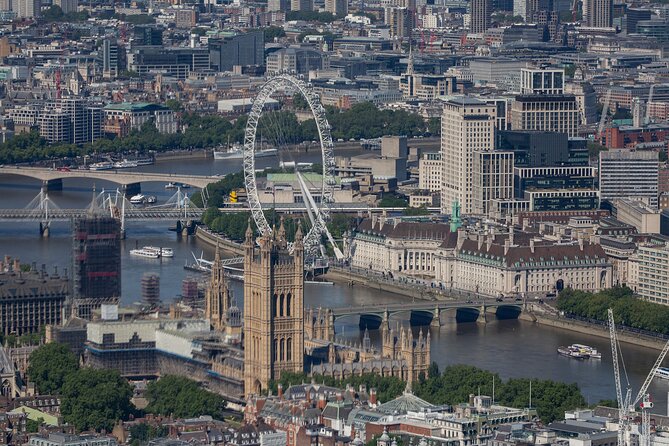
The London Eye is built into the route with very concrete details: it’s 135 meters high, has a 120-meter diameter, weighs 1,700 tons, and has 32 closed capsules. The fact that it was built in 1998 and was the largest Ferris wheel in the world when it opened gives the landmark a “modern classic” angle.
The game’s style here is smart. Instead of making you read a guidebook paragraph, it gives you a few facts that make it easier to remember what you’re looking at. And because you’re likely walking through the Thames corridor anyway, the landmark fits the day rather than turning it into a standalone checklist item.
Even if you don’t ride the wheel, the approach to it helps. You can take photos, get your bearings, and then continue the hunt with more confidence about where you are in London’s river loop.
Kensington Palace and Clarence House: Royal Residences Without the Lecture
Two royal residence stops appear with history in the background. One of them is described as having been a residence of the British royal family since the 17th century, and as the official residence of William, Duke of Cambridge since 2013. Another is Clarence House, an official London residence located on The Mall, neighboring St. James’s Palace, and described as British state property and the residence of Crown Prince Charles since 2002.
What I like about including these is that they’re not just “big royal buildings.” The game turns them into puzzle clues with specific years and roles. That helps you keep track of what’s what when London’s palaces start to blur together.
Also, because this part happens as you move through central streets, you get a nice contrast: you’re stepping between high-visibility monuments and the more subtle, official residences that people rarely stop to notice.
Westminster Abbey and St Paul’s: Ceremony, Seating, and Sacred City Scale
When the hunt hits Westminster Abbey, it frames it as the place traditionally associated with coronations and funerals of members of the British royal houses. It also mentions that marriages of royal family members take place here. That’s a lot of weight packed into a single prompt, and it makes the building feel less like a “photo stop” and more like an active symbol.
Then the route shifts to St Paul’s Cathedral, described as the Anglican Bishop of London’s seat. That simple line tells you why St Paul’s is so tied to the identity of the city beyond being famous for its dome.
The key here is pacing. If you rush these stops, you’ll miss the scale and the calm that a cathedral space gives you. The game doesn’t force you to linger, but it also doesn’t punish you for slowing down. If you’re the kind of person who likes to look up and take in architecture, this is where the hunt rewards that habit.
Harrods, Imperial College London, and the Fun-Side Trivia
London has a serious side, but the hunt brings in a few light moments too. One stop includes Harrods, with the fact that it was founded in 1849 by Charles Henry Harrod. That’s a simple origin story, and it helps if you want to understand why Harrods feels like more than a store.
There’s also a question tied to a Harry Potter-themed moment: it points to the scene where Harry first takes flight on his Nimbus 2000 broom over the Hogwarts quidditch pitch in the first film, Harry Potter and the Philosopher’s Stone. This is the kind of trivia that makes the hunt feel less like homework and more like “okay, I see what they did there.”
Another intellectual stop is Imperial College London, with a prompt that it’s ranked 7th in the world in the QS World University Rankings 2022, and that it focuses solely on science, engineering, medicine, and business. Even if you don’t plan to visit the campus, this helps you place the area in a wider “London does serious stuff” context.
If you enjoy quizzes that mix pop culture with real facts, these stops are likely to be highlights.
Tower Complex, Borough Market, and the Walk-That-Matters Feeling
The hunt also includes the Tower, described as a building complex on the Thames that has served as a fortress, royal palace, state prison, mint, garrison, museum, and arsenal. That list alone gives you a mental map of how the Tower has shifted roles over time. It’s the kind of detail that makes you see the building as a living timeline rather than a static postcard.
Then comes Borough Market, a partially covered market in Southwark on the right bank of the Thames for wholesalers and individuals. This is one of the best ways to end a walking game because it gives you a natural reason to pause. Markets are where London feels normal, not just monumental.
If you use the hunt to structure your day, you’ll probably appreciate this stop as a “human scale” ending. You’ve done the big monuments; now you’re rewarded with food, people, and that lively market rhythm.
Price and Value: Is $36.07 Worth It?
The cost is listed at $36.07 per group for up to 6 people. That means the value is really about how you travel. If you’re a solo walker, you’re paying a fixed fee for the app and route. If you’re coming with friends or family, the per-person cost drops quickly—and you get a shared activity without needing separate tickets for everyone.
I like this pricing model because it’s flexible. You’re not locked into a guided format, and you can spread the experience across a couple hours instead of committing to an all-day tour. As long as your group enjoys walking and doesn’t mind using a phone for GPS, it’s a decent deal for a “play and see London” day.
Just remember the one tradeoff: you must provide your own smartphone and mobile data. If you’re the kind of traveler who keeps your phone on low battery and plans for minimal data use, this hunt might require a little adjustment to your usual routine.
Practical Tips That Keep the Hunt Smooth
This type of app scavenger hunt is only as smooth as your phone setup. I suggest you start with these basics:
- Bring a power bank or a fully charged phone, since the hunt relies on your device.
- Trust the GPS prompts more than quick impressions from the street.
- If a clue feels hard to locate, slow down and re-check the app instead of guessing.
Also, based on real feedback, a couple tasks can feel a bit fiddly. One example from past experiences: a photo or selfie-related prompt may not be as fun as the rest of the game, and some “hunt for the exact spot” moments can be difficult to find quickly. That’s not a dealbreaker, but it helps to enter with the right attitude: this is a scavenger hunt, not a perfectly signposted museum route.
Who Should Book This London Game
I think this fits best if you want London without the parade feeling. You’ll likely enjoy it if you:
- prefer exploring in short bursts and then deciding what to do next,
- like trivia and photo challenges more than lectures,
- want to reduce time spent figuring out routes.
It’s also a good choice for groups of up to six since the price is per group. And since it’s described as user friendly for the hearing impaired and service animals are allowed, it’s designed with accessibility in mind where possible.
If you hate walking, or if you absolutely want a human guide to handle every question, you might find the self-guided style less satisfying. But if you’re happy to let the city guide you through a phone game, this is a fun way to get a lot of London in a focused window.
Should You Book e-Scavenger Hunt London?
Book it if you want a fun, flexible way to see major sights while learning specific facts tied to what you’re standing in front of. The strength of this experience is the mix of big names (Tower Bridge, Buckingham Palace, London Eye) with clue-based reasons to pay attention.
Skip it if you don’t want to rely on your smartphone, you’re worried about phone battery, or your idea of sightseeing doesn’t include scavenger-style “find the spot” moments. For most people who enjoy light challenges and self-paced walking, it’s a smart value play.
FAQ
How long does the e-Scavenger Hunt London take?
It’s listed as about 2 to 4 hours.
Where does the hunt start?
The start location is Big Ben, London SW1A 0AA, UK.
Where does the hunt end?
It ends back at the meeting point.
How much does it cost?
The price is $36.07 per group (up to 6 people).
Is this guided or self-guided?
It’s self-guided. You use your phone’s GPS to discover landmarks and complete the hunt.
Do I need a smartphone?
Yes. The smartphone and mobile data are not included, so you’ll need your own device with data.
When can I play?
Opening hours are listed as 12:00 AM to 11:59 PM (daily) within the listed date range.
Is it a private activity?
Yes. It’s listed as private, meaning only your group participates.
Is it accessible for people with hearing impairments?
It’s described as user friendly for the hearing impaired.
Are service animals allowed?
Yes, service animals are allowed.