REVIEW · OXFORD
Follow the Money Tour – by Uncomfortable Oxford™
Book on Viator →Operated by Uncomfortable Oxford · Bookable on Viator
Oxford has a money trail.
This Follow the Money walk uses real buildings and real donors to help you ask better questions about how the University of Oxford and nearby institutions got funded, and what that means today. I especially liked how it turns sightseeing into a guided, talk-in-the-street kind of history, not just a list of dates.
Two things I really liked were the discussion format and the way the stops connect to current issues. You don’t just hear claims; the guide shares carefully researched context and then invites your reactions, which is why people leave thinking and still talking after the hour and a half. A possible drawback: if you want a neutral, purely academic tour with zero moral friction, this one may feel a bit too politics-and-ethics focused for your taste.
In This Review
- Key points before you go
- What this tour actually does: history with an ethics question
- Starting at Saïd Business School: Wafiq Said and the cost of big gifts
- Middle Fisher Row Gardens: a green break with the Oxford housing crisis
- Nuffield College: Lord Nuffield, memory, and local tensions
- The Bodleian Art, Archaeology and Ancient World Library: Sackler naming and the power of a label
- Wellington Square: a peaceful garden on the site of the Oxford Workhouse
- Blavatnik School of Government and the Schwarzman future: where policy meets funding politics
- Price, group size, and the value of a guided conversation
- Who should book this tour (and who might skip it)
- Should you book Follow the Money in Oxford?
- FAQ
- How long is the Follow the Money Tour?
- Where does the tour start and end?
- What does it cost?
- Is the tour offered in English?
- Is there a group size limit?
- Do I need to buy entry tickets for the stops?
- Can I get a mobile ticket?
- What’s the cancellation policy?
- Is it near public transportation, and can I bring a service animal?
Key points before you go
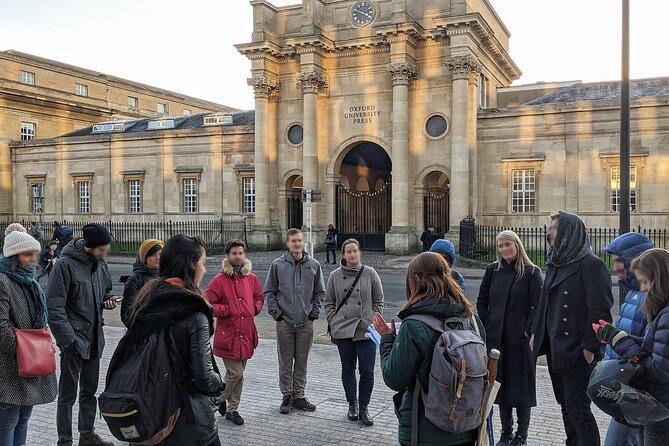
- Donor stories tied to street-level places: you walk from Saïd to Blavatnik and see how funding shows up in architecture and names.
- Small group size (up to 15) keeps the conversation from turning into a lecture.
- Short, focused stops (about 15 minutes each) make it a good primer without overwhelming you.
- Housing, workhouses, and public policy are part of the route, not just university gatekeeping.
- Facilitators like Hera Jay and Julie (featured by previous guides) are known for keeping the vibe open and thoughtful.
- Mobile ticket + near public transport makes it easy to fit into a day of Oxford walking.
What this tour actually does: history with an ethics question
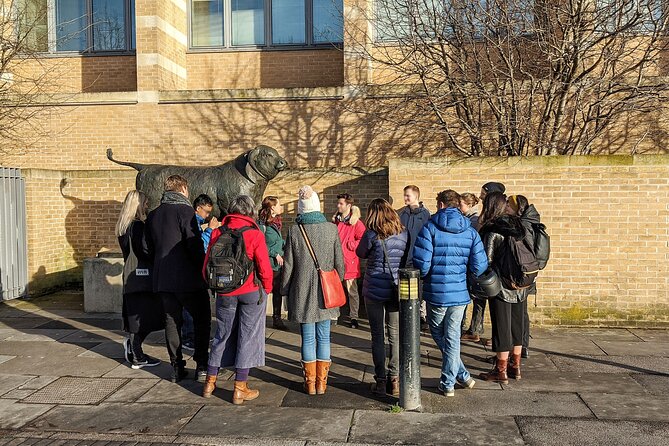
Oxford is famous for tradition. This tour takes that tradition and asks one stubborn question: who paid for it, and what did they get in return? That can sound heavy, but the structure keeps it manageable. You’ll spend roughly 90 minutes moving between six stops, with each one lasting around 15 minutes and centered on a specific place and donor-related theme.
The format matters. You’re not trapped listening to one viewpoint the whole time. The guide sets context, then turns the corner to discussion—inviting different reactions and keeping the talk respectful. That’s a big reason the tour feels memorable: you leave with your own questions sharpened, not just facts filed away.
And yes, this is explicitly about “uncomfortable” income sources and their downstream effects. If you’re the type who enjoys tracing causes—who funds what, who benefits, and who pays—you’ll probably love the tone. If you mainly want postcard Oxford with zero controversy, you may find the pacing a little too “let’s talk about power” for an easy day.
You can also read our reviews of more tours and experiences in Oxford.


Starting at Saïd Business School: Wafiq Said and the cost of big gifts
The tour starts outside Saïd Business School on Park End Street. The opening stop is your entry point into the theme: Wafiq Said and the controversies around his large donations to the University of Oxford. This isn’t taught like a mystery story with a neat reveal. It’s more like a prompt—how donors and institutions interact, how influence can be indirect, and how public attention shifts when money is involved.
What I like about starting here is that it anchors the tour in a clear, modern example of philanthropy meeting institutional branding. It also gives you an early “lens” for everything that follows. When you later see other buildings named after donors, you’ll understand why names matter as much as bricks.
A practical note: because the tour begins right outside the school, you’ll want to be there a few minutes early to meet your group and get your bearings. This walk is short overall, so every minute counts.
Middle Fisher Row Gardens: a green break with the Oxford housing crisis
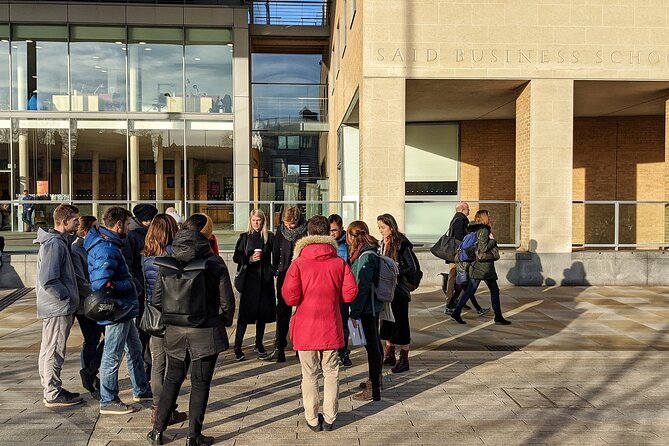
Next you head to Middle Fisher Row Gardens, a quiet pocket of green that feels like a reset button after the weight of the first stop. But the conversation doesn’t drift into scenery-only mode. The guide uses the space to shift toward the ongoing Oxford housing crisis, connecting how institutional money and urban pressures can collide.
This is one of the smartest segments for most visitors, because it ties “Oxford University funding” to the kind of issue you can recognize in any city: who lives where, who gets priced out, and what happens when elite institutions become major players in local development.
If you’re hoping for a tour that only focuses on scholarship and donors, this stop helps you widen the frame. It reminds you that funding isn’t sealed inside campuses. It affects the broader city ecosystem.
Potential drawback: this is still a discussion-based walk. If you personally prefer fewer open-ended prompts, the middle of the tour may feel more conversational than strictly informative.
Nuffield College: Lord Nuffield, memory, and local tensions
From the gardens you move to Nuffield College, where you’ll learn about Lord Nuffield and the tensions over his memory in the city. This stop adds an important layer: it’s not just about money arriving. It’s about what it leaves behind—names, reputations, statues, and the arguments that can follow when society reevaluates its heroes.
In a place like Oxford, legacy is everywhere. Buildings, college identities, and plaques make the past feel fixed. But “memory” isn’t fixed. It changes as values shift and new information becomes part of public discussion. That’s why this stop lands: it teaches you to notice how honorifics can become contested.
What you’ll get from this segment is a better sense of how Oxford treats history in public space. Not all “uncomfortable” moments are new scandals. Some are long-running debates that simply grow louder over time.
The Bodleian Art, Archaeology and Ancient World Library: Sackler naming and the power of a label
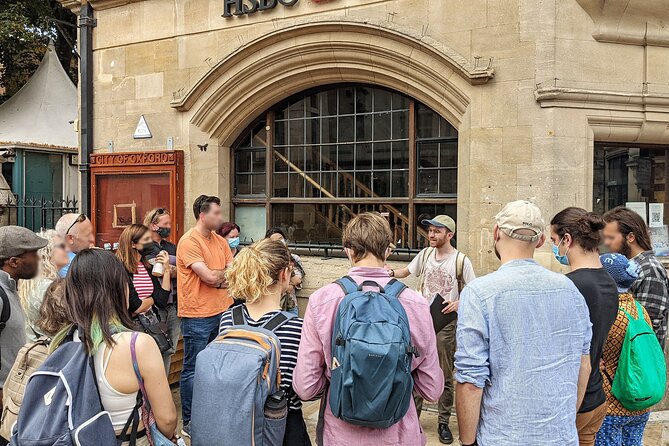
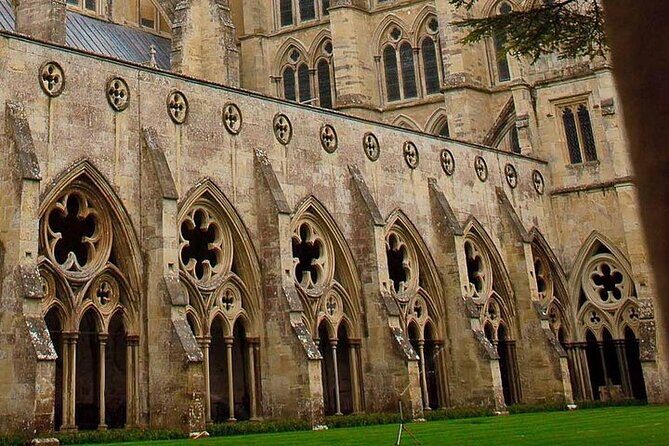
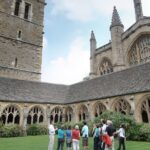
Next comes the Bodleian Art, Archaeology and Ancient World Library, where you pause to admire the architecture while hearing the story behind its Romanesque library setting and the fact it’s named after the Sackler family.
This is a powerful stop because it forces you to hold two things in your head at the same time: the building’s beauty, and the controversy tied to the name on it. The guide’s approach, as you’ll experience it on the walk, is less about telling you what to think and more about presenting context so you can decide what feels right.
For visitors who love the feel of classic Oxford masonry, this stop is also visually rewarding. It’s a chance to slow down, look closely, and then let the moral question sit there with you—rather than rushing past it like it’s just another plaque.
A consideration: if you’re prone to strong reactions to donor-linked controversies, you may want a pause afterward. The tour doesn’t drag, but the topics do carry emotional weight.






Wellington Square: a peaceful garden on the site of the Oxford Workhouse
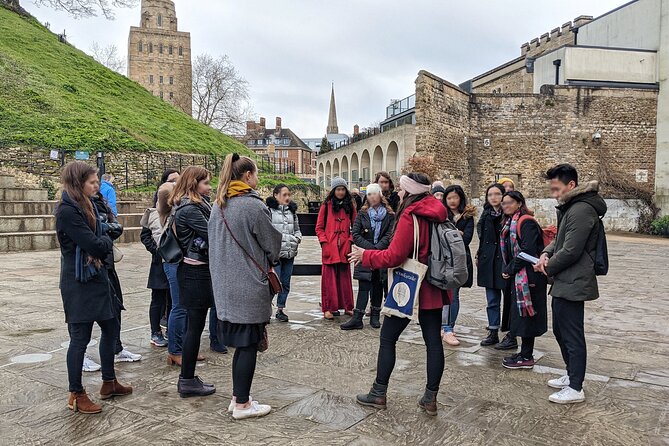
After the Bodleian segment, you move to Wellington Square, where you enter a peaceful garden that was the former site of the Oxford Workhouse. This stop shifts the conversation away from modern billionaire funding and toward older social realities—how cities managed poverty, labor, and survival.
I like that this segment breaks the pattern. It keeps the tour from becoming a single-note story about big donations alone. Instead, it shows that institutional choices—then and now—shape who is protected and who is exposed.
This is also where you’ll start to see the tour’s real skill: it links the built environment to policy and social consequences. A garden can be quiet today, but its ground once held a different purpose. That contrast is exactly the kind of “look again” moment that makes the walk worth your time.
Blavatnik School of Government and the Schwarzman future: where policy meets funding politics
The tour ends beside the Blavatnik School of Government and near another site associated with the soon-to-be Stephen A. Schwarzman Centre for the Humanities. The final segment circles back to power: the government-training side of the university and the humanities center tied to controversial billionaire funding.
Ending here makes sense because it leaves you with a theme bigger than individual buildings. If you’re a policy-minded traveler, you’ll probably appreciate the implication: decisions about governance and culture aren’t only made by elected officials and scholars. They’re shaped by who funds the infrastructure that trains future leaders and supports public-facing thought.
It also gives your brain a final checkpoint. By now you’ve handled multiple donor narratives and multiple “what it means” questions. The finish helps you connect the dots and leave with an ongoing sense of inquiry—exactly the kind of takeaway that makes people want to do more Uncomfortable Oxford tours.
Logistics tip: the walk ends at 120 Walton St, Oxford OX2 6GG. Since you’re finishing near the university area, you can usually roll straight into a meal or a museum visit without much backtracking.
Price, group size, and the value of a guided conversation
The price is $89.12 per person for about 1 hour 30 minutes, with English as the offered language. That’s not “cheap,” but it’s also not priced like a private driver or a full-day experience. The value here comes from the human element: you’re paying for interpretation and facilitation, not just route and access.
A few factors support that value:
- Max 15 travelers means you’re more likely to be part of the discussion than a silent observer.
- Admission is free at each stop (per the tour’s stop details), so you’re not paying extra to enter buildings during the walk.
- Mobile ticket keeps friction low once you book.
If you’re traveling with people who love Oxford’s “classic narrative,” this tour works well as a different lens rather than a replacement. It can be the one segment of your day that gives you the city’s institutions in a more grown-up, real-world context.
Who should book this tour (and who might skip it)
Book it if you:
- Enjoy walking tours where the guide asks for your thoughts.
- Like Oxford but want to see beyond the postcard story.
- Are curious about how money and ethics intersect with education and city life.
- Want a small-group primer that’s short enough to fit between other plans.
Consider skipping it if you:
- Prefer straightforward factual storytelling with no controversy.
- Don’t enjoy discussions and would rather listen quietly the whole time.
- Want a full-day deep dive. This one is designed to move briskly and hit the key themes.
Should you book Follow the Money in Oxford?
I’d recommend booking if your goal is to understand Oxford as a living system, not a museum. The route is compact, but the themes keep expanding: donor influence, housing pressures, contested memory, and the way names stick to buildings. It’s the kind of tour that makes you look at Oxford twice.
If you’re on a tight schedule, it’s also a practical choice. Ninety minutes is enough time to get a strong mental framework without eating the entire day. And because it’s offered in English, it’s easy to slot into most itineraries.
If your trip is your one big Oxford splurge and you want the most relaxed sightseeing possible, you might feel better choosing a lighter, purely historical walk. But if you’re the type who likes your culture with context—and your history with questions—this one earns its spot.
FAQ
How long is the Follow the Money Tour?
It’s approximately 1 hour 30 minutes.
Where does the tour start and end?
It starts outside Saïd Business School, Park End Street (Park End St, Oxford OX1 1HP, UK) and ends at Blavatnik School of Government (120 Walton St, Oxford OX2 6GG, UK).
What does it cost?
The price is $89.12 per person.
Is the tour offered in English?
Yes, the tour is offered in English.
Is there a group size limit?
Yes. The tour has a maximum of 15 travelers.
Do I need to buy entry tickets for the stops?
Each stop is listed as Admission Ticket Free, meaning you don’t need extra admission tickets for the stops on this tour.
Can I get a mobile ticket?
Yes, the experience uses a mobile ticket. You also receive confirmation at the time of booking.
What’s the cancellation policy?
You can cancel for free up to 24 hours in advance for a full refund. If you cancel less than 24 hours before the start time, the amount you paid won’t be refunded.
Is it near public transportation, and can I bring a service animal?
It’s near public transportation, and service animals are allowed. The tour notes that most travelers can participate.