REVIEW · LONDON
Private Archaeologist Guided Tour Stonehenge, Salisbury & Avebury
Book on Viator →Operated by Archaeologist Guided Tours · Bookable on Viator
Megaliths, but with real answers. This private archaeologist-guided Stonehenge and Avebury route is interesting because you’re not just watching history from a distance—you’re talking it through. I love that you can ask questions as you go, and I love the luxury vehicle with a dedicated driver, so you spend the morning focused on sites, not traffic.
The tradeoff is that this is still a packed day with moderate walking on uneven ground, plus a price that’s aimed at small groups (up to 6). If you’re the type who wants every stop to feel like a long seminar, you’ll likely want to set expectations before you book.
In This Review
- Key things to know before you go
- The value of a private archaeologist day: context you can actually use
- Woodhenge first: learning the language of rings and timber posts
- Durrington Walls: the builders’ village idea you can picture
- Stonehenge for 2 hours: better questions, better memories
- Salisbury Cathedral and the Magna Carta: connect the ancient and the legal
- Milk Hill White Horse: a quick breather that still fits the theme
- Silbury Hill and West Kennet long barrow: when engineering meets burial
- Silbury Hill: the giant chalk-and-clay mound
- West Kennet long barrow: entering a 5,500-year-old tomb
- Avebury stone circles and the Red Lion finish: the day’s payoff
- Price and value for a group of up to 6
- Practical tips for a smooth 11-hour day from London
- Should you book this private Stonehenge, Salisbury & Avebury tour?
- FAQ
- Is this tour private or shared?
- What does the price include for a group?
- Do I need separate tickets for Stonehenge and Salisbury Cathedral?
- How long is the tour and what time does it start?
- When is West Kennet long barrow open to visit?
- How much walking is involved and what about weather?
Key things to know before you go
- Private archaeologist Q&A time: real conversation beats a headset lecture.
- A route built for context: you see early henge sites before Stonehenge and end with Avebury.
- Comfort-first transport: a luxury Mercedes E–Class/V–Class/Sprinter plus a separate professional driver.
- Some paid sights, most free: Stonehenge and Salisbury Cathedral have separate entrance fees; many others are free.
- Season matters for one key stop: West Kennet long barrow visits run March 1 to October 31.
- You’ll move a bit: some uneven surfaces and a few longer walks at megalithic sites.
The value of a private archaeologist day: context you can actually use
A day like this can be either impressive or confusing. You’ll see big stones, sure. But without guidance, it’s easy to miss what matters most: how these monuments connect to the people who built them and how archaeologists interpret the evidence.
That’s where this tour earns its money. You’re paying for an expert archaeologist guide and a setup that lets them tailor explanations to your questions. It’s not just a script. You can ask why alignments are debated, what excavation found (and what it didn’t), or how a site’s layout changes your understanding of purpose.
The other value is practical. You’re in an air-conditioned luxury vehicle, with a separate professional driver so the guide can stay present with your group. That means less wasted time dealing with directions, parking stress, or crowd movement—especially since the day starts at 7:30 am and runs about 11 hours.
And because it’s private for your group only, you don’t have to worry about keeping up with strangers or waiting for laggards. You can linger where you care and move on when you’ve gotten what you need.
You can also read our reviews of more guided tours in London



Woodhenge first: learning the language of rings and timber posts
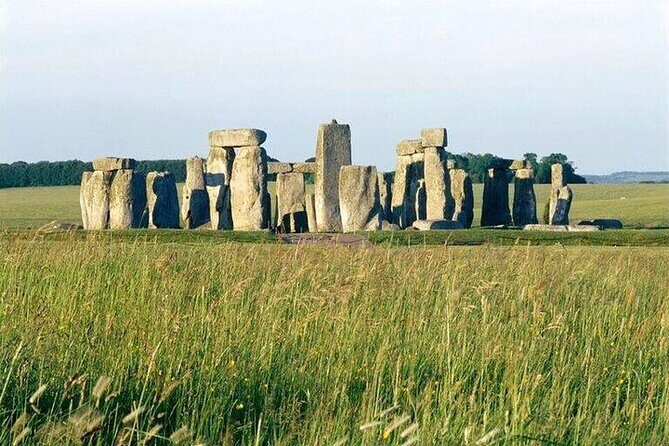
Starting at Woodhenge is smart. Before you reach Stonehenge’s famous stones, you get introduced to the earlier idea of sacred enclosure made with timber. Woodhenge dates to the Late Neolithic period and is made of six concentric rings of wooden posts—168 posts in total. The pattern is symmetrical, and the posts may have been connected by lintels.
What I like about this stop is how it trains your eye. You’re learning to “read” prehistoric design before you’re hit with Stonehenge’s scale and drama. You also get a concrete detail that makes the site feel real: during excavations in the 1920s, archaeologists found that the posts were made from oak trees.
Time on site is around 20 minutes, with admission listed as free. That’s enough to understand the concept and ask questions, but not enough for long wandering. If you want slow, careful exploration, you’ll likely spend extra minutes framing your questions with your guide.
Durrington Walls: the builders’ village idea you can picture
Next comes Durrington Walls, often described as a Stonehenge builder’s village—and the name fits the bigger story. This site is a large circular earthwork with a diameter of over 500 meters, plus two large timber circles inside it.
The detail that helps most here is scale. Earthworks can look like “just grass” if you don’t know what you’re looking at. With a guide, you can mentally reconstruct what a timber setting would have meant in daily life and ceremony.
Archaeologists believe Durrington Walls was constructed around 2600 BC, and it may have served as a ceremonial centre for the local population. It’s also one of the earliest known examples of this monument type—so it helps you see Stonehenge as part of a broader chain of building traditions, not a one-off mystery.
This stop is short too—about 20 minutes and free admission. Think of it as an important briefing before the main event, not your full deep-dive.
Stonehenge for 2 hours: better questions, better memories
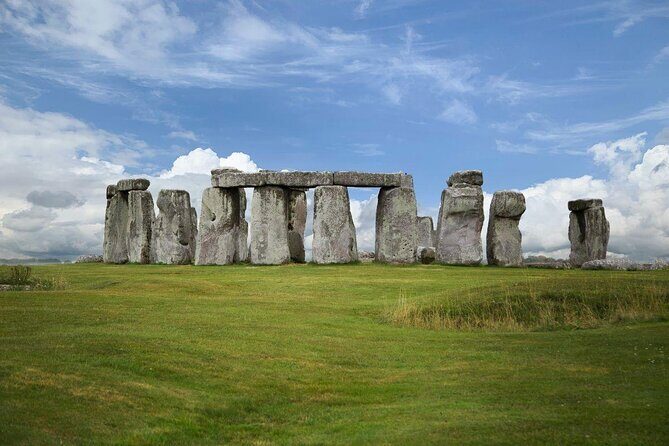
Stonehenge is what people come for. Here, you get around 2 hours, and Stonehenge entrance is not included (listed as £12.70 per person). The monument’s power is partly visual, but it’s also interpretive: there are many theories about what it was for, and your guide’s job is to help you sort ideas by evidence.
What I find valuable is the way this tour reframes your experience. Stonehenge isn’t presented as a puzzle you either solve or don’t. It’s a place that drew people from far away, and the evidence suggests Neolithic and Bronze Age travellers may have come for long stretches—weeks or months—to stand inside the setting.
During your time here, you’re in a position to ask questions that usually go unanswered on standard tours. For example:
- What do excavations suggest about construction stages?
- Why do alignments matter, and why are they debated?
- How do “what we know” and “what we guess” differ at a monument like this?
One more practical note: because you’re not on a fixed group schedule, you can adjust where you spend attention—especially if your guide points out details from different viewpoints.
Salisbury Cathedral and the Magna Carta: connect the ancient and the legal
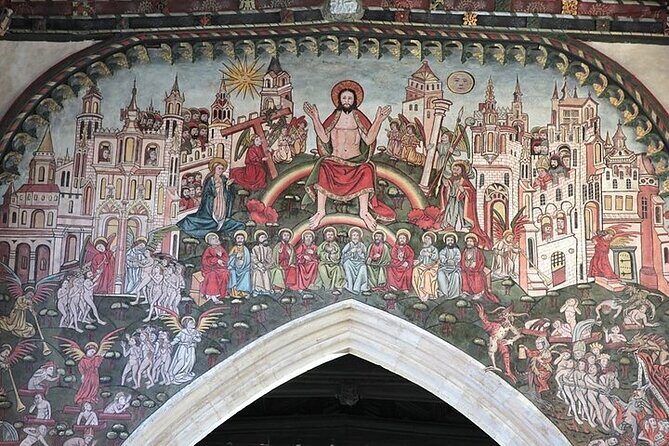
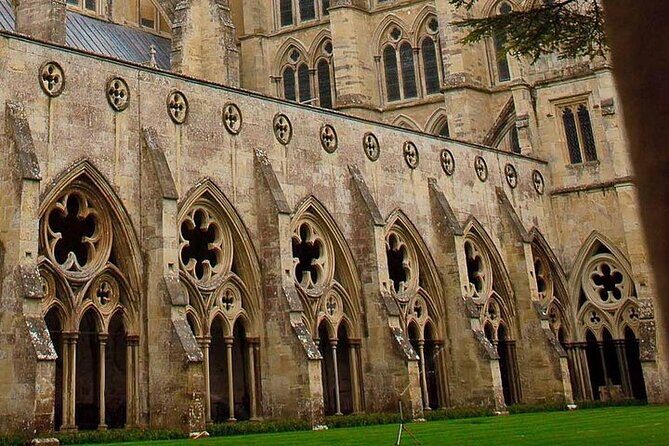
After the prehistoric sites, you pivot to Salisbury and the Magna Carta, which is an excellent rhythm change. You get about 2 hours here, and the Salisbury Cathedral entrance fee is not included (listed as £5.50 per person).
This stop works best if you care about how societies think about rights and authority over time. The Magna Carta isn’t just a document; it’s a legacy that people have interpreted for around 800 years, shaping laws and culture long after it was written.
Even if your main interest is Stonehenge-level archaeology, I’d still recommend this part. It reminds you that “important Britain” isn’t only megaliths. It’s also institutions, texts, and the slow evolution of ideas.
You’ll have time to explore Salisbury itself—handy for a coffee break or a quick stroll—before returning for the next rural hop.
You can also read our reviews of more private tours in London





Milk Hill White Horse: a quick breather that still fits the theme
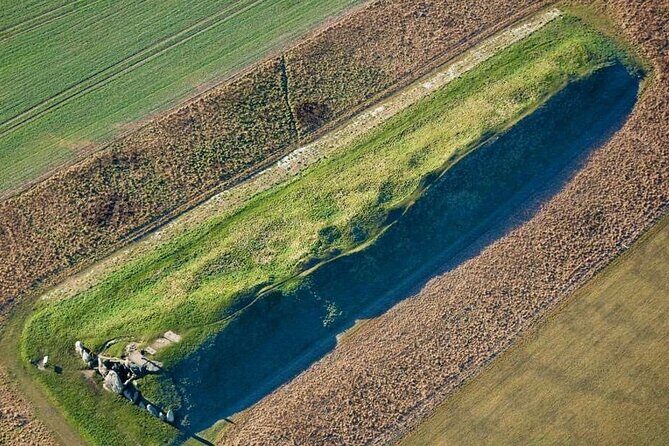
Alton Barnes White Horse is a short stop and free. It’s an engraving on Milk Hill—best thought of as a palate cleanser between bigger sites.
You’re not going to learn Neolithic secrets here, but it does give you something useful: perspective on how modern communities keep marking the landscape. If you want a photo and a moment of stillness, this works. If you’d rather spend those minutes elsewhere, you can ask your guide where to prioritize your time next.
Silbury Hill and West Kennet long barrow: when engineering meets burial
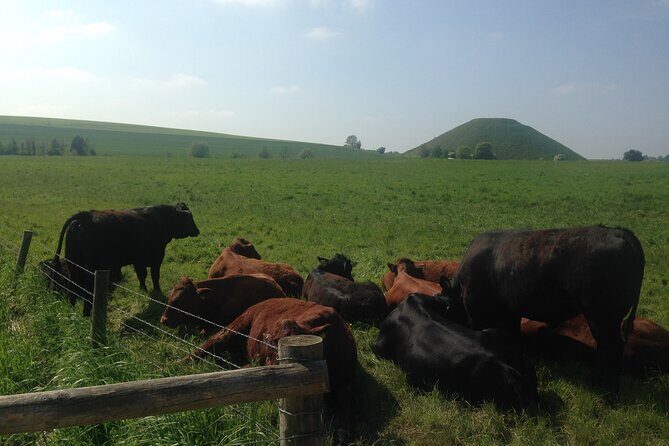
After Salisbury, you head into a zone where scale and purpose feel personal. Two major stops anchor this section: Silbury Hill and West Kennet long barrow.
Silbury Hill: the giant chalk-and-clay mound
Silbury Hill is described as the largest man-made tumuli in Prehistoric Europe. It reaches 37 meters (130 feet) high, with a base diameter around 160 meters (520 feet). It’s made from chalk and clay, built using a technique called terrazzo, or pounded earth—mixing water with dry chalk and clay and then pounding it into place with wooden beams or stone hammers.
This is one of those places where a guide really matters. Without context, it can look like a hill. With context, you start appreciating what it must have required: coordinated labor, planning, and a commitment to a shared goal.
Time here is about 20 minutes, and admission is free. That’s enough for the key facts and photos, but you may want to ask about construction technique and why such effort was worth it.
West Kennet long barrow: entering a 5,500-year-old tomb
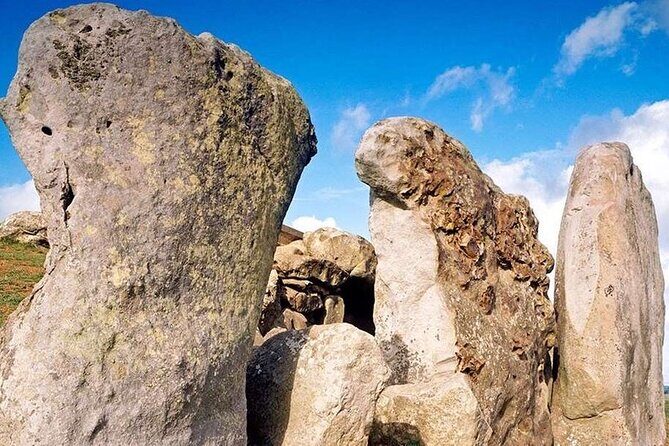
West Kennet long barrow is where the tour gets emotionally real. You step into a Neolithic tomb about 5,500 years old. The barrow includes a burial chamber, an attached passageway, and side chambers. It’s roofed with large slabs of stone, and the entrance is flanked by massive upright stones.
Built around 3750 BC, it’s one of the largest and best-preserved examples of its kind in the country. Archaeological excavations in recent years led to it becoming open to the public.
But timing matters: visits occur between March 1 and October 31. If you’re traveling outside those months, plan for it to be unavailable.
Expect it to be a slower, more grounded visit than the stone circles. Also expect uneven ground, since this is an on-site structure you’ll walk around to enter and view features.
Avebury stone circles and the Red Lion finish: the day’s payoff
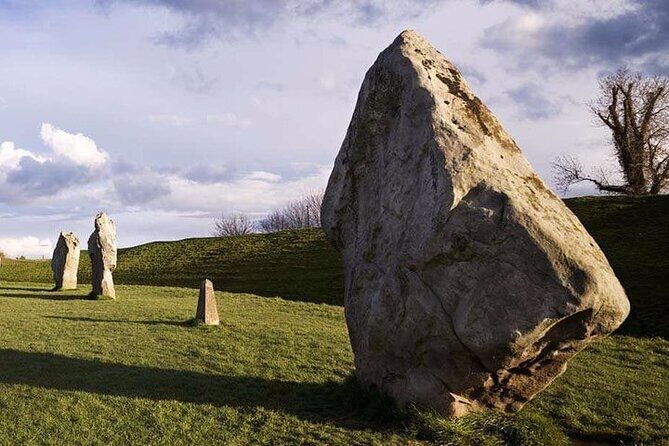
The final stop is Avebury, and it’s a strong choice. Avebury is home to the world’s largest stone circle and sits inside a medieval village. That combination changes the feel of the stones. They aren’t isolated like a museum piece; they’re part of daily life.
You explore:
- three stone circles (outer circle, plus northern and southern circles)
- an avenue of stones connecting key alignments
The stones were erected between 2600 and 2400 BC, and they may have had astronomical or ritual purposes. With an archaeologist guide, you can compare Avebury’s layout to what you learned earlier at Woodhenge and Durrington Walls—how the patterns evolve.
Then the tour adds a human touch: finishing with a drink at the Red Lion pub. That’s optional in spirit, but it gives you a sensible landing point. You’ve been talking about prehistory for most of the day; taking five minutes with something warm or cold helps it all click.
The drive back to London is around 1 hour 45 minutes, and admission for Avebury is listed as free.
Price and value for a group of up to 6
At $1,782.05 per group (up to 6), the price works out very differently depending on who you travel with. If you’re two people, it can feel steep. If you’re four to six people sharing the cost, it starts to look more like a fair trade for a private archaeologist plus a full day of vehicle and driver time.
Here’s how I think about value on this one:
- You’re paying for an expert guide across multiple major sites, not just one.
- You’re paying for private transport (air-conditioned luxury vehicle plus a separate driver) and parking fees.
- Your biggest separate costs are the two paid attractions: Stonehenge and Salisbury Cathedral. Everything else in the day is listed as free admission.
So yes, this is a splurge. But it’s a splurge with structure: you’re not just buying access, you’re buying explanation, context, and flexibility.
There’s also one note of caution based on guide variation. The archaeologist experience can depend on the individual guide’s style. If you end up with an archaeologist who prefers short answers over long discussion—or one who explains at a more general level—you might leave wanting more. That doesn’t mean the tour fails. It just means you should come with questions ready, so your guide has something to work with.
Practical tips for a smooth 11-hour day from London
A few details will make your day easier:
- Start time is 7:30 am, so plan breakfast early. This isn’t a late-morning wander.
- You’ll have moderate walking and uneven surfaces, especially around the megaliths and tomb entry points.
- Bring layers. The tour runs in all weather, and you’ll be outside for many parts.
- Luggage is limited. The luggage compartment is not meant for big items.
- Mobile tickets are part of the setup, and you’ll receive confirmation within 48 hours (subject to availability).
- Pickup is offered, and the tour operates as a private activity, meaning only your group participates.
If you have any mobility concerns, ask before booking. The tour is described as suitable for most travelers, but it’s still a day of feet-first archaeology.
Should you book this private Stonehenge, Salisbury & Avebury tour?
If you want Stonehenge but also want the story behind it, I’d say yes—especially if you’re traveling with 3–6 people who can split the group cost. The early stops (Woodhenge and Durrington Walls) help you understand what Stonehenge represents, not just what it looks like. Then Avebury gives you a satisfying comparison, plus time to slow down and think.
Skip it only if you’re on a tight budget for admission and you expect every single stop to be long and lecture-heavy. This is a well-paced private day with a bit of quick-site time, and the value is in asking questions and getting context—not in dragging out every location.
FAQ
Is this tour private or shared?
It’s private. Only your group will participate, with a guide and dedicated transport for your party.
What does the price include for a group?
The price includes an expert-led archaeologist guide, transport by air-conditioned luxury vehicle, parking fees, and a separate professional driver so the guide can focus on you. Entrance fees for Stonehenge and Salisbury Cathedral are not included.
Do I need separate tickets for Stonehenge and Salisbury Cathedral?
Yes. Stonehenge has an entrance fee listed as £12.70 per person, and Salisbury Cathedral has an entrance fee listed as £5.50 per person. Entrance is listed as free for the other stops.
How long is the tour and what time does it start?
The tour runs about 11 hours and starts at 7:30 am.
When is West Kennet long barrow open to visit?
Visits to West Kennet long barrow happen between March 1 and October 31.
How much walking is involved and what about weather?
There’s a moderate amount of walking and some uneven surfaces. The tour operates in all weather conditions, so dress appropriately for rain, wind, and cool mornings.