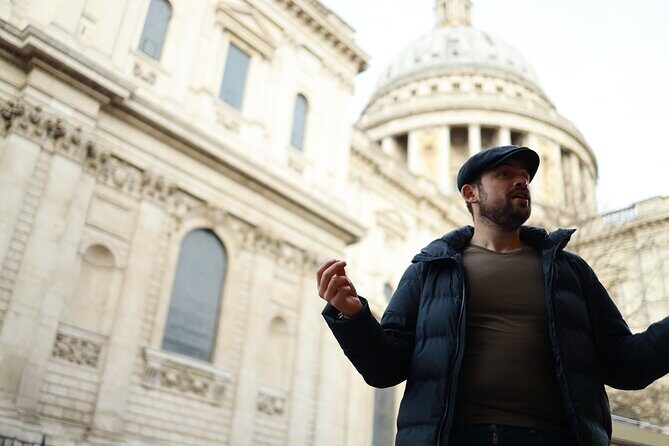
London’s lesser-known lanes get a spotlight. This guided City of London walk strings together Roman-era finds, civic power spots, and photo-friendly landmarks you’d otherwise skip. I especially liked the energy from guide Nick (Loudman Tours) and the fact the group stays small, max 20 people, which makes it easy to ask questions. One practical catch: St. Paul’s Cathedral and the Tower of London are listed with admission not included, so build in extra time and money if you want to go inside.
This is a 2 hours 20 minutes walking tour that starts at the Blackfriar area (Queen Victoria Street) and finishes at Tower Hill. Expect short stops—many are around 15 to 20 minutes—so it’s more about seeing and understanding the right places fast than lingering. If you’re not into walking or you want long museum-style visits, consider adding independent time after the tour.
In This Review
- Key Things That Make This City of London Walk Worth Your Time
- Price and Logistics: What You’re Actually Paying For
- The Route in One Breath: From Blackfriars to Tower Hill
- Step 1: St Paul’s Cathedral and the First Photo Moment
- Guildhall: The City’s 800+ Years of Governance in Plain Sight
- London Mithraeum Bloomberg SPACE: A Roman Temple Stop That’s Actually Free
- Bank of England and Mansion House: When Power Looks Like Architecture
- Royal Exchange: A Commerce Landmark Built for Traders
- Monument to the Great Fire: A Reminder You Can’t Ignore
- Leadenhall Market: The Architecture Break You’ll Want to Photograph
- 120 Garden: A Viewing Platform Stop for City-Wide Perspective
- All Hallows by the Tower: The Church That Survived Long Enough to Tell Stories
- Tower of London Finale: Big Importance, Short Time, Plan for Admission
- What the 2 Hours 20 Minutes Feels Like on Your Feet
- The Value Equation: Why $24.69 Can Be a Smart Buy
- Who Should Book This Walk
- Should You Book This City of London Walking Tour?
- FAQ
- How long is the tour?
- Where does the tour start and end?
- What time does it start?
- Is it a walking tour, and what should I wear?
- Are any admissions included?
- Is lunch included?
Key Things That Make This City of London Walk Worth Your Time
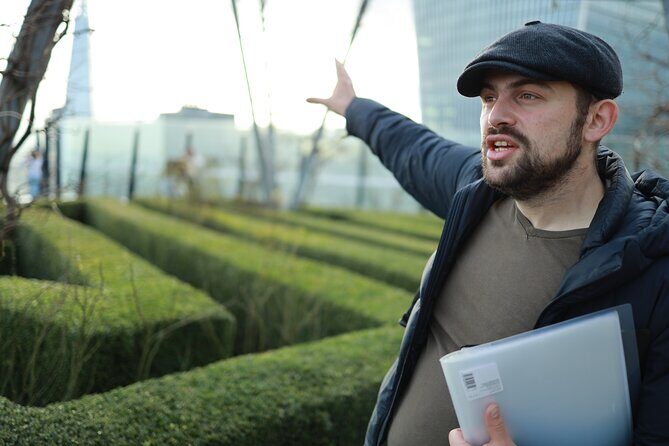
- Small group feel (max 20): easier conversation and a more personal pace.
- Roman London focus: the stops connect the story of Londinium from ancient times through later eras.
- Big-photo stops without the stress: you’ll be near landmarks like St Paul’s and the Tower.
- Real architecture you can read on the street: Guildhall, Bank of England, Royal Exchange, and the Monument.
- Free entry points included: London Mithraeum Bloomberg SPACE, Leadenhall Market, and the 120 Garden viewing platform are listed as free.
- Walk ends where the best views begin: Tower Hill is a great jumping-off point for more exploring.
Price and Logistics: What You’re Actually Paying For

At $24.69 per person, the price looks low for a guided, multi-stop City walk. The reason is simple: you’re not buying a big, full-day attraction ticket. You’re paying for a guide to connect the dots—Roman London, the City’s governing institutions, and why these buildings matter—while you move on foot.
The tour also includes all fees and taxes, which helps keep the “extras math” straightforward. Lunch is not included, so you’ll either eat before you go or plan something near your own schedule after you finish at Tower Hill.
You can also read our reviews of more city tours in London


The Route in One Breath: From Blackfriars to Tower Hill
Your start point is Blackfriar, near Queen Victoria Street, and the walk ends at Tower Hill. That matters because it keeps the morning traffic logic out of your head: you’re going straight through the central core, rather than bouncing around London in random directions.
Start time is 1:30 pm, which is handy if you want a slower morning. Many people like this mid-afternoon slot because you can pair it with a morning museum, a late lunch, or even just a relaxed coffee before heading out.
Group size stays capped at 20, and that small size comes through in how you experience the stops. The guide can slow down for questions, and you’re less likely to get lost in a crowd.
Step 1: St Paul’s Cathedral and the First Photo Moment
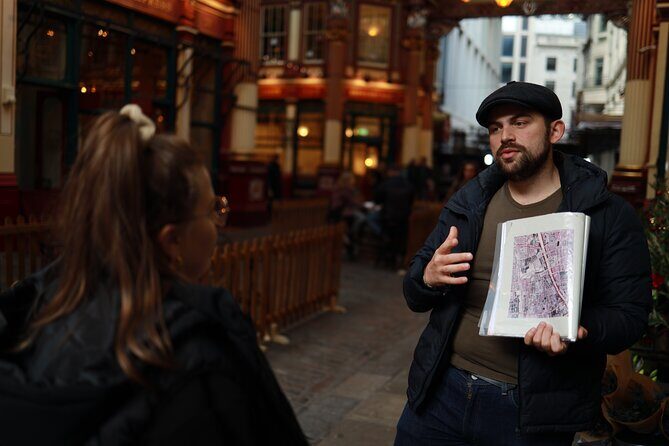
The walk opens with a 15-minute stop at St. Paul’s Cathedral. Even if you’ve seen it in photos before, it hits differently when you’re standing close enough to notice the scale and the way the building anchors the surrounding streets.
Important practical note: admission is not included for St. Paul’s. That means you may view the exterior and the immediate surroundings during your short time, and if you want inside access, you’ll likely need to plan extra time and pay separately.
Why this works early in the tour: it sets the tone. The City can feel like office towers and stone walls until someone explains how the old and powerful parts of London line up. St Paul’s is one of the best places to get that orientation fast.
Guildhall: The City’s 800+ Years of Governance in Plain Sight
After St Paul’s, you’ll focus on the historic London Guildhall, including its role as the ceremonial and administrative center for the City of London for over 800 years.
This is one of those stops where the building isn’t just pretty. It’s functional history. The Guildhall is where City governance happens in a long-running tradition, and understanding that helps you see why the City’s institutions are still so self-contained compared with the rest of London.
You’ll also get a sense of continuity: medieval feasts and modern-day city functions happening in the same neighborhood over centuries. That’s the kind of context that turns architecture into a story you can follow.
London Mithraeum Bloomberg SPACE: A Roman Temple Stop That’s Actually Free
Next up is London Mithraeum Bloomberg SPACE, scheduled for 15 minutes and listed as free. This is a Roman temple site, and it’s one of the most concrete reminders that London’s story didn’t start with kings or clocks—it started long before.
Roman sites can feel abstract when you only see a few bricks. Here, the guided explanation helps you connect the temple’s significance to the larger idea of Roman settlers shaping early Londinium. If you’re a history lover, this stop is the one that often changes how you picture London’s timeline.
One consideration: the stop is short. If you want to go slow and read every panel, you may want to return later on your own. But for a walking tour’s pace, it’s a high-value hit.





Bank of England and Mansion House: When Power Looks Like Architecture
After the Mithraeum, the walk continues through the City’s institutional core, with stops focused on the Bank of England and Mansion House.
- Bank of England: you’ll look at its neoclassical architecture and its role as the heart of the UK’s financial system for over 300 years. The guide’s framing helps you connect this place to the City’s long habit of shaping events beyond London.
- Mansion House: you’ll also focus on this Georgian building, the official residence of the Lord Mayor of London since the mid-18th century. It’s an office-and-pageantry kind of landmark, where civic leadership has always mattered.
These stops can feel less “romantic” than a palace, but that’s why they’re good. London’s real engine is often paperwork, policy, and institutions. Seeing them with context turns those buildings from background scenery into characters in the story.
Royal Exchange: A Commerce Landmark Built for Traders
The route includes the Royal Exchange, founded in 1565 by Sir Thomas Gresham. The core idea here is commerce: merchants and traders from around the world gathered to do business, and the building became a physical symbol of the City’s global role.
You’ll also learn about how it was rebuilt after the Great Fire of London and again in the 19th century. That adds an extra layer to what you’re looking at: the Exchange isn’t just a historic building; it’s a rebuilt sign that the City kept trading through disasters and change.
If you like history that explains why the world is structured the way it is, this stop delivers.
Monument to the Great Fire: A Reminder You Can’t Ignore
The walk then stops at the Monument to the Great Fire of London. It was designed by Sir Christopher Wren, and it stands as a lasting reminder of the catastrophe from 1666, which reshaped the City.
This stop is more than a “wow, tall thing.” It’s a practical example of how one disaster altered city planning, building approaches, and civic memory. And yes, the Monument is known for views from its summit—so even if you don’t go up, you get a sense of why people make a day of it.
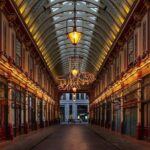
Leadenhall Market: The Architecture Break You’ll Want to Photograph
Next is Leadenhall Market, a 15-minute stop with free admission listed. This is where the tour gives your feet a small reward: the space is photogenic, and it feels more human than office-block London.
Markets have a special role on walks like this. They let you pause and absorb atmosphere while still staying connected to the City’s identity. You’re not only seeing institutions—you’re seeing where people shop and pass through.
The time is short, so keep your camera ready and be quick about wide shots first, then details second.
120 Garden: A Viewing Platform Stop for City-Wide Perspective
You’ll then visit the Garden at 120 viewing platform for about 20 minutes. It’s listed as free, and that’s a big deal for value because a viewing stop can easily become an extra-paid attraction elsewhere.
This is where you finally get to zoom out—panoramic views of the skyline and landmarks help you understand the City as a whole rather than a line of street-level sights. It also gives you a natural pause before you head toward the more intense final stretch.
All Hallows by the Tower: The Church That Survived Long Enough to Tell Stories
Near the Tower area, the tour includes All Hallows by the Tower, described as the oldest church in the City of London at over 1,300 years old. The tour also notes it narrowly survived the Great Fire of 1666, which is the kind of detail that makes a building feel like it has scars.
Inside, you’ll hear about artifacts such as a Roman pavement and exhibits connected to the church’s long life. This stop fits the tour’s Roman-through-city-through-fire theme in a way that feels grounded, not forced.
If you’re the type who loves small, old places—places that don’t scream tourist attraction—this is a highlight.
Tower of London Finale: Big Importance, Short Time, Plan for Admission
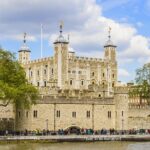
The walk ends at the Tower of London, with a 20-minute stop. This is where the City’s political drama becomes physical: royal intrigue, imprisonment, and executions are part of the Tower’s long reputation.
Admission is listed as not included, so your experience here may depend on how much you choose to pay for entry versus how much you want to focus on the exterior and nearby areas. If you want the full Tower experience, don’t treat this as your only chance. Use it as a guided setup, then consider returning later with more time.
Still, as a tour finale, it works well. You finish at the place that feels like London’s memory made stone.
What the 2 Hours 20 Minutes Feels Like on Your Feet
This is a walking tour, and the total time is about 2 hours 20 minutes. Many stops are short—often 15 minutes, with a couple longer at 20 minutes—so you should expect a steady rhythm rather than long museum-style breaks.
That pacing is a feature, not a bug, if you want a City overview with real context. It’s also why the small group size matters. When you’re with about 20 people, you’re less likely to be rushed through explanations you actually want.
From what I learned through the guide style praised by others, Nick’s approach is energetic and detail-heavy, and he seems to keep the tone friendly rather than lecture-only. That’s perfect for a tour like this, where there’s a lot to learn in a short amount of time.
The Value Equation: Why $24.69 Can Be a Smart Buy
Let’s do the simple value math. In your time, you get:
- Several key City landmarks connected into one story.
- Multiple photo-worthy points near major icons.
- Free stops listed for London Mithraeum Bloomberg SPACE, Leadenhall Market, and Garden at 120.
- A guide to interpret the architecture and institutions so you’re not just taking pictures with no idea why the place matters.
The possible cost “gotcha” is admission at St. Paul’s Cathedral and the Tower of London, since those are not included. If you plan to go inside both, your total trip cost will rise. If you’re fine with seeing them from the outside during the tour and using your own time later, the $24.69 fee stays very reasonable.
Either way, the guide’s job is the value engine here: translating stone, offices, and institutions into something that feels understandable fast.
Who Should Book This Walk
This tour is a strong fit if you:
- Want a guided way to understand Roman London and the City’s evolution
- Like short stops with clear takeaways
- Enjoy architecture, governance, and institutions—not just famous landmarks
- Prefer a smaller group where you can talk to the guide
It’s less ideal if you need lots of downtime, dislike walking, or expect each stop to be a long, ticketed visit.
Should You Book This City of London Walking Tour?
Yes, if you want a smart, time-efficient way to understand the City of London’s past and see the big names in a more meaningful order. The free entry stops help keep it economical, and the small group format makes the guide’s storytelling feel personal. Just plan for the admission possibility at St. Paul’s and the Tower so you aren’t surprised by extra costs at the end of the walk.
If you’re willing to add your own time for any inside visits you care most about, this is the kind of afternoon that leaves you with a much clearer mental map of Londinium to modern finance.
FAQ
How long is the tour?
It’s about 2 hours 20 minutes.
Where does the tour start and end?
It starts at The Blackfriar, 174 Queen Victoria St, London EC4V 4EG and ends at Tower Hill, London EC3N.
What time does it start?
The start time listed is 1:30 pm.
Is it a walking tour, and what should I wear?
Yes, it’s a walking tour. Wear comfortable shoes.
Are any admissions included?
Some stops are listed as free, including London Mithraeum Bloomberg SPACE, Leadenhall Market, and Garden at 120. St. Paul’s Cathedral and the Tower of London are listed with admission ticket not included.
Is lunch included?
No, lunch is not included.