REVIEW · LONDON
Imperial War Museum and Churchill War Rooms
Book on Viator →Operated by How to do History · Bookable on Viator
War rooms feel uncomfortably close to real life. This small-group tour pairs the Imperial War Museum with the Churchill War Rooms, so you move from the broad story of British conflict to the tight nerve-center of wartime decision-making.
I especially liked how our guide Andy started by quickly sorting the topics we cared about most, then used that to guide our time through the IWM. I also loved the way Sheldon brought the Churchill War Rooms to life, with clear context about key players such as Hastings Ismay and the Chiefs of Staff.
The main thing to consider is pacing: in just 3 hours, you’ll cover a lot of ground. If you prefer to linger for a long time in one section, you might feel a little rushed.
In This Review
- Key highlights worth your attention
- Why these two London sites fit together so well
- Imperial War Museum London: making sense of conflict in 90 minutes
- What you should do before you go in
- The only potential drawback here
- From Lambeth to King Charles Street: timing that keeps the day workable
- Churchill War Rooms: the command center feel you can’t really fake
- Sheldon’s approach: names plus meaning
- A smart moment at the end
- How the guides keep WWII readable instead of overwhelming
- Included admissions: what you actually save
- Price and value: is $180.30 per person a fair deal?
- Who this tour suits best in real life
- Should you book the Imperial War Museum and Churchill War Rooms tour?
- FAQ
- How long is the Imperial War Museum and Churchill War Rooms tour?
- Where does the tour start and end?
- Is admission to both sites included?
- What size is the group?
- What language is the tour offered in?
- Can I cancel for a full refund?
Key highlights worth your attention
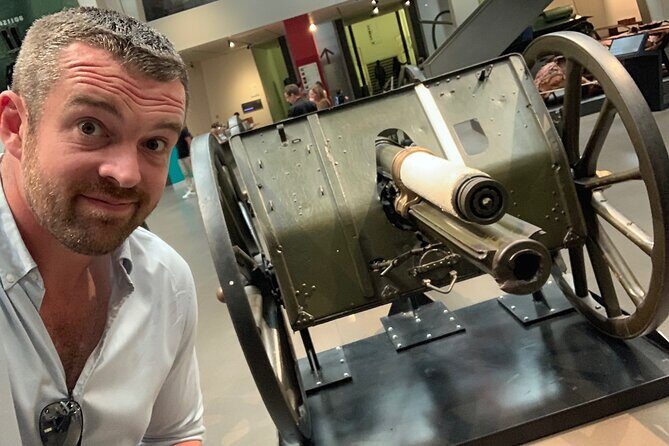
- A two-site story arc: big-picture conflict in the Imperial War Museum, then the command mindset in the Churchill War Rooms
- Small group size (max 8): easier questions and less time waiting around
- Interest-led museum time: Andy helps focus the museum visit so you don’t waste effort wandering
- People behind policy: Sheldon connects Churchill’s leadership to figures like Hastings Ismay and the Chiefs of Staff
- Admission included twice: you spend your energy inside, not on ticket logistics
- Mobile ticket: less hassle when you arrive
Why these two London sites fit together so well
The Imperial War Museum and the Churchill War Rooms are both about war, but they don’t do it the same way. The museum helps you understand the full sweep of conflict—how Britain experienced modern war since the early 1900s, with a special focus on the two world wars. Then, once you reach the old Cabinet War Rooms, the scale shrinks fast. Suddenly you’re looking at the tools, personnel, and daily mechanics of wartime administration between 1940 and 1945.
That contrast is the secret sauce of this tour. You don’t just hear about World War II in the abstract. You get context first, then you see where decisions were made, who helped shape them, and how Churchill’s leadership was supported by a wider team.
For your time in London, it’s also practical. You’re not trying to map out two major stops on your own, or guessing which sections will matter most. The guides act like translators between the museum’s broad themes and the war rooms’ concentrated command world.
You can also read our reviews of more museum experiences in London


Imperial War Museum London: making sense of conflict in 90 minutes
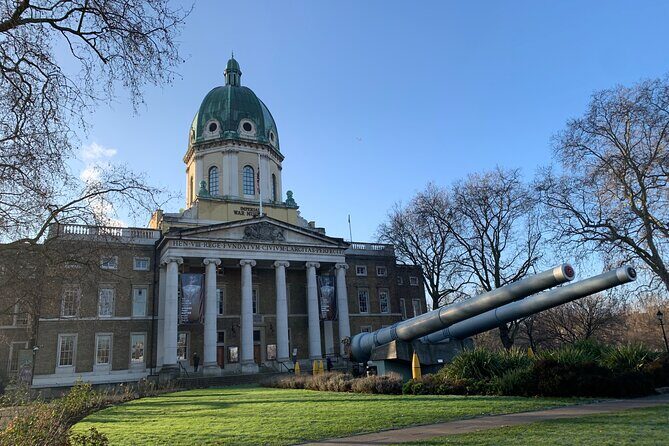
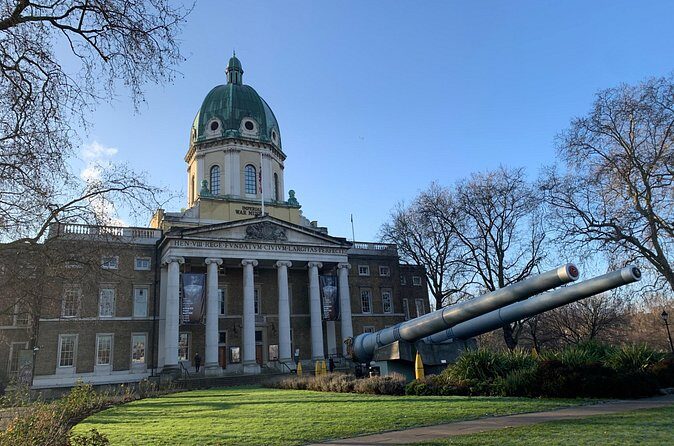
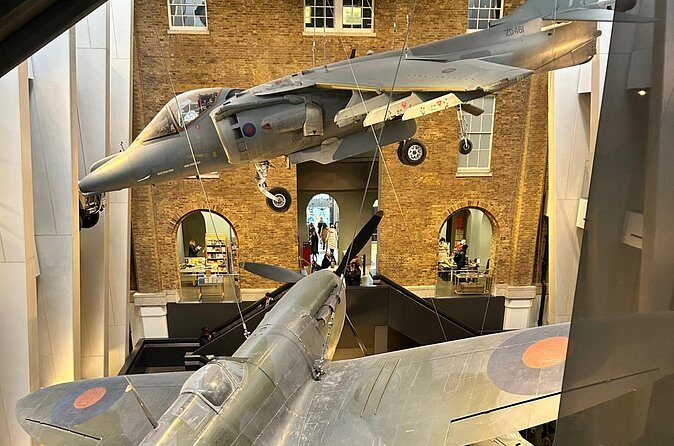
At the Imperial War Museum, you’re guided around the main site, with the emphasis on Britain’s experience in conflict since 1914—especially the First and Second World Wars. The museum is the kind of place where you could easily spend all day and still feel like you missed things. This tour does something smart: it treats the visit like a guided route, not a free-for-all.
You start with an overview that helps you get bearings fast. That matters because the IWM covers many angles—different theaters of war, different types of conflict, and different views of what it meant to fight. With a guide steering the time, you can connect the dots instead of collecting random facts.
One of my favorite moments in this stop was how Andy doesn’t just talk at you. He asked which topics we most wanted to cover, then used that to keep the tour focused. That sounds small, but it changes everything. If you’re curious about the home front, the military side, or the air/sea dimensions of war, you’ll feel like your interests actually drive the pacing.
What you should do before you go in
You’ll get more from the 1 hour 30 minutes if you show up with at least a rough direction. Think in terms of:
- Which war matters more to you: WWI, WWII, or both
- Which angle you want: battlefield action, British society during conflict, or leadership and strategy
- Any names or topics you already care about
Then trust the guide to steer you.
The only potential drawback here
A guided pass through a major museum always means trade-offs. The IWM is big, so you’ll cover the “main” parts with purpose, not every corner. If you’re the type who wants to read every label end-to-end, this structured tour may feel like it moves on too quickly.
From Lambeth to King Charles Street: timing that keeps the day workable
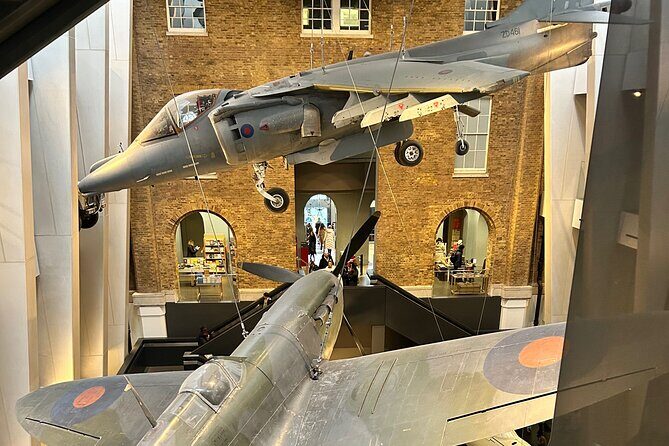
After the museum, you travel to the Churchill War Rooms at King Charles St. The meeting point is Imperial War Museum, Lambeth Rd, London SE1 6HZ, and the tour ends at Churchill War Rooms, King Charles St, London SW1A 2AQ.
Two practical points make this smoother than trying to DIY it:
- The schedule is built as a tight package: about 3 hours total, with dedicated time for each site.
- The tour is positioned near public transportation, so you’re not stuck with a long, awkward logistics problem.
Because this is a guided experience, you don’t have to waste mental energy figuring out routes, entrances, or timing. The group format also helps you stay organized. In London, that’s often half the battle.
One more note: the tour information calls for strong physical fitness level. That doesn’t automatically mean “hardcore,” but it does suggest you should be ready for standing, moving between spaces, and keeping up a brisk tempo.






Churchill War Rooms: the command center feel you can’t really fake
The Churchill War Rooms (also known as the Cabinet War Rooms) are where the tour shifts from overview to the heart of wartime administration. This portion covers what the war leadership used and who staffed it between 1940 and 1945, under Winston Churchill’s leadership.
You spend about 1 hour 15 minutes here, exploring Churchill’s life and history and also some of the key figures around him—especially the Chiefs of Staff and Churchill’s principal military advisor, Hastings Ismay.
What I find compelling is that the war rooms give you a setting that practically forces you to think in terms of urgency and coordination. Instead of hearing that decisions were made, you’re physically placed in the environment where those decisions were shaped.
Sheldon’s approach: names plus meaning
In my view, the War Rooms work best when someone connects the setting to actual people. Sheldon did that by bringing both historical nuance and a sense of how Churchill’s mindset fit the pressures of wartime leadership. The result is that the names (Churchill, the Chiefs of Staff, Hastings Ismay) aren’t just labels on a wall. They become roles in a functioning command system.
A smart moment at the end
Toward the end, the tour tends to leave you to browse the souvenir shop at the war rooms. It’s a nice buffer if you want a few minutes to decompress, grab a book or print, or just slow down before you head back into the city.
How the guides keep WWII readable instead of overwhelming
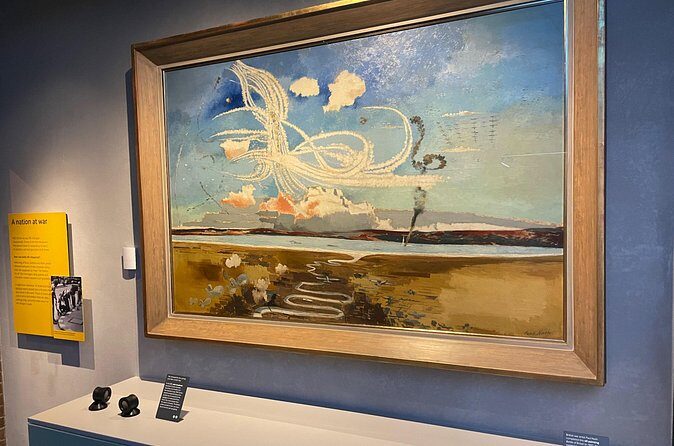
Three decades and two world wars in a short guided tour could easily turn into a blur. It doesn’t have to. The strongest part of this experience is how the guides keep the story understandable while still covering real complexity.
In practice, that means:
- Upfront focus-setting so you don’t wander through the museum with no direction
- Clear explanations that connect events and people rather than tossing dates at you
- Space for questions, so you can chase what you’re genuinely curious about
In one highlight, the discussion even touched on anti-submarine warfare. That’s the kind of topic you’d never know to prioritize unless you had a guide willing to follow your curiosity and explain with confidence.
For you, the payoff is simple: you leave feeling like you can place key moments in context, and you understand why the people in the war rooms mattered—not just what they did.
Included admissions: what you actually save
This tour includes admission tickets for both stops. That matters more than it sounds. Museums and major historic sites can have time spent on ticket lines and decision-making. Here, your guide handles the flow, and you get your time inside without turning your day into admin.
You’ll also use a mobile ticket, which helps in a city where paper tickets can be easy to misplace. The tour also confirms at booking time, which reduces uncertainty when you’re scheduling other plans in London.
And because the structure is built around entry and guided time, you’re more likely to use the museum and the war rooms efficiently instead of half-exploring and then rushing at the end.
Price and value: is $180.30 per person a fair deal?
At $180.30 per person, this isn’t a bargain-bin activity. But it also isn’t just paying for door entry.
You’re paying for:
- A guided visit that’s structured around two major sites
- Admission included at both the Imperial War Museum and the Churchill War Rooms
- A small group experience (maximum 8), which usually means more responsive pacing
- Guided interpretation that saves you from spending your limited London hours deciding what to see
If you only have a short window for London history, the math starts to make sense. Trying to do both sites independently is doable, but it can cost time and mental energy—time you might rather spend exploring.
If you’re a strict budget traveler with plenty of days, you could DIY and go slower. But if you want an efficient, guided “big picture to command room” route in a single morning or afternoon block, this is a strong value-for-time option.
Who this tour suits best in real life
This experience is a great match if you:
- Want a focused, guided overview of Britain’s conflict since 1914, with special emphasis on WWI and WWII
- Are especially interested in Winston Churchill’s leadership and the people around him
- Prefer small-group touring over big crowds and audio-only visits
- Have enough physical stamina for a guided walk-and-stand style day
It may not be ideal if you’re the type who needs a lot of silent time to read every exhibit in detail, or if you’re hoping for a slow, no-rush museum experience. The tour’s strength is clarity and pace, not lingering.
Also, the tour is offered in English, so if that’s your comfort zone, you’ll get the most from it. If it isn’t, you’d need to look for other language options (none are indicated here).
Should you book the Imperial War Museum and Churchill War Rooms tour?
Yes, I think you should book it if your goal is understanding, not just checking boxes. The pairing makes sense: the Imperial War Museum helps you grasp the wider British experience of modern conflict, and the Churchill War Rooms show you the command environment where wartime administration operated.
Book it especially if you like your history with structure—someone helping you sort what matters in limited time. The small group size and the guide-led focus are the difference between a pile of facts and a story you can actually hold in your head.
If you want slow pacing, you might prefer separate visits on different days. But for a single, high-impact London outing, this tour is one of the most direct ways to connect two iconic WWII landmarks into a single coherent experience.
FAQ
How long is the Imperial War Museum and Churchill War Rooms tour?
It runs for about 3 hours.
Where does the tour start and end?
It starts at Imperial War Museum, Lambeth Rd, London SE1 6HZ, and ends at Churchill War Rooms, King Charles St, London SW1A 2AQ.
Is admission to both sites included?
Yes. Admission tickets are included for the Imperial War Museum and the Churchill War Rooms.
What size is the group?
The tour has a maximum of 8 travelers.
What language is the tour offered in?
The tour is offered in English.
Can I cancel for a full refund?
Yes, you can cancel up to 24 hours in advance for a full refund. If you cancel less than 24 hours before the start time, it won’t be refunded.