REVIEW · LONDON
Indoor Skydiving Experience at iFLY London 2 Flights
Book on Viator →Operated by iFLY Indoor Skydiving · Bookable on Viator
Some people want thrills without the plane.
That’s exactly what iFLY London at The O2 delivers: indoor skydiving in a vertical wind tunnel, with an instructor coaching you through free-fall style flying.
I like that you get two flights included in about 90 minutes, so you’re not just doing one quick try and hoping for the best. I also love the human factor: instructors such as Liam, Ardan, Rangi, and Ferne show up in real stories as calm, clear, and encouraging, including for people nervous about heights.
The one thing to watch is value. The actual flying time is short per flight, and the venue is built around add-ons like upgraded high flights and media, so the final bill can creep up.
In This Review
- Key things to know before you fly
- Indoor Skydiving at The O2: what you’re really paying for
- Getting ready right: check-in timing and the rules that matter
- The 90-minute session: what happens between your flights
- Two flights, two chances: how coaching changes the experience
- The optional high flight: when it’s worth the extra money
- Photos, videos, and the add-on economy at iFLY
- Price and value in London: what $110.90 buys
- Who should book iFLY, and who should think twice
- Should you book indoor skydiving at iFLY London?
- FAQ
- How long is the iFLY London session?
- How many flights are included?
- Do I need to arrive early?
- Is there an age minimum?
- What are the weight and health limits?
- Is the group size large?
- Is a high flight included in the standard price?
- Can I bring a phone to film during the activity?
Key things to know before you fly
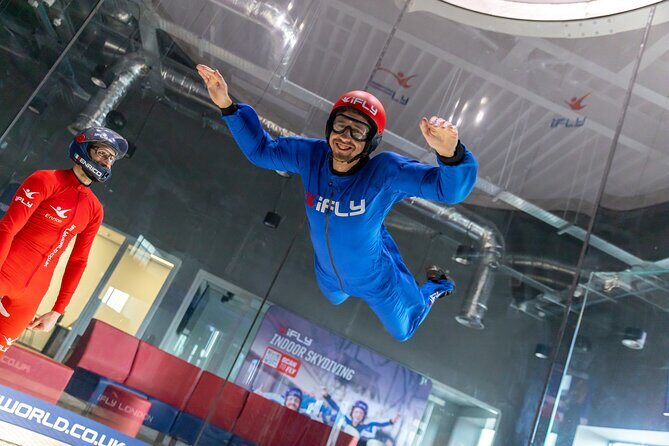
- Two included flights per person, each around 50–60 seconds, inside a controlled wind tunnel.
- Arrive early: check-in is 45 minutes before your booked flight time because gearing up and briefing take real time.
- Small groups: the session has a maximum of 13 people, which helps the flow and keeps coaching focused.
- Optional high flight exists if you want to go higher with a specially trained instructor (height can vary).
- Plan around photos/videos: media is sold on-site, and some people were unhappy with quality or felt pressured.
Indoor Skydiving at The O2: what you’re really paying for
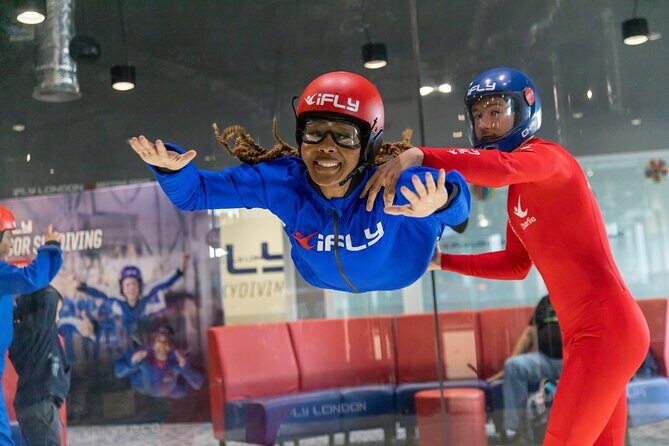
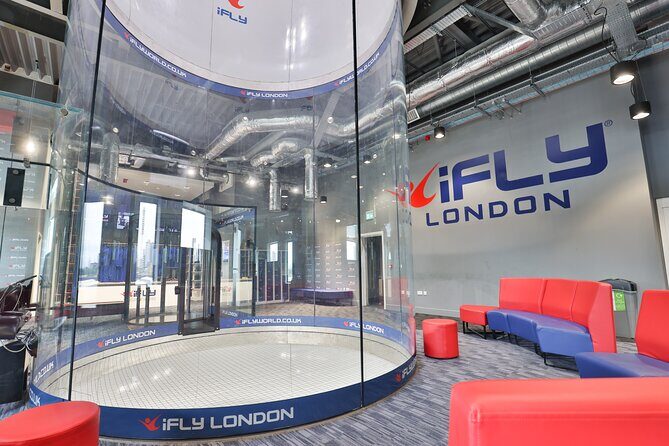
iFLY London is built for one goal: give you the sensation of free-fall without jumping out of an airplane. You step into a vertical wind tunnel. Then air flow does the work that gravity would do outdoors. An instructor stays with you and coaches your body position so you can fly safely and look good doing it.
What makes this experience interesting is that it’s not about long training or complicated maneuvers. It’s about getting you comfortable fast, then letting your body learn what the right position feels like. In real terms, it’s a controlled intro to skydiving physics.
Two things I’d highlight from the strongest stories: first, people often come in nervous and leave feeling coached into confidence. Names like Rangi and Ferne show up tied to supportive, reassuring teaching, and that matters when you’re worried about heights. Second, you can get a second chance quickly. Since you get two flights, you’re not just repeating one “training run.” You can improve between attempts.
You can also read our reviews of more tours and experiences in London.



Getting ready right: check-in timing and the rules that matter
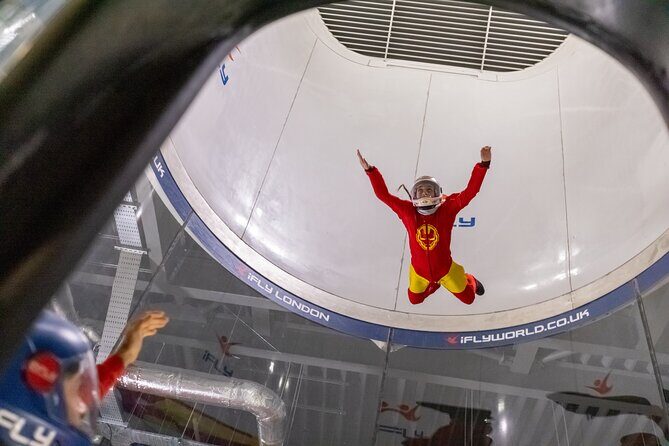
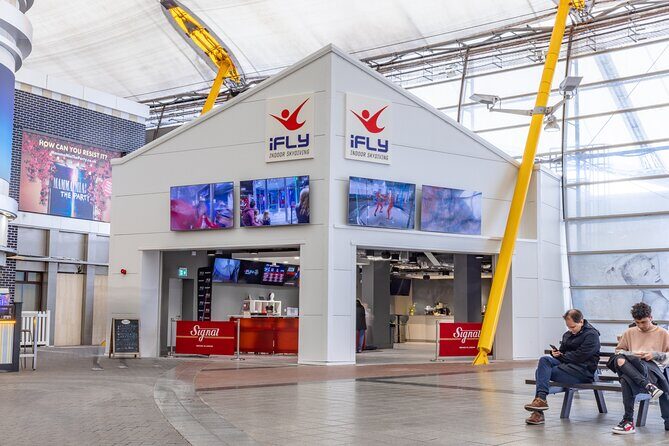
The biggest practical tip is simple: don’t show up late. You need to check in at least 45 minutes before your booked flight time. The venue even runs like an airline with a manifest, so being early protects you from the chain reaction of delays (and London traffic surprises).
Before you get suited up, you’ll be screened for basic safety and eligibility. You may fly if you:
- Weigh less than 18 stone 7 pounds / 117 kg
- Are not pregnant
- Have not previously dislocated your shoulder
- Are not under the influence of alcohol or non-prescribed drugs
- Are not wearing a hard cast
Those limits aren’t there to be annoying. They affect how safely you can be strapped, positioned, and coached in a high-stress posture. If any of these apply to you, it’s worth contacting iFLY directly instead of guessing.
Also: this is suitable for age 3 and above, but you should still expect a moderate physical fitness level. That usually means you can stand, move into the right gear and stance, and follow instructions under a bit of stress.
The 90-minute session: what happens between your flights
Your total time on-site is about 1 hour 30 minutes. That doesn’t mean you’re flying for 90 minutes. The wind tunnel time is measured in seconds. The rest is briefing, gearing up, and taking turns so the tunnel stays safe and organized.
Here’s what the flow generally feels like:
- Check-in and briefing (where you learn the body cues and safety rules)
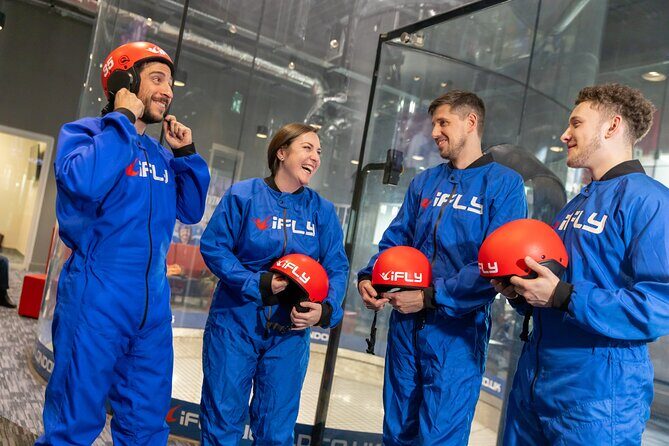
- Gearing up (clothes and equipment that match your flight)
- Wind tunnel time in two rounds (often around 50–60 seconds each)
- Reset and queueing so the next flight can start properly
If you’re the type who hates waiting, this may test your patience. Some people felt they spent more time readying and waiting than actually flying. That’s not unusual in operations like this, but it’s still the main trade-off: you’re buying a safe, coached taste of free-fall, not a long personal training camp.
The upside is that the whole experience has a clear arc. You go from unsure to slightly better with each flight. And because it’s structured, you don’t have to figure out what to do next.
Two flights, two chances: how coaching changes the experience
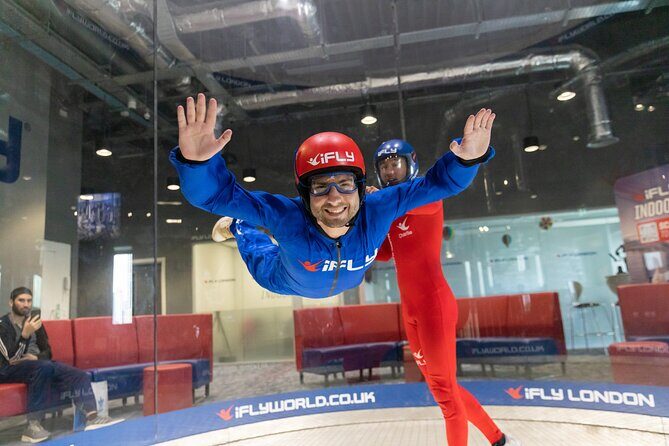
With two flights included, you can treat the first as a warm-up and the second as the one where you try to relax and nail the position.
This is where instructor quality really shows up. In the stories I read, names like Ardan and Rangi were praised for clear explanations and calm support, especially for first-timers. When you’re in a wind tunnel, it helps when someone gives simple cues that make sense in your body, not just in your head.
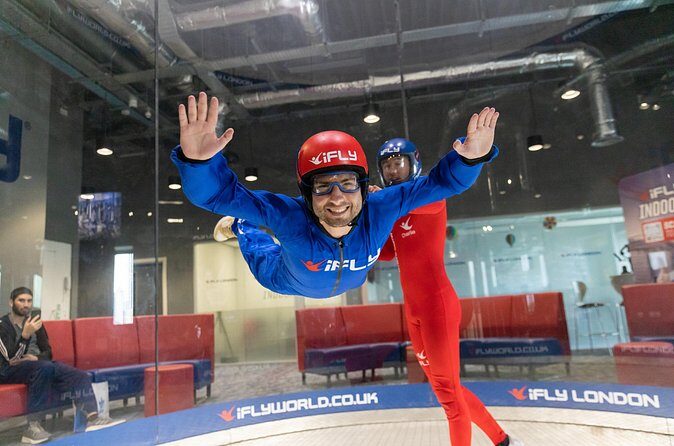
You’ll also see the instructors demonstrate movements. One great example: Ardan demonstrated Superman moves, and people found it genuinely impressive. That kind of moment works like a reset. It reminds you you’re watching professionals, not just taking a gimmick ride.
One practical consideration: if you’re trying to conquer a fear of heights, you may want to go into this with patience. It’s not instant. But a good instructor can reduce the panic by making each step feel predictable.
The optional high flight: when it’s worth the extra money
There’s an add-on called the High-Flight, and it’s described as flying higher with a specially trained instructor. Many people feel it’s an upgrade worth considering, especially if you’re paying for a special day out and you want something beyond “hovering.”
That said, be aware of two value realities:
- The experience still isn’t a long free-fall session. Even with the upgrade, the overall time in the tunnel stays short.
- Height can vary due to safety guidelines and instructor assessment.
So ask yourself a blunt question before you spend extra: do you want the higher experience, or do you just want the core thrill? If you’re already satisfied with the two standard flights, you might not need to upgrade.




Photos, videos, and the add-on economy at iFLY
This is where cost can surprise you. The base price is $110.90 per person, and your session time is fixed. After that, the venue sells media and upgrades. Some people said the media packages weren’t worth it, complaining about blurry images or that the photos/videos didn’t match how they expected the high flight to look.
You should also know there may be restrictions on where you can bring your phone for filming. One person specifically noted they couldn’t take their phone to the seating area, which made them feel forced toward the official media.
My practical advice:
- Decide ahead of time whether you want the official media package. If you skip it, you can save money.
- If you do buy it, go in with the understanding that you’re paying for convenience, not cinematic perfection.
- If you want your own footage, check what areas allow personal devices before you count on it.
None of this ruins the core flight. But it can change the final experience from fun to frustrating if you’re expecting a souvenir-proof bundle.
Price and value in London: what $110.90 buys
At $110.90 per person, this sits in the “treat day” category. You’re not paying for time; you’re paying for setup, safety management, a specialized facility at The O2, and two coached flights in a controlled environment.
So the value argument is not how long you’re in the tunnel. The value argument is what you get for a single visit:
- Two chances to fly
- Instructor coaching that helps you correct your position quickly
- A real simulation of free-fall sensations without the outdoor jump
Where value gets messy is when you start adding the things people often add: high flight and media. One theme in unhappy stories is spending a lot more than expected for very brief tunnel time, plus feeling disappointed by photo/video quality.
If you want the cleanest value, I’d keep your plan simple: book the base two flights and treat it as a one-day “I did it” adventure. If you’re chasing a bigger spectacle, then consider the high flight, but still keep your expectations aligned with short tunnel time.
Who should book iFLY, and who should think twice
This experience fits well for:
- People who are curious about skydiving but not ready for the real thing
- First-timers who want an instructor-led approach
- Families with kids age 3+ (the session is structured to handle a range of ages)
It may not be ideal if:
- You hate waiting and only tolerate brief activities
- You’re very budget-sensitive and don’t want add-ons
- You’re hoping to self-film everywhere with a phone without any restrictions
Also, if you have any of the health or safety conditions listed (weight limit, pregnancy, shoulder history, cast type, substance influence), don’t try to “work around it.” It’s safer to check with iFLY directly.
And for nerves: I’d lean into the coaching promise. Several instructors were singled out for calming first-timers. If you’re anxious about heights, choose your moment and let the briefing do its job.
Should you book indoor skydiving at iFLY London?
If you want a fun, guided thrill in London with two flights included and the chance to learn fast in a safe wind tunnel, iFLY at The O2 is a strong bet. The best part is the combination of short, intense flying plus coaching that can turn fear into focus.
Book with clear expectations: you’re buying seconds in the tunnel, not a long skydiving session. Then protect your budget by thinking carefully about the High-Flight and media packages. If you want simple value, stick to the base flights. If you want a bigger splurge day, the high flight can add extra satisfaction, but only if you accept that the overall flying time still stays brief.
FAQ
How long is the iFLY London session?
It’s about 1 hour 30 minutes total, including check-in, briefing, gearing up, and your two flights.
How many flights are included?
You get two flights per person, and each flight lasts around 50–60 seconds.
Do I need to arrive early?
Yes. You must check in at least 45 minutes before your booked flight time, because you’ll need time to get geared up and follow the session schedule.
Is there an age minimum?
Yes. The experience is suitable for ages 3 and above.
What are the weight and health limits?
You may fly if you weigh less than 18 stone 7 pounds / 117 kg, are not pregnant, have not previously dislocated your shoulder, are not under the influence of alcohol or non-prescribed drugs, and are not wearing a hard cast.
Is the group size large?
No. The experience has a maximum of 13 travelers per session.
Is a high flight included in the standard price?
The high flight is described as an optional add-on, so it’s not guaranteed to be included in the base package.
Can I bring a phone to film during the activity?
Your ability to film may depend on where you are in the venue. One flyer noted phones weren’t allowed to the seating area, so it’s smart to confirm what’s permitted before you rely on your own footage.