REVIEW · LONDON
Jack The Ripper Walking Tour of London
Book on Viator →Operated by See The Sights Tours · Bookable on Viator
Jack the Ripper lives in London streets. This walk takes you to the most talked-about corners of Whitechapel, then ties them to evidence, victims, and the big question people still argue about. You’ll also pass classic East End landmarks along the way, so it’s not just true-crime trivia.
What I love most is how route-based it feels. You don’t wander. Your guide keeps the story tied to real locations, so you see the sites without getting lost. I also like that it’s victim-focused and respectful—murder and prostitution are part of the topic, but the tone stays humane, with clear context rather than shock value. Guides such as Carolina and Adam have been specifically praised for being engaging, thoughtful, and easy to follow.
One drawback to consider: this is not a light, kid-friendly stroll. The tour covers dark and mature themes, and it isn’t suitable for guests with walking or mobility difficulties, or for prams/strollers.
Key things to know before you go
- A tight 2–3 hour route built around Whitechapel’s key Ripper-era stops, then finishing back at The Ten Bells
- Real locations tied to evidence, including the bloodstained apron link connected to Goulston Street
- Victims and everyday East End life get real attention, not just famous suspects
- Theories discussed, without sensational shouting, and with a tone meant to honor those who were harmed
- Group size is capped at 25, which helps keep the experience organized and personal
In This Review
- Whitechapel on Foot: Why This Tour Works
- Price and What You Actually Get for It
- Getting Started: Aldgate Station and the Yellow Umbrella
- Stop 1: Whitechapel (The Longest Listen)
- Stop 2: The Ten Bells Pub and the Question That Won’t Quit
- Stop 3: Goulston Street and the Apron Evidence
- Stop 4: Brick Lane and the East End You Can Still See
- Stop 5: Spitalfields Market (Where People Lived and Were Seen)
- Stop 6: Christ Church Spitalfields and the Quiet Weight of a Landmark
- Stop 7: St Botolph’s Aldgate and the Church of Prostitutes
- Finishing at The Ten Bells: A Lively End to a Heavy Story
- What Makes the Guides Matter Here (Carolina, Adam, and the Tone)
- Who This Tour Is Best For
- Should You Book the Jack the Ripper Walking Tour?
- FAQ
- What is the tour duration?
- How much does the Jack the Ripper Walking Tour cost?
- Where does the tour start and end?
- What’s the meeting point detail at Aldgate Station?
- What language is the tour offered in?
- Is there a ticket fee for the stops?
- Is the tour suitable for children?
- Is it accessible for wheelchair users or strollers?
- Is there a limit on group size?
Whitechapel on Foot: Why This Tour Works
There are plenty of Jack the Ripper experiences in London, but this one has a simple strength: it’s built for you to understand the geography. Whitechapel can be confusing, especially if you’re trying to follow famous names from books or documentaries. On this walk, each stop has a job. The guide connects that place to what happened there, who was involved, and what people think it might mean.
You also get a nice balance between the big mystery and the human side. The tour doesn’t treat the case like a Halloween costume. Instead, it spends time on the women who were murdered and on the harsh realities of East End life in 1888. That makes the walk feel heavier in the right way—more like history with consequences than entertainment.
And at about $19.41 per person for a guided tour lasting roughly 2 to 3 hours, it’s strong value if you like structured storytelling. You’re paying for a professional guide, a planned route through multiple locations, and discussion of theories and evidence—no museum tickets required for the key stops.
Price and What You Actually Get for It
Let’s talk value, because in London, “cheap” can also mean “thin.” This experience earns its price by including more than just a couple of photos outside famous places.
For the money, you get:
- a professional guided walking tour
- crime-scene locations around Whitechapel
- theories, clues, and evidence about the identity of Jack the Ripper
- stories that focus on victims and the social conditions of the East End
- time at landmarks such as Spitalfields Market and Brick Lane
- a mobile ticket and an English-speaking guide
The practical win here is the structure. You’re not paying for an audio guide while you figure out what’s important. You’re paying for someone to point out what matters and explain why it matters—while keeping the tone respectful.
You can also read our reviews of more walking tours in London


Getting Started: Aldgate Station and the Yellow Umbrella
Your walk begins at Aldgate Station, at Aldgate High St, London EC3N 1AH. The meeting point is by Hotel Saint (9 Aldgate High Street), and the guide will be holding a yellow umbrella.
That detail matters. In a crowded station area, a visible meetup cue saves time and stress. Also, the tour ends at The Ten Bells, so the route makes a loop-like story arc: you start in the Whitechapel/inner-East End orbit, then finish at the pub that anchors so much of the popular lore.
Two more practical notes:
- The tour is in English and is near public transportation.
- It requires good weather, so check the forecast for your travel day. If conditions aren’t right, the operator offers a different date or a full refund.
Stop 1: Whitechapel (The Longest Listen)
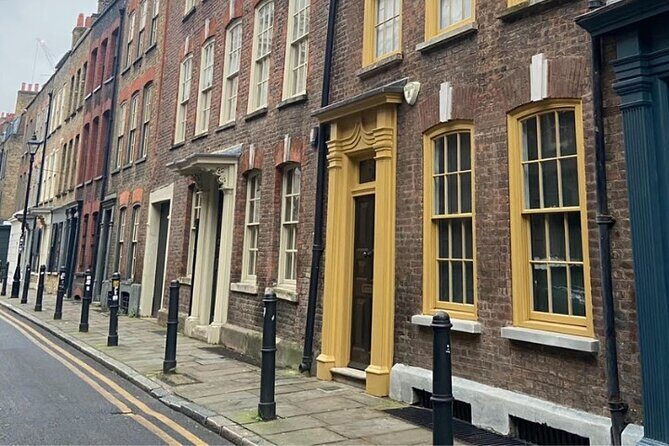
Whitechapel is where the story becomes real. This is your first big segment, about 2 hours, and it sets the context for everything that follows.
Your guide walks you through the kinds of conditions that helped shape the case: poverty, overcrowding, and social unrest. The area becomes the stage for the murders that drew worldwide attention in 1888, with the killer still unidentified.
What’s valuable here is pacing. Spending the most time at the start means you aren’t trying to learn everything while moving too fast. You get context first—then when the tour reaches the famous sites, the names start to click.
Potential downside: because this is longer than the other stops, you’ll want to be comfortable with standing and listening for a while. If you’re the type who gets antsy without constant movement, you might feel like you’re waiting through the longer introduction.
Stop 2: The Ten Bells Pub and the Question That Won’t Quit
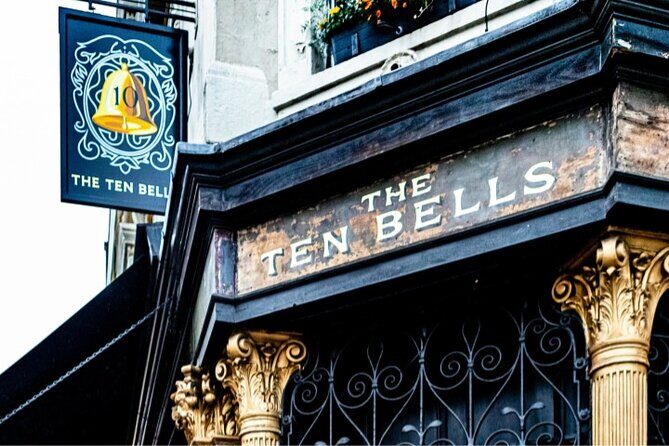
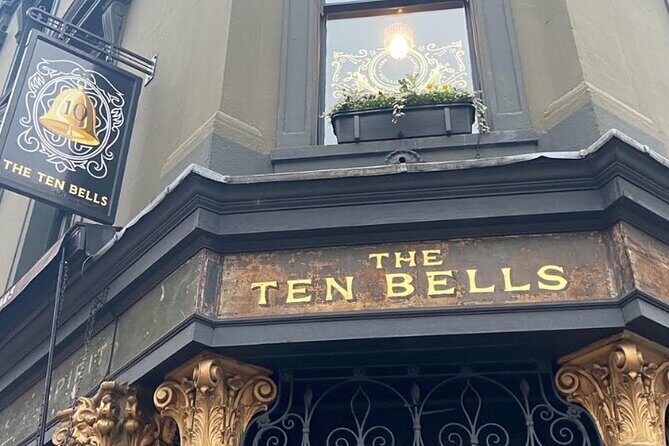
Next comes The Ten Bells, the most famous Jack the Ripper site on the route. It’s only about 10 minutes, but it’s a concentrated moment because so much lore revolves around this one pub.
Here, you’ll connect the pub to victims who visited in the hours before their deaths, and you’ll get the central haunted question: did Jack the Ripper visit the pub too?
This is where the tour’s “theory” side comes forward. You’re not just hearing a script. You’re hearing ideas tied to places, and you’re being encouraged to think about what evidence people use to support different stories.
One thing to keep in mind: the Ten Bells stop is short. If you want extra time inside the pub, you can always plan a post-tour drink since the walk ends there anyway.
Stop 3: Goulston Street and the Apron Evidence
If Whitechapel is the context, Goulston Street is one of the sharpest story hooks on the walk. Again, it’s about 10 minutes, but it’s packed because of a specific piece of evidence tied to Catherine Eddowes in 1888.
A portion of her bloodied apron was reportedly found in a doorway on this street, making it a central location in the mystery.
Why this stop matters for you: evidence-based details help separate rumor from the case’s “facts people keep returning to.” Even if you’ve watched documentaries before, you may appreciate hearing how specific locations get linked to particular findings.
Quick consideration: since the evidence is tied to violence, the tone can feel heavy. This is one reason I think the tour’s respectful approach is a real strength. The story stays grounded in human impact, not spectacle.





Stop 4: Brick Lane and the East End You Can Still See
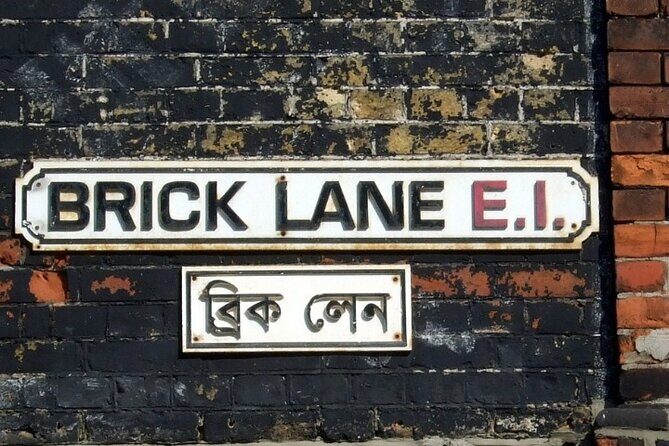
From Goulston Street, you move toward Brick Lane, one of the East End’s best-known streets. This stop is about 10 minutes.
You’ll learn how Brick Lane sat inside the poorer, crowded East End during 1888—the same general environment where victims were frequently found or had ties. The street’s association adds to the dark layer people attach to it.
The practical upside of this stop is that you also get a sense of the modern city. Brick Lane is a real place you can recognize. So after hearing about the Victorian backdrop, you can look around and try to imagine how the area’s density and social pressures might have looked then.
The drawback is also practical: you won’t get deep time to explore Brick Lane’s current scene because it’s a short stop. Think of it as a story waypoint, not a street market tour.
Stop 5: Spitalfields Market (Where People Lived and Were Seen)
Next is Spitalfields Market E1, another 10-minute stop. This one adds a “nearby life” feel to the case.
You’ll hear how the market area sat close to the grim events of 1888, and how several victims lived or were last seen near these streets. That proximity is the point: you start thinking about the case not as a distant crime story, but as something tangled up with daily movement—where people lived, worked, and went about their day.
If you like tours that connect dots between a crime and the lived geography around it, you’ll likely enjoy this section. It makes the case feel less like a mystery locked in a book and more like a problem rooted in ordinary streets.
Stop 6: Christ Church Spitalfields and the Quiet Weight of a Landmark
You’ll then visit Christ Church Spitalfields, about 10 minutes.
The church is positioned as a silent witness to the era. Your guide connects it to the nearby sites of the infamous 1888 murders and notes that some victims were last seen nearby. Even today, that proximity gives the place an eerie atmosphere—one that comes from context more than from spooky props.
I like this stop because it forces a different kind of imagining. Instead of focusing only on street corners tied to violence, you’re also looking at how landmarks endure while human lives and safety change around them.
You’ll want a moment here to slow down and look. It’s easy to rush when the tour keeps moving, but the church’s meaning is in standing still for a second.
Stop 7: St Botolph’s Aldgate and the Church of Prostitutes
The final stop on the walk is St Botolph’s Aldgate, again about 10 minutes.
This church is linked to the Ripper case through proximity to Whitechapel crime scenes. It’s known as the Church of Prostitutes, because women often gathered nearby for safety, and several of the Ripper’s victims were known to frequent the area.
This is one of the most sensitive parts of the tour. The subject involves prostitution, and the tour clearly signals that it covers murder and prostitution as mature themes. If you’re attending with people who are sensitive to that topic, it’s worth knowing ahead of time.
The upside is that the tour’s focus on victims and context makes the landmark feel less like a shock magnet and more like a reminder that the story involved real people with complicated circumstances.
Finishing at The Ten Bells: A Lively End to a Heavy Story
After the last stop, the tour ends at The Ten Bells Pub. That matters because it turns the closing scene into something you can choose.
You can simply leave and head on, or you can grab a drink and reset in a warm public setting. In fact, one practical tip from the tone of the experience itself is that The Ten Bells is often described as lively rather than theatrically haunted. Ending there lets you come out of the story without being stuck in it.
If you plan to stay, give yourself a little time buffer. The walk ends at the pub, so you’re already in the right place to do something casual afterward.
What Makes the Guides Matter Here (Carolina, Adam, and the Tone)
A huge part of whether a dark-history tour feels respectful or exploitative is the guide’s voice. The best reviews highlight that the guides keep things thoughtful and victim-focused, using clear context and helpful photos.
Two names show up repeatedly in the feedback: Carolina and Adam. Carolina has been praised for keeping the pace digestible and for using photos and respectful framing. Adam has been praised for being friendly and humorous while still staying respectful and for providing facts that weren’t obvious even to people who had watched documentaries the week before.
That matters because Jack the Ripper content can veer into sensational territory fast. Here, the emphasis is on honoring victims and explaining the puzzle. That’s what keeps the walk from turning into a spooky reenactment.
Who This Tour Is Best For
You’ll likely enjoy this tour if:
- you like structured walking tours where you’re not left to connect the dots
- you enjoy true-crime history but prefer it grounded in evidence and context
- you’re curious about the often-overlooked victims, not only the famous killer
- you want a route that covers multiple key locations: Whitechapel, Brick Lane, Spitalfields Market, Christ Church Spitalfields, and St Botolph’s Aldgate
It might be less ideal if:
- you need step-free access or lots of frequent seating opportunities, because the tour is not suitable for walking or mobility difficulties
- you’re traveling with a stroller/pram, since it’s not suitable for those
- you’re bringing younger kids, since the tour covers murder and prostitution and the operator recommends children be aged 14+ and the guide won’t adjust the tour for children in attendance
Should You Book the Jack the Ripper Walking Tour?
If you want Jack the Ripper in a way that’s place-based, respectful, and structured, I’d book it. At around $19.41 for a 2 to 3 hour guided walk that hits multiple serious sites and includes theories and evidence, it’s strong value—especially if you care more about context than about theatrics.
Book it confidently if you’re the type who likes:
- a clear route through Whitechapel
- discussions of clues tied to actual locations
- a tone that honors victims
Skip or reconsider if you’re expecting an easy, family-friendly walk, or if mobility needs mean you’d struggle with the format. Also, plan for weather: the tour requires good conditions, so check ahead.
FAQ
What is the tour duration?
The tour runs about 2 to 3 hours.
How much does the Jack the Ripper Walking Tour cost?
It costs $19.41 per person.
Where does the tour start and end?
It starts at Aldgate Station (Aldgate High St, London EC3N 1AH) and ends at The Ten Bells Pub (84 Commercial St, London E1 6LY).
What’s the meeting point detail at Aldgate Station?
You meet your guide at Aldgate Station, next to Hotel Saint at 9 Aldgate High Street, and the guide will be holding a yellow umbrella. The tour starts at Aldgate Station, not Aldgate East.
What language is the tour offered in?
The tour is offered in English.
Is there a ticket fee for the stops?
The tour notes admission ticket free for the listed stops.
Is the tour suitable for children?
The tour covers dark and mature themes, including murder and prostitution. The recommendation is children aged 14+, and the guide will not adjust the tour due to children in attendance.
Is it accessible for wheelchair users or strollers?
The tour is not suitable for guests with walking or mobility difficulties and is not suitable for prams, buggys, or strollers.
Is there a limit on group size?
Yes, the tour has a maximum of 25 travelers.