REVIEW · LONDON
Jack the Ripper Walking Tour with Expert Ripperologist
Book on Viator →Operated by Jack the Ripper Walks · Bookable on Viator
London gets dark fast. This Jack the Ripper walk mixes a costumed expert guide with 14-inch backlit visuals so the story sticks as you move street to street. I love the way you learn the Whitechapel setting and key stops without fussing with maps, but plan for limited toilets and lots of standing.
You’ll cover the route that takes you from Aldgate into the heart of 1888 Whitechapel and back out toward Spitalfields, stopping at places tied to the crimes and the day-to-day grind that made them possible. The guide keeps things focused on the victims and the people around them, not just shock value.
One thing to consider before you book: this is a walking tour with a moderate pace and 2+ hours on your feet, and it is not recommended if walking and standing are a struggle. That said, it’s a strong fit if you like dark history done with care and context.
In This Review
- Key highlights you’ll feel during the walk
- Entering Aldgate: how the route makes sense fast
- St Botolph’s to Aldgate Square: poverty, crowding, and the 1888 backdrop
- Mitre Street: the first double-night details at the City edge
- Petticoat Lane to Goulston Street: police boundaries and the one clue
- Gunthorpe Street and George Yard Buildings: Martha Tabram’s likely claim
- Thrawl Street and Brick Lane corners: Mary Ann Nichols and Annie Chapman
- Wilkes Street to Puma Court: the Dear Boss letter
- Ten Bells and Christchurch Graveyard: a favorite pub and Itchy Park
- Spitalfields finale: the London Fruit & Wool Exchange and Mary Kelly’s last day
- What the cost, visuals, and guide style mean for you
- Practical tips so you enjoy the walk (not just survive it)
- Who should book this Jack the Ripper walking tour
- Is it worth $23.61? My value check
- Should you book this tour?
- FAQ
- How long is the Jack the Ripper walking tour?
- Where do I meet and where does the tour end?
- Is the tour offered in English?
- Do I need tickets or pay for admissions during the walk?
- Is this tour suitable for people who struggle to walk for 2+ hours?
- Are there age limits?
- Are restrooms available during the tour?
- How big is the group?
- What is the cancellation rule?
Key highlights you’ll feel during the walk

- Expert Ripperologist storytelling with a costumed guide touch for atmosphere
- 14-inch backlit tablet visuals so you can actually see the images and scenes clearly
- A route that avoids map-checking while you follow the story logically through the area
- Clear focus on locations and timing, including Elizabeth Stride and Catherine Eddowes on the night of the double event
- Crime-lane details like boundary lines between jurisdictions and the clue that followed police steps
- Small-group cap of 30 so the guide can keep control of the pacing
Entering Aldgate: how the route makes sense fast
The tour kicks off at Aldgate Station on Aldgate High St (EC3N 1AH). You start the story right where London’s geography matters: St Botolph’s Aldgate, a church tied to its old nickname, the Prostitutes Church, because women historically solicited near where the church stood.
That opening works for two reasons. First, it tells you what this area was known for, not just what happened there. Second, it gives you a mindset: you’re not just hunting murder sites, you’re seeing the neighborhood context that shaped everything in 1888.
From there, you keep moving without turning it into a scavenger hunt. The guide’s job is to keep you oriented—what you’re looking at, why this corner matters, and what comes next. For me, that’s the best kind of walking tour: you pay to have someone do the thinking for you while you do the walking.
You can also read our reviews of more walking tours in London


St Botolph’s to Aldgate Square: poverty, crowding, and the 1888 backdrop
Your next stop is Aldgate Square, next to the church. Here the guide sets the stage with a blunt picture of overcrowded Whitechapel and the day-to-day reality of people living on the breadline. Expect talk of squalor, crime, and degradation—not as vague gloom, but as the social pressure cooker around the streets you’re walking.
This part matters because it changes how you interpret the later scenes. If you only chase locations, you can miss the core point: these murders happened inside a system of scarcity, fear, and survival. The tour does the hard work of making that connection feel real.
And yes, you’ll be standing and listening for short bursts—around ten minutes at this stop—so come ready for a slightly slower rhythm than a typical hop-on, hop-off stroll.
Mitre Street: the first double-night details at the City edge
At Mitre Street, right by the City boundary, you get into the story’s sharp edges. This stop centers on Elizabeth Stride, nicknamed Long Liz, described as the first victim killed on the night of the double event. Then the guide moves a few yards to explain Catherine Eddowes, killed about 45 minutes later at the spot discussed on this route.
What I like here is the precision. The tour doesn’t treat these names like labels on a map. It gives you timing and sequence, then ties them to where you are standing now.
If you’re the kind of person who remembers history by images and geography, this is where the guide’s tablet visuals really help—because you’re comparing what you see outside with what the area was like back then.
Petticoat Lane to Goulston Street: police boundaries and the one clue
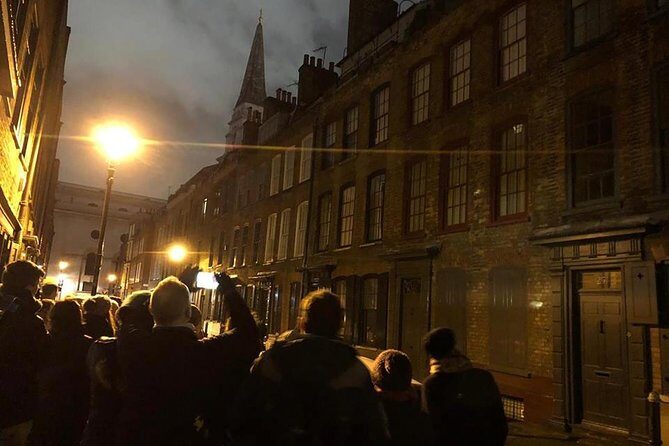
Next up is Petticoat Lane Market, now referred to as Middlesex St. You’re shown this as a key boundary between the City of London and the Metropolitan area—and the big deal here is the human one: there were separate police forces for these areas.
This is not trivia. Jurisdiction lines change how fast people respond, who investigates, and how evidence travels. Even if you don’t care about policing, you should care about this: it helps explain why the chase and coverage weren’t one unified machine.
From there you head to Goulston Street. You pause at a doorway tied to what the tour says was the only clue found on the same route that police took that night, hot on Jack’s trail. It’s a short stop, but it’s one of the most “story-clicks-into-place” moments on the walk.
Gunthorpe Street and George Yard Buildings: Martha Tabram’s likely claim
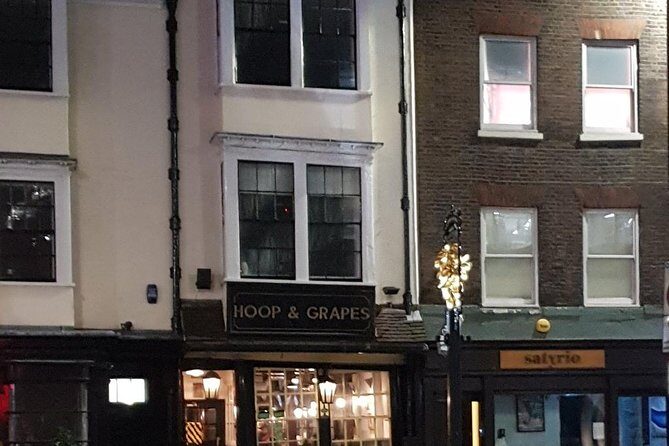
At Gunthorpe Street, you view the street from Wentworth St with a look toward where Martha Tabram was found murdered on 7 Aug 1888 in George Yard Buildings. The tour says she is now thought to be the most likely first victim of Jack the Ripper.
This is a great moment to slow down mentally. The area is still busy and modern, but the guide keeps pulling you back to what matters: who was here, what the streets connected to, and how that evidence shaped the hunt.
One caution: because this is a street-facing viewpoint, you’ll get the best experience if you’re willing to stand quietly and listen through traffic noise. If you struggle to hear in busy areas, bring your best patience and keep close to the guide.





Thrawl Street and Brick Lane corners: Mary Ann Nichols and Annie Chapman
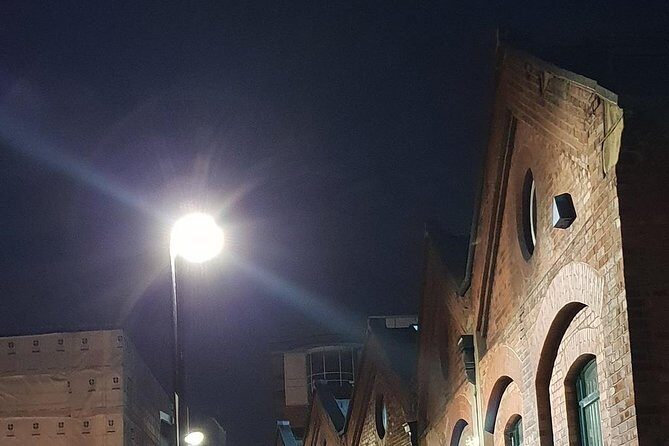
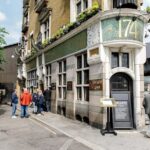
Then the walk presses into Brick Lane territory. At Thrawl Street, you stop opposite the Frying Pan Pub on the corner. The story here centers on Mary Ann Nichols, described as having her last drink before she staggered down Whitechapel Road to be murdered in Bucks Row, behind Whitechapel Station.
Why this stop lands: pubs and corners are where stories become believable. Even without modern-day details, the guide makes the movement path feel like a real person’s last known steps.
A little later you turn into Hanbury Street. Here the tour says Annie Chapman was murdered in the back yard of 29 Hanbury St. Compared with the earlier stops, this one feels more grounded and specific because you’re tied to a named address.
Wilkes Street to Puma Court: the Dear Boss letter
Next is Wilkes Street, including a walk through a street described as untouched by time since the 1800s. From there you make your way to Puma Court, where you hear about the Dear Boss letter.
This stop is a nice break from the pure crime-scene routine. You’re shifting from bodies and streets to the way messages fueled fear, attention, and speculation. It’s also a good moment to reset your brain—because if you’re on this tour for the first time, the names and sequence can start to blur.
Ten Bells and Christchurch Graveyard: a favorite pub and Itchy Park
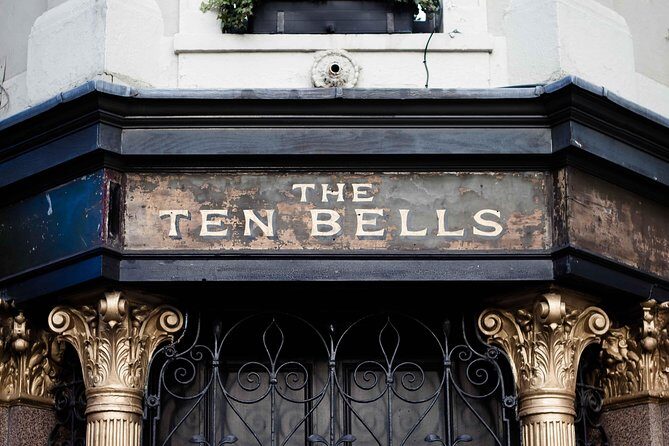
At The Ten Bells, you stop opposite a pub identified as Mary Kelly’s favourite. Nearby, the tour also points you toward Christchurch Graveyard, nicknamed Itchy Park, where the homeless were said to sleep in the daytime.
This is one of those “you didn’t know you needed this” parts. It makes the story feel wider than crime. You see how the neighborhood sheltered people and how that daily reality sat beside the murders.
It also helps the guide’s tone make sense. Costumed or theatrical elements don’t erase the serious part; they frame it. The best guides keep the line: atmosphere without turning real suffering into a show.
Spitalfields finale: the London Fruit & Wool Exchange and Mary Kelly’s last day
Your last stretch leads you to Old Spitalfields Market. You stop opposite the London Fruit & Wool Exchange, then into the entrance area to hear about a letter sent to George Lusk, head of the Whitechapel Vigilance Group.
Finally, you reach the square behind the London Fruit & Wool Exchange where the tour ends with the murder of Mary Kelly, described as Jack’s last victim, killed on 9 Nov 1888. From here it’s about a 5-minute walk to Liverpool Street Station, with multiple tube line options.
This ending works because it closes the loop: from street corners and boundaries to organized community response and the final victim. If you’re the type who likes closure, you’ll likely feel it here.
What the cost, visuals, and guide style mean for you
At $23.61 per person for about 2 hours 30 minutes, the value isn’t just that it’s cheaper than private guiding. You’re buying a structured route plus tools that solve common tour problems.
First, the tour includes all the photos of victims and sites shown on a 14-inch backlit tablet, meant to be clear enough that you can actually follow visuals while standing outside. That’s a big deal on dark-history tours, where low detail can turn into confusion fast.
Second, the guide’s style is part of the product. You’ll see it in the balance: upbeat and even witty at times, but with an obvious attempt to treat the women involved with sensitivity. That shows up in how the story is framed—who the guide emphasizes, how they connect events to neighborhood reality, and how they pace the stops.
Third, you’re capped at 30 travelers. That small-group limit matters because it reduces the classic problem of walking tours: you can end up behind people with no clue what the guide is pointing at. Here, the setup is designed for you to hear and see.
Practical tips so you enjoy the walk (not just survive it)
This is straightforward, but it helps to plan smart:
- Wear shoes you trust. You’ll stand at multiple corners and doorways for short stretches, and the route is meant for walking.
- Bring layers. You’re outdoors for the full story, and weather can change fast in London.
- Toilet options are very limited, so use facilities before you start.
- If you’re traveling with kids, note the limit: no children under 15 and 16–17 must be accompanied by an adult.
- If walking 2+ hours is hard for you, this is not recommended.
If you want the option of more personal pacing, there’s also mention of a private tour for smaller group attention and a choice of information. That can be a good call if you want extra focus on suspects rather than the neighborhood and victims.
Who should book this Jack the Ripper walking tour
This works best for you if:
- You like dark London history with real place-based context (not just names).
- You want a guide to connect crime scenes to what the streets were like in 1888.
- You appreciate visuals and want something more concrete than a purely spoken story.
You might choose something else if:
- You hate walking tours with standing time.
- You need frequent restroom breaks.
- You’re hoping for a long, suspects-only lecture. This tour’s emphasis is on the people and the area around the crimes.
Also, book ahead. It’s commonly reserved about 40 days in advance, so last-minute plans can get tight.
Is it worth $23.61? My value check
For $23.61, you’re paying for a focused 2.5-hour guided route plus included visuals on a 14-inch backlit tablet. You’re not paying for separate admissions at most points, because the major stops are outside street views and doorway moments.
The real “value” is in the structure:
- The stop order follows a logical geographic arc through Whitechapel.
- The guide gives you timing details at key points like Stride and Eddowes.
- The City vs Metropolitan boundary explanation gives you a clearer why, not just a what.
If you’ve done London tours that wander without meaning, this one is the opposite. It’s built to keep the story moving with you.
Should you book this tour?
Yes, if you want a route-based Jack the Ripper experience that connects streets, timing, and 1888 neighborhood reality with visuals you can actually see. The combination of a costumed guide, careful pacing, and backlit tablet images makes it easier to follow than a purely spoken walk.
But if your priority is comfort above all, or you can’t manage 2+ hours of standing and walking, skip it. Choose a format with more downtime or a smaller, more tailored setup.
If you fit the walking-and-listening profile, this is a strong buy for your London schedule.
FAQ
How long is the Jack the Ripper walking tour?
It runs for about 2 hours 30 minutes.
Where do I meet and where does the tour end?
You start at Aldgate Station, Aldgate High St, London EC3N 1AH. The tour ends at 66–68 Bell Ln, London E1 7LA, inside the square of the London Fruit & Wool Exchange area, with Liverpool Street Station about 5 minutes away.
Is the tour offered in English?
Yes, it is offered in English.
Do I need tickets or pay for admissions during the walk?
Most stops are handled as free to view from outside viewpoints. Some market stops are noted as not including admission, but the tour focuses on the street-level sites along the route.
Is this tour suitable for people who struggle to walk for 2+ hours?
No. It is not recommended if you cannot walk and stand for 2+ hours.
Are there age limits?
Yes. No children under 15 are allowed, and 16–17 must be accompanied by an adult.
Are restrooms available during the tour?
Toilets are very limited on the route, so plan ahead.
How big is the group?
The tour has a maximum of 30 travelers.
What is the cancellation rule?
You can cancel for a full refund up to 24 hours in advance of the experience start time.