REVIEW · LIVERPOOL
Liverpool: City & Cavern Quarter Walking Tour
Book on Viator →Operated by Vox City International Ltd · Bookable on Viator
Beatles and buildings, all on one walk. This Liverpool City & Cavern Quarter tour helps you get your bearings fast while you pass major landmarks that explain how the city grew from port power to pop-music legend. I like that you’re not stuck with just a live guide, either: the Vox City app audio is there to carry the story in English plus German, Spanish, French, and Italian.
The second big plus for me is the Cavern Quarter focus—especially the stop at The Cavern Club and the Merseybeat connection, including the detail that The Beatles played there 292 times. One thing to keep in mind: a walking tour lives and dies by timing, and there’s been at least one reported start-time problem where a group didn’t show, so plan to arrive about 5 minutes early and keep your voucher directions handy.
In This Review
- Key things I’d watch for on this Liverpool walk
- Where Derby Square sets the tone
- St George’s Hall, the Cenotaph, and the city’s “center of gravity”
- The Cavern Club stop: Merseybeat in real space
- Radio City and the skyline view you might not plan otherwise
- Maritime Liverpool: Old Dock and the Sailor’s Home
- Bluecoat, Liverpool Central Library, and cultural institutions
- A few streets that sharpen the Liverpool story
- Beatles, war, and the dock city story in one route
- Price, timing, and what you actually need to bring
- Should you book this Liverpool City & Cavern Quarter walk?
- FAQ
- How long is the Liverpool City & Cavern Quarter walking tour?
- Where is the meeting point for this tour?
- What languages are available for the in-app audio commentary?
- Is entry to attractions included in the price?
- Do I need to bring my own headphones or mobile device?
- How many people are in a group?
- Is there a free cancellation option?
Key things I’d watch for on this Liverpool walk
- Vox City app audio in multiple languages, so you can follow along even when the group moves quickly
- Cavern Club and Merseybeat context, including the 292-times Beatles detail
- A tight city-center route that hits “big deal” landmarks plus lesser-seen corners
- Maritime landmarks like the Old Dock (Thomas Steer’s dock) and the Liverpool Sailor’s Home
- Small group size (max 25), which keeps it easier to hear and stay together
- Bring your own headphones and phone since those aren’t provided
Where Derby Square sets the tone
You start at One Derby Square, Liverpool L2, and the tour is designed to orient you right away. Derby Square matters because it’s not just a pretty square—it connects a lot of Liverpool’s layers: you’re looking at a location that shifted from Liverpool Castle to later St George’s church, and today you’ll find the imposing Memorial to Queen Victoria.
As you walk away from the statue area, you’ll get a sense of how the city uses “public space” to tell stories. That’s the whole trick of this tour: rather than treating Liverpool like a list of stops, the guide stitches the city together through monuments, streets, and institutions. It’s a smart use of time if you’ve only got an hour or two and want the highlights without doing separate sightseeing bookings.
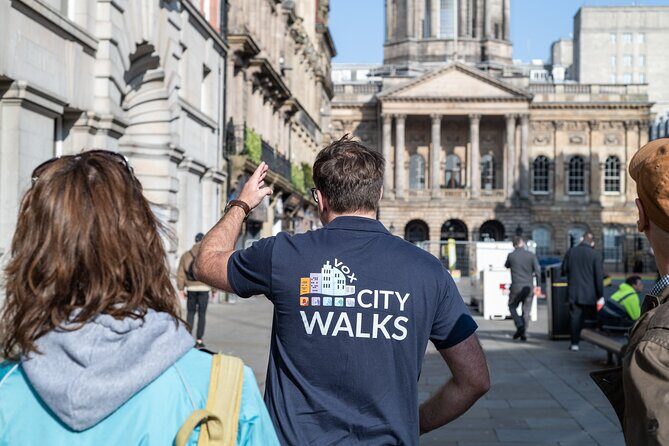
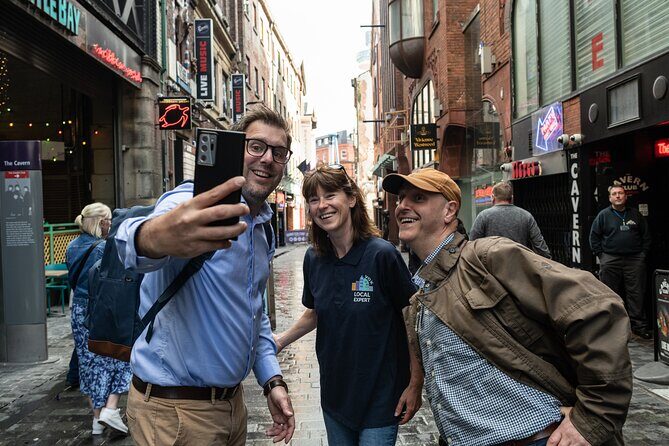
From a practical standpoint, it helps that the tour is small—up to 25 people—and the meeting instructions are specific. You’ll also hear that the tour departs from the Queen Victoria Statue on James Street, with the guide wearing a dark blue Vox City Walks uniform. That kind of visual cue makes it much easier to grab the correct group and not waste the first minutes standing around.
You can also read our reviews of more walking tours in Liverpool


St George’s Hall, the Cenotaph, and the city’s “center of gravity”
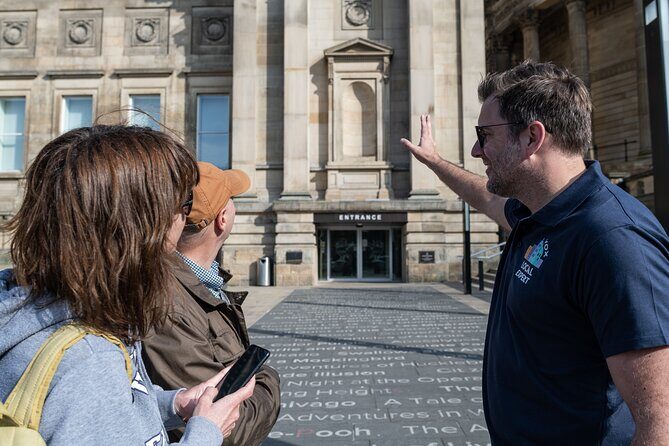
One reason I like this route is that it doesn’t treat the Cavern Quarter as the only Liverpool story. St George’s Hall is a key stop because it’s the kind of building that anchors a city—one of those places people naturally gather around. You’ll also learn that it offers more than a backdrop; it’s tied to the sense of civic center and celebration.
Right near it, you’ll also run into the Cenotaph, opposite St George’s Hall. This memorial is designated as a Grade I listed building, and the tour frames it as architecturally significant and tied to those who lost their lives in war. Even if you’re not the type to stop for every monument, I’d still pause here. It gives the walking route emotional context and prevents the tour from feeling like only a music-and-bingo-photo hunt.
If you’re traveling with kids, this part can be surprisingly useful. Buildings and memorials give you simple “what am I looking at” moments, and the guide’s job is to turn the stone into a story you can repeat later.
The Cavern Club stop: Merseybeat in real space
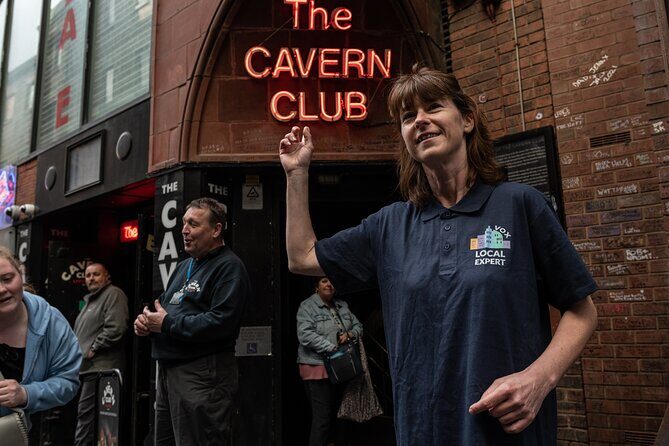
Then comes the main draw for most people: the Cavern Club and the Cavern Quarter. This is where Liverpool’s pop history stops being an abstract Wikipedia page and starts being street-level reality. You’ll learn that The Cavern Club is a thriving live music venue and the home of the Merseybeat movement—plus that The Beatles played there 292 times.
What I like about this stop is how it explains the “why” behind the famous venue. A room like this isn’t just a photo spot. The guide’s context helps you understand why Liverpool produced music with an identity, not just famous bands.
It also makes the walk feel rewarding, not just busy. You can see how the city’s geography funnels you from civic buildings and memorials to music landmarks without feeling like you’re crisscrossing town in circles.
One practical note: because this is a walking tour, the best photos usually happen during moments when the group pauses. If you want extra time at The Cavern Club area, you can take a quick look as the group moves, then plan for a second stop afterward on your own.
Radio City and the skyline view you might not plan otherwise
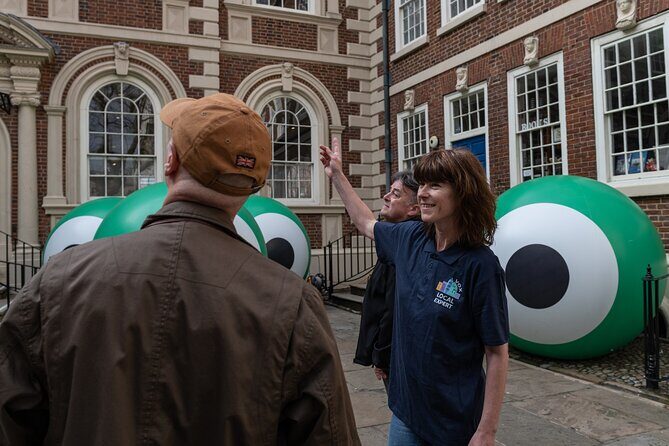
After the central landmarks, the tour also includes a stop at Radio City. The big promise here is the skyline view—over 400 feet above the heart of city centre. Even if you don’t go into any specific attraction beyond the tour’s stops, it’s a useful waypoint because it gives you a different angle on where you’ve been walking.
City views are often the “free payoff” of a walking tour. You start at street level, you learn the stories, and then you see how it all connects from above. That’s especially helpful in Liverpool, where neighborhoods and landmark clusters can feel a bit confusing if you haven’t been oriented.
Timing matters here: if you’re sensitive to heights, you can still get value from the location without lingering too long. The tour is built to keep moving, so just use the moment for what you need—photos, orientation, or a quick reset.
Maritime Liverpool: Old Dock and the Sailor’s Home
One of the strongest values of this tour is that it doesn’t stop at music. It leans into the port story too, and that makes Liverpool make more sense.
You’ll visit the Old Dock, also called Thomas Steer’s dock, recognized as the first wet dock used for commercial purpose worldwide. That detail matters because it tells you Liverpool wasn’t only a cultural export—it was a working engine of global trade. When you hear that, the city’s size and ambition feel logical, not just impressive architecture.
Another maritime-linked stop is the Liverpool Sailor’s Home, originally a safe haven for sailors coming in and out of the port, in service from 1850 until 1969. This is one of those places where the tour’s approach feels human. It shifts the focus from ships as objects to people as lives touched by the harbor.
If you like history that connects directly to real places, this part will land. And if your schedule is tight, it’s also efficient. You’re getting major cultural context and a couple of high-impact maritime landmarks in the same walking window.
You can also read our reviews of more city tours in Liverpool





Bluecoat, Liverpool Central Library, and cultural institutions
Not every walking tour gives you a break from street-level landmarks. Here, you also hit cultural institutions that help you understand how Liverpool thinks and creates.
You’ll see Liverpool Central Library, described as the largest of the 22 libraries in Liverpool, England, and located in the center of the city. Then there’s Bluecoat, identified as a 300-year-old building in the city center offering a year-round programme of visual art, literature, and music. Even if you don’t step inside for long (entry to attractions isn’t included), simply stopping and looking at these places can tell you a lot about civic priorities.
Here’s why I think these stops are good value for you: they widen the Liverpool story beyond the docks and the Cavern Quarter. The city isn’t only history and Beatles lore. It’s also institutions that keep arts and learning visible.
If you’re the type who likes to choose one museum or gallery later, these stops can help you decide what to prioritize next. The guide also tends to give practical ideas on what to do after the walk—use that as a shortlist, not as a strict itinerary.
A few streets that sharpen the Liverpool story
This tour includes small, specific street-level details that make the city feel more real. Here are the kinds of stops that add texture.
You’ll see a historic street with a plaque installed that explains its links with the slave trade in Britain—the kind of information that can be hard to find on your own when you’re rushing. This isn’t a “quick photo moment.” It’s a moment for learning and reflection, and it changes how you understand Liverpool’s port past.
Then there’s 16 Cook Street, dating from 1866, described as a strikingly modern piece of architecture for the Victorian era. That’s the fun part: Liverpool’s architecture isn’t all “old and grey.” Some of it hints at experimentation, even in the 1800s.
You’ll also find a bronze sculpture on Stanley Street tied to the Beatles song One. I like this kind of stop because it gives you a quick, memorable Beatles reference without needing to spend the whole day only chasing band mythology.
And don’t miss the John Lennon statue details. The tour describes it as sculpted by David Webster and unveiled in January 1997, then moved a few metres from its original home shortly afterward. It even calls out that the hairstyle originally had a quiff, and that this would fit the stance and styling from the Rock n Roll album cover photo. Those are the tiny factual anchors that make the walking route feel like more than a generic sightseeing loop.
Beatles, war, and the dock city story in one route
If you’re wondering how everything fits together, that’s the tour’s real strength. It keeps your attention by hopping between three themes:
First, civic Liverpool: Derby Square, St George’s Hall, and the Cenotaph give you a sense of identity and public values. Second, music Liverpool: Cavern Club and the Beatles details connect culture to place. Third, port Liverpool: the Old Dock and Sailor’s Home explain why the city had the reach to become globally famous.
That mix is why this walk is more useful than a single-topic tour. Even if you’re mainly a Beatles fan, the dock and institutional stops will make your future sightseeing feel better organized. You’ll start noticing connections on your own walks afterward.
Price, timing, and what you actually need to bring
At $15.80 per person for about 1 to 2 hours, this is priced for orientation, not for long museum visits. Entry to attractions isn’t included, so think of this as a guided route plus storytelling, not a “pay once, do everything” ticket.
The value comes from the combination of:
- a guided city-center route,
- audio support through the Vox City app,
- and a controlled group size (max 25).
Logistics are straightforward. The tour runs at a booked time slot, and the advice is to arrive about 5 minutes early if possible. Your voucher includes directions, and the guide is identifiable by the dark blue Vox City Walks uniform.
One important practical point: the tour doesn’t include a headset or a mobile device. The audio is delivered through the Vox City app, so you’ll want your own phone and ideally your own headphones. If your phone battery is low, this becomes a less fun experience. Bring a charger or plan for a quick power top-up before you meet.
You’ll scan the QR code on your voucher to download the Vox City app and audio tours. The tour also lists in-app multilingual audio commentary available in English, German, Spanish, French, and Italian, which can be great if you’re traveling with someone who prefers a specific language channel.
Should you book this Liverpool City & Cavern Quarter walk?
I’d book this if you want a structured introduction to Liverpool in a short time window. The mix of Cavern Club/Beatles context, civic landmarks, and maritime history gives you a well-rounded mental map. At $15.80, the guided route plus multilingual audio is a solid value, especially if you like learning what to look for while you’re already walking.
I’d be a little cautious if you have zero flexibility with timing. One reported issue involves a missing tour group at the meeting time, so treat this like any time-sensitive tour: show up early, check your voucher directions, and keep an eye on the meeting point near Derby Square on James Street.
If you’re flexible, curious, and you want Liverpool to feel connected instead of random, this is an efficient way to do it.
FAQ
How long is the Liverpool City & Cavern Quarter walking tour?
The tour lasts about 1 to 2 hours.
Where is the meeting point for this tour?
The tour starts at One Derby Square, Liverpool L2, UK, and it ends back at the same meeting point.
What languages are available for the in-app audio commentary?
The Vox City app audio commentary is available in English, German, Spanish, French, and Italian.
Is entry to attractions included in the price?
No. Entry to attractions is not included.
Do I need to bring my own headphones or mobile device?
Yes. The tour notes that a headset and mobile device are not included, and you’ll use the Vox City app via a QR code on your voucher.
How many people are in a group?
This activity has a maximum of 25 travelers.
Is there a free cancellation option?
Yes. You can cancel up to 24 hours in advance for a full refund.