REVIEW · LONDON
London: British Museum Guided Tour
Book on Viator →Operated by My Tour London · Bookable on Viator
Two hours at the British Museum can feel like power-walking. The difference here is a guided loop through the museum’s biggest hits, including the Rosetta Stone and Benin Bronzes, paced for a small group (max 20). It’s also built for an easy slot into your afternoon plans.
I like that the guide approach turns the chaos of a world-class collection into clear signposts. When guides like Filomena or Maya lead, you get story threads and practical pointing that make major objects feel connected instead of just impressive.
One thing to keep in mind: if you prefer fewer side stories and a tighter, faster pace, this kind of highlights tour can feel like it slows down for extra anecdotes. Also, clear speech matters—one earlier review flagged that an accent made parts harder to catch.
In This Review
- Key things to know before you go
- The British Museum, explained in a way that actually helps
- Where the tour starts: Great Russell Street logistics that keep you calm
- Two hours of priorities: how the highlights route feels in real life
- Enlightenment Rooms: Sloane, natural specimens, and how collecting became culture
- King George III’s Library: where ideas and objects share the same air
- Africa, Easter Island, and the emotional power of the Hoa Monument
- Benin Bronzes: precision, storytelling, and why details matter
- Tree of Life: decommissioned weapons turned into a message
- Egypt section: the real Rosetta Stone and what comes after decipherment
- Assyrian monuments, Parthenon sculptures, and the art of empire
- Greeks in Italy and Cyprus: culture travels, and the museum shows it
- Romans and Rome: power, politics, and how the museum tells the story
- Price and ticket value: is $31.55 a fair deal?
- Group size and pacing: what to expect from a max-20 tour
- Which guide style fits you: Filomena, Maya, and beyond
- Should you book the British Museum guided tour?
- FAQ
- How long is the British Museum guided tour?
- What does the tour cost?
- Is the tour offered in English?
- How many people are in the group?
- Where do I meet for the tour?
- What’s included in the ticket price?
Key things to know before you go
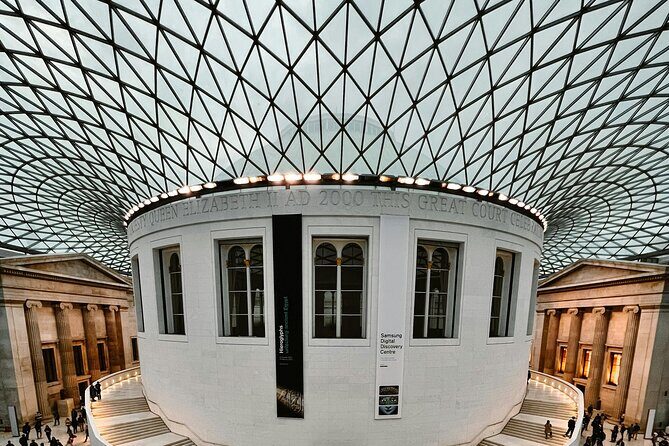
- Small group size (up to 20) means you can actually hear your guide without constant elbow traffic.
- Admission included for a 2-hour plan is ideal if you want maximum objects per hour.
- A true highlights mix runs from Egypt and Assyria to Greece and Rome.
- Originals and key artifacts like the Rosetta Stone help you understand the museum’s big themes.
- Tree of Life (made from decommissioned weapons) gives you a modern, thought-provoking stop.
- Strong guiding shows up in real value—without context, the British Museum can feel like a maze.
The British Museum, explained in a way that actually helps
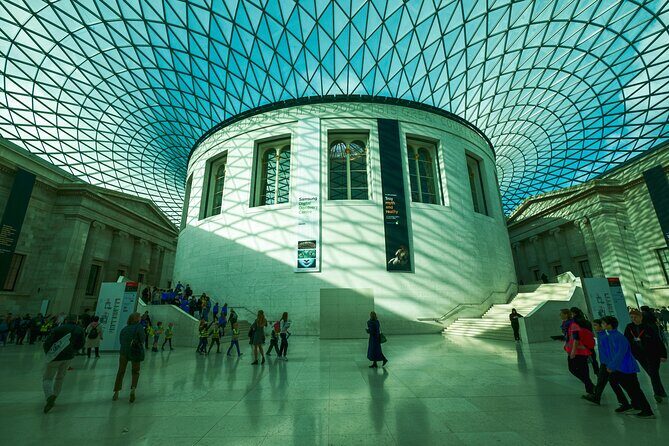
The British Museum is huge, and most first visits come with the same problem: you see great things, but you don’t always know where to look next or why one object matters more than another. A guided highlights tour fixes that. In a tight two-hour window, you’re not meant to cover every gallery. You’re meant to understand the museum’s logic: how civilizations connect, how collecting changed what people see today, and why certain objects became “name brand” items.
This format is also practical for planning. You can build the rest of your day around it—lunch, a walk through Bloomsbury, another museum stop—without feeling stuck waiting in lines or figuring out routes at museum speed.
And yes, summer can be busy. A guide helps you keep moving while the crowd swells around the most famous rooms.
You can also read our reviews of more guided tours in London



Where the tour starts: Great Russell Street logistics that keep you calm
You meet at the British Museum, Great Russell St, London WC1B 3DG. The tour ends back at the same starting point, which is a small detail that matters when you’re planning transport or a second activity.
Because this is a group tour, the “where” is your friend. You don’t need to hunt for your meeting corner once you’re already inside London’s museum district. You simply arrive, check in, and join the group.
The tour runs in English, and that matters for comfort. If English is your strong language, you’ll get more out of the context—how objects were used, what they meant to their societies, and how the British Museum presents them.
Two hours of priorities: how the highlights route feels in real life
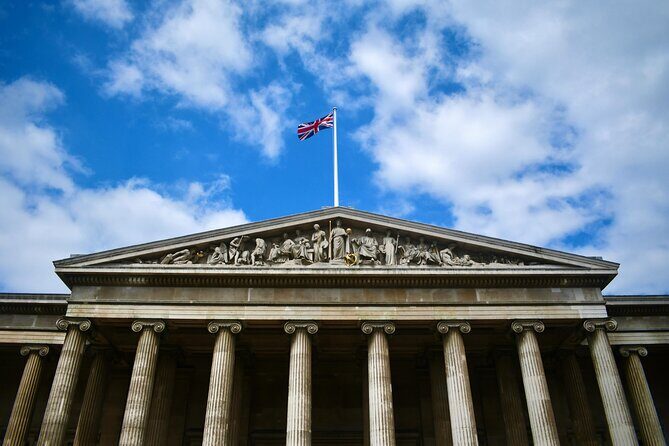
A two-hour museum tour can either feel rushed (like a train sprint) or focused (like an annotated route). This one leans focused, because it strings together major storylines rather than bouncing randomly.
That matters most at the start. When you begin with the right rooms, the rest starts to make sense. You’re not just looking at objects; you’re building a mental map of empires, art styles, and belief systems—Egyptian religion, Greek sculpture traditions, Roman political storytelling, and the way the museum collects and displays them.
The best part: the “big names” are not just shown—they’re explained enough that you leave knowing what to notice later, even if you go off on your own afterward.
Enlightenment Rooms: Sloane, natural specimens, and how collecting became culture
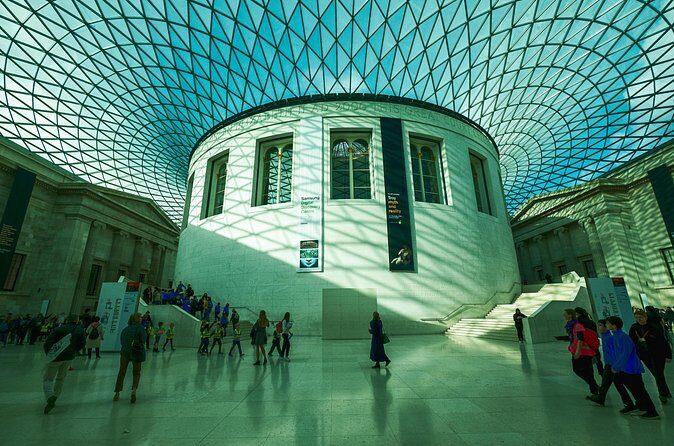
You start in the British Museum with rooms tied to the museum’s Enlightenment roots, including the Hans Sloane collection. This stop is worth it because it sets up why the British Museum looks the way it does. Sloane didn’t just collect art. He gathered diverse artifacts and natural specimens, which helped shape the museum’s identity as a place where knowledge is cataloged and connected.
If you like museums that have a point of view, this opening delivers. It’s not only about ancient civilizations—you also learn how European collecting practices influenced what survived, what got displayed, and what became accessible to later audiences.
You also spend time around the Rosetta Stone, which is the kind of object that can either be a quick photo moment or a real learning pivot. With a guide, it becomes a centerpiece for understanding decipherment of Egyptian hieroglyphs—why the object mattered, and why it remains one of the most important “keys” in museum history.
King George III’s Library: where ideas and objects share the same air
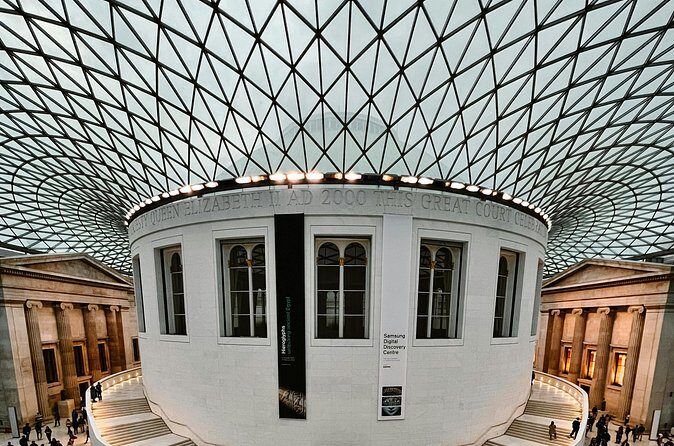
Another early highlight is the King George III Library. This isn’t an “artifact room” in the same way. It’s more like the museum reminding you that objects live alongside texts, scholarship, and the people who organized knowledge.
For many visitors, this is a palate cleanser: after staring at carvings and metalwork, you switch to the world of books and intellectual pursuits. It gives you a more complete sense of the British Museum as an institution, not just a warehouse of famous things.
If your group likes pictures, this area also offers a calmer visual moment compared with the busiest galleries.
You can also read our reviews of more museum experiences in London




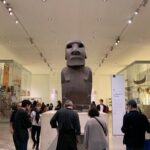
Africa, Easter Island, and the emotional power of the Hoa Monument
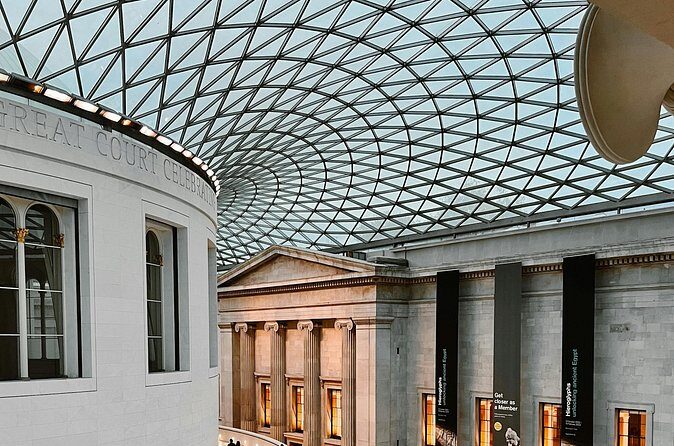
The tour moves into the museum’s African-related spaces, including the Africa section and the Hoa Monument—a moai statue from Easter Island.
This is one of those “wait, what?” moments that can actually make the museum easier to navigate. Seeing the Hoa Monument in the context of a guided route nudges you to connect regions and cultures, not treat them as isolated stops.
It also hits emotionally in a way that purely art-history explanations sometimes miss. Even if you don’t know the background, the scale and presence carry weight. With a guide, you get enough context to move past just admiring the shape.
Benin Bronzes: precision, storytelling, and why details matter
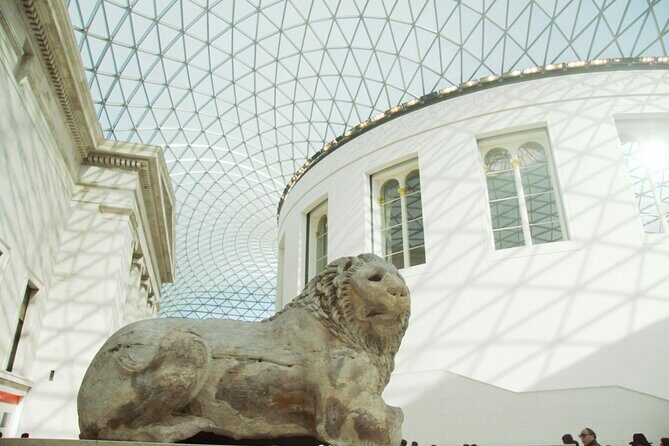
Next up: the Benin Bronzes. These intricate brass plaques and sculptures are the kind of objects that tempt you to slow down—too much, sometimes—because there’s so much detail packed into each work.
A good guide helps you focus without rushing the art itself. You learn what you’re looking at and how the museum frames the objects in relation to the Kingdom of Benin. This stop is a strong example of why a guided tour is more valuable than wandering solo: the museum’s best objects can be overwhelming without a thread.
If you love craftsmanship, this is one of the stops most likely to give you that I-wish-I-did-this-on-day-one feeling.
Tree of Life: decommissioned weapons turned into a message
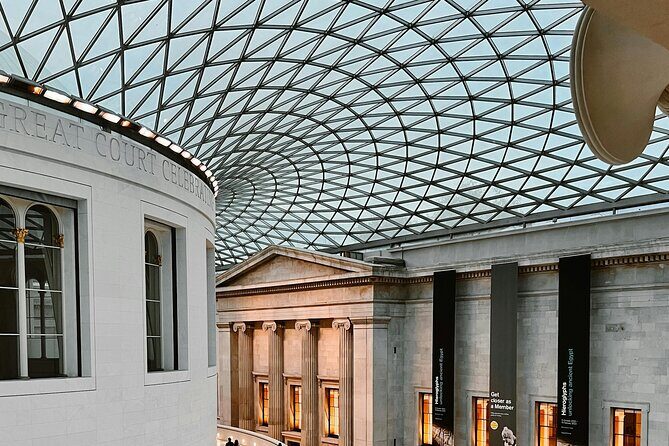
Then comes the Tree of Life, made from decommissioned weapons, meant to symbolize peace.
This is a powerful pivot from ancient worlds into a more modern moral conversation. The idea alone makes you look longer. It’s one of the few “museum objects” that speaks directly to contemporary values rather than only to history.
What I’d watch for here is your own reaction. If you’re the type who likes objects with a clear message, this stop will stick. If you’re only chasing ancient artifacts, you may need a second to reset your expectations—yet it’s exactly the kind of contrast that makes the British Museum more than a timeline.
Egypt section: the real Rosetta Stone and what comes after decipherment
In the Egypt portion of the tour, you see the original Rosetta Stone again, framed more deeply through the museum’s Egyptian displays. You’re not just seeing a famous object; you’re learning why it unlocked understanding of hieroglyphs and what that means for the way museums interpret Egyptian artifacts and mummies.
A standout pairing here is Portals of Life, which focuses on ancient beliefs about death and the afterlife. This isn’t only about what Egyptians believed. It’s about how those beliefs shaped art, burial practices, and the way objects were made for specific purposes.
If you want the tour to help you “connect the dots” across rooms, this is where you start feeling that payoff.
Assyrian monuments, Parthenon sculptures, and the art of empire
The route continues through Assyrian Monuments—stone reliefs and sculptures—and then into Parthenon Sculptures from Athens (the so-called Elgin Marbles). These stops give you a direct look at how empires used art to communicate power.
Assyrian reliefs tend to reward close looking: the surfaces tell stories in layers, and you get more out of them when you understand what’s being depicted and why.
Then the Parthenon sculptures shift you into Greek marble sculpture traditions, where form, proportion, and composition do a lot of the work. Even if you’ve seen photos before, standing close changes the experience. A guide helps you notice the kinds of details that casual viewing often misses.
This section can be the emotional high point for art lovers, but it also depends on your group’s pacing. In a busy museum, these galleries can get crowded near the most “photo magnets.”
Greeks in Italy and Cyprus: culture travels, and the museum shows it
You then move through Greeks in Italy and Cyprus. This stop is valuable because it pushes you beyond the idea that Greek culture stayed in one place. Instead, you see how Greek influence traveled and how local contexts blended with Greek artistic traditions.
It’s also a good moment to pause and ask yourself what you’ve learned so far. After Egypt and Assyria, this is the tour’s “art in motion” chapter: the museum helps you recognize patterns and themes across regions.
Romans and Rome: power, politics, and how the museum tells the story
The tour ends in a Romans and Rome section that ties the route together with another empire narrative. This is where the overall structure of the museum becomes clear: objects don’t just represent the past. They also represent how later audiences selected, categorized, and valued what survived.
Even if you don’t leave with every fact, you’ll likely leave with better instincts for how to read museum displays. You’ll be more alert to what an object is trying to say—whether it’s belief, authority, craft, or identity.
For many visitors, the final empire room gives that satisfying click: you start seeing how these civilizations shaped each other’s world, and how the British Museum groups them.
Price and ticket value: is $31.55 a fair deal?
At $31.55 per person for about two hours, you’re paying for two things: a live guide and an admission ticket included. Even without comparing ticket prices, the math of experience value is straightforward: you’re getting roughly $15.78 per hour of guided interpretation plus entry.
Where the value really shows is density. The tour hits major objects—Rosetta Stone, Benin Bronzes, Parthenon sculptures, and major supporting galleries—within a short time. If you’re the type who wants to see the best-known highlights but also understands that “seeing” alone can be shallow, this pricing makes sense.
A quick reality check: you won’t get deep specialization in every field. This is a highlights route. If you’re a serious Egyptologist or a marathon museum scholar, you’ll still want additional self-guided time. But for most people, it’s a strong first hit with enough context to steer your later exploring.
Also, this tour is often booked ahead—on average about 39 days in advance—so it’s popular. If your travel dates are fixed, booking early is a smart move rather than gambling on last-minute availability.
Group size and pacing: what to expect from a max-20 tour
With a maximum of 20 travelers, you’re in that sweet spot where you can usually keep up with the guide’s direction. It’s large enough to feel social, small enough to avoid total chaos.
Still, you should be ready for a “guided highlights” pace. The tour covers a lot of rooms and marquee objects in a limited time. That means you’ll likely get a handful of key facts and context per stop, not an exhaustive lecture.
One review mentioned that too many small stories and side talks can break focus, and another pointed out a strong accent that made parts harder to follow. That doesn’t mean the tour is bad—it means this format isn’t ideal if you want only the bare facts with zero detours. If you like anecdotes and story threads, it can be a win.
Which guide style fits you: Filomena, Maya, and beyond
The names Filomena and Maya came up in positive feedback for a reason: when the guide is confident and enthusiastic, the museum feels navigable. In particular, strong guides help you avoid the common trap of being impressed but confused.
If you want a tour that helps you find your footing fast, look for that energy and clarity. A guide who points out historic details makes a huge difference in a building as large as this one.
If you’re sensitive to accents or you need very crisp articulation, you may want to read the tour language expectations carefully and be prepared to ask questions if anything isn’t landing.
Should you book the British Museum guided tour?
Book it if:
- You want a 2-hour British Museum highlights plan that hits the big-name objects: Rosetta Stone, Benin Bronzes, and Parthenon sculptures.
- You’d rather pay for guidance than spend your first visit guessing routes and gallery order.
- You like story-based context—especially around Egyptian beliefs, empire art, and how collecting shaped what museums show.
Skip or consider another format if:
- You want a slower, deeper dive into one civilization or one gallery.
- You prefer minimal talking and fewer anecdotes.
- You’re very particular about accent clarity and speaking style.
For most first-timers, this is an efficient, satisfying way to walk into the British Museum, get your bearings fast, and leave knowing what you’ll want to revisit on your own.
FAQ
How long is the British Museum guided tour?
The tour lasts about 2 hours.
What does the tour cost?
The price is $31.55 per person.
Is the tour offered in English?
Yes, the tour is offered in English.
How many people are in the group?
The tour has a maximum of 20 travelers.
Where do I meet for the tour?
You meet at the British Museum, Great Russell St, London WC1B 3DG, UK, and the tour ends back at the meeting point.
What’s included in the ticket price?
You get a live tour guide and the admission ticket included. Coffee and/or tea, an air-conditioned vehicle, and brunch are not included.