REVIEW · LONDON
London Charles Dickens Puzzle Questo and Self-Guided Tour
Book on Viator →Operated by Questo · Bookable on Viator
London can feel like a maze. This self-guided Charles Dickens Puzzle Quest turns that maze into a storyline you can solve at your own pace. I like that it starts at the Charles Dickens Museum in a real author’s home, and I like that you can take breaks whenever you want. One drawback: since there is no physical guide, you’ll rely on the game clues and your phone to keep you moving.
The set-up is simple: you buy a mobile ticket, then play offline on your own time. I also like the “private, no human contact” approach, which makes it a calmer way to sightsee in central London. The trade-off is you’re doing the navigation and decision-making yourself, so it helps to be comfortable walking and reading your screen.
If you want a budget-friendly way to connect the dots between Dickens’s life and his London—without joining a crowded group—this is a solid pick. The experience has a strong rating, and one tip stands out: go find the man in black (yes, that’s part of the game’s fun).
In This Review
- Key things to know before you go
- How the Questa puzzle tour feels in London (and why it’s good value)
- Start at 47 Doughty Street: Dickens Museum and the first challenge
- Following Dickens through Vine Street and the Man in the Moon Passage
- Three Cripples and Bill Sykes: a 1759 inn linked to Oliver Twist
- Staple Inn (1585): wool taxes, the Great Fire, and wartime repairs
- Lincoln’s Inn Fields Theatre: from a tennis court to a Duke’s Theatre
- The Maughan library after a big renovation: classic exterior, modern purpose
- Dr Johnson’s House: another literary heavyweight near Dickens country
- Ye Olde Cheshire Cheese: a classic pub stop you can pace with the game
- St Peter of all Nations: basilica-style church and a wartime footnote
- Royal College of Surgeons: from barber-surgeons to academic medicine
- St Dunstan-in-the-West: Romanian Orthodox chapel and a Bucharest iconostasis
- Finishing at 145 Fleet Street: what to expect, timing, and practical tips
- Should you book the London Charles Dickens Puzzle Quest?
- FAQ
- How long is the London Charles Dickens Puzzle Quest and self-guided tour?
- Where does the tour start and end?
- Do I need internet to play the puzzle game?
- Is there a physical tour guide with this experience?
- Can I start at any time and take breaks?
- What language is the experience offered in?
Key things to know before you go
- Start any time, stop anytime: you can begin when you like and resume later.
- Offline play: you don’t need internet to solve the puzzle game.
- Private and low-contact: it’s just your group—no guide leading you.
- A Dickens route with variety: museums, old inns, theaters, pubs, and churches.
- Designed for a quick outing: plan on about 1 hour for the full run, give or take.
How the Questa puzzle tour feels in London (and why it’s good value)
This isn’t a traditional tour where one person talks and you follow. It’s a self-guided city game that asks you to look around, find answers, and move to the next location. The selling point for me is control: you set the pace, and you can pause when you want a breather or a drink.
At $8.33 per person for an experience that takes roughly an hour, the value comes from how much you get out of a short window. Instead of paying for a long guided day, you’re paying for a guided-in-your-pocket format—using clues to turn ordinary streets into an actual route.
It also helps that the tour is always available to book and runs 24/7, so you’re not stuck building your plans around someone else’s schedule. One more practical win: it’s in English, and confirmation is received at booking.
Finally, the “no human contact” angle matters more than you’d think in London. You avoid the feeling of getting shoved along with a group. You’re still in the city—but you’re not in a crowd.
You can also read our reviews of more guided tours in London
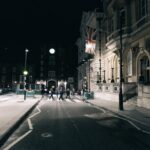
Start at 47 Doughty Street: Dickens Museum and the first challenge
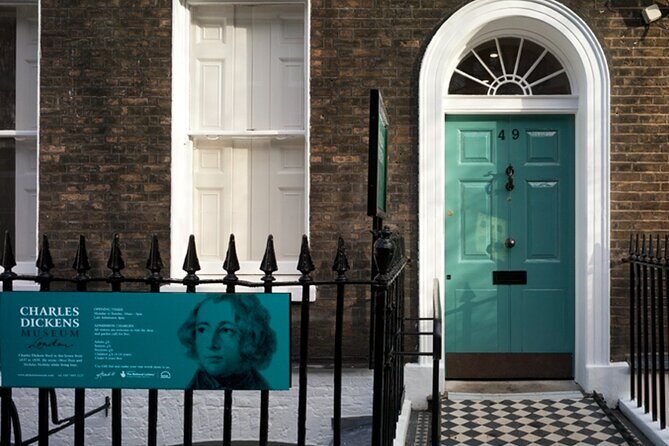
Your walk begins at 47 Doughty St, London WC1N 2LW, and the first stop is the Charles Dickens Museum at 48 Doughty Street. This is an author’s house museum in a classic Georgian terraced home, and Dickens lived there from 25 March 1837 to December 1839.
This first location does two jobs at once. It grounds the story in a real place, and it teaches you how the game wants you to act: you’ll need to look around to find an answer, then advance to the next location. If you like history but hate lectures, this is a strong start.
Practical tip: go in with your phone charged and ready. Since the game relies on your device for the next steps, you don’t want to fight with battery life while you’re searching details.
Also, if you’re the kind of traveler who enjoys solving things, the first puzzle sets a fun tone. You’ll be scanning exhibits and room details with purpose, not just “passing through.”
Following Dickens through Vine Street and the Man in the Moon Passage
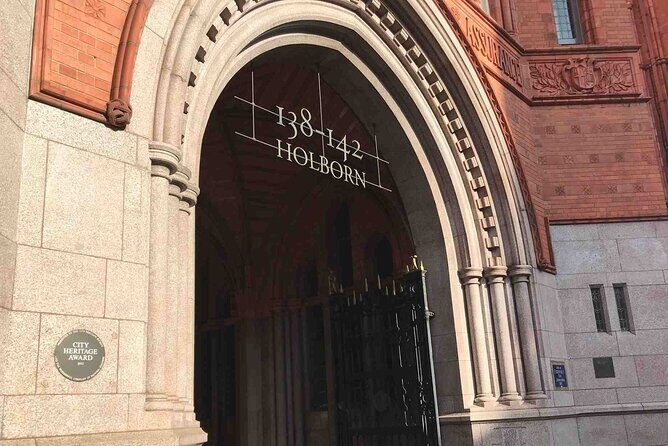
Next up is a historic slice of London tied to Vine Street and the Man in the Moon Passage area. The route notes that the layout dates back to around 1686 and that it originally ran farther along what’s now the Man in the Moon Passage.
John Rocque’s 1746 Map of London shows Vine Street extending from Piccadilly northeast to Warwick Street. The details get even more grounded: around 1720, the main properties here included a brewery and a carpenter’s yard.
This is a good stop for the “slow down and notice” style. The puzzle pushes you to look for clues in the street setting rather than treating it like scenery. You’re connecting urban geography to how London actually worked—shops, trades, and everyday businesses living side by side.
One consideration: street-level clues can be easier on a sunny day and harder at dusk. If you’re doing this in low light, take your time. Read carefully. Let your eyes adjust.
Three Cripples and Bill Sykes: a 1759 inn linked to Oliver Twist
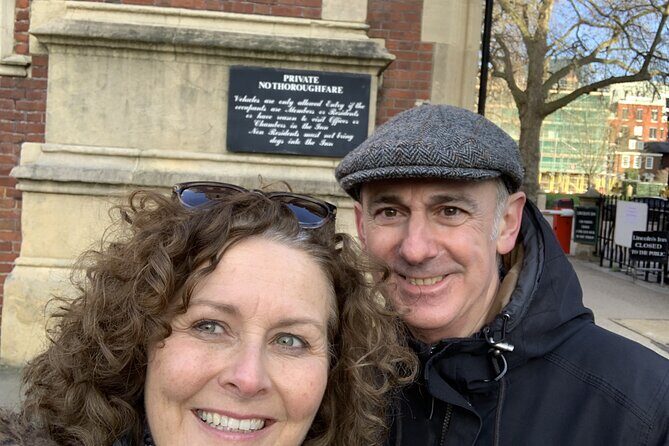
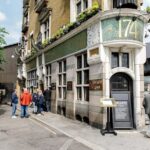
Then you’ll come to a stylish inn dating to 1759. Dickens’s mark on this place is the reason it matters to the storyline: in 1838, he changed its name to the Three Cripples and used it as Bill Sykes’ watering hole of choice in Oliver Twist.
This is where the game’s literary angle really clicks. You’re not just watching Dickens’s London from far away—you’re standing near the kind of real-world stopovers his fiction used as building blocks.
You’ll again be looking around to find the challenge answer. Don’t rush. This stop rewards people who notice signage, street texture, and the “old London” vibe that builds up over multiple blocks.
If you plan to do pub breaks as you go, this is a good place to remember that the route includes at least one classic pub later—so you can pace your stops without derailing the hour-long plan.
Staple Inn (1585): wool taxes, the Great Fire, and wartime repairs
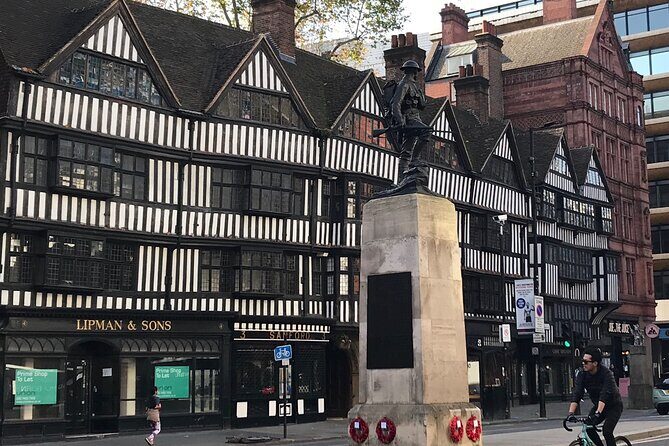
The itinerary then heads to Staple Inn, a building dating to 1585. It was once the wool staple—where wool was weighed and taxed—which means it wasn’t just pretty architecture. It was part of the money machine that fueled trade.
This stop has big survival and repair stories too. Staple Inn survived the Great Fire of London, and it was later extensively damaged by a Nazi German Luftwaffe aerial bomb in 1944, then restored after the war.
For a puzzle tour, this is perfect. You’re given context that changes how you look at the façade and setting. Instead of seeing “an old building,” you see a structure that outlasted disasters and stayed useful enough to be brought back.
Practical note: if you’re photographing, do it early. These places can get busy, even if the game keeps you moving at your own pace.
A few more London tours and experiences worth a look



Lincoln’s Inn Fields Theatre: from a tennis court to a Duke’s Theatre
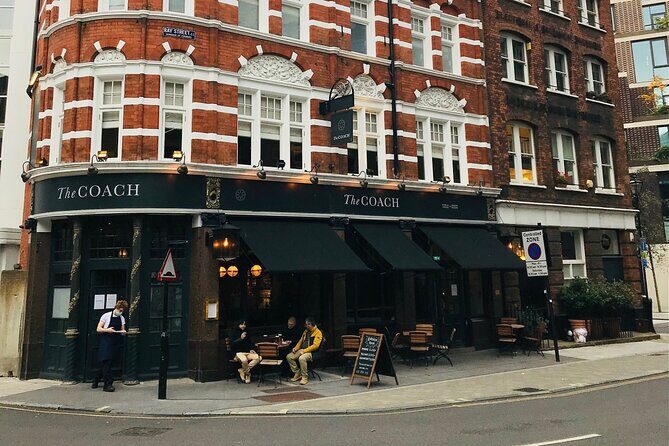
Next, you’ll connect Dickens’s world to entertainment history at Lincoln’s Inn Fields Theatre. The theater was located in the Fields from 1661 to 1848, when it was demolished. The route also notes that it was originally called the Duke’s Theatre, and it was created in 1695 by converting Lisle’s Tennis Court.
That “tennis court to theater” detail is the kind of odd fact that makes London feel fun to walk. You’re seeing layers of the city’s reuse—how buildings change jobs as tastes and money change.
The game will ask you to look around again to find the answer before moving on. If you tend to skim maps fast, slow down here. This is the stop where you’re most likely to appreciate how the clue ties the physical location to the story.
The Maughan library after a big renovation: classic exterior, modern purpose
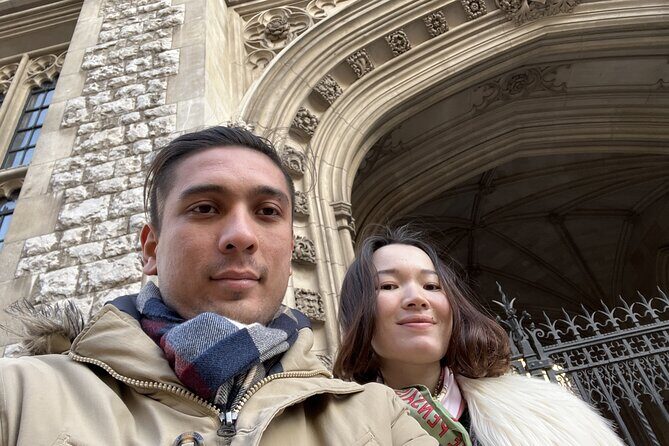
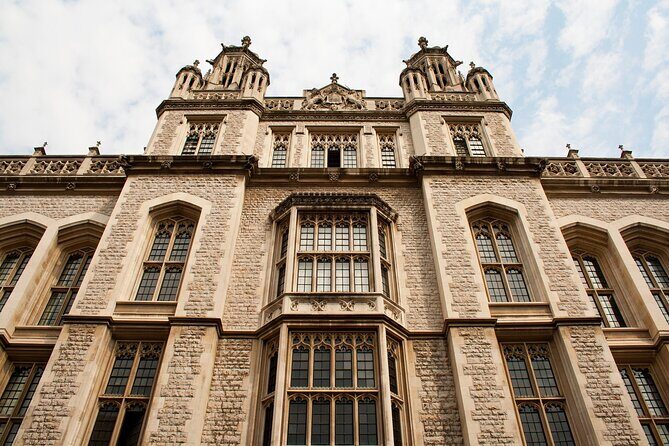
Then comes a major contrast: the Maughan. After a £35m renovation, designed by Gaunt Francis Architects, it became the largest new university library in the UK since World War II.
The building itself is older and significant: designed by Sir James Pennethorne and constructed in 1851, with further extensions between 1868 and 1900. It’s also a Grade II listed building.
This stop is a smart reminder that Dickens-era London isn’t only museums and pubs. It’s also places that keep getting repurposed. The game’s approach makes you pay attention to that through the puzzle steps, not just by reading a sign.
If you like architecture, you’ll enjoy the blend here: older structure, newer improvements, and a library that feels like it has real everyday purpose. The clue-based format can help you notice details you’d otherwise skip.
Dr Johnson’s House: another literary heavyweight near Dickens country
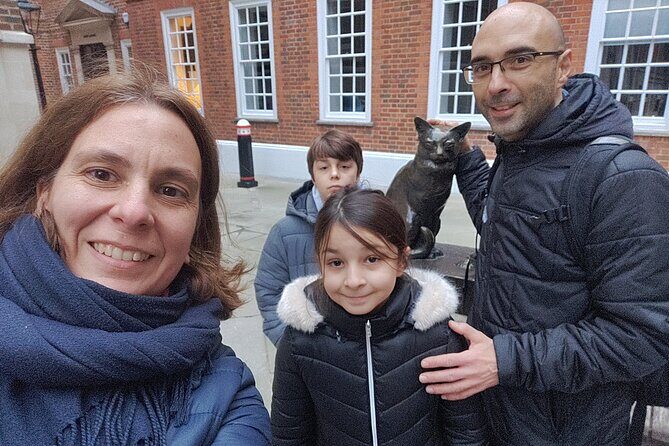
After the university library, the route moves to Dr Johnson’s House. The info provided says the house was probably originally built for a City merchant. Its most famous resident was Samuel Johnson (1709–84), who rented it from 1748 to 1759.
This stop widens the lens beyond Dickens, which I think is a strength of the route. Dickens didn’t write in a vacuum. You’re walking through a literary corridor where one famous author followed another across time.
Again, you’ll be prompted to look around to find the game answer and move forward. If you’re a “read signs, then walk away” type, this stop encourages you to linger a bit longer.
Ye Olde Cheshire Cheese: a classic pub stop you can pace with the game
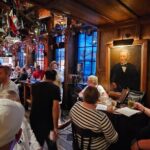
One of the most enjoyable parts of the experience is that it goes near Ye Olde Cheshire Cheese. The current info says it was originally built in the 1530s, though the original pub was lost in the Great Fire of London in 1666. The current pub dates from 1667, and it was one of the first London buildings reconstructed after the fire.
This is the stop that fits naturally with a slower sightseeing rhythm. In the one standout feedback I saw, the writer mentioned stopping at several pubs and keeping it relaxed. That matches what this route allows: you can take breaks whenever you want and resume later, so pub time can fit the puzzle pace.
Just keep an eye on your schedule if you’re tight on time. Even though the tour is flexible, the full run is listed at about an hour, so you’ll want to choose how long your break should be.
St Peter of all Nations: basilica-style church and a wartime footnote
Next is St Peter of all Nations, consecrated on 16 April 1863. At the time, it was the only basilica-style church in the UK, which makes it a standout architectural reference point on the walk.
The route also includes a detail that feels human and specific: the organ was built in 1886 by Belgian Anneesen. During World War II, when Italian immigrants were interned, the church was used by Irish Pallottines.
This is one of those stops where the puzzle format helps you. Otherwise, a church could turn into quick glances and photos. With the game, you’re nudged to look carefully and connect the physical building to the facts.
If you’re visiting around service times, be mindful of what’s allowed, but the tour itself is set up for you to explore at your own speed.
Royal College of Surgeons: from barber-surgeons to academic medicine
Then you’ll reach a location tied to the Royal College of Surgeons. The route notes that origins trace back to the 1540s, when the Company of Barbers and the Fellowship of Surgeons formed the Company of Barber-Surgeons.
In the 1700s, medicine became an academic discipline, and surgeons pushed for more recognition of their expertise. That’s a clear storyline: institutions evolving as knowledge evolves.
If you like the behind-the-scenes side of history (who got credit, who had power, how training changed), this stop is worth your attention. The puzzle clue here is likely to steer you toward understanding the institution, not just the name on a building.
St Dunstan-in-the-West: Romanian Orthodox chapel and a Bucharest iconostasis
Near the end of the route, you’ll find St Dunstan-in-the-West and its Romanian Orthodox chapel. The details say it shares its building with the Romanian Orthodox community of St. George church.
A specific feature is called out: the chapel to the left of the main altar is closed off by an iconostasis, which was formerly from Antim Monastery in Bucharest and dedicated in 1966.
This stop is interesting because it adds a modern cultural layer to an old London site. Dickens’s era is part of the story, but London keeps changing, and the game reflects that by ending with a place tied to living tradition.
Like the other stops, you’ll be looking around to find the game’s answer and progress.
Finishing at 145 Fleet Street: what to expect, timing, and practical tips
Your tour ends at 145 Fleet St, London EC4A 2BU. That’s a smart finish because Fleet Street is where you can easily pivot to other plans—coffee, dinner, or another walk—without feeling like you’ve been dropped into nowhere.
Timing is flexible. The itinerary lists about 1 hour, but because you can take breaks and resume later, I’d treat it as a rough guide. If you move quickly and don’t pause, you might keep it close to that. If you read carefully and add a pub stop, plan extra time.
A few practical tips that make the experience smoother:
- Bring a fully charged phone and consider a power bank.
- Wear comfortable walking shoes since you’ll be moving between multiple points.
- Since it’s offline, you don’t need data for the game, but you may still want location services for navigation.
Also, this tour is listed as private, meaning only your group participates, and it’s positioned as safe because there’s no human contact and you’ll avoid crowds. If you’re trying to sightsee during a busy season, that matters.
One more small planning note: it’s listed as free cancellation if you cancel at least 24 hours ahead for a full refund. If your schedule might shift, that flexibility can reduce stress.
Should you book the London Charles Dickens Puzzle Quest?
Book it if you want a Dickens-themed walk that feels active rather than passive. You like solving things, you prefer flexibility over fixed-group schedules, and you want to pay a low price for a whole route of real sights—from Dickens’s own home to old institutions and a church with a WWII thread.
Skip it if you need a live guide to answer questions on the spot. Since it’s self-guided and offers no physical tour guide, you’ll have to be okay using the game clues and signs. Also, if you hate screen-based instructions, this may feel like work rather than fun.
If you’re the type who enjoys a relaxed pace—especially with the option to stop for a drink—the route fits. Just keep one mantra in mind from the best tip you’ll hear: go find the man in black*.
FAQ
How long is the London Charles Dickens Puzzle Quest and self-guided tour?
The tour is listed as about 1 hour.
Where does the tour start and end?
It starts at 47 Doughty St, London WC1N 2LW and ends at 145 Fleet St, London EC4A 2BU.
Do I need internet to play the puzzle game?
No. You can play offline and you don’t need an internet connection.
Is there a physical tour guide with this experience?
No. This tour is self-guided and does not come with a physical guide.
Can I start at any time and take breaks?
Yes. You have full flexibility to start at any hour and take a break, then resume later.
What language is the experience offered in?
The tour is offered in English.