REVIEW · LONDON
London in One Day: Tour Royal Westminster and the Square Mile
Book on Viator →Operated by Moore Walking Tours · Bookable on Viator
If your London list feels impossible, this tour makes it doable. You get a tight, well-guided sweep from Buckingham Palace all the way to the Tower of London, plus the City of London side of the story.
I especially like how the guide sets up your sightlines for famous buildings, so you waste less time hunting for the best angles. I also like that you’re not stuck planning logistics across districts, because the route stitches Westminster and the Square Mile together in a way that clicks fast.
One consideration: it is a long walk with short on-the-spot stops, and most entries are not included. If you want long time inside major sites, you may feel a bit rushed.
In This Review
- Key highlights from this Westminster + Square Mile route
- A one-day plan that actually connects Westminster to the City
- Meet at Diana’s fountain, then head straight into royal-land angles
- Buckingham Palace: the classic exterior view setup
- Changing of the Guard: front-row viewing on the right days
- Clarence House and St James’s Palace: the “other half” of royal residence
- St James’s Park and Trafalgar Square: greenery, birds, and London’s “common room”
- Whitehall and Parliament: the politics corridor you usually rush past
- Churchill War Rooms: walking over the wartime command center footprint
- Westminster Abbey: stand in the shadow of coronations and royal weddings
- Palace of Westminster: Parliament’s center plus Westminster Hall’s long memory
- Lunch on Villiers Street, then Thames views that reframe the whole day
- Wren’s churches and courtrooms: St Clement Danes to the Royal Courts of Justice
- Temple Bar into the City: Roman boundaries, Fleet Street writers, and a pub stop that makes sense
- Dr Johnson’s House and the courtyard cat statue
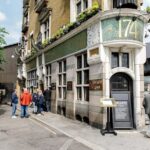
- Ye Olde Cheshire Cheese: writers, journalists, and Dickens-era atmosphere
- St Bride’s Church: journalists’ church and a cake-spire legend
- St Paul’s, Bow Bells, and the Royal Exchange: the City’s big names, explained fast
- Royal Exchange: commerce history with a modern function
- Mansion House, Bank of England vaults, and the Great Fire view from the Monument
- The Monument to the Great Fire: 211 steps to a skyline
- London Bridge, the Shard area, Tower Bridge, and HMS Belfast across the water
- Tower of London: the day’s grand finale
- Price and value: when $514.18 makes sense
- Who this tour fits best
- Should you book this London in One Day tour?
- FAQ
- Is lunch included on the tour?
- Are admission tickets included for the major sights?
- How long is the tour?
- When does the Changing of the Guard happen on this tour?
- Will we definitely see the War Rooms?
- Is this a private tour?
- What should my group size be?
- Are service animals allowed?
Key highlights from this Westminster + Square Mile route
- Royal photo viewpoints at Buckingham Palace and other key gates and palace edges
- Changing of the Guard and Horse Guards on select days, with schedule changes possible
- A big civic arc, from Westminster Abbey and Parliament to the City’s 2,000-year-old boundary at Temple Bar
- Hands-on-feeling stops like the Bank of England vault viewpoint and the Monument steps for skyline views
- City culture breaks with a lunch window near Villiers Street and stops tied to writers and journalists
- A strong finale at the Tower of London, plus an exterior look toward HMS Belfast from the river
A one-day plan that actually connects Westminster to the City
This tour is built around one simple idea: London makes more sense when you see the power centers in one flow. You start in Westminster (royal court, government, ceremony) and you end in the City of London (finance, law, old guild-era streets). Walking between those worlds helps you understand why the buildings feel so different, even when they’re only a few tube stops apart.
You also get a guide who is focused on pacing and positioning. Many stops are around 10 minutes, so the goal isn’t lingering. The goal is: see the essentials, learn what matters, then move on before the crowd crush or daylight shifts.
If you’re someone who hates “half-planning” (where you show up, then spend the afternoon figuring out transit and entry windows), this format fits. It’s private to your group (up to 15), and it runs about 6 hours 15 minutes starting at 10:00 am.
A few more London tours and experiences worth a look
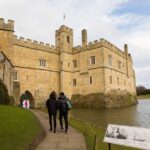

Meet at Diana’s fountain, then head straight into royal-land angles
The meeting point is at the Constance Fund fountain of Diana (London SW1A 1RN). That’s a smart start area: you’re close to the Buckingham Palace approach, but also near the wider Westminster walk that keeps the day moving.
From there, the tour launches into the royal-core sights with a strong emphasis on photographs and sightlines:
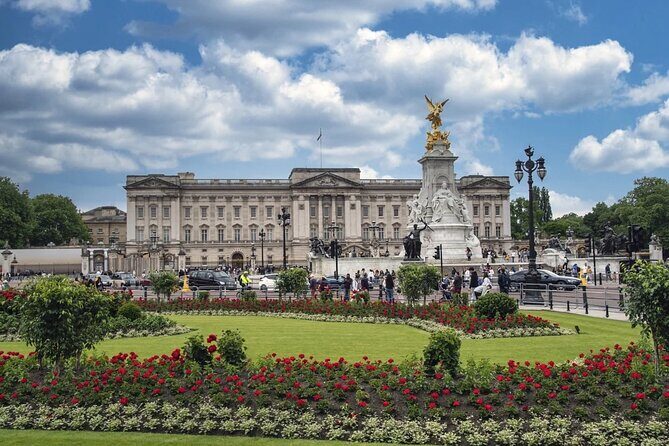
Buckingham Palace: the classic exterior view setup
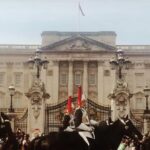
You’ll be positioned for the most famous palace in the world, which has been home to the British monarchy for nearly 200 years. Expect a short stop focused on exterior angles. The big practical note is that there’s no admission ticket included here, so you’ll be enjoying the place mostly from the outside.
Still, this stop is worth it because your guide is aiming for the best framing. With Buckingham, that difference is everything. If you’ve ever tried to photograph it on your own, you already know how quickly lines of sight get blocked.
Changing of the Guard: front-row viewing on the right days
This part runs only Monday, Wednesday, and Friday, and the schedule can change due to weather, London events, or official Royal Family activity. If it’s running, you’ll get taken to a tried-and-tested viewpoint for a more direct view than the usual crowd edges.
The helpful way to think about this: don’t build your whole emotional day around it, but do treat it as a bonus if you’re visiting on the correct days. When it works, it’s one of the rare London sights that feels like real ceremony rather than just scenery.
Clarence House and St James’s Palace: the “other half” of royal residence
Clarence House is presented as a peek through gates at how the royals live beyond the main palace publicity. It also connects you to Elizabeth the Queen Mother and to the current residence of King Charles II and Queen Camilla. Again, it’s a short, exterior-focused stop with no admission included.
Then you move to St James’s Palace, which may not be as famous in pop culture as some royal landmarks, but is framed as the epicenter of the royal court. It’s a good palate cleanser after Buckingham: less postcard, more institutional.





St James’s Park and Trafalgar Square: greenery, birds, and London’s “common room”
After palaces, the route shifts to a calmer stretch through St James’s Park. The park is described as opened to the public in the 17th century and as a home for birds, including swans and pelicans linked to the King.
This is one of those stops that helps your body reset. Ten minutes in a park near major royal buildings is also a reminder that London isn’t all stone and queues. It’s a quick breathe before the day gets heavier again.
Next up: Trafalgar Square. It’s often called London’s common room, and that description is accurate in how the square functions. You’ll see the four lions at the base of Nelson’s columns and get a feel for how Londoners use this space for celebration, protest, and everyday gathering.
Practical note: Trafalgar can be crowded, and your stop is short. Plan to be flexible with your photos and don’t expect to circle the entire area.
Whitehall and Parliament: the politics corridor you usually rush past
From Trafalgar Square, you head toward Whitehall and the Royal Horse Guards open space. The tour calls out a key conditional moment: if the Changing of the Horse Guards is taking place, you’ll get a front-row view.
If it isn’t, you still get the context of the spot tied to Trooping the Colour, the Monarch’s annual birthday celebration. Either way, this stop helps you see how London stages national moments with a mix of open space and rigid ceremony.
Then you pass 10 Downing Street. The tour doesn’t promise an extra walk inside, but you’ll have a moment to spot the building as you go past the imposing walls and gates. It’s a short but effective way to connect the government story you’ll see next with the real-world “front door” of power.
Churchill War Rooms: walking over the wartime command center footprint
Here’s a nuance I really like in this itinerary: you’re told upfront that you cannot see the War Rooms, but you walk on top of the important wartime structures beneath the Treasury area. The tour frames this as the place where Winston Churchill led British forces during World War Two.
Even without entry, it’s valuable because your guide can connect what you’re seeing in front of you to what was going on underground. If you’ve ever toured museums that just list facts, this is the opposite: it links history to geography.
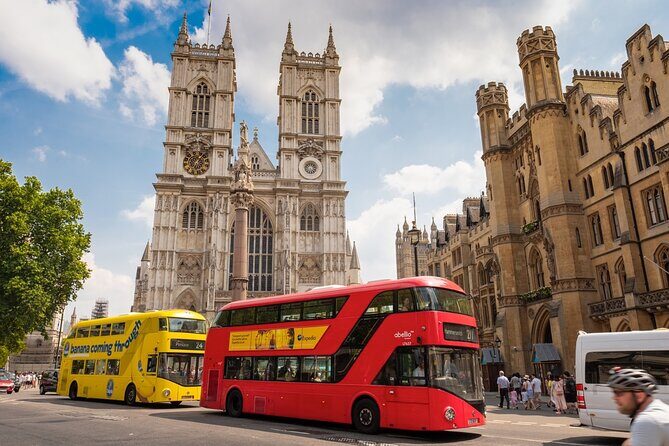
Westminster Abbey: stand in the shadow of coronations and royal weddings
Westminster Abbey is next, described as originally built over 1,000 years ago, with resting places for kings, queens, and famous figures. The highlight here is the “shadow” feeling: standing near a site that has held royal weddings, coronations, and state funerals.
You get the best view setup, but like others, admission isn’t included. Treat it as a history-and-architecture stop rather than a ticketed cathedral visit.
Palace of Westminster: Parliament’s center plus Westminster Hall’s long memory
Then comes the Palace of Westminster, tied to both Houses of Parliament. The building is largely Victorian, but it contains Westminster Hall, which the tour connects to trials, coronation banquets, laying-in-state, executions, and more since 1097.
Ten minutes here is brief, so the value comes from hearing what to notice. When the guide points out how the building’s pieces connect to centuries of legal and ceremonial life, it feels more than a quick photo stop.
Lunch on Villiers Street, then Thames views that reframe the whole day
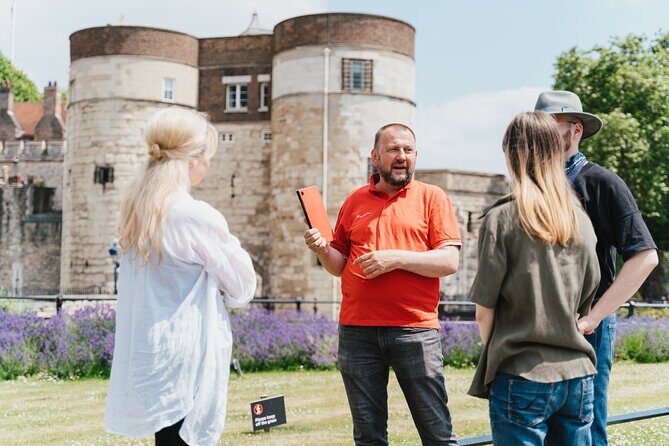
The itinerary builds in a 1-hour lunch break along Villiers Street, a lane lined with pubs, sandwich shops, cafés, and restaurants. Your guide will recommend favorite locations, and you can choose what fits your appetite and budget.
There are two specific lunch-adjacent ideas mentioned: an opportunity to have a drink in an 18th century underground cellar, or to choose a small park setting nearby. Lunch isn’t included, so you’ll be choosing on your own—but you get the advantage of local guidance on where to go.
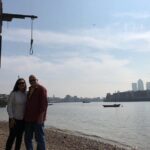
After lunch, the tour pivots toward the River Thames with views of the river winding through London. The tour gives a sense of scale too: the Thames stretches 215 miles (346 kilometers) and is described as England’s longest river. It’s framed as a lifeline for trade, transport, and recreation, with landmarks like Tower Bridge and the Houses of Parliament lining the banks.
This is a key mental reset. After concentrating on buildings, you’re reminded that the city’s history moved with the river first.
Wren’s churches and courtrooms: St Clement Danes to the Royal Courts of Justice
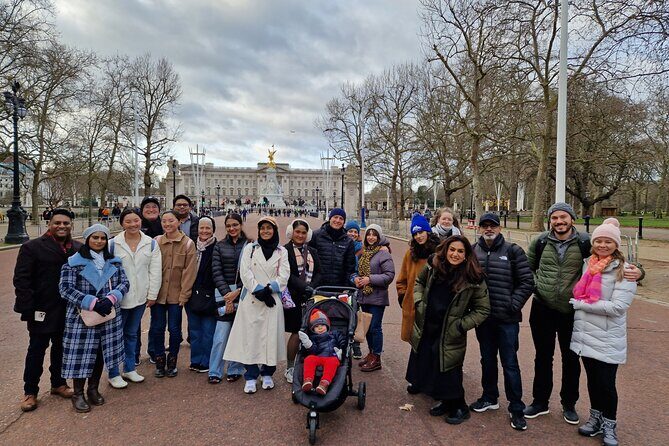
The tour then goes to St Clement Danes Church, a Georgian church connected to architect Christopher Wren. It’s described as the official worship site for the Royal Air Force, and you’ll hear why the church was selected by the RAF and see damage left unaltered from World War II bombing campaigns.
Even if you don’t care much about church architecture, the World War II angle gives the day gravity. It’s one of those stops where London’s layers show clearly: monarchy, government, then war.
Next is Royal Courts of Justice, opened by Queen Victoria in 1882. The building is described as neo-gothic and designed by George Edward Street, with an outward look like a medieval palace while holding over two dozen court rooms.
No admission is included, and the stop is short, but the “looks medieval, functions modern law” framing helps you understand why it’s such a recognizable setting on screen.
Temple Bar into the City: Roman boundaries, Fleet Street writers, and a pub stop that makes sense
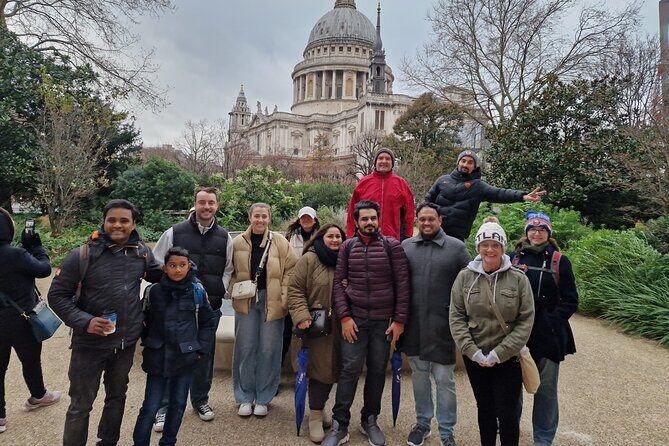
Now you cross into the City of London story. The tour uses Temple Bar as a marker for the idea that the City is effectively a 2,000-year-old city inside London. The boundary you see dates to the 1800s, and the tour notes the symbolic rule about the King needing permission to enter the City and a jurisdiction shift ending the monarch’s authority there.
Then you walk along the ancient Roman road of Fleet Street. This is where the tour name-checks the journalist connection, and even the Sweeney Todd tie-in from the street’s cultural reputation.
Dr Johnson’s House and the courtyard cat statue
At Dr Johnson’s House, you enter a quiet courtyard away from street noise. The tour points out this Georgian townhouse from the 18th century, tied to Samuel Johnson and his work on the first comprehensive English dictionary.
The highlight detail here is the statue that commemorates Johnson and his feline friend. If you’re the type who likes small, memorable storytelling details, this stop is for you. It’s short, but it feels personal and off the main tourist rush.
Ye Olde Cheshire Cheese: writers, journalists, and Dickens-era atmosphere
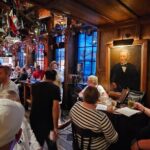
Then comes the pub stop: Ye Olde Cheshire Cheese. The tour calls it one of the oldest, best known, family friendly pubs in London, and notes big names tied to it, including Charles Dickens, Arthur Conan Doyle, and P.G. Wodehouse.
Even if you don’t drink, it helps to stop here because the pub is described as a piece of working London history tied to writing culture. It’s a good pause between landmark intensity.
St Bride’s Church: journalists’ church and a cake-spire legend
Next is St Bride’s Church, associated with printing and newspapers, described as dating back to the 6th century. The current structure is by Sir Christopher Wren, completed in 1675 after the Great Fire of London.
One of the quirky details you’ll hear is that the church’s tiered spire is said to have inspired the design of traditional tiered wedding cakes. It’s the kind of fact that sticks, and it makes the architecture easier to remember.
St Paul’s, Bow Bells, and the Royal Exchange: the City’s big names, explained fast
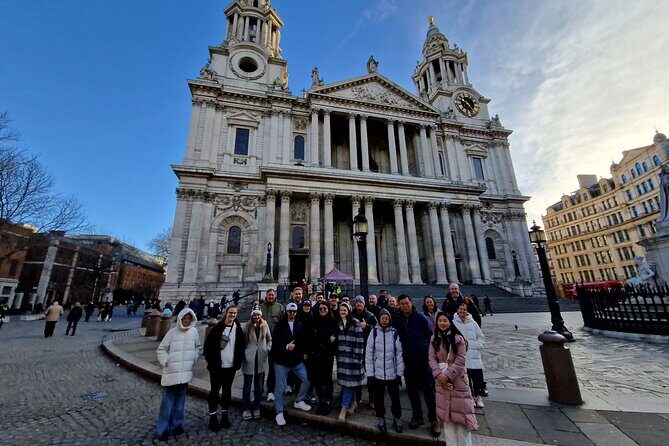
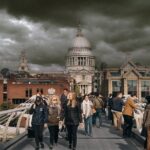
At St Paul’s Cathedral, you’ll be positioned for the best views. The tour calls it Christopher Wren’s masterpiece, completed in the early 1700s, and linked to major events including the funerals of Winston Churchill and the wedding of Prince Charles and Lady Diana Spencer.
It also mentions the interior features: mosaics, impressive arches, and the Whispering Gallery known for its acoustics. Admission isn’t included, so expect an exterior-or-view moment and context from the guide.
Then you reach St Mary Le Bow Church, another Wren church completed in 1680. The tour connects it to the Bow Bells, and the traditional idea that people born within earshot of the bells were true Cockneys. You’ll also walk along Cheapside, tied to the medieval market place that gave the area its name.
Royal Exchange: commerce history with a modern function
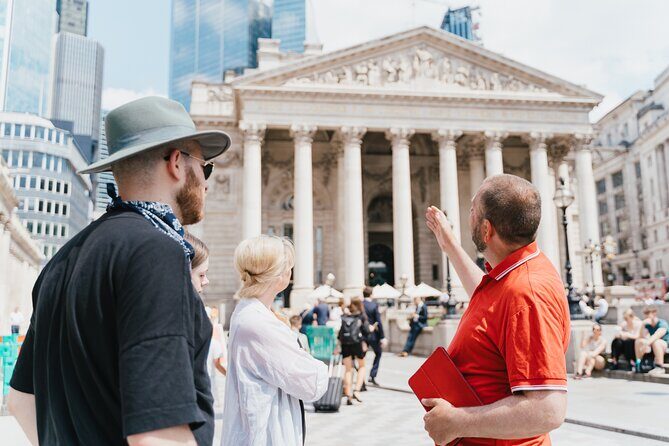
The route moves to the Royal Exchange building, established in the 16th century under Queen Elizabeth I as a commerce center. The current building opened in 1844, designed by Sir William Tite, with a neo-classical style featuring a grand portico and Corinthian columns.
Today, it’s framed as a blend of historic grandeur and modern commerce, with luxury shops, restaurants, and offices. Even without entering in a big way, the stop gives you a sense that the City didn’t become finance by accident—it grew it.
Mansion House, Bank of England vaults, and the Great Fire view from the Monument
Next is Mansion House, the Lord Mayor of London’s official residence. It was built between 1739 and 1752 by George Dance the Elder. The façade with Corinthian columns is a clear “City power” signal, and the tour explains it hosts official functions and the annual Lord Mayor’s Show.
Then comes the Bank of England Museum area and viewpoint. The tour describes the Bank as the world’s second-oldest central bank and notes its roles in monetary stability, setting interest rates, and regulating the financial system. The iconic building is by Sir John Soane, completed in 1827.
The standout detail is what you’re told you’ll see: your guide will have you standing on top of the vaults that hold 310 tonnes of solid gold. That’s a dramatic fact for a quick stop. If you like how a city’s institutions feel tangible, this is one of those moments.
The Monument to the Great Fire: 211 steps to a skyline
After the money stop, you get the fire story at the Monument to the Great Fire of London. The tour frames it as commemorating the devastation of 1666, with Christopher Wren chosen by King Charles II to rebuild the City, and Wren also linked to the monument.
You’re told you can visit today and take in unique capital views from the top, including a “special treat” if you climb the 211 steps and return down again. Admission isn’t included, but the climb (if you choose it) is the kind of effort that pays off in views.
London Bridge, the Shard area, Tower Bridge, and HMS Belfast across the water
Then it’s London Bridge, described as sitting on a crossing site dating back to AD 42. You’ll hear why the medieval bridge was famously “falling down,” and the tour notes the current version was constructed in the 1960s, with a guide pointing out where to see the previous version location (including a joke about passports).
Next is a stop or viewpoint relating to The Shard, described as 310 meters tall and Western Europe’s tallest building, completed in 2012 by Renzo Piano. The tour frames it as a glass-and-steel city icon with observation decks, offices, restaurants, luxury apartments, and a five-star hotel. Again, admission isn’t included, so treat it as a skyline moment and context.
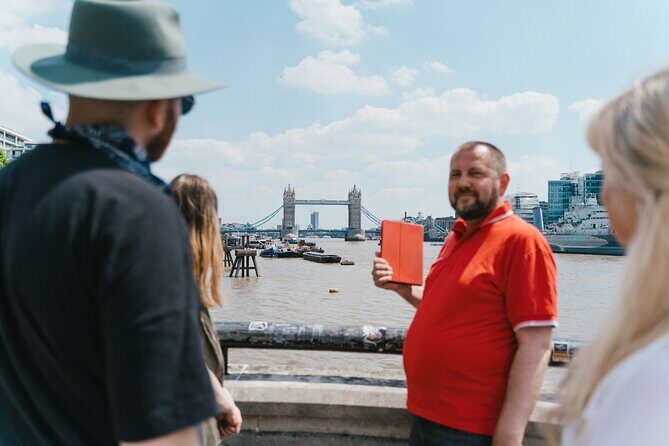
Then you reach Tower Bridge. You’ll get a chance for panoramic views from high-level walkways, and the tour notes the bridge is a drawbridge, so you may get to see it open on one of the summer time afternoon tours.
Across the water, you’ll see HMS Belfast, a former Royal Navy cruiser moored on the Thames as a floating museum. The tour includes the ship’s WWII role, including D-Day landings and Arctic convoys, and notes that visitors can explore decks and compartments with interactive exhibits. Your tour stop is about sight and context, not a ticketed museum visit.
Tower of London: the day’s grand finale
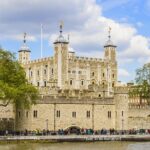
Finally, you end at the Tower of London at 2 Tower Hill, London EC3N 4EE. This is the “grand finale” moment in the itinerary: a UNESCO World Heritage Site founded by William the Conqueror in the 11th century, used as royal palace, prison, and treasury.
You’ll hear what to focus on inside the outer walls: the White Tower, the Jewel House for the Crown Jewels, and the idea of strolling along Tower Green while learning stories of intrigue, betrayal, and royal power.
Admission isn’t included, and the stop is about 10 minutes. But the Tower works even in a short guided hit because it’s visually powerful and story-heavy. The guide’s job is to keep you oriented so it doesn’t feel like you’re just staring at stone.
Price and value: when $514.18 makes sense
The price is $514.18 per group (up to 15) for about 6 hours 15 minutes, booked on average 36 days in advance. That group price is a big part of the value math.
Why it can be a good deal: you’re getting a guide for a full run across major districts with a private group cap. If you’re traveling with family or friends, splitting the cost can bring the per-person price into the range where a guide is actually worth it. You’re also not paying separately for the guide’s time spent repositioning you for photo angles and coordinating schedule-sensitive moments like the Changing of the Guard.
What makes it less of a bargain: most site admissions are not included (the tour notes this at multiple stops). If you’re aiming for a ticket-heavy day, you’ll likely spend more on top. This tour is about efficient seeing and learning, not about collecting entry stamps.
Who this tour fits best
This tour is a great match if you want:
- a high-impact overview of Westminster plus the City of London
- a guide to explain what you’re looking at right then, not later in a guidebook
- a structured plan that reduces decision fatigue across a huge area
It’s not the best fit if you want long indoor museum time at lots of stops. The stops are short, and admission tickets aren’t included.
The route also lists a moderate physical fitness level requirement. You’ll be walking enough that you should wear comfortable shoes and plan for weather.
Should you book this London in One Day tour?
I’d book it if you want your London day to feel organized without feeling like you missed half the city. The Royal Westminster pieces plus the Square Mile sequence gives you a clearer mental map than piecemeal sightseeing.
Skip it or adjust expectations if you’re hoping for lots of inside admissions, or if the Changing of the Guard matters so much that losing it would ruin your day. It’s also a walking-heavy format, so treat shoe choice and weather planning as part of the experience.
If you want a one-day London “greatest hits” with a guide doing the positioning and storytelling, this route is a strong candidate.
FAQ
Is lunch included on the tour?
No. Lunch is not included. The tour includes a lunch break along Villiers Street, and your guide will recommend places, but you’ll choose and pay on your own.
Are admission tickets included for the major sights?
No. The stops are marked with admission ticket not included, including places like Buckingham Palace, Westminster Abbey, and other key sites on the route.
How long is the tour?
The tour runs for about 6 hours 15 minutes.
When does the Changing of the Guard happen on this tour?
The Changing of the Guard is offered only on Monday, Wednesday, and Friday. The schedule can change due to weather, London events, and official Royal Family activity.
Will we definitely see the War Rooms?
No. The tour states that you cannot see the War Rooms, though you will walk over the important wartime structures related to them.
Is this a private tour?
Yes. It’s a private tour/activity, and only your group participates.
What should my group size be?
It’s priced per group up to 15 people.
Are service animals allowed?
Yes. Service animals are allowed.