REVIEW · LONDON
London’s Football Stadiums Sightseeing Tour
Book on Viator →Operated by Tourope UK · Bookable on Viator
Big stadiums, tight time. This private London football tour strings together four iconic grounds so you can see Wembley, London Stadium, Emirates, and Stamford Bridge in one stretched day. I like the fact that it’s set up for motion and variety, with transport built in to limit the hassle of figuring out cross-city routes on your own.
Two things I really appreciate: first, the tour is private (your group only), so the pace can feel more human than a cattle-style bus day. Second, you’re not just staring at photos; you get the engineering wow factor at Wembley and the modern football-city feel around Stratford and North London. The main consideration is simple: this isn’t an indoor-stadium tour, so bad weather and long outdoor walks can feel more noticeable.
In This Review
- Key things to know before you go
- Why this London stadium loop is a smart day plan
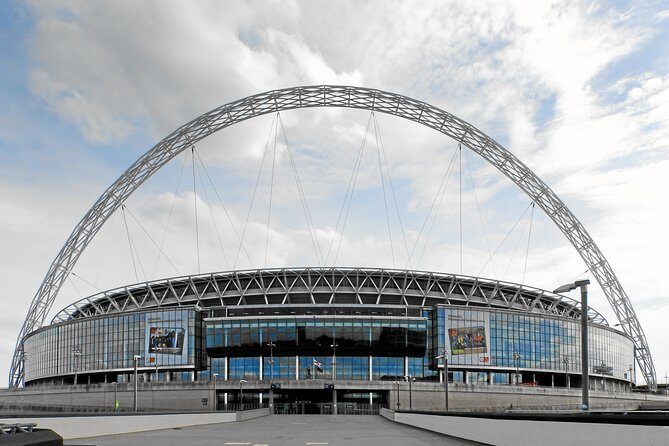
- Wembley Stadium: the 90,000-seat arch you can’t unsee
- London Stadium at Queen Elizabeth Olympic Park: from the 2012 Games to West Ham
- Emirates Stadium: Arsenal’s 60,704-seat home and the Arsenalization era
- Stamford Bridge and Chelsea FC Museum: the 1877-to-today connection
- Time on the clock: what 6 to 8 hours means for real life
- Getting around: pickup zones, Parliament Square, and the easiest meet point
- Price and value for up to 15 people
- Who should book this stadium tour (and who should skip it)
- Should you book?
- FAQ
- Is this a private tour?
- How long is the London football stadiums tour?
- Are admission tickets to the stadiums included?
- Does the tour include hotel pickup?
- Where do I meet if I don’t want pickup?
- What if Parliament Square is closed due to an event?
- Do I need to bring anything?
- Is the tour suitable for wheelchair users?
- What if I need to cancel?
Key things to know before you go
- A private group up to 15 makes it a good fit for families, friend groups, and multi-fan households
- No indoor stadium tours included, so you’ll spend more time outdoors around the venues
- Wembley’s signature arch details (and scale) are the kind of sight you remember later
- London Stadium connects to 2012 Olympic legacy, then shifts fully into West Ham matchday identity
- Arsenal and Chelsea both get their own on-the-ground stops, not just passing drive-bys
- Admission tickets aren’t included, so plan on budgeting extra if you want any paid entry inside
Why this London stadium loop is a smart day plan
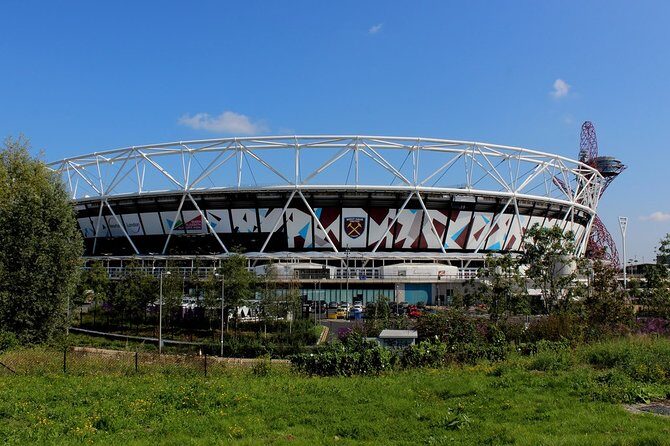
London is huge, and football grounds are spread out. What makes this tour work is that it’s designed as a route, not a museum day. You’re moving between neighborhoods with very different vibes: Wembley’s west London scale, Stratford’s post-Olympic redevelopment, Holloway/Islington’s Arsenal area, and south-west London’s Stamford Bridge pocket.
This is also the kind of tour that fits the reality of planning: you don’t need to chase fixtures, you don’t need to get advance tickets to see the stadiums from the outside, and you can still learn what makes each place distinct. And because it’s private, you can ask questions without feeling like you’re shouting over 40 strangers.
One more practical point: you’ll be doing plenty of walking around big venues, so comfortable shoes matter. The tour uses public transportation to avoid traffic, which can be a lifesaver in London, especially during busier times.
You can also read our reviews of more tours and experiences in London.



Wembley Stadium: the 90,000-seat arch you can’t unsee
Wembley is the headline. The modern Wembley you see today opened in 2007, and it carries the weight of a lot of football tradition layered over modern engineering. It holds 90,000 seats, making it the biggest stadium in the UK, and it sits on the same site that hosted an earlier Wembley Stadium.
The most striking element is the roof’s massive arch support. You’ll be looking at a structure about 133 metres long, with the arch set at 22° from the perpendicular. The height is 133 feet, and that scale is exactly why the stadium feels instantly recognizable even from farther viewpoints across London.
There are also fun nerdy details that you’ll actually be able to picture when you’re there: Wembley’s circumference is about 1 km (around 3,280 feet), and its roof is movable but not fully sealed, meaning you may still feel open-air conditions depending on the weather.
How long you’ll spend here matters too. The stop is about 1 hour, and because admission tickets aren’t included, you’re mostly getting exterior views and on-the-ground context rather than a ticketed interior walk-through. That’s not bad, just different from the stadium tours some people expect.
Best for: soccer fans who want scale and iconic architecture in one shot.
Watch for: if you were hoping for full indoor access, this stop is more about the outside experience.
London Stadium at Queen Elizabeth Olympic Park: from the 2012 Games to West Ham
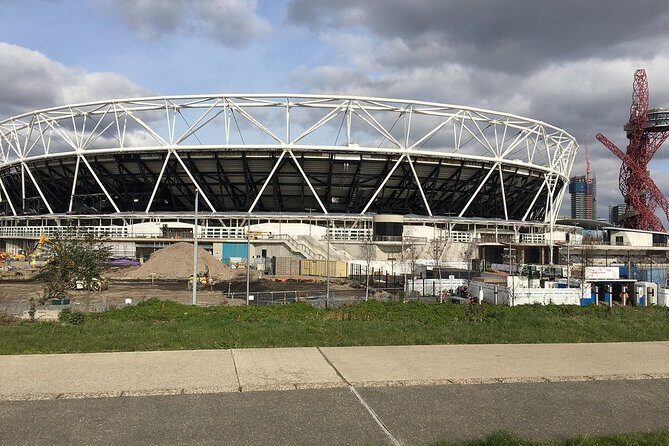
Next up is Stratford and the London Stadium, formerly the Olympic Stadium created for the 2012 Summer Olympics and 2012 Summer Paralympics. It was built as the track-and-field venue and hosted the opening and closing ceremonies. In other words, you’re seeing a stadium with a major global event footprint, not just a football-only build.
After its Olympic life, it got renovated and became a multi-purpose venue that’s now mostly used by West Ham United. West Ham moved into the London Stadium in 2016 from their earlier home, the Boleyn Ground. That “place identity shift” is part of what makes this stop interesting: the vibe here is modern, open-air, and built for spectacle, which you can feel even when no match is happening.
If you want club context, West Ham’s story is the kind of local identity you can connect to what you’re seeing. The club was founded in 1895 and renamed West Ham United in 1900. The two hammers on the club coat of arms reflect the connection to Thames Ironworks. You’ll also learn about the long arc from playing in lower leagues to reaching the top flight.
There’s also a neat 2012-era detail that helps you place the site. One of the first public functions held at the Olympic Stadium was the National Lottery Olympic Park Run on 31 March 2012, with about 5,000 people for the five-mile run around the Olympic Park.
This stop is also about 1 hour, with admission tickets not included. So treat it as an on-location explanation and sighting stop rather than a guaranteed inside look.
Best for: people who like stadiums with a second life beyond football.
Watch for: the area can feel spread out, so keep a steady walking pace.
Emirates Stadium: Arsenal’s 60,704-seat home and the Arsenalization era
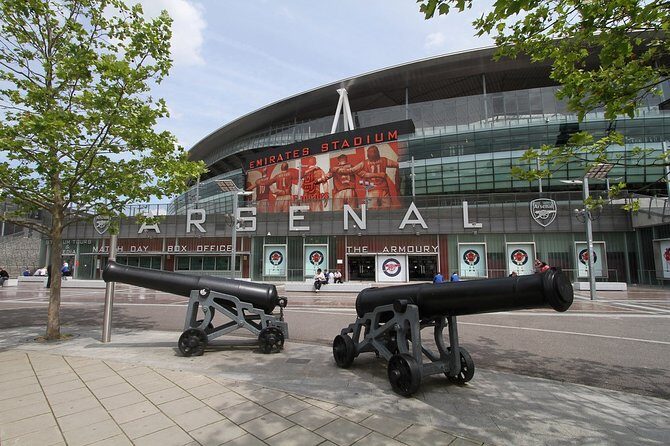
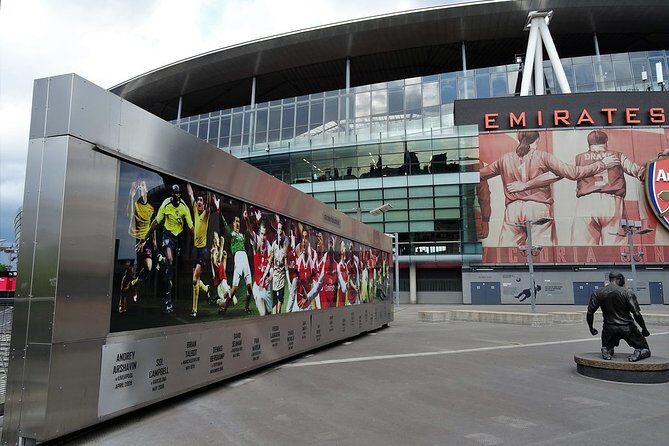
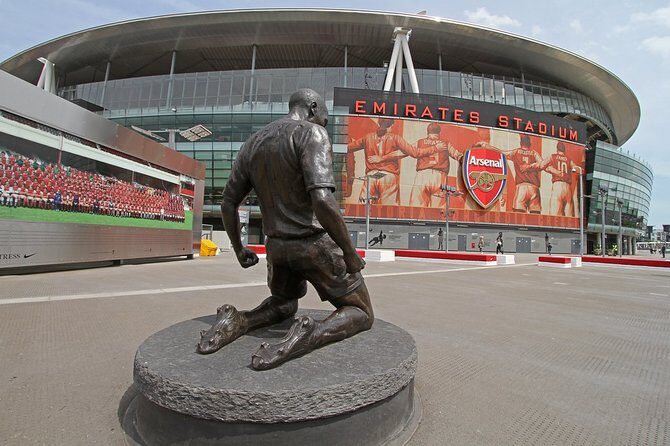
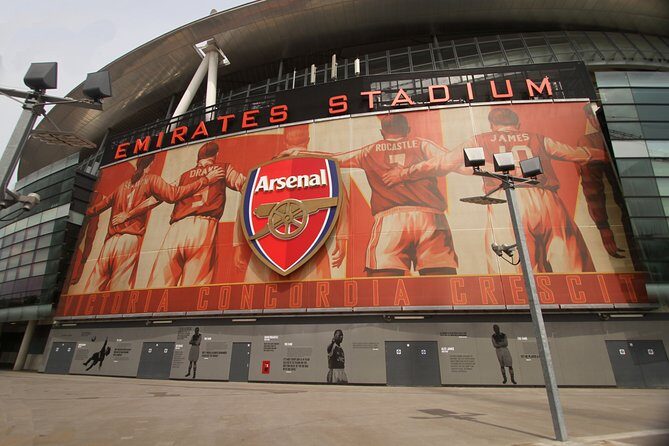
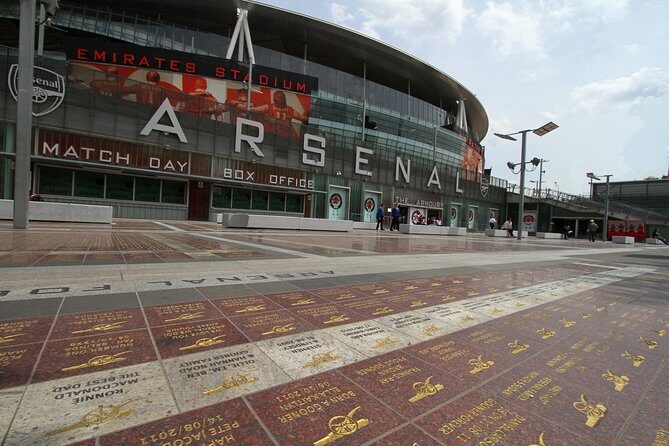
Emirates Stadium is the Arsenal home in Holloway, and it’s a classic example of how modern sponsorship and big investments changed English football’s footprint. The stadium’s capacity is 60,704, and it’s noted as the fourth-largest in the UK after Wembley, Old Trafford, and Tottenham Hotspur.
If you like the “how did this happen?” side of sport, you’ll enjoy the move story. Arsenal proposed relocating in 1997, right after the Islington Council denied planning permission to extend the Highbury stadium. In 2000, the club bought the industrial and waste disposal site at Ashburton Grove. The project moved forward soon after, and Arsène Wenger described it as the largest decisions in Arsenal’s history.
The Emirates Stadium project wrapped up in 2006, with a stated cost of 390 million Pounds. What happened to the old stadium? Highbury Stadium was rebuilt into Highbury Square, which lets you connect past and present without having to guess.
One more detail that helps you read the place while you’re standing there: Emirates has gone through an “Arsenalization” phase since 2009, preserving club culture even after the move. Like Wembley, it has also hosted international festivals and concerts, so the stadium isn’t trapped in just matchday identity.
The stop is about 1 hour, and again, admission tickets aren’t included. That means you’ll likely spend your time with exterior views and guided context rather than an inside museum-style tour.
Best for: Arsenal supporters and architecture-minded fans who want the scale and the backstory together.
Watch for: if you want full interior access, you’ll likely need separate paid entry.
Stamford Bridge and Chelsea FC Museum: the 1877-to-today connection
Stamford Bridge is Chelsea’s home in Fulham, known as The Bridge, and it carries deeper roots than most modern stadiums. It opened in 1877 and was initially used by the London Athletic Club. By 1905, the property was taken over by Gus Mears, who formed Chelsea Football Club to run it. Since then, it’s evolved from a Victorian-era venue into a Premier League-ready stadium.
Today, Stamford Bridge holds 41,837 and was listed as the ninth-largest Premier League venue for the 2019–20 season. Chelsea has plans to expand capacity to about 63,000 during 2023–24, which means the stadium’s future identity is still being written.
A useful planning detail from the tour info: Chelsea planned to play at Wembley until their return in 2024, when the expansion begins. So Stamford Bridge is in that transitional period where the “current” matchday setup and “next” stadium vision overlap.
This stop also includes the Chelsea FC Museum & Tours component. That title suggests more than just a quick peek at the exterior, but the tour information still notes that admission tickets aren’t included. In other words: you should expect official Chelsea content as part of the visit, but the paid entry side may be something you handle separately.
For atmosphere and historical weight, Stamford Bridge has hosted a mix of major events over time: FA Cup finals and semi-finals, Charity Shield matches, and even other sports like cricket and rugby. The attendance numbers are huge when you think about how long the stadium has been part of London life. The record noted is 82,905 for Chelsea vs Arsenal on 12 October 1935.
And if you’re the type who likes human stories inside big stadium statistics, there’s a standout moment from 1945: an invited Soviet team, Dynamo Moscow, with an estimated 100,000 people involved in the scene watching a 3–3 match.
Best for: Chelsea fans who want both place identity and club-era context.
Watch for: expect this stop to be a mix of sighting plus museum/tour time, but don’t assume interior admission is automatic.






Time on the clock: what 6 to 8 hours means for real life
The tour runs about 6 to 8 hours, roughly. That wide range is normal in London because pickup timing, transport flow, and the exact rhythm between stadiums all affect the day.
Plan on a moderate fitness level. There’s a lot of moving between sites, plus walking around venues. If you’re bringing kids or doing this as a family day, pack patience with your water bottle and a snack plan. The tour info also flags comfortable shoes for a reason.
Weather is your other real variable. Since the tour doesn’t include indoor stadium tours, you’ll want a backup plan for rain or wind. If you’re going on a day when skies look iffy, I’d bring a light rain layer even if you’re hoping for sun.
Getting around: pickup zones, Parliament Square, and the easiest meet point
This part can make or break your day, so it’s worth getting clear.
Pickup is offered between London zones 1 to 4. If you’re outside those zones (zones 5 to 9), you’ll need to contact the operator for options. Airport and cruise port pickups are also available for an extra charge.
If you don’t need pickup, you can meet your guide at Parliament Square. The nearest tube station is Westminster. The instructions are very specific: check in 30 minutes before your booked start time, and look for the Statue of Sir Winston Churchill in front of the Houses of Parliament.
There’s also a smart contingency plan. If there’s a daily event or closure in Parliament Square, you’ll switch meet-up location to the London Eye area by crossing Westminster Bridge, and the guide waits in front of the main exit gate of the London Eye.
Other small but useful notes:
- You’ll get a mobile ticket.
- The tour provides hand sanitizers and masks in vehicles for hygiene.
- It’s a private tour/activity, so it’s only your group.
- Service animals are allowed.
- The tour is near public transportation, which helps if you decide to self-manage a small segment.
Price and value for up to 15 people
The price is $1,198.98 per group, up to 15 people. That structure is the biggest value lever on this tour. If you’re a solo traveler, it can feel steep because you’re paying for a full private experience. But if you’re traveling with a family, a couple of friends, or even a small “we all love football” group, that per-group cost can spread out quickly.
Here’s where you should be careful with expectations: admission tickets are not included at the listed stops. So your final spend may be higher if you want ticketed entry beyond what’s covered by the tour itself.
Still, for the right group, you’re paying for:
- transport that avoids traffic issues (public transport is used),
- guided storytelling at multiple iconic stadium locations,
- and the flexibility of a private schedule for your group size.
This is also the kind of itinerary that works when you want a lot of London variety in limited time. You get far more cross-city ground coverage than you’d likely do on your own in one day without turning the day into a logistics project.
The tour is rated 4.7 on its platform based on a small number of ratings, which suggests consistent satisfaction rather than random hype.
Who should book this stadium tour (and who should skip it)
You’ll probably love this if:
- you’re a soccer fan who wants big-name grounds fast,
- you like guided context and club identity details,
- you have a group of up to 15 and want a private day without renting multiple taxis.
You might want to skip or adjust expectations if:
- you’re hoping for full indoor stadium access at every venue,
- you hate walking and long outdoor stretches,
- or you’re traveling solo and want the lowest cost per person.
For families: it can work well, especially if you keep breaks short and focus on the sights. Bring snacks and plan for weather, because this is a route day, not a sit-down museum crawl.
Should you book?
If your goal is to see Wembley, London Stadium, Emirates, and Stamford Bridge in one organized loop, this is a strong booking choice. The private format helps a lot, and the route gives you London variety that feels earned, not rushed sightseeing-by-windshield.
Just go in with two expectations dialed in: it’s mostly an outside experience (no indoor stadium tours included), and admission tickets aren’t part of the package at the stops. If you’re okay with that, you’re set up for an excellent day of football culture across four different corners of London.
FAQ
Is this a private tour?
Yes. It’s a private tour/activity, and only your group participates.
How long is the London football stadiums tour?
It runs about 6 to 8 hours.
Are admission tickets to the stadiums included?
No. The tour information notes that admission tickets are not included for the stops.
Does the tour include hotel pickup?
Pickup is available between London zones 1 to 4. For zones 5 to 9, you need to contact the operator. Airport and cruise port pickups are also available for an extra charge.
Where do I meet if I don’t want pickup?
You can meet at Parliament Square. The nearest tube station is Westminster, and you should look for the Statue of Sir Winston Churchill in front of the Houses of Parliament.
What if Parliament Square is closed due to an event?
If Parliament Square is affected by a daily event or closure, the tour meets at the London Eye area by crossing Westminster Bridge, with the guide waiting in front of the main exit gate of the London Eye.
Do I need to bring anything?
Comfortable shoes are advised, and you’ll be doing a lot of walking plus transport between stadiums. The tour also provides hand sanitizers and masks in vehicles.
Is the tour suitable for wheelchair users?
Wheelchair users must inform the agent whether the guest(s) is fully dependent on the chair or partly able to walk or move.
What if I need to cancel?
The experience is non-refundable and cannot be changed for any reason. If you cancel or ask for an amendment, the amount you paid isn’t refunded.