REVIEW · LONDON
Mission SUNSCREEN by Glitch Hunters
Book on Viator →Operated by clueQuest - Glitch Hunters · Bookable on Viator
London turns into a game board. Mission SUNSCREEN by Glitch Hunters turns City of London into an interactive spy hunt where a web app on your phone leads you to real landmarks. I also love the choose-your-own-pace setup, so you can pause, regroup, and notice details as you go; the main drawback is that you’ll spend a lot of time looking at your phone while walking through busy streets.
This is a 3–4 hour, on-foot adventure (about 4,000 steps) with built-in breaks for food and drinks. You play in teams of 2–6, and your group stays private, so it feels less like a lecture and more like a friendly race through central London.
In This Review
- Key things I’d circle in your planning
- Mission SUNSCREEN: A spy-style city walk that rewards attention
- Price and time: does $17.73 make sense?
- Where you start at Cannon Street Greater (and how the game keeps moving)
- Stop 1: Royal Exchange Building London—puzzles meet precision architecture
- Stop 2: Leadenhall Market—clever tasks in a lively corridor
- Stop 3: The Monument to the Great Fire—turning a landmark into a solution
- The phone app experience: mostly easy, with a built-in safety net
- Walking smart: steps, breaks, cyclists, and your team dynamic
- Accessibility and group fit: good for wheelchairs, good for mixed ages
- Who should book Mission SUNSCREEN?
- Should you book? My take on the decision
- FAQ
- How long is Mission SUNSCREEN by Glitch Hunters?
- How much walking is involved?
- Where do we meet, and do we return there?
- Is it wheelchair accessible?
- How big are teams?
- Can I cancel for a full refund?
Key things I’d circle in your planning
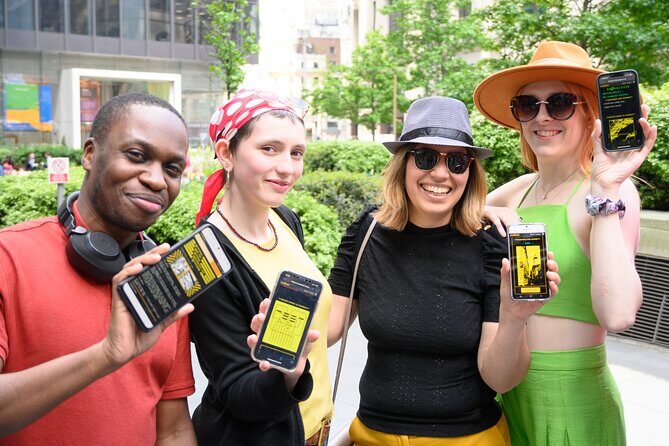
- A spy-game format using a phone web app to guide you step by step
- City of London landmarks you can’t fully appreciate from postcards (Royal Exchange, Leadenhall Market, the Monument)
- Play at your pace with the freedom to stop, start, and re-think your strategy
- A true walk-about experience at roughly 4,000 steps, with breaks built in
- Clever puzzles that range in difficulty, with support if you get properly stuck
- Timing matters for comfort: lunch time can be crowded on weekdays
Mission SUNSCREEN: A spy-style city walk that rewards attention
Mission SUNSCREEN works because it flips how you see London. Instead of rushing from “must-see” to “next,” you’re solving a storyline with clues and puzzles that take you through the City of London’s most distinctive corners. You’re not just passing buildings—you’re reading them, comparing details, and trying to make sense of what’s in front of you.
The tone is light and fun, but the design feels practical. You’re walking a set route, yet you control the speed. That matters in a city where everyone else moves like they’re late for a train. In this game, stopping to examine an architectural feature is part of the point. And you’ll do it—because the clue trail pushes you to look closer than you normally would.
If you’re worried about getting “lost,” don’t be. The experience is built to be easy to follow, and you’re directed to where you need to go without needing to constantly re-check maps. That’s a big deal if you’re traveling with kids, older relatives, or a mixed group where not everyone wants the same pace.
You can also read our reviews of more tours and experiences in London.



Price and time: does $17.73 make sense?

At $17.73 per person for roughly 3 hours (often just under 3 hours in practice), this is one of those London activities that can feel more like value than a souvenir-scale expense. You’re paying for structure: a guided puzzle route, a phone-based clue system, and a designed flow with breaks.
The best way to think about the value is this: you’re buying time and focus. With a normal day out, you could walk through these areas for free—but you wouldn’t have the built-in reasons to stop and interpret what you’re seeing. Here, the puzzles create a “why now” that keeps the day engaging. It also turns “sightseeing” into teamwork, which can be worth extra when you’re traveling with friends or family.
The main tradeoff is energy. This isn’t a sit-down activity. Expect a solid central-London walk and about 4,000 steps. If your group wants something low-walk, you may want to save this for a day when everyone feels ready to roam.
Where you start at Cannon Street Greater (and how the game keeps moving)
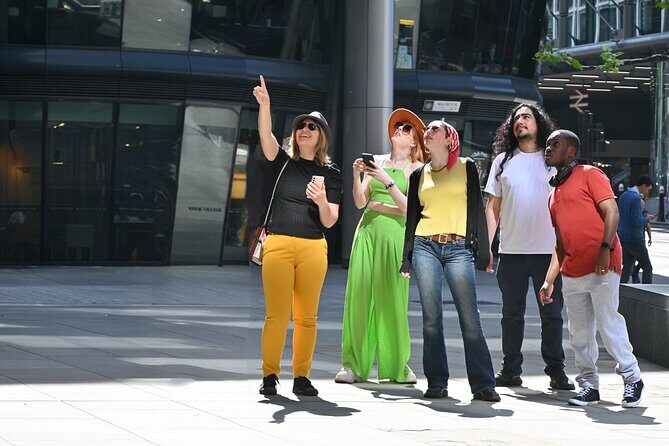
You meet at Cannon Street Greater, Cannon St, London EC4N 6AP, and the activity ends back at the same meeting point. That loop matters. It means you don’t have to plan a separate pickup or transit puzzle at the end of your day.
From there, the experience uses a web app on your phone. It tells you what to look for and where to go next. The overall feel is “guided but flexible.” In other words, you’re not stuck waiting on someone else. If your team is solving quickly, you’ll keep your momentum. If your team needs to slow down—maybe you’re taking photos, maybe you’re discussing a clue—you can do that without breaking the game.
One small reality check: because the phone is your clue interface, you will be looking down more than you might like. The streets in central London are active, and you’ll also be around cyclists. It’s manageable, but it changes how you should walk—especially in busier stretches where you can’t afford to stare at your screen for long.
Stop 1: Royal Exchange Building London—puzzles meet precision architecture
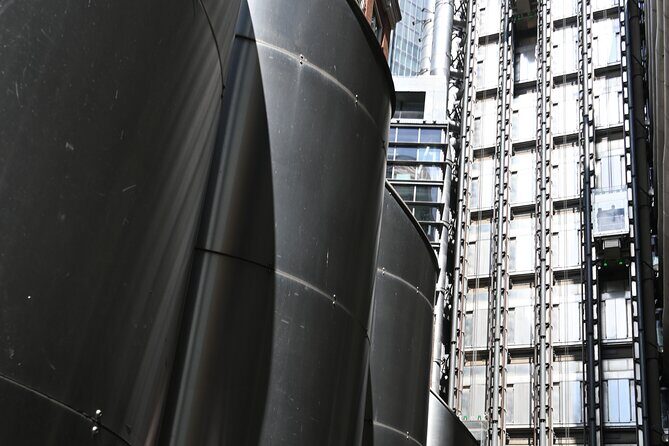
The first landmark sets the tone: you’re in the City of London, among buildings that reward close looking. The Royal Exchange area has that classic “city power” feel—clean lines, thoughtful layout, and a sense that this neighborhood was designed for people who travel fast but also notice details.
In a normal visit, you might glance at the building and move on. In this game, you’re more likely to slow down. The clues push you to observe patterns, features, and the kinds of small design choices you normally ignore. That’s one of the best parts of the experience: it helps you learn without turning the day into a classroom.
The practical downside here is simple: early in the walk, groups can take a few minutes to get fully set up and into the rhythm. One family described a slower start, then better speed once they were moving. If your group likes to win, it helps to treat the first section like a warm-up and not a verdict on how fast you’ll go.
Stop 2: Leadenhall Market—clever tasks in a lively corridor
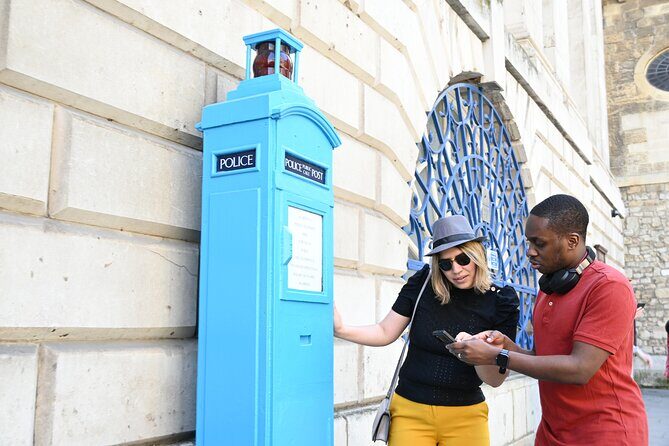
Leadenhall Market brings a different flavor. It’s a place where architecture and daily life mix—so it’s not just “look at the building.” You’re also negotiating the feel of an active London market area.
This stop is where the game design shines for teamwork. Market environments naturally create distractions—people moving through, noise, sudden changes in foot traffic. The puzzles give you a reason to focus anyway. They also make the time feel less like “we’re walking again” and more like “we’re solving something together.”
A tip from real-world experience: aim to avoid lunch time if your group dislikes crowds. Weekday midday can be packed, and you’ll be stopping and scanning while others pass. Weekends may feel quieter, but either way, the key is that the puzzle format requires attention. If you go when the area is overloaded, the game can still work—but you’ll feel it.
Another practical note: if you’re using the phone for direction, keep your eyes up when you cross small gaps or move along tighter walkways. One reviewer flagged that the navigation style leans heavily on phone use, and in busy areas that’s not just annoying—it’s a safety thing. Plan for slower walking and more awareness.






Stop 3: The Monument to the Great Fire—turning a landmark into a solution
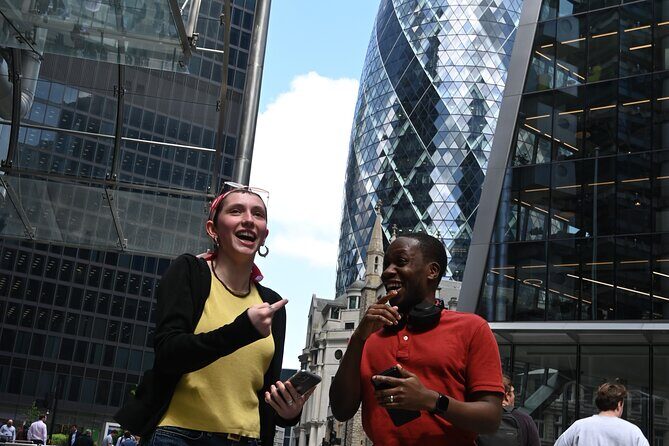
The Monument is the kind of London site that many people know exist, even if they haven’t studied the details. In this game, that changes. The Landmark becomes part of your puzzle trail, so you’re not just seeing it—you’re working with it.
This is a strong closing-style stop because it feels like a payoff. You’ve already learned how the clue system works, you’ve gotten used to the walking pace, and now the landmark helps you connect the dots in the storyline. The puzzles tend to feel clever and tied to what you can actually notice outside.
The Monument area also offers a useful “end-of-game” mood. By now, teams are often more confident and more willing to take risks on a guess. That matters because puzzles don’t always split cleanly into easy and hard. Even when a question is tough, the teamwork flow usually keeps the day fun.
One reviewer pointed out that the puzzles range in difficulty—some are straightforward, others need a nudge. The good part is that the structure supports that. You’re not dead-ended forever.
The phone app experience: mostly easy, with a built-in safety net

The web app guidance is a major reason this works well for families and groups with mixed ages. It’s clear enough that you’re not constantly re-locating your position, which is a common failure point in self-guided games.
There’s also a help mechanism built into the puzzle flow. If you get really stuck, you can see the answer rather than getting trapped in frustration. That’s important if you’re traveling with kids or older adults, or if you want the day to stay playful rather than a long argument over one clue.
Some people also noted that they would prefer more text clues rather than photo-based navigation during certain parts. That’s a matter of preference. If your group is sensitive to too much screen scanning, you might want to keep conversations active and limit time standing still with your eyes buried in the phone.
Walking smart: steps, breaks, cyclists, and your team dynamic
You’re on foot for about 3–4 hours, around 4,000 steps. That’s enough walking to feel like a real outing, but it’s not an all-day hike. It’s the “London sightseeing” version that fits in a travel schedule without stealing your whole day.
One thing I like in the design is that breaks are built in. That means you’re not forced to power through hunger while trying to solve puzzles. You can grab food and drinks, recharge, and reset mentally. For families, that’s the difference between enjoying the game and turning it into a complaint session.
Team size affects the experience too. Groups of 2–6 can work well because you’ll have shared attention—someone can read the clue, someone can scan surroundings, someone can try a solution. For kids especially, shared problem-solving beats passive “waiting” time.
But there’s also a reality: you’ll look at your phone a lot. In central London, you need to walk like you’re carrying a map—glance, then move. Watch for cyclists, keep to the safe side of the pavement, and don’t let the puzzle steal your street smarts.
Accessibility and group fit: good for wheelchairs, good for mixed ages
This experience is fully wheelchair accessible, and service animals are allowed. That’s a big plus in London, where many “activities” end up being stairs-and-closed-doors.
It’s also described as suitable for most travelers. Reviews reflect a wide age span, from kids around 12–14 to adults from about their thirties into their seventies. That tells me the game isn’t purely juvenile or purely challenging. It’s flexible enough to work if your group can read clues and collaborate.
The private tour/activity model helps too. Your group stays together, so you’re not constantly negotiating space with strangers or dealing with mismatched energy levels.
Who should book Mission SUNSCREEN?
You should book if you want:
- A fun way to explore City of London without rushing
- An activity that works for families and friends because it’s teamwork-based
- A puzzle route that encourages you to notice architectural details you’d normally skip
- A day plan that can run on your schedule since you can stop and start at your pace
You might reconsider if:
- Your group hates phone-based navigation
- You want something with minimal walking
- You’re traveling at a time when you won’t enjoy crowding, since lunch time on weekdays can get busy in this area
In other words, this is best for people who like solving things, strolling, and talking out loud as you go.
Should you book? My take on the decision
I think Mission SUNSCREEN is a smart buy for London visits because it turns a short city walk into a story you can actually participate in. The combination of a clear phone-guided trail, real landmark stops, and puzzle variety makes it more than “just a scavenger hunt.”
If you want a classic sightseeing day, pick a museum or a landmark tour. If you want a day that feels like London is handing you the clues, this fits well. Go on a time of day when your group is fresh, expect some screen time while walking, and lean into teamwork. Do that, and you’ll likely leave with both better photos and better memories than you’d get from a simple route.
FAQ
How long is Mission SUNSCREEN by Glitch Hunters?
It lasts about 3 hours, with an approximate range of 3–4 hours depending on how you play.
How much walking is involved?
The game is on foot and is listed at about 4,000 steps.
Where do we meet, and do we return there?
You meet at Cannon Street Greater, Cannon St, London EC4N 6AP, UK, and the experience ends back at the same meeting point.
Is it wheelchair accessible?
Yes. The experience is stated to be fully wheelchair accessible.
How big are teams?
You play in teams of 2 to 6 players.
Can I cancel for a full refund?
Yes. Free cancellation is available if you cancel up to 24 hours in advance of the experience start time for a full refund.