Money leaves footprints in London. This small-group City of London history tour connects money and power through real streets and real buildings, starting with the area’s Roman and Medieval beginnings and ending with the modern financial core. You’re not just looking at famous facades here.
I like that it’s paced for people with different backgrounds. With a maximum of 8 travelers, the guide can meet you where you are, and you get the stories behind the sights without feeling like you need a finance degree. One standout for me is the way insider gossip and scandal are used to make the past feel human.
The one possible drawback: because it’s a walking tour and it runs in the City’s open streets, you’ll want good weather. If rain hits, you may need to dress smart and keep moving.
In This Review
- Key highlights at a glance
- A 2-hour power walk through the City of London’s money streets
- Meeting points: Emperor Trajan to the London Stock Exchange finish
- Roman and Medieval beginnings: where the financial district’s story starts
- East India Company power: trade becomes institutional muscle
- Royal Exchange, Bank of England, and Mansion House: neo-classical authority
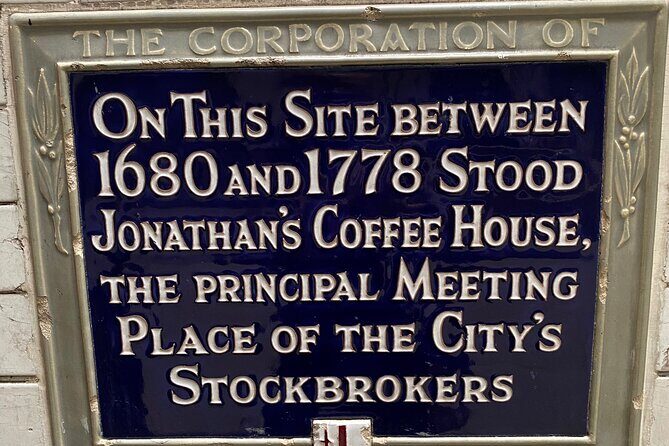
- The coffee shop where the stock market first based itself
- Exchange Alley (Change Alley): the shortcut that explains how trading moved
- Guildhall and medieval guild buildings: storing goods and staging power
- St Paul’s Cathedral over the modern market area: power on a skyline
- Why the $41.14 price feels fair for this London experience
- Who this tour suits best (and who might want a different option)
- Should you book Money and Power in the City?
- FAQ
- How long is the Money and Power in the City tour?
- What is the group size?
- Where does the tour start and end?
- What time does the tour begin?
- What language is the tour offered in?
- Do I get a mobile ticket?
- What if the weather is bad or I need to cancel?
Key highlights at a glance
- Small group up to 8: easier questions and more back-and-forth with Terry
- Foot-based storytelling: you’ll connect past to present block by block
- Finance origin points in plain sight: Royal Exchange, Bank of England, Mansion House, and more
- Exchange Alley (Change Alley): a narrow shortcut that explains how trading flowed
- Medieval Guildhall context: how civic power and entertainment shaped the City
- St Paul’s Cathedral as the visual finish: power architecture literally towers over the market area
A 2-hour power walk through the City of London’s money streets
This is a focused, 2-hour walking experience built around one big idea: money doesn’t just happen in rooms. It forms on streets, grows through institutions, and leaves clues you can still see.
You’ll move through the heart of the City of London and keep a tight theme running the whole time: who gained control, how trade and finance evolved, and why certain buildings ended up where they did. It’s the kind of tour where you start noticing patterns. You look at a doorway or an alley and your brain clicks into place, because the guide gives you the “why” not just the “what.”
Another thing I really like is how the tour balances accessibility with depth. The guide’s approach, including Terry’s energy, is built for families and first-timers just as much as people with a strong interest in London’s financial past. That matters, because City history can turn into a word salad fast, and this doesn’t.
You can also read our reviews of more city tours in London



Meeting points: Emperor Trajan to the London Stock Exchange finish
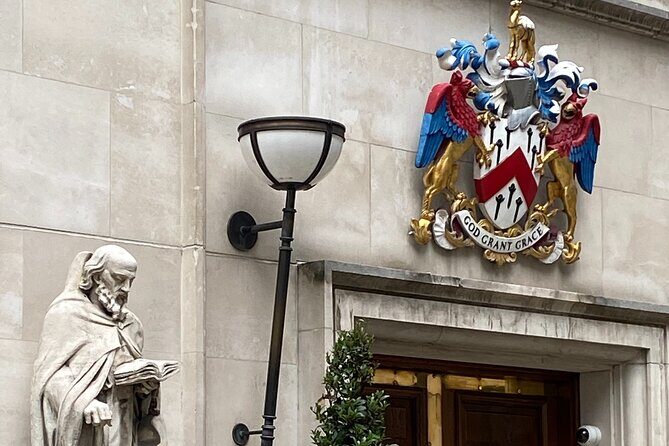
You start at Emperor Trajan A100, London EC3N 4DR, with the tour beginning at 2:00 pm. The end point is London Stock Exchange, 10 Paternoster Sq., London EC4M 7LS, and you’ll meet the group at Paternoster Square by the main column.
Why this matters for you: the route is set up so you’re gradually pulled deeper into the City’s financial district instead of doing random out-and-back sightseeing. You don’t need a map brain for this. You just follow the story from one “power location” to the next.
Also, it’s near public transportation. That helps if you’re already working your way through London that day and don’t want to add a complicated transit puzzle.
Roman and Medieval beginnings: where the financial district’s story starts
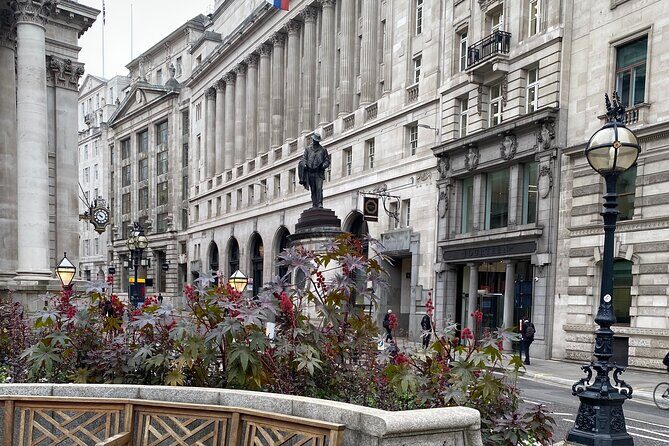
The first segment sets the baseline: the Roman and Medieval beginnings of the Financial District area. You’ll hear the early foundation of the City’s importance before the landmarks become the recognizable institutions you’ve seen in photos or headlines.
Even without heavy technical detail, the framing is smart. It gives you a timeline you can hold in your head. You start to see later institutions as outcomes, not magic tricks. That shift is the whole point of a themed history walk, and it’s why the tour works well for people who feel lost in London’s layers.
Practical tip: if you’re even slightly tired from jet lag or travel days, this opening helps because it gives context early. You’re not guessing why later stops matter.
East India Company power: trade becomes institutional muscle
Next, you’ll focus on a historic location tied to the East India Company, after seeing other sites that connect to it. The East India Company is one of those subjects where it’s easy to remember the name and miss the mechanism. Here, the tour uses the location itself to explain how influence grows from commerce into control.
I like this part because it’s not just a lecture on dates. You’re shown a specific place and guided toward what it meant in the City’s power system. That makes it easier to understand why certain corners of London became magnets for money.
The tour also leans into the more human side of power—what can look like abstract economics when you read about it. The guide’s style brings in the atmosphere: ambition, competition, and the kinds of conflicts that happen when money meets decision-making.
Royal Exchange, Bank of England, and Mansion House: neo-classical authority
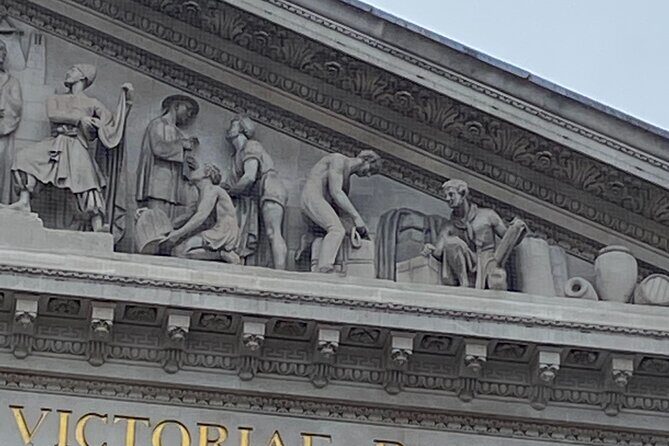
Then comes a stretch where you get to absorb the neo-classical splendour of the Royal Exchange, Bank of England, and Mansion House. These aren’t just pretty buildings. On this walk, they’re presented as a language. Architecture says who matters, what kind of power is legitimate, and what the city wants to project.
Here’s why this stop is valuable for you: it teaches your eyes to read the City. When you later see other grand institutional buildings around London, you’ll already understand the idea of design as a political signal, not just decoration.
Possible consideration: these stops are visually impressive, but they can also be busy. If you’re hoping for total silence and long photo sessions at each point, you might feel rushed. The tour is built to keep momentum, so bring your patience and plan to shoot while you’re moving or during short pauses.






The coffee shop where the stock market first based itself
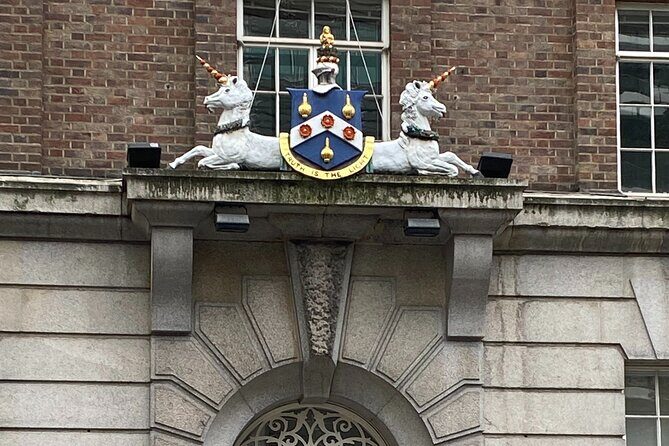
One of the most memorable parts is the stop at the location of the coffee shop where the stock market was first based. That detail changes your mental image of financial history fast.
Coffeehouses sound casual until you connect them to decision-making and trading. This stop helps you understand that early finance wasn’t just high-level policy and marble halls. It also lived in everyday meeting spaces where people gathered, talked, and made calls.
I especially like how the tour treats this as a story beat, not a trivia detour. It builds a bridge between the street-level feel of London and the massive institutions you see today.
Exchange Alley (Change Alley): the shortcut that explains how trading moved
Next you’ll get to Exchange Alley, also known as Change Alley, a narrow alleyway connecting shops and coffeehouses in an old neighbourhood of the City of London. The tour explains its function as a convenient shortcut from the Royal Exchange on Cornhill to the Post Office on Lombard Street, and you’ll see that it still links these two streets.
This stop is small in size and big in meaning. It’s a reminder that money depends on movement: people, information, and timing. A narrow alley might not look like power, but on this tour it becomes a practical clue. You start to picture the daily routes that helped trading happen efficiently.
If you enjoy walking through side streets and seeing how neighborhoods work at human scale, this part is for you. It’s one of those “blink and you miss it” places unless a guide points it out.
Guildhall and medieval guild buildings: storing goods and staging power
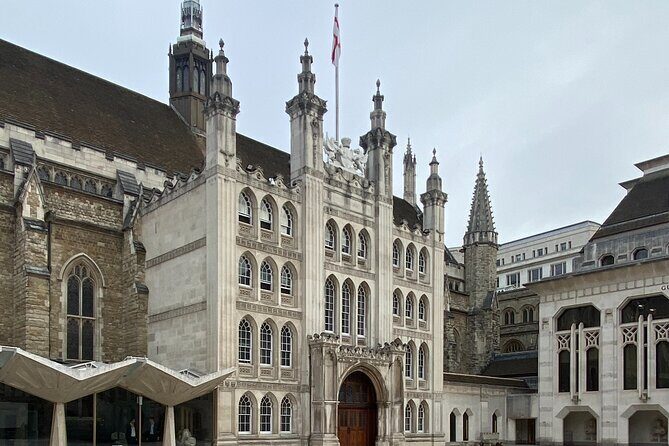
The tour then moves to the medieval Guildhall and selected nearby Guild buildings. The key idea here is that medieval guild halls weren’t only ceremonial. The tour frames them as places to store goods and host celebratory events.
When events weren’t required for guild members, the hall often became a spot for townspeople entertainment, including Passion plays. That’s a detail I love because it shows civic space had multiple jobs. Power wasn’t locked in offices; it showed up in public life.
Why this helps you understand the theme: the tour keeps circling back to the same question—who has control over production, distribution, and public attention. By connecting guild halls to later financial institutions, you get a clearer picture of how “power” evolves without vanishing.
St Paul’s Cathedral over the modern market area: power on a skyline
The final big visual is the contrast between the modern Stock Market area and the glorious St Paul’s Cathedral above it. St Paul’s is described as an Anglican cathedral, the seat of the Bishop of London, and the mother church of the Diocese of London. You’ll also learn it sits on Ludgate Hill at the highest point of the City of London and is a Grade I listed building.
That last stop is where the theme clicks into place. The cathedral isn’t being used as a generic landmark. It’s presented as part of the City’s long-running story of authority—religious, civic, and financial all sharing the same skyline.
If you like tours that leave you with an image you can remember for weeks, this one does it well. You walk away thinking about power as a spatial thing. Where it stands matters.
Why the $41.14 price feels fair for this London experience
At about $41.14 per person for roughly 2 hours, the pricing lands in the “reasonable for a guided walking tour” zone, especially because this isn’t a giant group. With a maximum of 8 travelers, you should expect a more personal pace and more time for questions.
You also get a lot of major-name geography packed into one run: the Royal Exchange area, the Bank of England zone, Mansion House, the Guildhall complex, the coffeehouse origin point, and the St Paul’s finish. That’s a useful combo if your time in London is tight and you don’t want to piece together a financial-history self-walk.
Booking tends to happen in advance (on average around 33 days), so if you’re traveling in peak season or you have a limited schedule, I’d secure your spot early.
Who this tour suits best (and who might want a different option)
This tour is a strong fit if you:
- want City of London history tied to money, trade, and institutional power
- like walking routes with clear storytelling beats
- enjoy insider context, including the guide’s ability to bring in scandal and gossip without losing clarity
- appreciate a guide who can answer questions and match your starting knowledge
It can also work for families, based on the emphasis on engaging explanations. The pace is designed to keep both new learners and more history-inclined visitors interested.
You might consider another option if you hate walking or prefer long stays inside major sites. This is an outside, on-street experience built for momentum.
Should you book Money and Power in the City?
If you’re curious about how London’s financial district got its muscle and why those places still matter, I think you’ll enjoy this. It’s short enough to fit into a sightseeing day, but structured enough to give you real context from Roman and medieval beginnings to the modern stock market area.
I’d book it if you want a small-group walk with Terry’s story energy and a tight focus on how power actually operates in a city. The tour’s biggest advantage is also its theme: you see landmarks as chapters in one continuing story, not as isolated photo stops.
If weather is iffy, plan your day with layers and keep your schedule flexible, since it requires good weather. If you can handle that, this is a solid value way to understand the City without getting lost in names and dates.
FAQ
How long is the Money and Power in the City tour?
It lasts about 2 hours.
What is the group size?
The tour has a maximum of 8 travelers, making it a small-group experience.
Where does the tour start and end?
It starts at Emperor Trajan A100, London EC3N 4DR and ends at London Stock Exchange, 10 Paternoster Sq., London EC4M 7LS, near the main column in Paternoster Square.
What time does the tour begin?
The start time is 2:00 pm.
What language is the tour offered in?
The tour is offered in English.
Do I get a mobile ticket?
Yes. The tour includes a mobile ticket.
What if the weather is bad or I need to cancel?
This experience requires good weather. If it’s canceled due to poor weather, you’ll be offered a different date or a full refund. You can cancel for free up to 24 hours in advance for a full refund.